What Counts as a Public Water for License Purposes
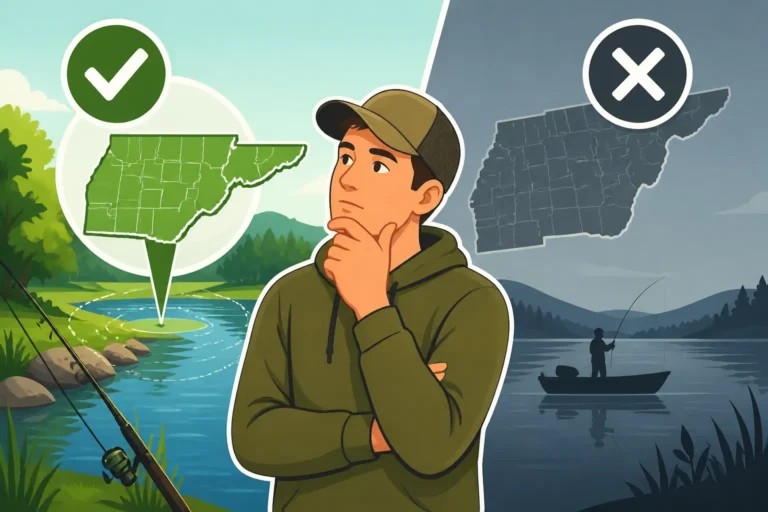
It can be incredibly confusing trying to figure out if that serene stream or inviting pond requires a fishing license in Tennessee, especially when you're not sure if it's considered "public water" or not. Many anglers, new and seasoned alike, grapple with where the line is drawn, leading to anxiety about breaking rules or missing out on a great fishing spot. This guide will meticulously break down what exactly constitutes public water for license purposes in Tennessee, helping you fish with confidence and stay on the right side of the law.
Navigating Public Waters in Tennessee: What Defines Them?
The question of what truly makes a body of water "public" in Tennessee is more nuanced than simply looking for a "No Trespassing" sign. It delves into legal definitions, historical precedents, and the proactive management of our natural resources by the state. Understanding these underlying principles is key to navigating Tennessee's diverse aquatic landscapes responsibly.
The Legal Distinction: Navigable vs. Non-Navigable Waterways
In Tennessee, a significant part of the definition of "public water" hinges on whether a waterway is considered "navigable." Historically, navigable waters were those large enough to support commercial boat traffic, essentially meaning they could be used as highways for commerce. While the interpretation has broadened somewhat over time, the core concept remains: if a river or stream is "navigable in fact," meaning it's capable of being used for commercial purposes like transporting goods, then the water itself is generally considered public, regardless of who owns the land underneath or adjacent to it. This means that even if you're standing on private property next to a navigable river, the water itself is public, and fishing on it requires a license.
Conversely, non-navigable streams and smaller creeks are a different story. The landowner typically owns the stream bed and the water flowing over it. If you want to fish in a non-navigable stream that flows entirely through private property, you absolutely need permission from the landowner to access the water. This is a crucial distinction that often trips up anglers who assume all flowing water is fair game. Imagine a small trout stream winding through a private farm; while the fish might be plentiful, the water is not considered public in the same way the Tennessee River is. This can be tricky, as some non-navigable streams might be stocked by the state, adding another layer of complexity we’ll discuss shortly.
Public Ownership and Access Rights
Beyond navigability, public ownership and designated access points play a huge role. Waters fully contained within public lands, like state parks, national forests, or lands managed by the Tennessee Wildlife Resources Agency (TWRA), are almost universally considered public waters. The state, through agencies like the TWRA, has a mandate to manage these resources for the public good, which includes providing fishing opportunities. However, "public ownership" doesn't automatically mean "free access everywhere." While the water is public, gaining access to it might still require using designated public access points, such as boat ramps, fishing piers, or trailheads. You can't just trespass across private land to reach public water, no matter how much you want to cast a line.
This also extends to larger bodies of water like major reservoirs formed by the Tennessee Valley Authority (TVA) or Army Corps of Engineers dams. These massive impoundments, such as Kentucky Lake, Chickamauga Lake, or Percy Priest Lake, are clearly public waters. The land immediately surrounding them might be managed by various entities – some private, some public – but the main body of water itself is open to licensed anglers. The emphasis here is on responsible access: always use public boat ramps or designated shoreline access points. Understanding these fundamental rights helps anglers appreciate the vast opportunities available while respecting private property boundaries.
Where Your Tennessee Fishing License is Always Required
Now that we've touched on the foundational definitions, let's get specific about the places where you can be absolutely certain a valid Tennessee fishing license is a must-have. Ignoring this could lead to a fine, and nobody wants that when they're just trying to enjoy a peaceful day on the water.
The Mighty Rivers and Expansive Reservoirs
If you're casting a line into any of Tennessee's major rivers – think the Tennessee River itself, the Cumberland River, or the Clinch River – or any of our vast reservoirs like Norris Lake, Watts Bar Lake, or Dale Hollow Lake, you will need a fishing license. These are the quintessential public waters of Tennessee. Their sheer size, their history of commercial navigation (or their role in large-scale public projects like flood control and power generation), and the recreational opportunities they provide solidify their status.
Whether you're targeting big smallmouth bass on Dale Hollow, trying for crappie on Kentucky Lake, or chasing catfish on the Tennessee River, these impoundments and mainstem rivers are open to all licensed anglers. The Tennessee Fishing Regulations Explained will offer a deep dive into the specific rules for each, but the basic license requirement is non-negotiable. These waters are managed for their fish populations by the TWRA, which includes extensive stocking programs and habitat work funded, in part, by license sales. So, when you buy your license, you're not just getting permission; you're contributing to the health of these incredible fisheries.
TWRA-Managed Lakes, Ponds, and Wildlife Management Areas
The Tennessee Wildlife Resources Agency (TWRA) directly manages numerous lakes, ponds, and Wildlife Management Areas (WMAs) across the state. These areas are explicitly set aside for public recreational use, including fishing. Examples include popular fishing destinations like Marrowbone Lake near Nashville or specific ponds within larger WMAs. The very purpose of these facilities is to provide accessible fishing opportunities to the public.
Therefore, any time you're fishing in a TWRA-owned or managed lake, pond, or within a designated WMA, you are absolutely on public water and a license is required. In many cases, these waters are actively stocked with various species, from trout to catfish, to enhance fishing success. You can often find detailed information about these sites, including specific regulations and stocking schedules, on the TWRA website. If you're exploring new areas, always check the TWRA resources or look for official signage; it will clearly indicate if you're entering a managed area where a license is mandatory. This also ties into the specific Wildlife Management Area Fishing Rules in Tennessee that apply to these regions.
State Parks and Designated Public Access Points
Tennessee's beautiful State Parks offer a wealth of outdoor activities, and fishing is certainly among them. Most lakes, ponds, and streams within the boundaries of a Tennessee State Park are considered public waters, and a valid fishing license is required to fish in them. For instance, whether you're fishing for bluegill with the family at Long Hunter State Park's ponds or trying for bass at Reelfoot Lake State Park, you'll need your license. These parks are maintained for the public's enjoyment, and their waters are no exception.
Furthermore, any designated public access point to a larger body of water – be it a boat ramp, a public fishing pier, or a section of shoreline specifically marked for public fishing – implies that the water you're accessing is public and requires a license. The key is "designated." You might find yourself on a private dock on a public lake, but the dock itself is private; the water accessed from that dock is public. However, if you're using a public ramp, you're interacting with clearly public infrastructure to access public water. Always double-check signage, as some specific park ponds might have unique local regulations, but the statewide license rule still applies. You can learn more about specific park locations in our Tennessee State Park Fishing Spots guide.
Tricky Situations: When Private Waters Get Complicated
While the major rivers and state-managed areas are straightforward, there are situations where the distinction between public and private water can become genuinely perplexing. It’s in these "gray areas" that anglers often find themselves unsure, sometimes inadvertently crossing lines they didn't even know existed.
Private Ponds with Open Public Access
Here's where it gets interesting. Imagine a small, privately-owned pond on a farmer's land. By default, this is private water, and you'd need the landowner's permission to fish it. However, what if that farmer, or perhaps a local community group, decides to open that pond up for public fishing? They might even promote it as a local fishing spot. In such cases, while the land and the pond are still privately owned, the activity of fishing has been granted public access.
When a private pond is explicitly opened for public fishing, even if there's no fee, the TWRA still considers it a public fishing opportunity. Therefore, a valid Tennessee fishing license is required. The rationale is that if the public is invited to fish, it falls under the same regulatory umbrella as other public fishing opportunities. These can be fantastic local spots, often less crowded than major reservoirs. Just be sure to respect any additional rules the landowner might have, such as specific hours or catch limits, in addition to your license. It's always best to look for clear signage or ask if you're uncertain about a pond's public access status.
Landowner Permission for Non-Navigable Streams
We touched on this earlier, but it bears repeating with more detail because it's a common point of confusion. Many anglers assume that if a stream has fish, they can fish it. Not so fast! For non-navigable streams, creeks, and smaller waterways that flow entirely through private property, the landowner generally owns the stream bed and the water itself. This means you absolutely must have the landowner's explicit permission to fish these waters. Without it, you are trespassing, even if you have a valid fishing license.
Your fishing license grants you the privilege to fish in public waters, but it doesn't grant you access over private land. If you're planning to explore some of Tennessee's beautiful, smaller waterways, especially those winding through rural areas, identifying the landowner and securing permission is a crucial first step. This might involve a friendly knock on a door, a phone call, or, for larger tracts, contacting a land management company. Showing respect for private property rights is paramount, and it often leads to discovering hidden gems that are well worth the effort of getting permission. This respect ensures landowners are more likely to continue granting access.
Fishing on Leased or Permitted Lands
Another complex scenario arises when land, including its water features, is leased for specific purposes, or permits are issued for activities. For example, some hunting clubs might lease large tracts of land that contain streams or ponds. While their primary focus might be hunting, fishing often occurs as well. In these instances, if you are a member of the club or have specific permission from the leaseholder, you might be allowed to fish.
However, even with permission from a leaseholder, the question of a fishing license still stands. If the water body is a private pond not opened to the general public, then technically no license is required for the landowner or those fishing with their direct permission. But if the water connects to or is part of a larger, navigable system, or if the lease agreement implies public access, then a license could still be mandatory. The safest bet, in this case, is to contact the TWRA directly or consult with the leaseholder and ensure their understanding aligns with state regulations. For anyone needing to purchase a license, knowing How to Get a Tennessee Fishing License quickly and easily can save a lot of headaches.
Demystifying Common Misconceptions and Special Cases
Beyond the basic definitions and tricky private land scenarios, there are several common misconceptions and special situations that can further muddy the waters for anglers. Let's clear some of these up to ensure you're fishing with accurate knowledge.
Dispelling the "Small Stream" Myth
One of the most pervasive myths among anglers, especially those who love exploring less-traveled spots, is the idea that "small streams" or "little creeks" don't require a fishing license. The thinking often goes: "It's so tiny, who would even check?" or "It's just a trickle, it can't be public water." This couldn't be further from the truth and is a dangerous assumption.
In Tennessee, the size of a stream does not automatically exempt you from license requirements if it's considered public water. Many small, non-navigable streams are located within public lands like state forests, national forests (e.g., Cherokee National Forest), or even flow into larger, navigable rivers, becoming tributaries that are still subject to public fishing regulations where public access exists. More importantly, the TWRA actively stocks many smaller streams with trout, particularly in East Tennessee, making them prime public fishing destinations. If you're fishing a stream that's part of a state-managed stocking program, or any stream where public access is granted, you absolutely need a license, regardless of its size. Penalties for Fishing Without a License in Tennessee can range from fines to confiscation of gear, so it's not a risk worth taking.
Inter-State Waters and Reciprocity Agreements
Tennessee shares borders with several states, and some of our most popular fishing destinations, like Kentucky Lake, actually span across state lines. This often leads to questions about which state's license you need. Thankfully, Tennessee has reciprocity agreements with some neighboring states for specific shared waters.
For instance, on the parts of the Mississippi River that border Tennessee and Arkansas or Missouri, a valid fishing license from either state is usually honored. Similarly, the main body of Kentucky Lake, which straddles Tennessee and Kentucky, often allows anglers with a valid license from either state to fish in either state's waters on the lake itself. However, these agreements usually have strict limitations: they typically only apply to the main body of water and don't extend to tributaries, embayments, or feeder creeks that are entirely within one state's borders. If you venture off the main body of Kentucky Lake into a creek solely within Tennessee, you'll need a Tennessee license, even if you have a valid Kentucky license. It’s always critical to consult the specific Fishing License Reciprocity Between Tennessee and Neighboring States agreements, as they can change and vary greatly by location. Don't assume; verify before you cast.
Catch and Release Still Requires a License
Another common misconception is that if you're only planning to catch and release, you don't need a license. This is unequivocally false in Tennessee. The act of "fishing" itself, regardless of whether you intend to keep your catch, requires a valid license if you are fishing in public waters.
Whether you're practicing ethical catch-and-release fly fishing for trout in the Caney Fork River or targeting trophy bass on Chickamauga Lake with no intention of putting them in the cooler, the regulatory requirement for a license remains. Your license helps fund the conservation efforts, habitat improvements, and fish stocking programs that make these catch-and-release opportunities possible in the first place. So, even if your goal is purely sport and not supper, make sure your Tennessee Fishing License Guide is up to date and in your wallet.
Ensuring You're Legally Covered
With all these nuances, it's easy to feel overwhelmed. But don't worry, there are clear steps you can take to ensure you're always legally covered and fishing with peace of mind. The goal is to spend more time enjoying the tug on your line and less time worrying about regulations.
Resources for Checking Public Water Designations
The best defense against uncertainty is information. Thankfully, the TWRA provides a wealth of resources to help anglers determine the status of water bodies.
- TWRA Website and Regulations Digest: The official TWRA website is your go-to source. They have detailed maps, lists of managed areas, and the complete annual Tennessee Fishing Regulations Explained. This digest often explicitly states rules for specific water bodies, including whether they are public and require a license. You can even find information on specific stocking programs, which by extension, usually signify public water.
- Geographic Information Systems (GIS) Maps: For the truly diligent, some counties or state agencies offer public GIS mapping tools online. These can overlay property lines with water bodies, giving you a visual representation of land ownership. While not always definitive for navigability, they can certainly help identify if a stream segment is crossing private land.
- Local Bait Shops and Outfitters: Don't underestimate the wisdom of local experts. The folks at your local bait shop or an outdoor outfitter, like those found through an Amazon search for "Tennessee fishing gear," are often a fantastic source of hyper-local information. They know the area's quirks, popular spots, and what local enforcement tends to focus on. They can often tell you whether a specific pond is public, if a certain creek requires permission, or the best place to buy a new Tennessee Fishing License Costs and Types.
- Signage: Always look for physical signage at boat ramps, trailheads, or along waterways. "Public Fishing Access," "TWRA Managed Area," or "State Park" signs are clear indicators that you're on public water. Conversely, "Private Property," "No Trespassing," or "Landowner Permission Required" signs are equally clear warnings.
The "When in Doubt, Buy It" Philosophy
If, after all your research, you're still genuinely unsure about a specific water body's status, the safest and simplest philosophy to adopt is: "When in doubt, buy a license." The cost of a basic single-day license option in Tennessee is minimal compared to the potential fines and hassle of being caught without one. The peace of mind alone is worth the investment.
Think of it this way: your license is not just a piece of paper; it's your permit to enjoy the incredible fishing opportunities Tennessee has to offer, and it's a direct contribution to the conservation and management of those resources. If you're visiting for a short trip, a Tennessee Single-Day Fishing License Options might be perfect. For residents, the Tennessee Resident Combination Hunt and Fish License often provides the best value. It's better to have it and not strictly need it in a gray area, than to need it and not have it. Plus, having a license ready to go means you can spontaneously hit any public water without a second thought, which is exactly the freedom every angler deserves. You can easily How to Buy or Renew a Tennessee Fishing License Online in minutes.
Here's a quick overview of common water types and their general license requirements:
| Water Body Type | General Status | License Required? | Notes |
|---|---|---|---|
| Major Rivers (Tennessee, Cumberland, Clinch) | Public (Navigable) | YES | Water is public, regardless of adjacent land ownership. Access via public ramps/points. |
| Large Reservoirs (Kentucky, Chickamauga, Norris) | Public (Navigable) | YES | Water is public. Access via public ramps/points. Specific rules for shared border waters may apply. |
| TWRA Lakes & Ponds | Public (Managed) | YES | Explicitly managed for public fishing by the state. Often stocked. |
| Tennessee State Park Waters | Public (Managed) | YES | Waters within state park boundaries. Follow park-specific rules. |
| Small, Non-Navigable Streams (Private Land) | Private (Landowner Owned) | NO | Unless landowner gives permission. License still required if you fish (even with permission). Access is key here. |
| Small, Non-Navigable Streams (Public Land) | Public (Managed/Accessible) | YES | Streams within National Forests, State Forests, or with designated public access. Often stocked. |
| Private Ponds (No Public Access) | Private | NO | Only landowner and those with direct permission may fish. No license required for those fishing with permission. |
| Private Ponds (Open to Public Fishing) | Public Access (Privately Owned) | YES | If advertised or explicitly opened for public use, a license is generally required. |
| Shared Border Lakes (e.g., Kentucky Lake) | Public (Reciprocity possible) | YES | Check specific reciprocity agreements. Often, either state's license is valid on the main body. Tributaries typically require the local state's license. |
Disclaimer
Please remember that while this guide provides comprehensive information, fishing regulations can change. It is always your responsibility to consult the latest official Tennessee Wildlife Resources Agency (TWRA) regulations guide and local signage before fishing. This content is for informational purposes only and should not be considered legal advice.