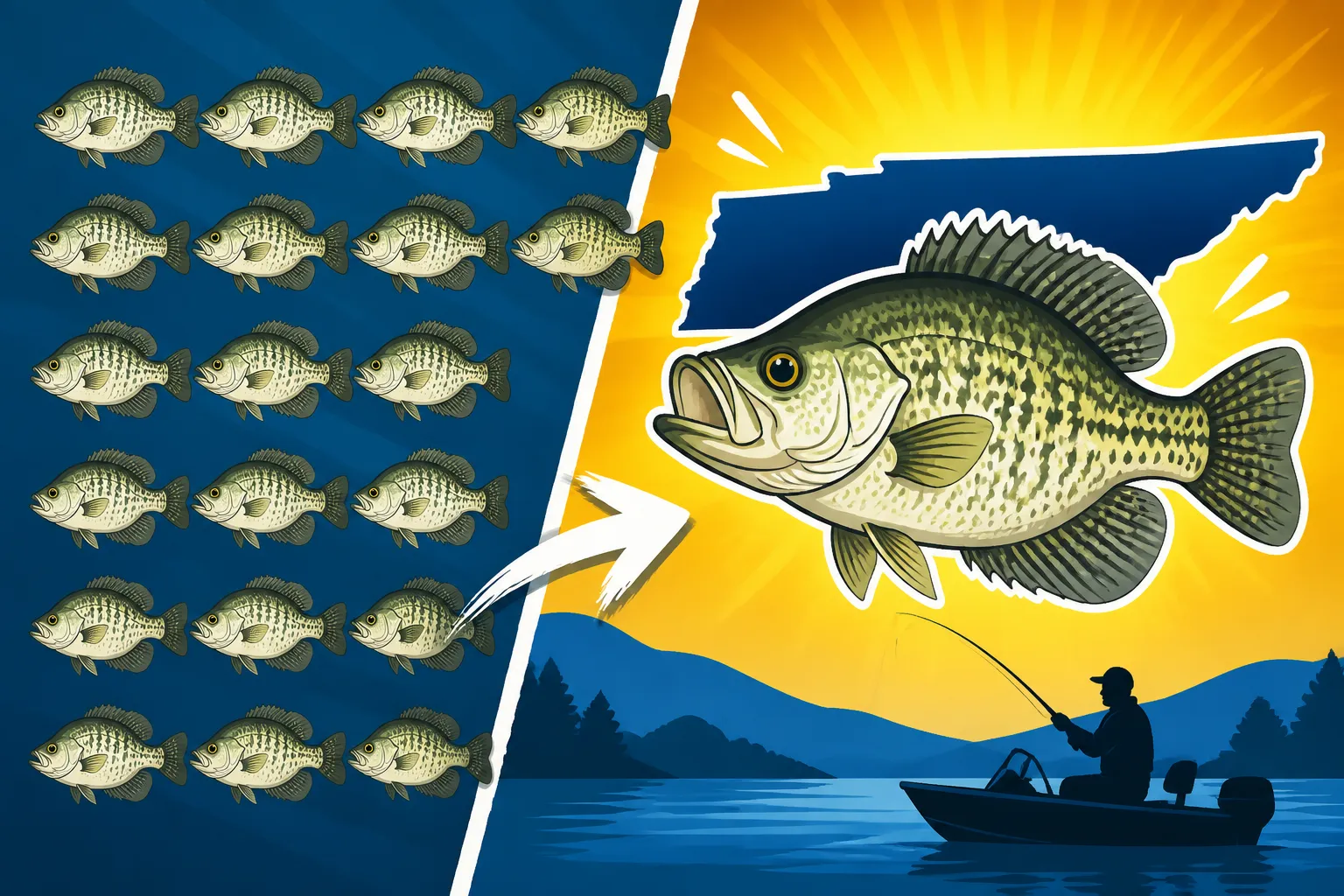
Only 5 of your 20 daily crappie may be over 12 inches
It can be incredibly frustrating to hit the water, have an amazing day catching crappie, only to get back to the ramp and wonder if you've actually followed all the rules. The joy of a successful fishing trip can quickly turn into anxiety when you're unsure about the nuances of statewide limits, especially when it comes to specific species like crappie. This guide is here to clear up one of the most common questions we hear: the specifics of Tennessee's crappie limits, particularly how many of your daily catch can be over 12 inches.
Understanding Tennessee's Statewide Crappie Limits
Tennessee is truly a crappie paradise, with countless lakes and rivers teeming with these popular panfish. It's no wonder so many anglers flock to places like Kentucky Lake or Reelfoot Lake specifically for crappie. But with great fishing comes great responsibility, and that includes understanding the regulations designed to keep these fisheries healthy for generations to come. The Tennessee Wildlife Resources Agency (TWRA) sets clear guidelines, and for crappie, there are two key numbers you need to commit to memory.
The Overall Daily Creel Limit
First and foremost, the statewide daily creel limit for crappie in Tennessee is 20 fish. This means that, in most public waters across the state, you are allowed to harvest a total of 20 crappie per person per day. This limit applies to both black crappie and white crappie, and they are counted together as one combined limit.
Imagine you're out on Percy Priest Lake, and the crappie are biting like crazy. You're pulling them in left and right – some big, some small. As long as your cooler doesn't exceed 20 fish by the time you're done for the day, you're staying within the overall creel limit. It’s a generous limit, designed to give anglers plenty of opportunity while still preventing overharvesting of the population as a whole. Many folks find that 20 crappie is more than enough for a fantastic fish fry!
How the 12-Inch Rule Fits In
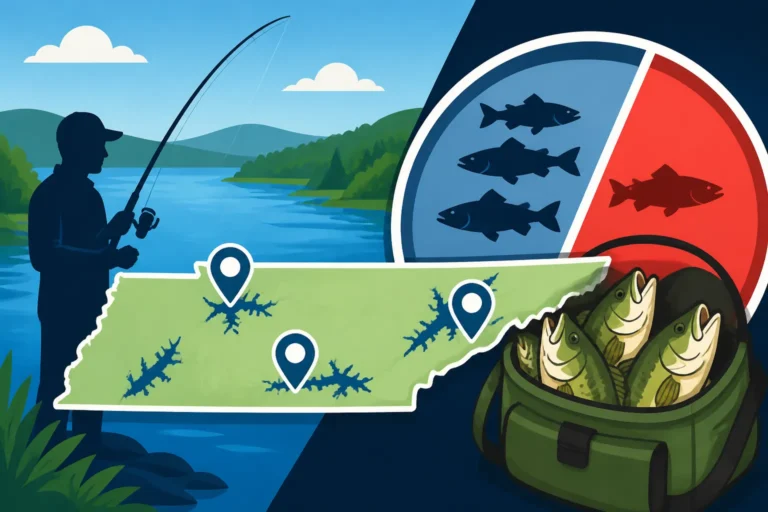
Now, here's where the specific rule this article focuses on comes into play, and it's where some anglers can get a little confused. While the overall limit is 20 crappie, not all those fish can be trophy-sized. The regulation states that only 5 of your 20 daily crappie may be over 12 inches. This is a critical detail that often gets overlooked, leading to accidental violations.
So, let's break that down. You can still catch and keep 20 crappie. However, within that total, you're limited to only five fish that measure 12 inches or longer. The remaining 15 crappie can be any size under 12 inches, assuming they meet any other local minimum length requirements (which we'll discuss later). This regulation is a bit different from many other states that impose a strict minimum length on all crappie. Tennessee’s approach allows anglers to keep smaller fish for the pan while carefully managing the larger, more valuable breeding stock. For more general information on these rules, check out our guide on Crappie Limits Under Tennessee Fishing Rules.
| Crappie Limit Category | Quantity | Size Restriction | Notes |
|---|---|---|---|
| Total Daily Creel | 20 fish | Any size | Combined for all crappie species. |
| "Over 12-Inch" Fish | 5 fish | 12 inches or longer | Must be included within the 20-fish daily creel limit. |
| "Under 12-Inch" Fish | 15 fish | Under 12 inches | Also included within the 20-fish daily creel limit. |
This table clearly illustrates the two-tiered structure of the crappie limit. You have your grand total, and then you have a subset within that total that has a size restriction. It’s essential to manage your catch throughout the day to ensure you don’t accidentally exceed the "over 12-inch" quota, even if your total count is still under 20.
Navigating the 12-Inch Rule for Crappie
Understanding the regulation is one thing, but practically applying it on the water is another. It requires a bit of mindfulness and, frankly, good habits. Nobody wants to accidentally break the rules, especially when it could lead to penalties for fishing without a license or exceeding limits, so being prepared is key.
Practical Implications for Anglers
This 12-inch rule means you need to be actively measuring your crappie, especially if you're having a particularly successful day. It's not enough to just count to 20; you also need to keep a running tally of how many of those fish are 12 inches or longer.
Consider this scenario: You're out on Watts Bar Lake, and it's a stellar day for crappie. You've already put 10 crappie in your livewell. You measure the next one, and it's 13 inches – a beautiful slab! You put it in. Now you have 11 total, and 1 of them is over 12 inches. Later, you catch four more crappie, all under 12 inches. You're at 15 total, still only 1 over 12 inches. Then, boom, you catch four more crappie, and all four are over 12 inches. You've now got 19 fish, and 5 of them are over 12 inches. You’ve hit your limit for large crappie, even though you can still keep one more crappie under 12 inches to reach your total of 20. If you caught another 12-inch+ crappie after this, you'd have to release it, even if your total count was still below 20. It's a nuance that many anglers, particularly those new to Tennessee waters, find challenging to remember in the heat of the moment.
It’s often helpful to keep your catch segregated if you’re pulling in a lot of fish. Some anglers use separate stringers or cooler compartments for their larger crappie, making it easier to track the "over 12-inch" count. The important thing is to have a system that works for you, ensuring you're always aware of where you stand with both your total count and your large fish count.
Essential Gear for Measuring Your Catch
To accurately adhere to the 12-inch rule, you absolutely need reliable measuring tools. Guessing is never a good idea, as even an inch can make the difference between a legal catch and a violation.
A simple, easy-to-read fish ruler, available at most sporting goods stores or even on Amazon, is an absolute must-have for every crappie angler. These can be adhesive rulers that stick to your boat, or portable plastic or metal rulers you keep in your tackle box. For even greater precision and ease of use, many serious crappie anglers prefer a dedicated measuring board. These boards usually have a built-in "stop" at one end, allowing you to quickly and accurately measure a fish by placing its nose against the stop and reading the length at the tail. If you're serious about crappie fishing, investing in a good quality, rigid measuring board from a retailer like Amazon can make your life a lot easier, especially when fish are flopping around.
Make sure your measuring device is clearly marked and easy to read, even when wet or covered in fish slime. And always measure your fish against a flat surface, pinching the tail to get the most accurate length reading. Don't forget that if you're fishing from a boat, you'll need the proper Tennessee Boat Registration Requirements Explained as well.
Why These Crappie Regulations Exist
Understanding the "why" behind fishing regulations can make them much easier to accept and follow. These rules aren't just arbitrary numbers; they are carefully considered measures based on scientific research and management goals. The TWRA has a vested interest in keeping Tennessee's fisheries robust and productive, and crappie limits play a crucial role in that mission.
Promoting Sustainable Fisheries
The primary reason for specific size and creel limits is to promote sustainable fisheries. Crappie, like all fish, have a life cycle that involves growing, maturing, and reproducing. Larger, older crappie are often the most prolific spawners, contributing significantly more eggs to the next generation. By limiting the number of large crappie an angler can keep, the TWRA ensures that a healthy population of these valuable breeders remains in the water to continue propagating the species.
Without such regulations, there would be a higher risk of "harvesting out" the larger fish, which could lead to a decline in the overall crappie population over time. This would not only be devastating for the fish but also for the angling community that cherishes this sport. Think of it as an investment in the future of crappie fishing. We all want to ensure that our children and grandchildren can enjoy the same fantastic crappie fishing we do, and these regulations are a critical component of that long-term vision. This approach is part of the broader strategy found in the Tennessee Fishing Regulations Explained.
Balancing Angler Opportunity and Conservation
Setting fishing regulations is a delicate balancing act. On one hand, the TWRA wants to provide ample opportunity for anglers to enjoy their sport and harvest fish. On the other hand, they must prioritize the long-term health and sustainability of the fish populations. The 20-fish daily limit, with the 5-fish over 12-inch sub-limit, is a prime example of this balance.
It allows anglers to keep a good number of crappie for consumption, satisfying the desire for a fresh meal, while still protecting the larger, more genetically valuable fish. It recognizes that not every crappie caught needs to be a trophy, and that smaller fish still make excellent table fare. By allowing the harvest of smaller crappie, it also helps thin out dense populations, which can sometimes lead to stunted growth if there's too much competition for food. This carefully designed limit provides a good compromise, aiming to please both the angler looking for a full stringer and the conservationist focused on species protection. Many anglers find the specific details in the A Complete Guide to Fishing Licenses in Tennessee also provide this balance between access and resource management.
Local Lake Exceptions and How to Stay Informed
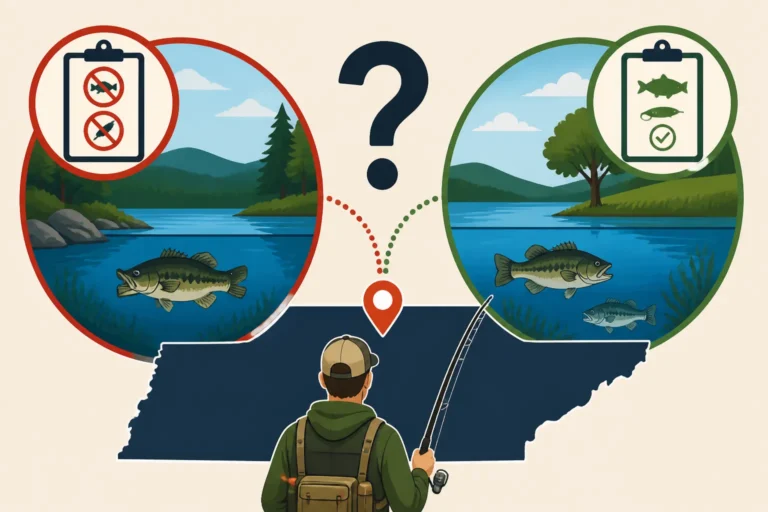
While the statewide crappie limits are a great baseline, it's absolutely crucial to understand that they are not universal. Tennessee's vast network of lakes and rivers are diverse, and what works for one body of water might not work for another. This means that certain lakes or specific stretches of rivers may have their own, unique crappie regulations that override the statewide limits.
When Statewide Rules Don't Apply
This is where things can get a little tricky, but it's vital information for any diligent angler. Some lakes, due to specific biological studies, management goals, or unique habitat conditions, will have different crappie size or creel limits. For example, a particular reservoir might have a 10-inch minimum length limit on all crappie, or perhaps a higher or lower daily creel limit than the statewide 20. These lake-specific rules are often put in place to address localized issues, such as a desire to grow larger fish, manage stunted populations, or protect a recovering fishery.
For instance, Dale Hollow Lake, famous for its smallmouth bass, might also have specific crappie regulations that deviate from the norm. Or perhaps a smaller, local lake like Center Hill Lake has a specific slot limit designed to protect mid-sized crappie. You can find detailed information on these exceptions in our article Lake-Specific Fishing Rules That Override Tennessee's Statewide Limits. Always double-check! This is why simply knowing the statewide rules isn't enough; hyper-local awareness is paramount.
Your Responsibility as an Angler
Given these potential variations, it becomes every angler's personal responsibility to know the specific regulations for the body of water they are fishing before they cast their first line. Ignorance of the law is never an excuse, and game wardens are unlikely to be sympathetic if you claim you didn't know about a lake-specific rule.
The best way to stay informed is to consult the official TWRA fishing guide, which is updated annually. You can pick up a physical copy at most bait shops, sporting goods stores, or TWRA offices, or download a digital version directly from their website. The digital version is particularly handy, as you can keep it on your phone for quick reference while you're out on the water. Many anglers also rely on localized fishing reports or online forums for up-to-date information, but always cross-reference with official TWRA sources. It's a small investment of time that can save you a lot of hassle and potential fines.
Before heading out, a quick search on the TWRA website for the specific lake or river you plan to fish will usually bring up any special regulations that apply. This due diligence is a hallmark of a responsible and ethical angler. Many anglers keep a small, waterproof notebook or even a digital log on their phone (backed up to the cloud, just in case!) to track their catch, alongside a reliable scale and tape measure, all easily found on Amazon.
Remember, whether you're targeting crappie, bass, or trout, having the correct Tennessee Fishing License Guide is the very first step. If you're unsure about how to obtain or renew one, we have a helpful guide on How to Buy or Renew a Tennessee Fishing License Online. These steps, combined with understanding the nuances of creel and size limits, ensure you have a fun, legal, and responsible day on the water.
Disclaimer
The information provided in this guide is intended for general informational purposes only and may not be entirely exhaustive or up-to-date. Fishing regulations can change, and it is the sole responsibility of each individual angler to consult the latest official Tennessee Wildlife Resources Agency (TWRA) regulations before engaging in any fishing activities. This guide does not constitute legal advice, and we recommend checking the TWRA website or obtaining an official TWRA fishing guide for the most current and accurate information.