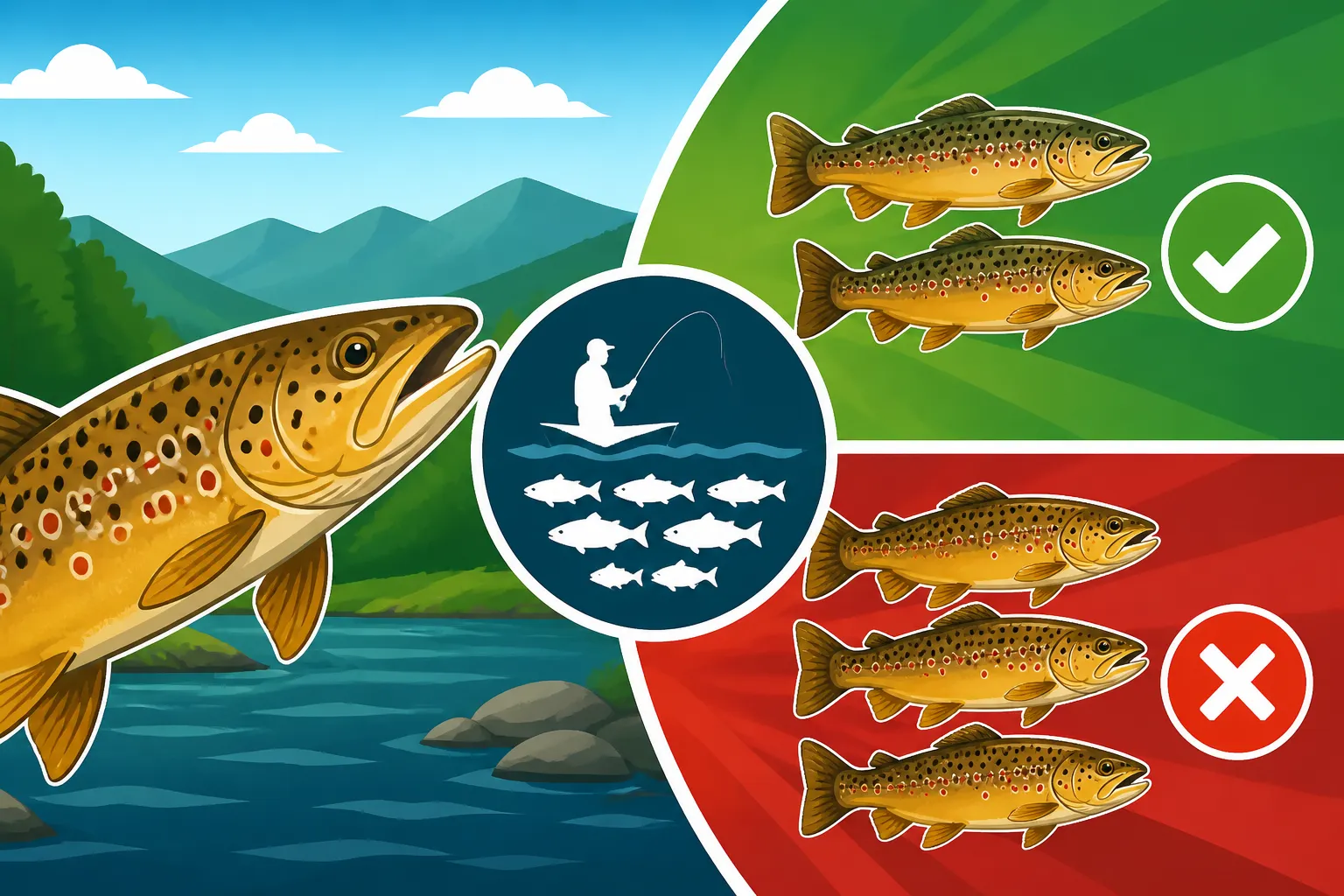
No more than 2 brown trout count toward the 7-fish summer limit
It can be incredibly frustrating to head out to your favorite fishing spot, rods rigged and ready, only to realize you're not entirely sure about the specific daily limits for certain fish. We've all been there, especially when it comes to trout in Tennessee, where the rules can seem a little nuanced. This guide is going to clear up one of the most common points of confusion: how brown trout fit into the overall daily limit during the prime summer fishing months, ensuring you stay within the law and contribute to sustainable fishing.
Understanding Tennessee's Statewide Trout Regulations
Tennessee is truly a fantastic place for trout fishing, offering everything from stocked lakes to wild mountain streams. The Tennessee Wildlife Resources Agency (TWRA) works hard to balance fishing opportunities with conservation, which means we have a few key regulations to keep in mind, especially for our beloved trout. It's not just about getting your Tennessee Fishing License Guide in order; it's about knowing the specifics once you're on the water.
The General 7-Fish Daily Limit for Trout
From March 1st through September 30th, Tennessee generally enforces a daily creel limit of seven (7) trout per person. This is what most anglers think of as the "summer limit," and it covers a wide array of waters across the state. This means if you're out on a designated trout stream, or a lake where trout are stocked, you can usually take home up to seven trout in total in a single day. This umbrella limit is designed to manage the overall trout population, ensuring there are enough fish for everyone to enjoy year after year.
However, it's crucial not to simply assume that any seven trout will do. While this general limit provides a good baseline, it's really just the first layer of the rules. The TWRA recognizes that different trout species have different biological needs, growth rates, and population dynamics, especially in various habitats. For instance, the beautiful, native brook trout, the hardy rainbow trout, and the elusive brown trout, while all falling under the "trout" category, don't necessarily face the same pressures or have the same numbers in every waterway. That's why, within this seemingly straightforward seven-fish limit, there are often finer details that apply to specific species, and knowing these details is what separates a knowledgeable angler from one who might accidentally run afoul of the regulations. It really pays to review the full Tennessee Trout Limits and Season Rules before heading out.
The Specific Brown Trout Cap: Two Fish Maximum
Now, here's where the specific rule for brown trout comes into play, and it’s one that often catches anglers off guard if they’re not paying close attention. Within that general seven-trout daily limit, no more than two (2) of those fish can be brown trout. This means you could keep seven rainbow trout, or seven brook trout (if local rules allow for that species), but if you catch and decide to keep brown trout, you are capped at only two brown trout for the day. So, a legal creel could be two brown trout and five rainbow trout, or two brown trout and five brook trout, or even one brown trout and six rainbow trout. What you cannot do is keep three brown trout, even if your total creel for the day is still under the overall seven-fish limit.
Why the stricter limit on brown trout? It often comes down to conservation and management strategies. Brown trout, while not native to Tennessee, have established themselves in many of our colder waters and are highly prized by anglers for their fighting spirit and size. They can be a bit more challenging to catch consistently than, say, freshly stocked rainbow trout, and their populations, especially wild or naturally reproducing ones, can be more sensitive to overfishing. By placing a stricter limit on brown trout, the TWRA aims to protect these specific populations, allowing them to grow larger and sustain themselves more effectively. This ensures that the thrill of hooking a big brown trout remains a possibility for future generations of anglers. It's a balance designed to keep our fisheries healthy and robust.
Consider a scenario: You’ve had an incredible morning fishing the Caney Fork River Trout Fishing area. You land a beautiful 18-inch brown trout, then a smaller 12-inch brown. You're feeling good! Later, you hook into three feisty rainbow trout. At this point, you have two brown trout and three rainbow trout, totaling five fish. You're well within your overall seven-fish limit, and you're within the two-brown-trout sub-limit. If you then catch two more rainbow trout, bringing your total to seven fish (two brown, five rainbow), you’re still perfectly legal. However, if you were to catch a third brown trout, even if you released one of your rainbow trout to stay at seven fish total, that third brown trout would be illegal to keep. Understanding this subtle but critical distinction is key.
Navigating Species-Specific Rules and Exceptions
While the statewide brown trout limit is a critical piece of information, Tennessee's waters are incredibly diverse. This means that blanket rules are sometimes superseded by very specific, localized regulations. Knowing how to identify your catch and where to find the most current local rules is paramount for any responsible angler. The Tennessee Trout Fishing Season Explained often highlights these regional differences.
Identifying Brown Trout Versus Other Species
Before you can adhere to the two-brown-trout rule, you absolutely must be confident in identifying a brown trout. This isn't just about good fishing practice; it's about legal compliance. Mistakes can happen, but "I didn't know what it was" isn't a valid excuse if a game warden checks your creel.
Here’s how to generally tell them apart from the other common trout species you’ll find in Tennessee:
- Brown Trout ( Salmo trutta ): Often have a more yellowish-brown or olive-brown body color, sometimes with a silvery sheen, especially in larger rivers or lakes. Their most distinctive feature is a scattering of dark spots, often ringed with a lighter halo, along their sides, back, and even on the gill covers. They also usually have some reddish-orange spots, particularly along their lateral line. The tail is typically square or slightly forked, and usually has very few, if any, spots. If you're comparing Brown Trout vs Rainbow Trout: Key Differences, brown trout tend to have a larger mouth that extends beyond the eye. You'll often find them lurking in deeper, cooler pockets of water, near submerged logs or undercut banks.
- Rainbow Trout ( Oncorhynchus mykiss ): As their name suggests, these fish often display a prominent reddish-pink band running horizontally along their sides, especially noticeable on males during spawning season. Their bodies are generally silvery with a greenish back, and they are covered in numerous small, dark spots on their backs, sides, and typically on their caudal (tail) fin. The tail is moderately forked. Rainbow trout are the most commonly stocked trout in Tennessee.
- Brook Trout ( Salvelinus fontinalis ): These are often considered the most beautiful and are Tennessee's only native trout species. They are generally smaller than rainbows or browns and prefer the coldest, clearest headwater streams. Their coloration is stunning: dark olive green to brown on the back, fading to white on the belly. They have distinctive worm-like markings (vermiculations) on their backs and dorsal fin, and scattered red and yellow spots on their sides, some of which have blue halos. The leading edges of their pectoral, pelvic, and anal fins are usually white, followed by a black stripe, a feature often called "white leading edges" or "fin tipping." Their tail is square or slightly emarginate.
It's a good idea to carry a small field guide or have some pictures saved on your phone for quick reference, especially when you're just starting out. Many anglers also find that a good pair of polarized sunglasses helps in spotting these differences underwater. For those who want a deeper dive, there are many resources, including specific guides like How to Identify Brown Trout Identification Tips for Tennessee Anglers.
What Happens During the October to February Season?
The shift in regulations from October 1st through February 28th is another crucial aspect of Tennessee trout fishing that anglers need to be aware of. During these colder months, the statewide 7-fish, 2-brown-trout limit often does not apply. Instead, many waters transition to water-specific regulations. This is where things can get a bit more complex, but it's essential for targeted management of particular fisheries.
During this period, individual rivers, streams, and even specific sections of those waterways might have entirely different rules. These can include:
- Reduced Creel Limits: Some waters might have a daily limit of 1 or 2 trout, regardless of species.
- Catch-and-Release Only: Many designated trout waters or sections might become strictly catch-and-release for all trout species.
- Artificial Lures Only: To further protect fish, some areas might restrict bait use, requiring anglers to use only artificial lures with single, barbless hooks.
- Different Size Restrictions: Minimum or maximum length limits could be implemented.
- Specific Species Restrictions: Some waters might ban the harvest of a particular species entirely for conservation purposes, like wild brook trout.
For example, a river like the Holston River or the Clinch River, both renowned for their trout fisheries, will often have specific regulations published by the TWRA that anglers must follow during these months. These special regulations are often posted at access points, boat ramps, and are always available on the official TWRA website. Before planning any winter trout trip, you absolutely must check the most current regulations for the exact body of water you intend to fish. Relying on the general summer rules during this period could easily lead to a citation. Checking local rules before keeping trout caught between October and February is not just a suggestion, it's a requirement for ethical and legal angling.
Practical Tips for Responsible Trout Angling
Being a responsible angler goes beyond just knowing the rules; it's about having the right tools and mindset to apply those rules effectively. Especially when dealing with species-specific limits like the brown trout cap, thoughtful preparation can make all the difference.
Gear and Techniques for Managing Your Catch
When you're out on the water, you need more than just your rod and reel. Having the right supplementary gear can help you easily comply with regulations and handle your fish respectfully.
- Measuring Devices: A good, reliable measuring tape or bump board is indispensable. Fish lengths can be tricky to eyeball, and a few inches can be the difference between a legal keeper and a fish that needs to be released. Keep it easily accessible on your vest or in your boat. Many affordable options are available on Amazon.
- Stringers or Livewells: If you intend to keep fish, a stringer for bank fishing or a well-aerated livewell for boat fishing is essential. This keeps your catch fresh and alive until you're ready to leave. However, remember the rule: once you have two brown trout on your stringer or in your livewell, any additional brown trout you catch must be released, regardless of how many other species you have or how many spots remain in your total seven-fish limit.
- Catch-and-Release Best Practices: For any fish you don't intend to keep, or those that exceed the brown trout limit, proper catch-and-release techniques are paramount for their survival.
- Minimize Handling: Touch the fish as little as possible. Wet your hands if you must handle them.
- Use Barbless Hooks: These make hook removal much easier and less damaging. You can crimp the barb on most hooks with a pair of pliers.
- Dehooker Tool: A long-nosed pliers or a specialized dehooker, easily found on Amazon, can quickly remove hooks without needing to put your hands near the fish’s mouth or gill plate.
- Keep Fish in Water: If possible, remove the hook while the fish is still in the water. If you must lift it for a photo, do so quickly and support its body horizontally.
- Revive Gently: If a fish seems sluggish after release, hold it gently in the water, facing upstream, until it swims away on its own.
By being prepared with the right gear and adopting a responsible approach to handling your catch, you ensure you're not only following the rules but also contributing to the health of Tennessee's incredible trout fisheries.
Staying Informed and Avoiding Penalties
Ignorance of the law is never an excuse, especially when it comes to fishing regulations. The rules are designed to protect our natural resources, and respecting them is part of being a good steward of the environment.
- TWRA Website and Guidebook: The Tennessee Wildlife Resources Agency website is your absolute best source for the most current and detailed regulations. They also publish an annual "Tennessee Fishing Regulations" guide, often available in print at bait shops, sporting goods stores, and TWRA offices. Make it a habit to check these sources at least once a year, or before visiting a new body of water. Specific posts like Tennessee Fishing Regulations Explained can break down many of these nuances.
- Local Bait Shops and Marinas: These local hubs are often invaluable resources. The folks working there are usually avid anglers themselves and can provide hyper-local insights into current conditions and specific rules for nearby waters. They might even have printouts of the regulations for their area.
- Understanding Enforcement: Tennessee game wardens are out there to ensure compliance and protect the fisheries. They are trained professionals who know the regulations inside and out. If you're approached by a game warden, be courteous, cooperative, and have your How to Get a Tennessee Fishing License and any permits readily available. They are simply doing their job, and a respectful interaction goes a long way.
- Consequences of Non-Compliance: Fishing without a license or exceeding catch limits can lead to significant penalties. Fines can range from monetary penalties to confiscation of equipment, and even potential loss of fishing privileges. For serious violations, particularly repeat offenses, the consequences can be even more severe. It's simply not worth the risk. Always make sure you're clear on the rules, including specific nuances like the brown trout sub-limit. As a reminder, you can always check out Penalties for Fishing Without a License in Tennessee for details on consequences.
Remember, the goal of these regulations is to ensure that Tennessee's trout fisheries remain vibrant and healthy for generations to come. By understanding and respecting the rules, you're playing an active part in that conservation effort.
Summarizing Trout Limits in Tennessee
To help you keep track of the important regulations we've discussed, here's a quick summary of the key trout limits in Tennessee during the main season (March 1 – September 30):
| Category | Rule | Details |
|---|---|---|
| Overall Daily Trout Limit | 7 fish per person, combined species | Applies statewide from March 1st to September 30th on designated trout waters. |
| Brown Trout Sub-Limit | No more than 2 brown trout count towards the 7-fish daily limit | This means you can keep a maximum of two brown trout within your 7-fish total. |
| October – February Season | Water-specific regulations override statewide limits | Always check current TWRA regulations for the specific body of water you intend to fish. These rules can vary significantly (e.g., catch-and-release, artificial lures only). |
| Identification | Know your trout species (Brown, Rainbow, Brook) | Proper identification is crucial for adhering to species-specific limits and avoiding violations. |
| Conservation | Practice responsible catch-and-release | Essential for fish beyond your limit or those you choose not to keep, minimizing stress and injury. |
Remember, these are the general rules for the specified season. Always, always check the latest TWRA regulations for the specific body of water you plan to visit, as local rules can and often do apply!
Disclaimer
The information provided in this guide is for general informational purposes only and is subject to change. While we strive to provide accurate and up-to-date content, fishing regulations, laws, and policies can be updated by the Tennessee Wildlife Resources Agency (TWRA) at any time. It is the sole responsibility of each angler to consult the official TWRA fishing regulations guide or their official website (tn.gov/twra) before fishing to ensure compliance with all current rules and laws. Fishing without a valid license or violating regulations can result in fines and penalties.