Can fishing regulations really differ between two lakes in the same county
It can be incredibly frustrating to head out for a peaceful day of fishing, only to realize that the rules you know for one lake might not apply to another, even if they're practically neighbors within the same county. You pack your gear, you know your limits for certain species, and then you get to a new spot, maybe just a few miles down the road, and wonder, "Are the rules really that different?" The short answer is a resounding yes, and this guide is here to unravel the complexities of Tennessee’s localized fishing regulations, helping you navigate these distinctions like a seasoned pro.
The Nuance of Tennessee's Fishing Regulations: Why Local Rules Exist
It's easy to assume that if you're fishing in Tennessee, a statewide rule is always the rule. But the truth is, the Volunteer State is a patchwork of incredibly diverse aquatic environments, from vast river reservoirs to intimate mountain streams and smaller, managed lakes. The Tennessee Wildlife Resources Agency (TWRA) understands that a blanket approach simply doesn't serve the best interests of the fish, the habitat, or the anglers. This is why you'll often find specific regulations tailored to individual bodies of water, even within the same county.
Tailored Management for Unique Ecosystems
Think about it: no two lakes are exactly alike, even if they share a county line. A massive reservoir like Kentucky Lake, which spans multiple counties including Henry and Benton, is a vastly different environment from a small, community fishing pond in Benton County. Each body of water has its own unique ecological characteristics – depth, water clarity, available food sources, spawning grounds, and even water temperature fluctuations. These factors directly impact fish populations, their growth rates, and their overall health.
For instance, a shallow, nutrient-rich lake might see crappie grow quickly and proliferate, potentially leading to overpopulation if not managed effectively. In such a scenario, the TWRA might implement higher creel limits or even remove size restrictions on crappie to encourage anglers to harvest more fish, thereby improving the overall health of the remaining population. Conversely, a deep, clear highland reservoir might have slower-growing fish or more fragile populations that require stricter limits to ensure their sustainability. These nuanced decisions are all part of the TWRA's commitment to effective fisheries management, ensuring that future generations can enjoy the same incredible fishing opportunities we have today.
Balancing Conservation and Angler Opportunity
At its core, the reason for these localized rules is a delicate balance between conservation and providing ample opportunity for anglers. The TWRA utilizes scientific data, population surveys, and public feedback to craft regulations that prevent overfishing, protect vulnerable species, and promote the growth of trophy fish in specific areas. It’s a dynamic process; regulations aren't set in stone forever but are reviewed and adjusted as fish populations and environmental conditions change.
Consider the example of bass fishing. While there are Statewide Bass Limits for Tennessee Anglers, some lakes might have special "slot limits" for bass. This means fish within a certain size range must be immediately released, while smaller or larger fish can be kept. This kind of regulation is typically implemented to address a specific issue, like promoting the growth of larger, healthier bass by reducing competition among smaller fish, or protecting prime breeding stock. Without these tailored approaches, some fisheries could quickly become depleted, ruining the fishing experience for everyone. These regulations also contribute to the overall Tennessee Fishing Regulations Explained, aiming for long-term health and enjoyment.
Common Regulatory Variations You Might Encounter
Once you understand why regulations vary, it becomes easier to anticipate how they might differ. It’s not just about what species you’re targeting, but where you’re targeting them. These localized rules often override the statewide defaults, making it crucial for anglers to stay informed about the specific water body they plan to visit.
Size and Creel Limits: Not Always Statewide Defaults
The most common differences you’ll encounter relate to the number of fish you can keep (creel limit) and the size of those fish (size limit). Imagine you're fishing Percy Priest Lake, a popular spot near Nashville in Davidson County. You might be accustomed to the general Tennessee's Largemouth Bass Limit Is 5 Per Day, Only 1 Over 18 Inches and a crappie limit of 20 fish per day, with only 5 of those allowed to be over 12 inches. These are fairly standard for many Tennessee reservoirs.
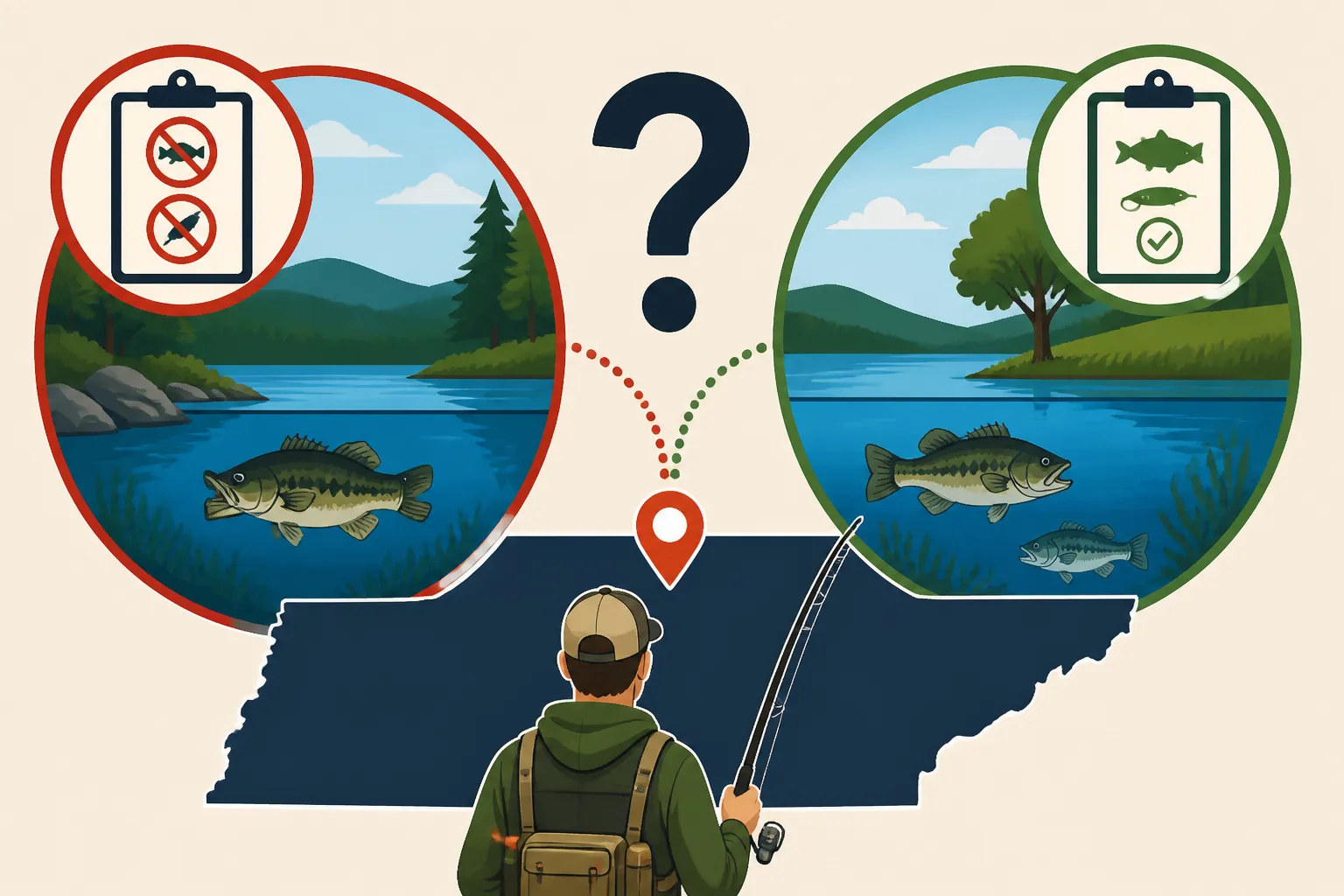
However, if you decided to venture to a smaller, more intimate fishery like Marrowbone Lake, also located in Davidson County and managed by the TWRA, you might be in for a surprise. Marrowbone Lake, as a TWRA-owned and intensely managed lake, often has unique regulations designed to create a specific fishing experience. For instance, its crappie limits have, at times, been set higher, or with different size restrictions, to manage the population more aggressively. This stark contrast, existing within the same county, perfectly illustrates how Lake-Specific Fishing Rules That Override Tennessee's Statewide Limits are a reality anglers must contend with. Another example could be a lake renowned for its trophy potential, such as Chickamauga Lake, Tennessee's Top Spot for Record Largemouth Bass, which might have specific regulations aimed at protecting those larger, older fish.
Season Dates and Special Restrictions
While many popular game fish in Tennessee have year-round open seasons, certain species, particularly trout, often come with more intricate seasonal regulations that can vary greatly from one stream to another. For example, the overall Tennessee Trout Fishing Season Explained outlines general guidelines, but individual streams, especially those that are regularly stocked, can have unique "open" and "closed" periods or special restrictions on bait and tackle.
Consider a county like Rutherford, which has parts of the Stones River system running through it, but also has specific trout stocking programs in designated areas. The regulations for fishing for bass on J. Percy Priest Lake in Rutherford County will be entirely different from the regulations for trout fishing in a small, stocked section of a stream in the same county. Some trout waters might be designated "artificial lures only" or "single hook only" to reduce mortality on released fish, while nearby warm-water lakes have no such restrictions. Similarly, a body of water might have specific "no-wake" zones, horsepower limits for boats, or even be completely closed to fishing during certain sensitive spawning periods. The Caney Fork River Trout Fishing in Middle Tennessee, for example, is famous for its special regulations, including bait and tackle restrictions, that are crucial for protecting its robust trout population and wouldn't apply to a nearby bass lake.
Navigating and Verifying Local Regulations
Given these potential differences, how can you, the enthusiastic angler, ensure you're always on the right side of the law? The answer lies in proactive information gathering. Relying on old habits or assumptions is a sure-fire way to end up with a conversation you don't want to have with a game warden.
The Official Sources: Your First Stop
When it comes to fishing regulations in Tennessee, the absolute authority is the Tennessee Wildlife Resources Agency (TWRA). Their website and annual Fishing Guide are your most critical resources. I can’t stress this enough: never, ever rely solely on hearsay from another angler or what you think you remember from last year. Regulations change! The TWRA's website features a comprehensive "Fishing Guide" section that allows you to drill down into specific regulations for individual bodies of water. This is where you’ll find those crucial details that override statewide defaults.
The annual Tennessee Fishing Guide is also available in print at most local bait and tackle shops, sporting goods stores, and TWRA offices. It’s a compact, easy-to-read booklet that summarizes all the rules. If you prefer a digital copy, you can usually download a PDF from the TWRA website to keep on your phone, or if you prefer a tangible reference, you can sometimes order a physical copy through platforms like Amazon. Remember that How to Buy or Renew a Tennessee Fishing License Online is also a breeze through the TWRA, so you know they keep their digital services up-to-date.
On-Site Signage and Local Knowledge
While the TWRA guide is your primary source, never ignore the signs posted at public access points. Boat ramps, fishing piers, and state park lakes often have large, clear signs detailing any special, localized regulations. These signs are there for a reason, specifically to highlight rules that differ from the statewide norms. It's truly a case where Always check a specific lake's regulations before your first cast is paramount.
Engaging with local bait shop owners is also a fantastic idea. They are often invaluable sources of information, not just about what's biting, but also about any peculiar local rules or recent changes. However, consider their advice as a helpful tip, not gospel. Always, always cross-reference what you hear with the official TWRA guide or website. You might also find that apps that provide information on Digital vs Printed Fishing Licenses in Tennessee might also integrate regulation data, but again, always verify with the official source.
Here’s a helpful breakdown of how regulations might differ, using hypothetical examples within a single county:
| Regulation Category | Statewide Default (Example) | Lake A (e.g., Percy Priest Lake, Davidson County) | Lake B (e.g., Marrowbone Lake, Davidson County) |
|---|---|---|---|
| Largemouth Bass Daily Limit | 5 (only 1 over 18") | 5 (only 1 over 18") | 5 (14-18" protected slot, 1 over 18") |
| Crappie Daily Limit | 20 (only 5 over 12") | 20 (only 5 over 12") | 30 (no size limit) |
| Trout Season | Varies by water | N/A (warmwater fishery) | Artificial Lures Only (seasonal restrictions) |
| Special Restrictions | None | Night fishing allowed | Electric motors only, no live bait fish |
This table illustrates how two bodies of water in the same county can have very distinct rules, ranging from bass slot limits to crappie harvest quotas and even restrictions on the type of bait or motor you can use. Having a reliable digital scale (many good options available on Amazon) can help you quickly verify fish size if a slot limit is in play.
The Importance of Compliance and Responsible Angling
Understanding and adhering to these nuanced regulations isn't just about avoiding a ticket; it's about being a responsible steward of Tennessee's incredible natural resources. Every angler plays a role in maintaining healthy fisheries for generations to come.
Avoiding Fines and Penalties
Let's be brutally honest: nobody wants to get a fishing citation. Not only can they put a serious damper on your day, but they can also hit your wallet hard. Ignorance of the law is never an excuse, and a Tennessee game warden will fully expect you to know the specific rules for the water you're fishing. Violations can range from fines that easily exceed the cost of an annual Tennessee Fishing License Guide to the confiscation of your catch and even your fishing gear. More severe or repeated offenses can lead to the suspension of your fishing privileges.
Imagine the scenario: you're having a banner day on a lake, catching what you think are legal-sized crappie. You've caught 15, and you're feeling great. But what if, unbeknownst to you, this particular lake has a special rule that only allows 10 crappie per day, or a stricter size limit than you're used to? That innocent mistake could cost you hundreds of dollars in fines, not to mention the embarrassment and hassle. Penalties for Fishing Without a License in Tennessee are just the tip of the iceberg; violating creel or size limits is also taken very seriously. Keeping a compact copy of the TWRA guide in your tackle box or glove compartment – you can often find them at local retailers or even on Amazon if you prefer home delivery – is a small effort that can save you a lot of grief. Consider waterproof pouches (easily found on Amazon) for your phone or a printed copy of the regulations to keep them safe and accessible, especially if you're out on the water.
Protecting Tennessee's Fisheries
Beyond the personal consequences, adhering to regulations is fundamental to the long-term health of Tennessee's fish populations. These rules aren’t arbitrary; they’re designed by biologists and fisheries managers to ensure sustainability. When anglers respect size and creel limits, they help maintain a balanced ecosystem, allowing fish to reach maturity and reproduce, and preventing localized overfishing that could deplete a resource for years.
For example, a slot limit on bass ensures that larger, genetically superior fish are released back into the water to spawn, contributing to a robust gene pool. Limiting the harvest of certain species during their spawning season protects future generations. Every fish you release, every legal limit you adhere to, contributes to the bigger picture of conservation. Being a responsible angler means not just catching fish, but caring for the waters and the fish themselves. If you witness someone violating regulations, don't hesitate to report it to the TWRA. It's about preserving the sport we all love.
Disclaimer
Please note that fishing regulations can change. While this guide aims to provide accurate and up-to-date information, it is always your responsibility to consult the official Tennessee Wildlife Resources Agency (TWRA) website or their current annual Fishing Guide for the most precise and current regulations before engaging in any fishing activity.