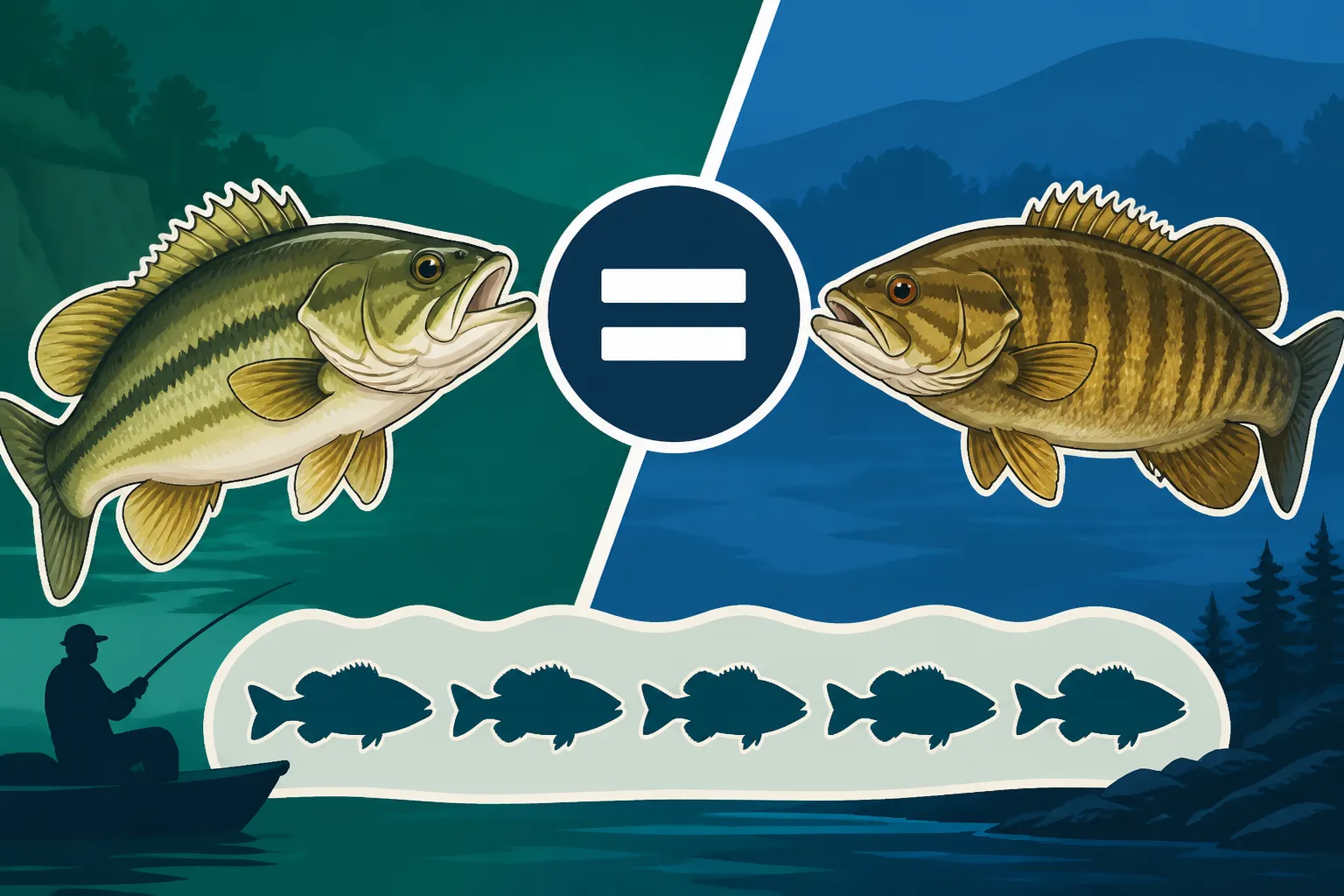
Hybrid bass count toward the same 5-fish combined limit as smallmouth
It’s a common frustration for anglers in Tennessee: you're out on the water, reeling in what you think is a smallmouth bass, only to realize it might be a spotted bass, or perhaps even a hybrid. The confusion isn't just about identification; it's about regulations. Accidentally exceeding your daily limit due to misidentification or not knowing the specific rules for each bass species can quickly turn a great day of fishing into a stressful one. This comprehensive guide will untangle the specific rules governing hybrid bass, detailing exactly how they count toward your daily limit, especially in conjunction with smallmouth bass and other closely related species, so you can cast your line with absolute confidence and stay compliant with Tennessee’s fishing laws.
Understanding Tennessee's Bass Fishing Landscape
Tennessee is a true paradise for bass anglers, boasting an incredible variety of waters and some truly impressive fish. From the big reservoirs like Chickamauga Lake and Kentucky Lake to the clearer, colder streams, you can find different types of bass thriving. But with that diversity comes a bit of a challenge: knowing your species and the rules that apply to each one.
The Challenge of Identifying Bass Species
Let's be honest, trying to tell the difference between some of the bass species on the fly, especially when you're excited about a catch, can be genuinely tricky. Smallmouth bass, spotted bass, and those feisty hybrid striped bass (often simply called "hybrids") can look remarkably similar at first glance, especially if you're not intimately familiar with their distinct markings and body shapes. Smallmouths tend to have a bronzy-brown color with vertical bars, while spotted bass have horizontal rows of spots below their lateral line and a jaw that doesn't extend beyond the eye. Hybrid stripers, on the other hand, might have broken or irregular stripes running along their sides, a key differentiator from the more solid lines of a white bass or a true striped bass.
Many seasoned anglers, myself included, have had moments of doubt. You've just pulled a hard-fighting fish from the depths, and in the heat of the moment, a quick glance might not give you all the information you need. This visual ambiguity is precisely why the Tennessee Wildlife Resources Agency (TWRA) has crafted regulations that group certain species together for daily limits. It makes enforcement more practical and gives anglers a clearer (though sometimes still complex) guideline to follow. Having a good, laminated fish identification chart on board, perhaps one you picked up from Amazon, can be a real lifesaver for those moments of uncertainty.
General Statewide Bass Regulations Overview
Before we dive specifically into hybrid bass, it’s helpful to understand the general framework of Tennessee’s bass regulations. The TWRA sets statewide daily creel limits and size restrictions for various game fish, including different species of bass. These regulations are designed to manage fish populations, ensure sustainable fishing, and provide quality angling opportunities for everyone. For many years, anglers have been accustomed to specific limits for largemouth bass, and separate rules for smallmouth.
However, it's absolutely crucial to remember that these "statewide" rules aren't always the final word. Many of Tennessee's incredible lakes and rivers have specific, localized regulations that can override the general statewide guidelines. This means that what's legal on Percy Priest Lake might be different on Dale Hollow Lake, especially concerning size and creel limits. Always, and I mean always, check the current TWRA fishing guide or their website before you head out, specifically for the body of water you plan to fish. You can find comprehensive details in our Tennessee Fishing Regulations Explained guide, which highlights the critical need to check local rules.
Hybrid Bass and the Combined Daily Limit Rule
Now, let's get to the heart of the matter and clear up any confusion about hybrid bass. These powerful, hard-fighting fish are a favorite among many Tennessee anglers, but their legal status can sometimes be a head-scratcher.
The Core Regulation: Hybrid Bass in the Smallmouth/Spotted Aggregate
This is the rule that many anglers often overlook or misunderstand: in Tennessee, hybrid bass count toward the same 5-fish combined limit as smallmouth, Alabama, and spotted bass. This isn't just a suggestion; it's a firm regulation. What this means in practice is that you don't get a separate daily limit for hybrid bass. Instead, they are lumped together with the smallmouth and spotted bass you catch.
Imagine you're having a fantastic day on a Tennessee reservoir. You catch two beautiful smallmouth bass. Later, you hook into three hard-pulling hybrid bass. Guess what? You've now reached your daily limit of five fish from that combined group. You cannot keep any more smallmouth, spotted, Alabama, or hybrid bass for the rest of that day, even if you could easily tell them all apart. This rule simplifies things for enforcement officers and acknowledges the challenges anglers face in quickly and accurately identifying these similar-looking species. It's designed to prevent overharvest of any one species that shares characteristics with the others in the aggregate.
Size Restrictions Within the Combined Limit
While the numerical limit is 5 fish for the combined smallmouth, Alabama, spotted, and hybrid bass group, there's also an important size restriction you absolutely need to be aware of. For smallmouth, Alabama, and spotted bass, only one fish within that 5-fish daily creel limit can be over 16 inches. This is a crucial detail that adds another layer to responsible angling.
So, let's walk through a few scenarios:
- Scenario 1: You catch two 14-inch smallmouth bass, one 15-inch spotted bass, and two 13-inch hybrid bass. You have five fish, all under 16 inches, so you are good to go.
- Scenario 2: You catch one 17-inch smallmouth bass, two 14-inch smallmouth bass, and two 15-inch hybrid bass. You have five fish total, and only one of them (the 17-inch smallmouth) is over 16 inches. Again, you are within the legal limits.
- Scenario 3: You catch two 17-inch smallmouth bass, one 14-inch spotted bass, and two 15-inch hybrid bass. Here, you have two fish over 16 inches. This would put you over the legal limit for oversized fish within this combined group, even though your total number of fish (5) is within the aggregate limit. You would have to release one of those 17-inch smallmouth bass.
It’s vital to understand that the "one over 16 inches" rule applies to the smallmouth, Alabama, and spotted bass within the aggregate. Hybrid bass generally don't have a specific "over X inches" rule tied to them in this aggregate, but they still count towards the total five fish. This distinction can trip up anglers, so always err on the side of caution. It's a key part of the Statewide Bass Limits for Tennessee Anglers that every serious angler should memorize.
Distinguishing Hybrid Bass from Other Species
Accurate identification is your best friend when navigating these regulations. While a hybrid bass is part of the "smallmouth group" for limits, recognizing it can help you understand what you've caught and manage your creel. Here’s how to tell them apart:
- Hybrid Striped Bass (Wipers): Look for broken, irregular stripes along their sides. Unlike white bass, which typically have a single, distinct stripe, or true striped bass, which have more numerous and unbroken stripes, hybrids will show these characteristic broken lines. Their body shape is also usually more robust and football-shaped than a white bass.
- Smallmouth Bass: Generally bronze to brownish-green, with distinct vertical bars or blotches along their sides. The upper jaw typically does not extend beyond the rear margin of the eye. Their eyes are often reddish.
- Spotted Bass: Similar to largemouth in color but with rows of dark spots below the lateral line, especially on the belly. The key identifier is that their jaw does not extend beyond the eye, and when you lay the fish on its side, a small patch of teeth on its tongue can be felt.
If you’re ever unsure, consider taking a clear photo to identify later, or simply practice catch-and-release if you're close to your limit. There are many great fish identification apps and field guides available on Amazon that can be a handy tool right in your boat or tackle box. Knowing How to Identify Tennessee's State Fish, the Smallmouth Bass can give you a baseline for comparison.
Practical Implications for Your Fishing Trip
Understanding the nuances of bass regulations isn't just about avoiding fines; it's about responsible angling and contributing to the health of Tennessee's fisheries.
Planning Your Catch and Keep Strategy
The combined limit rule for hybrid, smallmouth, Alabama, and spotted bass fundamentally impacts how you approach your fishing trip, especially if you plan to keep fish. If you're specifically targeting smallmouth bass on a lake known for them, like Dale Hollow, you need to be aware that any hybrid bass you inadvertently catch and decide to keep will directly reduce the number of smallmouth you can take home.
This means you might need to adjust your strategy on the water. For instance, if you've already boated a couple of nice smallmouth and then start catching hybrids, you'll need to decide whether to keep the hybrids and sacrifice potential smallmouth, or release the hybrids to save your limit for larger smallmouth. Many serious anglers embrace catch-and-release for most of their day, only keeping a few choice fish for a meal, especially when nearing their limit. This approach is not only sustainable but also removes the pressure of constantly counting and identifying every single fish you land. If a fish doesn't meet the slot limit or you're simply not going to eat it, a quick release helps ensure future generations of strong fish.
Gear and Tactics for Mixed Bass Species
The beauty (and sometimes the challenge) of fishing in Tennessee is that many of the same lures and techniques that attract one type of bass will also attract another. If you're throwing crankbaits or jigs for smallmouth bass around rocky points and drop-offs, there's a good chance a hungry hybrid bass might smash your offering too. These aggressive fish often feed on similar baitfish and inhabit similar structures in larger reservoirs.
For example, when targeting bass in the deeper waters of Watts Bar Lake, you might find yourself catching smallmouth and hybrids on the same retrieve. This overlap in preferred baits and habitats means that vigilance is key. It’s not uncommon for anglers focusing on Striped Bass Fishing in Tennessee Reservoirs to also encounter hybrids since they share similar lineage and feeding habits. Popular choices like Alabama rigs, deep-diving crankbaits, or even live shad can be irresistible to both species. So, while you're enjoying the fight, always keep the regulations in mind, particularly if you plan to keep your catch.
Common Misconceptions and Avoiding Penalties
One of the biggest misconceptions I hear from anglers is the belief that hybrid bass have their own, separate limit, or that they don't count towards any "black bass" aggregate. This is simply not true in Tennessee. Treating a hybrid bass as an "extra" fish, outside of the smallmouth/spotted/Alabama bass aggregate, is a direct violation of the regulations and can lead to penalties.
It’s crucial to avoid this oversight. Ignorance of the law is not an excuse. Game wardens are highly knowledgeable about fish identification and the specific regulations for their patrol areas. If you're caught with an over-limit catch, even if it was accidental, you could face fines, confiscation of your catch, or even more severe consequences depending on the extent of the violation. We've discussed these possibilities in our Penalties for Fishing Without a License in Tennessee guide, and while that article focuses on licenses, the principle of legal compliance applies to catch limits too. To stay out of trouble, always:
- Know your regulations: Check the current TWRA guide for the specific body of water you’re fishing.
- Identify your catch: Learn the key differences between bass species.
- Count carefully: Keep a mental or physical tally of what you've kept from each regulated group.
- When in doubt, release: If you're unsure about a fish's species or if you're close to your limit, a responsible catch-and-release is always the safest bet.
Where to Find Hybrid Bass in Tennessee
Knowing the regulations for hybrid bass is one thing, but knowing where to actually find these powerful fighters is another! Hybrid striped bass are incredibly popular sport fish in Tennessee, largely due to their aggressive strikes and strong fighting spirit.
Key Tennessee Lakes for Hybrid Bass
Hybrid bass thrive in large, open reservoirs where they can chase schooling baitfish like shad. They are often stocked by the TWRA to provide additional angling opportunities, making certain lakes standout destinations for targeting them. When considering Best Fishing Lakes in Tennessee for hybrids, a few names consistently rise to the top:
- Percy Priest Lake (Nashville Area): This reservoir near Nashville is renowned for its excellent hybrid striped bass fishing. Anglers often find success trolling open waters or casting to schooling fish, especially near the dam or large creek channels. If you're in the central part of the state, Percy Priest Lake Fishing Near Nashville, Tennessee is a must-try.
- Watts Bar Lake: Another fantastic location, Watts Bar Lake offers vast expanses of water and a healthy population of hybrids. Its size and forage base provide an ideal habitat for these fish. Many anglers consider it one of Tennessee's best hybrid fisheries. Our guide to Watts Bar Lake, Tennessee's Largest Lake for Fishing can give you more insights.
- Cherokee Lake: Located in East Tennessee, Cherokee Lake is a consistently productive lake for hybrid bass. Its deep, clear waters and abundant shad populations make it a prime hunting ground for these hard fighters.
- Norris Lake: Known for its clear waters and deep channels, Norris Lake also holds good numbers of hybrid bass. While more famous for smallmouth, hybrids provide an exciting alternative.
These lakes, among others, receive regular stockings of hybrid bass, ensuring a robust population for anglers to enjoy. Remember, while these are prime spots for hybrids, you’ll still need to consider them as part of your overall bass limit if you’re also keeping smallmouth or spotted bass.
Preferred Habitat and Behavior
Hybrid bass are pelagic fish, meaning they typically prefer open water where they can cruise and ambush schools of baitfish. They are powerful predators and often hunt in packs, driving baitfish to the surface in what's known as a "topwater boil." When you see these boils, it's often a sign that hybrids (or sometimes true stripers) are actively feeding.
Key habitats for hybrid bass include:
- Main Lake Channels and Humps: They love structure that allows them to congregate and ambush prey moving through open water.
- Near Dam Discharges: The current generated by dam releases can concentrate baitfish, which in turn attracts hybrids. This is often a hot spot for them.
- Schooling Baitfish: Any area where large schools of shad or other forage fish are present is a good place to look. Sonar units can be invaluable for finding these bait balls.
- Temperature and Oxygen: Like all fish, hybrids are sensitive to water temperature and dissolved oxygen levels. They'll move to find their preferred conditions, often going deeper in the summer heat and shallower during cooler periods.
Fishing for hybrids often involves trolling with umbrella rigs, large crankbaits, or live bait (like gizzard shad) in open water. When they are actively schooling, casting topwater lures, spoons, or swimbaits into the frenzy can lead to explosive strikes. While hybrids prefer open water, it’s worth noting that Tennessee River Fishing Access Points might occasionally provide opportunities for bank anglers if they are near a current or a concentration of baitfish.
Bass Species Daily Limits in Tennessee
To help you keep track, here’s a quick summary of the statewide daily limits for various bass species in Tennessee. Remember, individual lake regulations can and often do differ, so always double-check the TWRA guide for your specific fishing destination.
| Bass Species Group (Statewide Default) | Daily Creel Limit | Size Limit | Key Information |
|---|---|---|---|
| Largemouth Bass | 5 fish | Only 1 over 18 inches | Separate limit from smallmouth group. |
| Smallmouth, Alabama, Spotted, Hybrid Bass | 5 fish (combined) | Only 1 over 16 inches (applies to smallmouth, Alabama, spotted bass within this combined limit) | Hybrid bass count towards this aggregate limit. |
| Striped Bass (True) | 2 fish | 15-inch minimum length | Separate limit from all other bass species. |
| White Bass | 10 fish | No size limit | Separate limit, distinct from hybrids. |
Note: This table reflects statewide default regulations. Always consult the current TWRA Fishing Guide for specific lake rules and the most up-to-date information.
Disclaimer
Please remember that fishing regulations are subject to change. While we strive to provide the most accurate and current information, it is the angler's sole responsibility to consult the latest Tennessee Wildlife Resources Agency (TWRA) fishing guide or website before embarking on any fishing trip. This guide is for informational purposes only and should not be considered a substitute for official TWRA regulations.