Where to Catch Crappie on Percy Priest Lake
Finding crappie on a sprawling reservoir like Percy Priest Lake can feel like searching for a needle in a haystack, especially when you're faced with acres of water and don't know where to start. It’s a common frustration, trying to decipher where these elusive panfish hide, whether they’re tucked away in shallow coves or suspended over deep channels. This guide is here to cut through that confusion, giving you a roadmap to consistently locate and catch crappie across Percy Priest Lake, no matter the season.
Understanding Percy Priest Lake for Crappie Fishing
Percy Priest Lake, located just east of Nashville, is a massive body of water, covering over 14,000 acres. This makes it a fantastic fishery, but also a challenging one for anglers trying to pinpoint specific species like crappie. What makes Percy Priest unique for crappie is its diverse underwater structure, offering everything from shallow brush piles to deep, submerged creek channels. Knowing these features is the first step in unlocking its crappie potential.
Lake Characteristics and Crappie Habitat Preferences
Percy Priest is characterized by a mix of rocky banks, muddy flats, and extensive standing timber in certain areas, particularly in its upper reaches. The lake's irregular shoreline creates numerous coves and arms, many of which are fed by smaller creeks like Stewarts Creek and Stones River. Crappie, being structure-loving fish, will relate heavily to these features. They thrive around submerged brush piles, fallen trees, old roadbeds, and creek channel edges that provide cover from predators and ambush points for baitfish. Think of crappie as homebodies; they love to stick close to cover.
Many anglers mistakenly believe crappie are always in the same spot. In reality, their preferred habitat shifts with water temperature, light penetration, and the availability of their food source, primarily shad. During colder months, they might suspend in deeper water along old river bends, using that thermal stability. As the water warms, they move shallower, often seeking out submerged cedars or man-made fish attractors. Even subtle changes in depth, like a small drop-off from 10 feet to 15 feet, can be a magnet for crappie, especially if there's some woody debris present. The more complex the cover, the better, as it provides multiple layers of protection and feeding opportunities.
Seasonal Crappie Movements on Percy Priest
Crappie fishing on Percy Priest Lake is very much a seasonal game. Understanding their annual migration patterns is absolutely key to success. You won't find them in the same spots in January as you would in May. Each season presents a different set of challenges and opportunities, and adjusting your approach is paramount.
In early spring, as water temperatures nudge into the upper 50s, crappie begin their move towards shallower waters for the spawn. This is when they become more predictable, often gathering in large numbers in protected coves with muddy bottoms that warm up quickly. You'll find them around docks, fallen timber, and emergent vegetation in just a few feet of water. This is a prime time for anglers, as the fish are aggressive and concentrated. If you're looking for more details on the timing, you can check out the article on Spring Crappie Spawn Timing in Tennessee.
As summer heat arrives and water temperatures soar into the 70s and 80s, crappie retreat to deeper, cooler waters. They'll often suspend over submerged creek channels, hang out under boat docks in main lake pockets, or relate to brush piles and timber in 15-25 feet of water. They become less active during the brightest parts of the day, often feeding during dawn, dusk, or even at night. Come fall, as temperatures cool, crappie start to feed aggressively again, often suspending around baitfish schools in deeper coves or main lake points before moving to their deep winter haunts. Winter finds them concentrated in very deep water, often suspending over ledges or old river channels, sometimes 30 feet or deeper, making them challenging but rewarding to target with vertical presentations. Knowing these movements is essential for year-round success on Percy Priest.
Top Crappie Hotspots on Percy Priest Lake
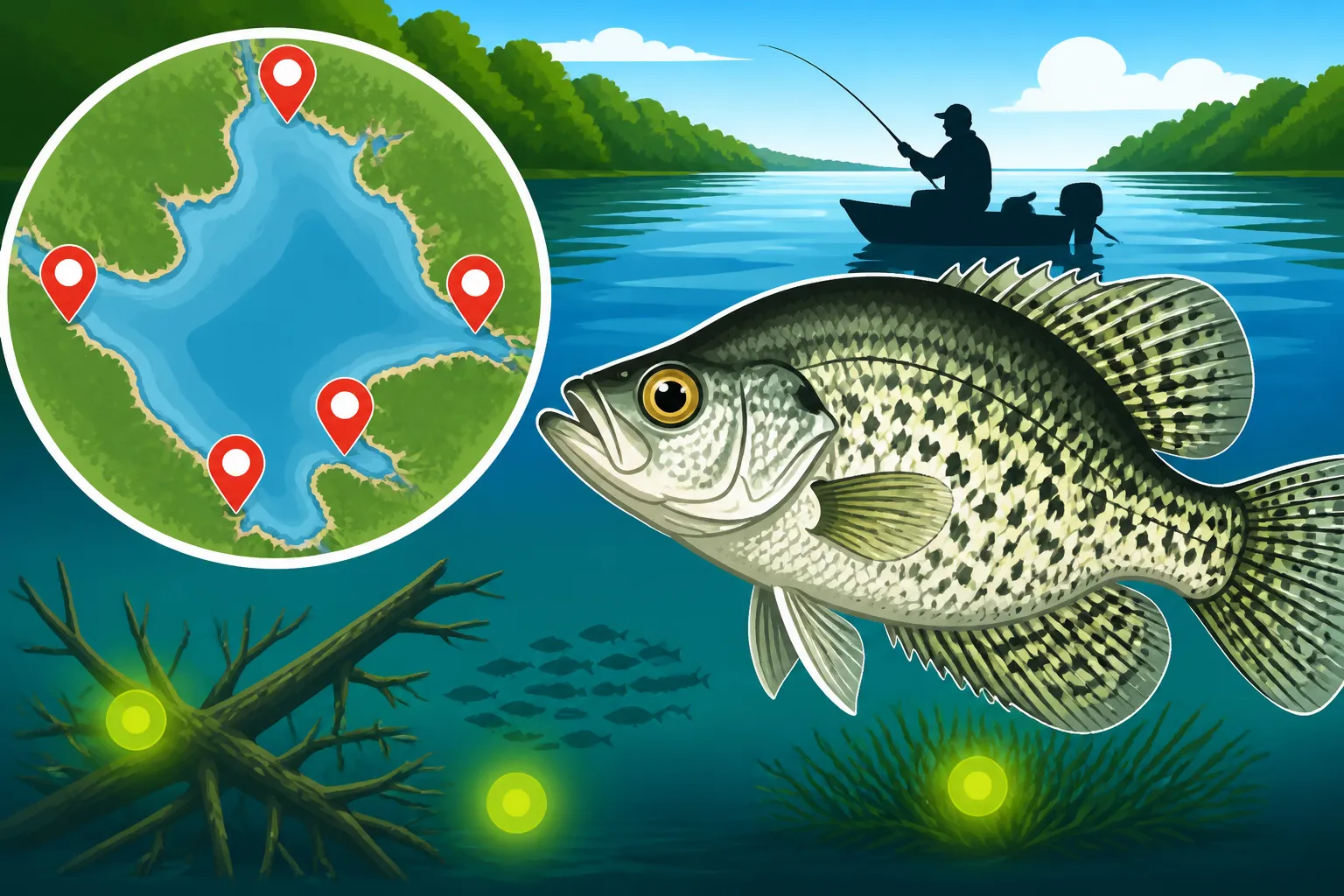
While crappie can be found throughout Percy Priest, certain areas consistently produce better results due to their favorable habitat and forage. These hotspots often feature a combination of ideal depth, cover, and baitfish presence, making them prime targets for anglers. Focusing your efforts on these proven locations will significantly increase your chances of a successful outing.
Key Coves and Creek Arms for Spring Crappie
When spring arrives and crappie are ready to spawn, you'll want to head into the warmer, shallower waters of the lake's many coves and creek arms. These areas offer the perfect conditions for spawning fish: protected from wind, ample cover, and muddy bottoms that retain heat. Stewarts Creek, a major tributary entering Percy Priest, is often a goldmine. Its numerous feeder creeks and shallow embayments, especially those with standing timber or laydowns, become crappie nurseries. Areas near Long Hunter State Park and Couchville Lake also offer excellent shallow water access with plenty of docks and brush piles where crappie will stage and spawn.
Look for areas with water depths between 3 to 8 feet, particularly those with stained water and woody cover. Docks are absolute magnets, as they provide shade and structure. Don't be afraid to probe every pilings, cross beam, and pontoon. Shallow water means quieter approaches are essential. Using a trolling motor to slowly navigate these areas, constantly scanning for structure with your electronics or visually, will pay dividends. The upper reaches of the lake generally warm faster, so checking those areas first in early spring is a smart move. Remember, a slight ripple on the water can actually help obscure your presence from skittish shallow-water crappie.
Deeper Structures for Summer and Winter Crappie
Once the spawn is over and water temperatures rise, crappie shift their focus to deeper, cooler water. This is when main lake points, submerged humps, and the edges of old creek and river channels become prime real estate. The main channel of the Stones River, which runs through the heart of Percy Priest, is a fantastic place to start. Crappie will often suspend along the drops, especially where there are significant timber lines or brush piles planted by other anglers. Look for sharp breaks or contour changes on your depth finder; crappie love these transitions.
Many anglers focus on the deeper sections of the lake, particularly near the dam or in the larger, deeper coves in the lower half of the lake, such as those around the Hurricane Creek or Seven Points areas. Here, you'll find crappie congregating in 15 to 30 feet of water, often suspending at specific depths over structure. Pay close attention to your electronics to spot bait balls and the distinct arcs of crappie holding nearby. Vertical jigging or slow trolling with multiple rods can be incredibly effective in these deeper areas. This is where a good fishing guide, perhaps found through a service like FishingBooker, can really show you the ropes and point you to hidden brush piles they’ve marked over the years. Understanding the deep water haunts is crucial for success during the warmer and colder months.
| Season | Preferred Depth | Key Habitat Features | Common Hotspots | Recommended Techniques |
|---|---|---|---|---|
| Spring | 3-8 feet | Shallow coves, docks, laydowns, emergent vegetation, muddy bottoms | Stewarts Creek, Long Hunter State Park, Couchville | Single pole jigging, bobber fishing, casting small jigs |
| Summer | 15-25 feet (often suspended) | Submerged creek channels, main lake points, deep brush piles, boat docks | Stones River channel, lower lake coves (Hurricane Creek, Seven Points) | Spider rigging, slow trolling, vertical jigging, slip bobbers |
| Fall | 10-20 feet (variable) | Secondary points, deeper coves, around baitfish schools | Transition zones between shallow and deep water | Casting jigs, slow trolling, vertical jigging |
| Winter | 20-40 feet (often suspended) | Deep creek/river channels, ledges, prominent deep timber | Main lake basin, deep holes in river channel | Vertical jigging, drop-shot, live minnows |
Effective Techniques and Baits for Percy Priest Crappie
Knowing where the crappie are is only half the battle; the other half is knowing how to make them bite! Crappie can be notoriously finicky, and success often hinges on adapting your presentation to their mood and the conditions. A small adjustment in jig color, retrieve speed, or bait size can make all the difference between a full livewell and an empty cooler.
Jigging and Live Bait Strategies
For crappie on Percy Priest, a combination of artificial jigs and live minnows covers most situations. Single pole jigging is a fantastic technique, especially when crappie are relating tightly to specific cover like docks or brush piles. You can precisely drop a small jig, typically 1/16 to 1/8 ounce, right into the strike zone. Popular jig colors include chartreuse, white, black and chartreuse, or even natural shad patterns. Tipping your jig with a small piece of minnow or a Crappie Nibble can add scent and appeal. The key is a slow, subtle presentation, often just barely twitching the rod tip to impart action to the jig. For more detailed jigging techniques, check out our guide on How to Jig for Crappie.
When crappie are more scattered or suspended over open water, slow trolling or "spider rigging" becomes incredibly effective. This involves using multiple rods (often 4-8) spread out from the boat, each rigged with a minnow, a jig, or a combination. You troll slowly, typically 0.5 to 1.5 mph, covering large areas until you locate a school. Live minnows, hooked lightly through the lip or dorsal fin, are often irresistible to crappie. They provide natural scent and movement, making them a consistent producer in nearly all conditions. When crappie are particularly finicky, a simple slip bobber rig with a tiny split shot and a minnow can be deadly, allowing the bait to suspend at a precise depth.
Reading the Water and Using Electronics
Modern electronics have revolutionized crappie fishing, transforming it from a guessing game into a precise hunt. A good fish finder is your best friend on Percy Priest, allowing you to quickly locate submerged brush piles, old creek channels, and most importantly, schools of crappie and their baitfish. Look for "arches" on your screen that indicate fish, and pay attention to how they relate to structure. Crappie often show up as distinct, sometimes stacked, arches or clumps on your screen. Down imaging and side imaging technologies can provide even clearer pictures of underwater structure, helping you identify brush piles or stumps that hold fish.
Beyond the electronics, learning to "read the water" is an invaluable skill. Pay attention to visible signs like diving birds (indicating baitfish), subtle water color changes, or even wind direction. A consistent wind can push baitfish into certain coves or along specific banks, and crappie will follow. Water temperature is another critical factor; crappie are cold-blooded, and their activity levels are directly tied to temperature. If the water is too cold, they'll be lethargic and deep. If it's just right, they'll be more active and potentially shallower. For a deeper dive into how water temperature affects fish activity, you can consult our article How Water Temperature Affects Fish Activity. Sometimes, the most obvious sign is the presence of other crappie anglers – if you see a cluster of boats in a certain area, there's a good chance they're on to something.
Navigating Percy Priest and Essential Gear
Getting around Percy Priest Lake, especially with its numerous arms and vast expanses, requires a reliable vessel and an understanding of its access points. You don't want to spend precious fishing time struggling with logistics or inadequate gear. Having the right tools for the job can significantly enhance your crappie fishing experience.
Boat Ramps and Access Points for Crappie Anglers
Percy Priest boasts several excellent public boat ramps that provide easy access to different sections of the lake. For anglers targeting the upper sections and creek arms, popular options include the Fate Sanders Ramp on Stewarts Creek and the Couchville Recreation Area Ramp. These put you right in prime spring spawning grounds. If you're focusing on the main lake or the deeper lower sections, ramps like the Seven Points Campground Ramp or the Anderson Road Recreation Area Ramp offer great access. Long Hunter State Park also provides multiple access points, making it convenient for those exploring the middle sections of the lake.
Each ramp offers unique advantages, depending on where you plan to target crappie. Before heading out, it's always a good idea to check ramp conditions, especially during periods of low or high water, as these can impact usability. Plenty of parking is usually available, but on busy weekends, arriving early is a smart move. If you're bringing your own boat, knowing the Boat Ramp Access on Tennessee's Major Lakes can save you a lot of time and hassle. For those without their own boat, consider exploring fishing charters through services like FishingBooker, where experienced local guides can take you directly to the crappie hotspots without you worrying about launching or navigating.
Recommended Gear for a Successful Crappie Trip
Successful crappie fishing on Percy Priest calls for a specific tackle setup. You don't need heavy-duty bass gear here. Instead, opt for sensitive, lightweight equipment that allows you to feel those subtle crappie bites. A 6 to 7-foot light or ultralight spinning rod paired with a small spinning reel (size 1000 or 2000) is ideal. Spool it with 4 to 6-pound test monofilament or fluorocarbon line; some anglers prefer braided line for its sensitivity, but a leader is often needed. This light setup provides the sensitivity needed to detect delicate crappie strikes and the finesse to present small baits naturally.
Beyond the rod and reel, a well-stocked tackle box is essential. Keep a variety of crappie jigs in different weights (1/32 to 1/8 oz) and colors. Soft plastic bodies like grub tails, tubes, and minnow imitations are staples. Don't forget a good supply of small hooks (size 2-6) for live minnows, split shots, and bobbers (both fixed and slip bobbers). A small cooler to keep your minnows lively and your catch fresh is also a must. For night fishing, a headlamp and maybe some glow jigs are great additions. You can find more recommendations on Best Tackle for Tennessee Crappie Fishing. Having the right gear not only makes fishing easier but also more enjoyable and productive.
Percy Priest Crappie Fishing Tips and Regulations
While techniques and locations are crucial, paying attention to the finer details and adhering to local regulations can make or break your crappie fishing trip. Understanding the nuances of crappie behavior and Tennessee's fishing laws ensures a responsible and rewarding experience.
Best Times of Day and Environmental Factors
Crappie, like most fish, have peak feeding times that often coincide with lower light conditions. Dawn and dusk are prime times, as the reduced light makes them feel safer to move and feed aggressively. On cloudy or overcast days, crappie might remain active throughout the day, as the natural light is diffused. Conversely, bright, sunny days often push them deeper or into dense cover. After a cold front, crappie can become very lethargic, suspending tighter to structure and requiring a much slower, more subtle presentation.
Wind can be both a friend and a foe. A light chop can break up the water's surface, making it harder for crappie to see you, and it can also concentrate baitfish. However, too much wind makes boat control and feeling bites challenging. Pay attention to barometric pressure as well; a stable or rising barometer often indicates active feeding, while a rapidly falling barometer might signal a tougher bite before a storm. Keeping a fishing log can help you identify patterns specific to Percy Priest and improve your success rate over time.
Understanding Tennessee Crappie Limits and Rules
Before you even make your first cast on Percy Priest Lake, it's absolutely vital to be familiar with Tennessee's fishing regulations, particularly those pertaining to crappie. The Tennessee Wildlife Resources Agency (TWRA) sets these rules to ensure healthy fish populations for everyone to enjoy. For crappie, the statewide daily creel limit is 20 fish per day, but here's the kicker – only 5 of those 20 crappie may be over 12 inches in length. This regulation is specifically designed to protect the larger, spawning-size crappie and promote a balanced fishery.
It's your responsibility as an angler to measure your fish accurately. Carry a reliable measuring board or tape measure to ensure you're compliant. There aren't currently any specific lake-size limits for crappie on Percy Priest that override the statewide rule, but it's always wise to double-check the latest TWRA proclamations or signboards at boat ramps, as rules can occasionally change. Of course, no matter how many fish you catch, you'll need a valid Tennessee Fishing License Guide for anyone aged 13 and older. Being caught without a license or exceeding your limits can result in penalties, so always stay informed and fish responsibly.
Disclaimer
Fishing conditions and regulations can change rapidly. Always check the latest Tennessee Wildlife Resources Agency (TWRA) regulations and local advisories before heading out on Percy Priest Lake. This guide is for informational purposes only and should not replace official sources.