Tennessee’s Crappie Limit Is 20 Per Day, Only 5 Over 12 Inches
It's easy to get excited when the crappie are biting, and you find yourself reeling in one slab after another. But amidst that fishing frenzy, a common frustration for many anglers is keeping track of the specific regulations, especially when it comes to daily limits and size restrictions. Nobody wants to accidentally break the rules, and understanding the nuances of crappie limits in Tennessee can feel like navigating a maze. This comprehensive guide is here to clear up all the confusion, detailing Tennessee's crappie limits so you can fish confidently and legally.
Understanding Tennessee's Statewide Crappie Daily Limits
When you head out to chase those speckled beauties in Tennessee, whether it's on a sprawling reservoir or a quiet backwater, there are two primary numbers you absolutely need to etch into your memory regarding crappie. These aren't just arbitrary figures; they're carefully set by the Tennessee Wildlife Resources Agency (TWRA) to ensure sustainable fishing for generations to come. Overlooking these details can not only lead to fines but also negatively impact the very fish populations we love to target.
The Overall Daily Creel Limit
First and foremost, the statewide daily creel limit for crappie in Tennessee is 20 fish per angler per day. This means that regardless of their size, you cannot keep more than twenty crappie in a single 24-hour period. This total count applies to both black crappie and white crappie, or any combination thereof, that you might catch. It's a straightforward rule designed to manage the overall harvest of these popular panfish.
Think of it like this: if you're out on the water and the bite is hot, you might catch twenty crappie relatively quickly. Once you hit that number, even if you're still getting bites, you have to stop keeping fish. Any additional crappie you catch must be immediately released back into the water. This ensures that the fishing pressure is spread out and that enough crappie remain in the system to reproduce and grow. It's a critical component of the broader "Crappie Limits Under Tennessee Fishing Rules" that all anglers should know.
The Specific Size Restriction for Larger Crappie
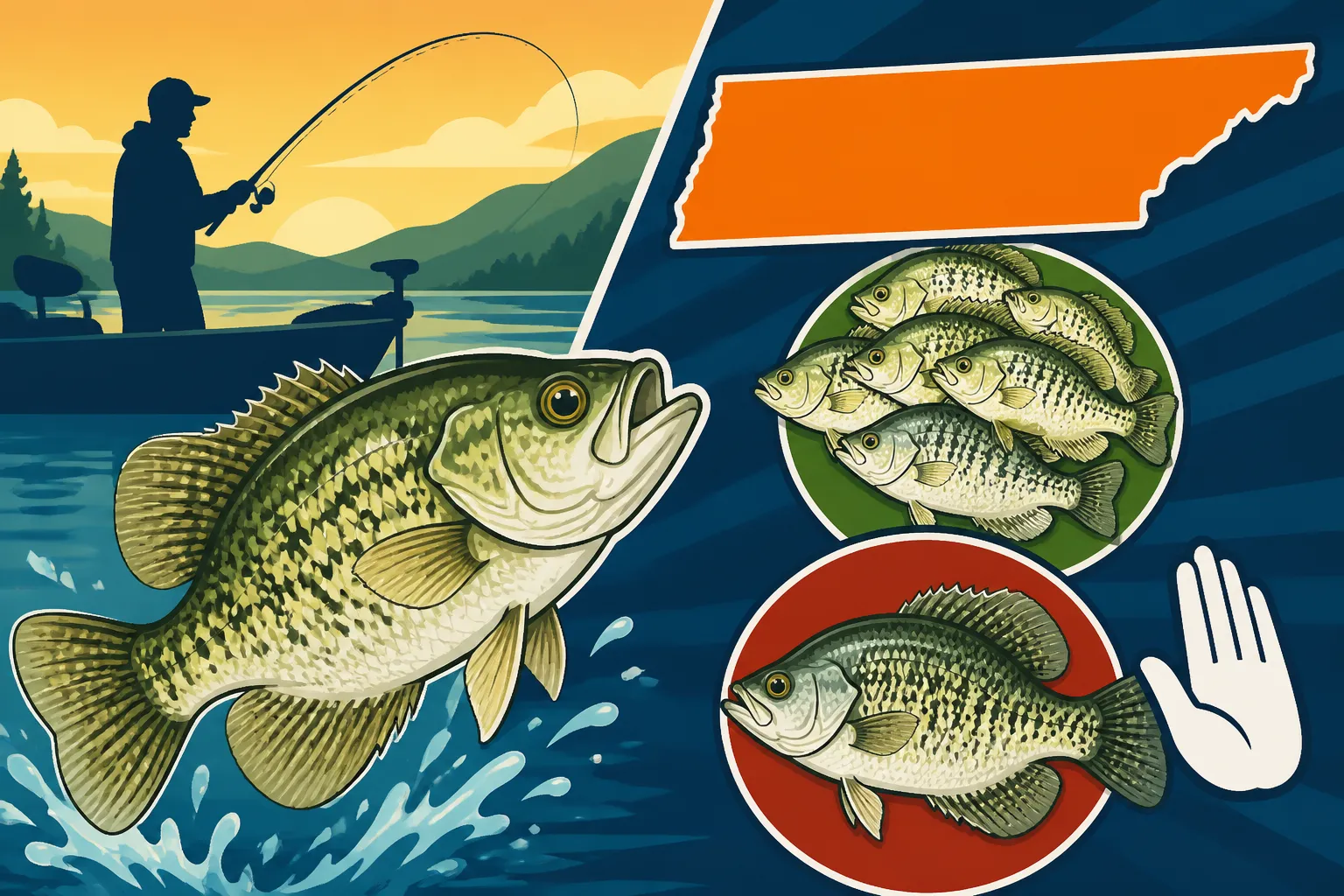
Now, here's where it gets a little more specific and can sometimes trip up even seasoned anglers: within that 20-fish daily limit, only 5 of those crappie may be 12 inches or longer. This is not an additional limit; it's a sub-restriction within the larger creel limit. This rule acknowledges that larger crappie, particularly those over 12 inches, are often the prime breeders and play a crucial role in the health and genetic diversity of the crappie population.
Let's break this down with a hypothetical: you're having an incredible day on Kentucky Lake, pulling in crappie left and right. You've kept 15 crappie so far, and they're all under 12 inches. You're still good to keep 5 more fish to hit your 20-fish total. Now, imagine your next cast yields a beautiful 13-inch crappie. You can keep it. Your total is now 16, and you have 1 fish over 12 inches. If you then catch three more crappie, all under 12 inches, you're at 19 fish total, with one over 12 inches. You can still keep one more fish. If that last fish is 14 inches, you can keep it, bringing your total to 20 fish, with two over 12 inches. You've hit both limits: 20 total, and only 5 of those were 12 inches or more. This nuance is why understanding "Why Tennessee Caps Large Crappie Separately from the Overall Daily Limit" is so important.
What if you've already kept 5 crappie that are all 12 inches or longer, and you're only at 10 total fish for the day? In this scenario, you can still keep 10 more crappie to reach your 20-fish daily limit, but none of those remaining 10 fish can be 12 inches or longer. They must all be under the 12-inch mark. This rule is designed to protect the trophy-sized and breeding stock while still allowing anglers to enjoy a good harvest of smaller, pan-sized fish.
Here’s a quick glance at the statewide crappie limits:
| Limit Type | Quantity | Size Restriction | Notes |
|---|---|---|---|
| Total Daily Creel | 20 fish | Any size | The maximum number of crappie an individual angler can keep in a 24-hour period, encompassing all crappie species. |
| Large Crappie | 5 fish | 12 inches or over | Within the 20-fish daily creel limit, no more than 5 crappie may measure 12 inches or greater in total length. |
Why These Specific Crappie Limits Are in Place
It's natural to wonder why these rules are so particular. Why not just a flat 20 fish, or an unlimited number of small ones? The truth is, these regulations are the result of extensive biological research and careful consideration of the long-term health of Tennessee's crappie fisheries. The goal is always to balance the desires of anglers with the needs of the fish populations.
Promoting Sustainable Crappie Populations
Crappie, while prolific breeders, can be susceptible to overfishing, especially in certain bodies of water. The 20-fish daily limit helps prevent individual anglers from depleting local populations too quickly. By capping the total number of fish an angler can take, TWRA ensures that a significant portion of the crappie population remains in the water, capable of spawning and contributing to future generations. This is especially vital during the "Spring Crappie Spawn Timing in Tennessee", when crappie are most vulnerable and concentrated.
The specific "only 5 over 12 inches" rule is particularly effective in promoting sustainability by protecting the larger, more mature crappie. These fish are typically the most successful spawners, producing a greater number of eggs and often passing on desirable genetic traits like faster growth rates. By allowing anglers to keep a higher number of smaller crappie (under 12 inches), which are often more numerous and can quickly become overpopulated in certain areas, TWRA helps to thin out the younger fish, reducing competition for food and resources. This allows the remaining fish to grow faster and healthier, ultimately leading to a more robust fishery in the long run. It's a delicate ecological dance designed to maintain a thriving ecosystem.
Balancing Angler Opportunity and Resource Management
Nobody wants to fish in a lake where the populations are dwindling, and the chance of catching a keeper is slim. The crappie limits are a proactive measure to prevent such scenarios, ensuring that Tennessee remains a premier destination for crappie fishing. The TWRA continually monitors crappie populations in various lakes and rivers, adjusting management strategies as needed. These limits reflect a scientific approach to resource management, aiming for a consistent supply of fish for anglers while safeguarding the natural resources.
For instance, if studies show that crappie growth rates are slowing down in a particular lake, or that the population of larger fish is declining, these limits help to course-correct. By encouraging the harvest of smaller fish and protecting the larger ones, the regulations aim to improve the overall size structure of the crappie population. This means anglers have a better chance of catching both plentiful pan-sized crappie for a meal and the occasional trophy-sized fish, too. It’s about creating a healthy balance where both the ecosystem thrives and anglers have a fulfilling experience. This careful approach applies to all species, including ensuring there are enough fish for the "Tennessee Crappie Fishing Guide by Season" to be relevant year after year.
Navigating Lake-Specific Crappie Regulations in Tennessee
While the statewide limits provide a solid baseline, it's absolutely crucial to remember that certain lakes and rivers in Tennessee have their own unique, special regulations that override the general statewide rules. Ignoring these localized rules is a common mistake that can lead to unexpected fines and a lot of disappointment. These specific rules are put in place for very good reasons, often due to unique ecological factors, heavy fishing pressure, or targeted management goals for a particular body of water.
How to Find Localized Crappie Rules
Before you even think about putting your boat in the water or casting a line, especially if you're visiting a new lake, the very first thing you should do is check for any local regulations. The best place to start is always the official TWRA website. They have a comprehensive "Fishing Guide" which is updated annually and lists all statewide regulations, as well as specific exceptions for individual lakes, rivers, and streams. You can often find a physical copy of this guide at sporting goods stores, bait shops, and TWRA offices.
Additionally, many popular fishing destinations, such as state parks and large reservoirs, will have signs posted at boat ramps or access points detailing any special rules. It's also a good idea to chat with local bait shop owners or guides in the area. They're often a wealth of information and can tell you about recent changes or nuances you might not find easily online. For example, if you're planning a trip to "Kentucky Lake Fishing on the Tennessee Side", you should specifically look up its unique rules, as it's a massive body of water with high fishing pressure. Remember, ignorance of the law is not an excuse. This is a vital part of understanding "Lake-Specific Fishing Rules That Override Tennessee's Statewide Limits".
Common Scenarios for Lake-Specific Variations
Local crappie regulations can vary in several ways, often making them stricter than the statewide limits. Here are a few common scenarios you might encounter:
- Different Minimum Size Limits: Instead of the statewide "only 5 over 12 inches" rule, some lakes might have a flat minimum size limit for all crappie kept. For example, a lake might stipulate that all crappie must be at least 10 inches long to be kept, or perhaps even 13 inches. This is often done to protect younger fish and allow them more time to grow into a desirable size.
- Reduced Daily Creel Limits: While the statewide limit is 20, certain lakes might have a lower overall daily limit, perhaps 10 or 15 crappie per angler. This is common in smaller, more heavily fished waters or lakes where crappie populations might be struggling due to environmental factors.
- Slot Limits: This is a more complex regulation. A slot limit means you can keep fish below a certain size and above another certain size, but you cannot keep fish that fall within a specific "slot" of sizes. For example, a lake might have a slot limit of 10-12 inches, meaning you can keep crappie under 10 inches and over 12 inches, but anything between 10 and 12 inches must be released. These are designed to protect medium-sized, fast-growing fish.
- Seasonal Closures: In rare instances, a specific lake or portion of a lake might have a seasonal closure for crappie fishing, typically during peak spawning times, to give the fish a break from pressure.
Always double-check! A quick search for the specific lake you're targeting will usually bring up any special regulations. Don't rely on word-of-mouth alone, as rules can change.
Practical Tips for Adhering to Crappie Limits on the Water
Staying compliant with crappie limits isn't just about knowing the numbers; it's about having the right practices and tools on hand to ensure you're always within the legal boundaries. A little preparation goes a long way in avoiding unintentional violations and ensuring a smooth, enjoyable fishing trip.
Accurate Measuring and Culling Practices
The key to adhering to size limits is accurate measurement. You can't just eyeball it. Always carry a reliable measuring device with you. A standard measuring board, often available at tackle shops or on Amazon, is ideal for quickly and accurately measuring your catch. Many fishing boats also have measuring stickers or marks directly on the deck. When measuring, lay the fish flat, with its mouth closed and touching the bumper of your measuring board, and measure to the tip of its tail. Make sure the tail is compressed to get the true total length.
Culling is the practice of replacing smaller fish you've kept with larger ones you've just caught, as long as you stay within your total daily and size-specific limits. For example, if you have 19 crappie under 12 inches in your livewell, and you catch a 10-inch crappie, you could keep it. If your next fish is a 13-inch crappie and you've only kept 4 crappie over 12 inches so far, you might choose to release one of your smaller 9-inch crappie to make room for the larger one, as long as you haven't exceeded your 5-fish over 12-inch limit. Always handle crappie gently during culling, especially if they are going back into the water. Minimize their time out of the water to increase their survival chances. A good fish gripper can help reduce stress on the fish during this process.
Essential Gear for Compliance
Beyond your rod, reel, and favorite crappie jigs, there are a few pieces of gear that are essential for any responsible crappie angler in Tennessee:
- Measuring Device: As mentioned, a solid measuring board or a durable tape measure is non-negotiable. Many anglers prefer a bump board that has a lip for the fish's mouth, ensuring consistent measurements. You can find many options on Amazon designed specifically for fishing.
- Livewell or Cooler: A properly maintained livewell keeps your crappie healthy if you plan to cull or release them later, and a quality cooler with ice will keep your keepers fresh. Maintaining a livewell with fresh, oxygenated water is crucial for fish survival, especially if you're considering releasing some later in the day.
- Digital Scale: While not strictly for compliance with limits, a small digital scale (also easily found on Amazon) is great for weighing your catch and can help you track your fishing success, especially if you're targeting those larger fish. It's a fun addition to your "Tackle Box Setup for Crappie Fishing".
- Fishing License: This goes without saying, but always ensure you have a valid Tennessee fishing license with you, whether it's a physical copy or a digital one on your phone. Getting caught without one can lead to "Penalties for Fishing Without a License in Tennessee", which nobody wants. You can easily purchase or renew your license online through the TWRA website.
- TWRA Regulations Guide: Keeping a physical or digital copy of the current TWRA Fishing Guide handy is always a smart move. It's your quick reference for any questions that might arise about species-specific limits, lake-specific rules, or other fishing regulations. It's far better to consult the guide than to guess.
By preparing yourself with knowledge and the right tools, you'll not only stay within the law but also contribute to the conservation efforts that keep Tennessee's crappie fishing fantastic for everyone. So grab your gear, check the local rules, and go enjoy a rewarding day on the water!
Disclaimer
Please note that fishing regulations, including creel and size limits, can change. While this guide provides current information as of its publication, it is the angler's responsibility to verify the most up-to-date regulations before heading out to fish. Always consult the official Tennessee Wildlife Resources Agency (TWRA) website or their current fishing guide for the latest and most accurate rules.