How to Find Striped Bass in Summer
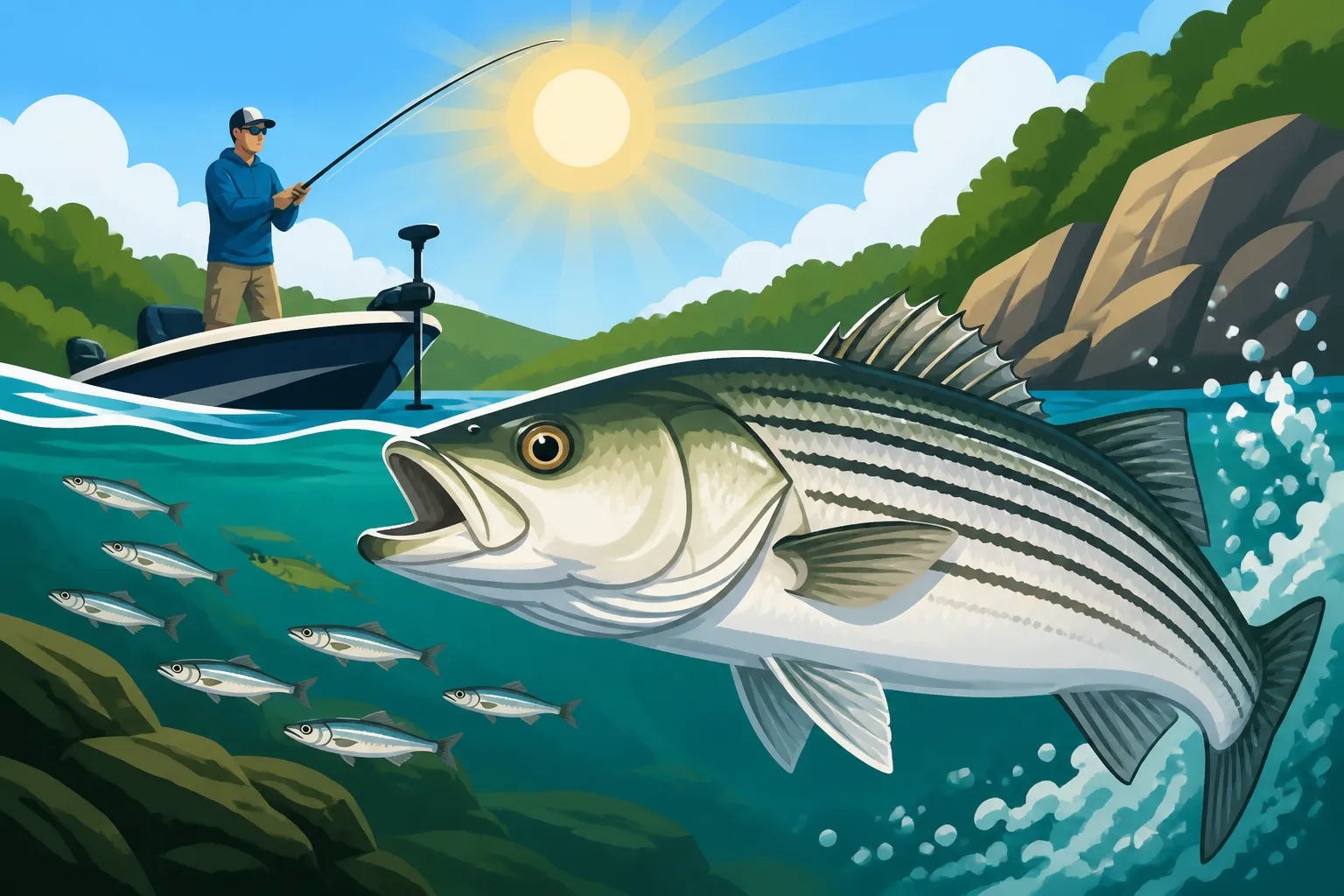
Ah, summer fishing in Tennessee. There's nothing quite like it, is there? The sun beating down, the cicadas humming, and the promise of a big fish at the end of your line. But let's be honest, finding striped bass when the mercury soars can feel like trying to find a needle in a haystack. These powerful fish don't just hang out where they do in spring or fall; they get crafty, heading to specific zones to escape the heat. This guide is all about cutting through that frustration, helping you understand where striped bass go in the scorching Tennessee summer and the best ways to get them to bite.
Understanding Striped Bass Behavior in Summer Heat
Striped bass are incredible fish, known for their strength and their love for open water. But like us, they don't enjoy baking in the summer sun. The heat fundamentally changes their behavior, driving them to seek comfort and ambush points in cooler, oxygen-rich waters. If you're trying the same spots you found success in during the spring, you're likely going to come up empty-handed, and that can be incredibly disheartening.
The Impact of Water Temperature on Stripers
As the summer progresses in Tennessee, surface water temperatures on our big reservoirs can climb well into the 80s, sometimes even higher in the shallows. This is simply too warm for striped bass. They are cold-blooded creatures, and while they can tolerate a range of temperatures, they thrive in cooler water, generally preferring temperatures between 60 and 70 degrees Fahrenheit. When the upper layers of a lake heat up, stripers are forced to move. This isn't just about comfort; it's about survival. Warmer water holds less dissolved oxygen, which these active fish need in abundance. You can often track their movements by keeping an eye on water temperature gauges on your fish finder. Understanding how the warmer months affect fish activity is crucial to adapting your approach.
They're not just moving to avoid the heat, either; their metabolism slows down when it's too warm, making them less active and less likely to chase a bait frantically. Instead, they become lethargic, conserving energy. This means your presentation needs to be perfect, placed right in front of them, because they won't go far to get it. Knowing these thermal preferences helps us predict their deeper patterns.
Why Stripers Go Deep in Summer
When surface waters become too warm, striped bass migrate to the thermocline. For those unfamiliar, the thermocline is that magical layer in the water column where the temperature rapidly changes from warm surface water to much cooler, deeper water. It's like a natural air conditioner for fish. Below the thermocline, the water is consistently cold, but it can also be low in oxygen, especially in very deep lakes. Therefore, the sweet spot for summer stripers is often right at or just above the thermocline. This depth provides them with optimal temperature and sufficient oxygen.
Think of it as their summer sanctuary. They'll hold around this depth, waiting for unsuspecting baitfish to pass by. This is why targeting these deeper zones is absolutely critical. If your lures aren't getting down to these specific depths, you're simply not fishing where the fish are. This shift from shallower spring patterns to deep summer patterns is a major reason why anglers often struggle if they don't adjust their techniques.
Key Locations for Summer Striped Bass in Tennessee
Tennessee is blessed with some fantastic striped bass fisheries, especially our large, deep reservoirs. But even within these vast bodies of water, stripers will concentrate in specific areas during the summer. Knowing these hotspots can save you hours of aimless searching and dramatically increase your chances of success.
Major Reservoirs Known for Stripers
When it comes to Tennessee striped bass fishing, a few names always come up. Lakes like Norris Lake, Percy Priest Lake, Watts Bar Lake, and portions of Kentucky Lake are perennial favorites for their healthy populations of striped bass. These reservoirs offer the deep, cool water that stripers crave in the summer, along with ample baitfish populations like gizzard shad and alewives, which are their primary food source. Each of these lakes has unique characteristics, but they all share the fundamental traits that make them prime striper territory.
For instance, Norris Lake is known for its incredible clarity, which means stripers can see your bait from a distance but also means they can see you and your boat. Percy Priest Lake, being closer to Nashville, offers convenient access but still holds massive fish. Researching guides like the Norris Lake Fishing Guide, Tennessee's Clearest Water or the Percy Priest Lake Fishing Near Nashville, Tennessee can give you even more localized insights. The sheer size of these lakes can be intimidating, but focusing on the right areas is key.
Identifying Deepwater Structure and Cover
Once you're on a striper-rich reservoir, the next step is to find where they're holding within that deep water. Striped bass are still predatory, and they'll relate to structure even when deep. Look for areas where submerged river channels, humps, ledges, and steep drop-offs meet the thermocline. These features create ambush points and concentrate baitfish. Imagine a submerged island with a sharp drop-off on one side; stripers will often suspend along that drop-off, waiting for shad to swim by.
Using your fish finder is absolutely essential here. You'll be looking for signs of baitfish clouds, which often look like dense blobs on your screen, and then larger, individual arcs representing the striped bass themselves, often sitting right beneath or within those bait balls. Don't just motor over these spots; spend time idling around them, scanning with your electronics. Sometimes, the stripers might be just off to the side of the main channel, hugging a contour line where the thermocline intersects it. These types of deepwater structures are their summer homes, and figuring out how to read them on your sonar will elevate your game.
Points, Humps, and River Channels
Specific types of deepwater structure are particularly effective for locating summer stripers. Long, tapering points that extend into the main lake basin are excellent, especially where they drop sharply into deeper water. Stripers will often patrol the edges of these points, following the contours. Submerged humps, essentially underwater hills, are also fantastic. If a hump rises from 60 feet of water to 30 feet, the stripers might hold around the 30-foot mark, especially if it's at their preferred temperature and oxygen level.
River channels, particularly old, flooded river channels that wind through the reservoir, are highways for baitfish and predators alike. Stripers will suspend along the channel edges, especially at bends or where smaller creeks intersect the main channel. These intersections often create current breaks and concentrate food. Learning about Deep Water Techniques for Striped Bass will further explain how to fish these areas effectively. It’s all about understanding that even in vast open water, stripers are still seeking out advantages, and these deep structures provide them.
Effective Techniques and Gear for Summer Stripers
Finding summer striped bass is only half the battle; the other half is convincing them to bite. Since they're often deep and can be a bit sluggish in the heat, your techniques and gear need to be spot-on. This isn't the time for guesswork or underpreparedness.
Trolling Deep Diving Lures and Baits
Trolling is perhaps the most popular and effective method for covering water and presenting baits at the precise depths where summer stripers lurk. You'll want to use deep-diving crankbaits that can reach depths of 20-40 feet, sometimes even deeper. The key is to select lures that accurately run at the depth of the thermocline. Brands like Rapala, Bomber, and Strike King offer excellent options. Experiment with different colors, but natural baitfish patterns (shad, alewife, perch) are almost always a safe bet. You can find a huge variety of these lures on Amazon.
For true deep trolling, incorporating downriggers or lead core line is essential. Downriggers allow you to precisely set your lure at a specific depth, say 35 feet, regardless of boat speed. Lead core line, on the other hand, sinks as you troll, with different colors indicating different depths. Learning How to Troll for Striped Bass is a skill that takes practice, but it's incredibly rewarding when you start consistently catching fish. Pay close attention to your boat speed; slow trolling (1.5-3 mph) is often best in the summer.
Using Live Bait on Downriggers or Freelines
Live bait is often irresistible to wary summer stripers. Large gizzard shad, threadfin shad, or alewives are prime choices. The natural action and scent of a live baitfish are hard to beat, especially when stripers are less inclined to chase. One highly effective method is to present live bait on downriggers, allowing you to drop it right into the strike zone at the thermocline. This is particularly effective when you've located schools of stripers on your fish finder.
Another excellent tactic, especially when fish are suspending closer to the surface (early morning or late evening), is to freeline live bait. Use a circle hook through the nose or back of the baitfish, and let it swim freely behind the boat. Sometimes, a small split shot might be needed to get it down a few feet. For really deep, suspended fish, a three-way swivel rig with a heavy sinker or a balloon rig can also be effective in keeping the bait in the desired depth range. Just make sure your tackle is stout enough, as stripers are powerful fighters. Getting the right Best Tackle for Striped Bass on Tennessee Reservoirs means you won't lose that trophy fish.
Essential Electronics and Rods
Modern fishing electronics are your best friend when chasing summer stripers. A good fish finder with down imaging and side imaging capabilities is invaluable for locating submerged structure, bait balls, and the stripers themselves. Pay attention to the water temperature readings on your unit to find that crucial thermocline. A reliable GPS is also key for marking productive spots and navigating large reservoirs, especially if you're exploring new areas or fishing at night. Many anglers also use trolling motor systems with GPS anchoring features, which allow you to hold over a specific spot even in wind or current. You can find detailed reviews and options for Fish Finders and Electronics for Tennessee Reservoirs on popular online retailers like Amazon.
For rods and reels, you need gear that can handle the sheer power of a striped bass. Medium-heavy to heavy action rods, 7 to 8 feet long, paired with robust baitcasting or spinning reels spooled with 15-30 pound monofilament or braided line are standard. The longer rod helps with casting distance and fighting larger fish. Choose reels with a smooth, strong drag system – it's crucial for tiring out these hard-fighting fish without snapping your line.
Adapting to Water Conditions and Time of Day
Summer striper fishing isn't just about finding the deep spots; it's also about understanding how the time of day and specific environmental conditions influence their willingness to feed. Being flexible and knowing when to adjust your strategy can make all the difference between a slow day and a successful outing.
Best Times to Target Stripers in Summer
While stripers are deep during the day, they can sometimes move shallower during periods of low light. Early mornings, just before and after sunrise, are often prime times. The surface waters are at their coolest, and baitfish might be pushed closer to the surface, bringing the stripers with them for a brief feeding window. Similarly, late evenings and into the night can also be highly productive. Many seasoned striper anglers prefer night fishing in the summer, especially under a full moon, as the stripers become more active and hunt aggressively. This is similar to how Best Time of Day to Catch Bass varies, but amplified for stripers due to their temperature sensitivity.
During the brightest, hottest parts of the day, you'll almost exclusively find stripers hunkered down at the thermocline. This means your deep trolling or downrigger presentations are your best bet. If you only have a few hours to fish, consider making it a dawn patrol or a twilight mission to maximize your chances when the fish are naturally more inclined to be active.
Impact of Weather and Cloud Cover
Surprisingly, weather conditions, even when fishing deep, can still play a role. Overcast days or periods leading up to a storm can sometimes trigger a bite, even in summer. The reduced light penetration makes the surface more tolerable, and the change in barometric pressure can make fish more active. However, post-front conditions with high pressure and clear skies often make fishing tougher, as fish can become lethargic and less willing to feed.
Strong winds can also affect your fishing, making boat control for trolling or still-fishing a challenge. On windy days, try to fish on the lee side of large points or islands, where the water is calmer, or use a strong trolling motor with GPS lock to maintain your course. While the deep water offers some insulation from surface conditions, these factors still influence the overall mood and activity levels of the fish.
Seasonal Shifts within Summer
Even within the broad "summer" season, there are subtle shifts. Early summer, when water temperatures are just beginning to climb, might see stripers in slightly shallower depths or more willing to chase faster presentations. As mid-summer hits, with peak heat, they'll be at their deepest and often most lethargic. By late summer, as days start to shorten and temperatures hint at a fall cool-down, they might begin to transition, becoming a bit more active, though still primarily deep during the day.
Keep a fishing journal to track your successes and failures throughout the summer, noting water temperatures, depths, and conditions. This personal data can be invaluable for predicting future patterns and adapting your approach. What works perfectly in June might need adjustment by August. It's all about being observant and learning from every outing on the water.
Disclaimer
This article is for general informational purposes only and does not constitute professional advice. Laws, prices and regulations vary by location and change over time. Consult a qualified professional for guidance on your specific situation.