Why Tennessee caps large crappie separately from the overall daily limit
It's frustrating when you head out to your favorite Tennessee fishing spot, fill your livewell with a respectable catch of crappie, only to get back to the ramp and realize you might have miscounted or misunderstood the specific size limits. Tennessee's fishing regulations can sometimes feel like a puzzle, especially when it comes to species like crappie where there isn't just one simple number to remember. This guide is designed to clear up all that confusion, helping you understand precisely why the state has both a daily creel limit and a separate size restriction for larger crappie, ensuring you can enjoy your time on the water without worry.
Understanding Tennessee's Crappie Regulations
Tennessee is truly a crappie angler's paradise, with abundant populations in many of our beautiful lakes and rivers. But with great fishing comes great responsibility, and that's where the Tennessee Wildlife Resources Agency (TWRA) steps in with its regulations. It’s not just about how many fish you can keep; it's also about which fish you can keep, particularly when it comes to those bigger, more desirable slabs.
The Statewide Daily Crappie Limit
Let's start with the basics. For most public waters across Tennessee, the statewide daily creel limit for crappie is 20 fish per angler per day. This means that, in a standard 24-hour period, you, as an individual angler, can legally keep up to 20 crappie. This limit is designed to allow anglers to have a productive day on the water while still maintaining healthy overall populations. Imagine everyone keeping 50 crappie a day – our fisheries would quickly become depleted! The 20-fish rule is a carefully calculated balance, giving plenty of opportunity for a good meal or a successful tournament, without putting too much pressure on the resource.
This overall limit ensures that even if you're catching smaller crappie, you're not depleting the younger year classes that will grow to be tomorrow's trophy fish. It's a foundational rule for sustainability, and one that all anglers should familiarize themselves with before heading out. For a more comprehensive look at these guidelines, check out our guide on Crappie Limits Under Tennessee Fishing Rules.
The Specific Large Crappie Cap
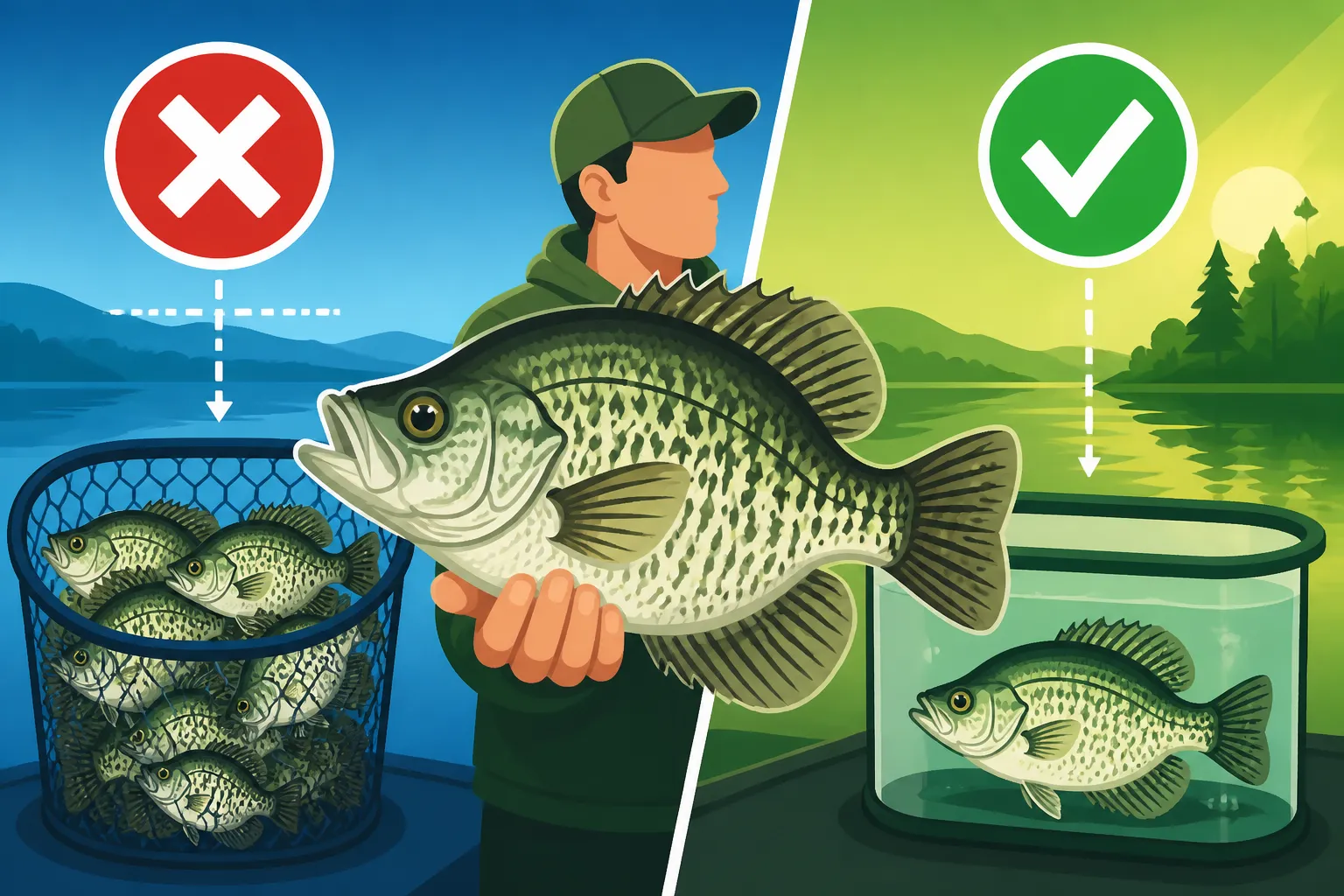
Now, here's where it gets a little more nuanced, and often, where the confusion arises. Beyond the overall 20-fish daily limit, Tennessee also has a specific cap on the number of large crappie you can keep. Specifically, you can only possess 5 crappie that are 12 inches or longer within your total daily limit of 20 fish. This means if you catch 20 crappie, no more than 5 of them can be at least 12 inches long. The rest of your catch, up to 15 fish, must be under 12 inches.
This isn't an arbitrary rule. Think of it like a safeguard. You can certainly catch more than 5 crappie over 12 inches in a day – it happens all the time on productive lakes like Reelfoot Lake or Kentucky Lake – but you have to release any additional large ones after you've kept your maximum of five. It's crucial to always have a reliable measuring device, like a bump board, handy. You can easily find various options for these on sites like Amazon, making sure you can quickly and accurately measure your catch right there on the water. This separate cap is a key part of Tennessee's efforts to manage its crappie populations effectively, and understanding it is vital for every responsible angler.
Why the Separate Limit Exists
The reason for this dual approach – an overall creel limit and a specific size cap for larger fish – boils down to responsible fisheries management. It’s not just about having fish in the water; it’s about having a healthy, thriving ecosystem that can sustain itself for years to come. The TWRA uses these regulations to balance angler opportunity with the biological needs of the crappie population. It’s a sophisticated strategy that considers reproduction, growth rates, and overall fish health.
Without this cap, there would be a much higher incentive for anglers to exclusively target and keep the largest crappie they could find. While catching big fish is certainly exciting, a prolonged focus on removing only the biggest individuals can have detrimental long-term effects on the fishery. This leads us into the biological reasons that make this separate cap so important for Tennessee fishing.
The Biology Behind Crappie Size Limits
When state agencies like the TWRA set fishing regulations, they're not just pulling numbers out of a hat. These rules are rooted in extensive scientific research and an understanding of fish biology, especially concerning reproduction and population dynamics. The separate cap on large crappie is a prime example of this careful consideration.
Protecting Spawning Stock
One of the most critical reasons for limiting the number of large crappie an angler can keep is to protect the spawning stock. Larger, older crappie, particularly the females, are typically the most prolific spawners. They produce more eggs, and often, these eggs are healthier and more viable than those produced by smaller, younger fish. By limiting the harvest of these larger individuals, the TWRA ensures that a sufficient number of these prime breeders remain in the population to reproduce each year.
Imagine if everyone kept every crappie over 12 inches they caught. Over time, the gene pool for large, healthy fish could diminish, and the overall reproductive capacity of the lake or river would suffer. This protection is especially vital during key times like the Spring Crappie Spawn Timing in Tennessee. Keeping a good number of these "brood stock" fish in the water guarantees that future generations of crappie have a strong foundation, leading to consistent fishing opportunities for years to come. It’s a classic case of short-term conservation for long-term gain.
Managing Crappie Population Health
Beyond just raw egg production, the separate size limit also plays a crucial role in managing the overall health and age structure of the crappie population. A healthy fish population isn't just about having a lot of fish; it's about having a balanced representation of different age and size classes. If too many large, older fish are removed, the population can become skewed towards younger, smaller individuals. This can lead to issues like stunting, where fish don't grow to their full potential due to overcrowding or insufficient food resources for a large number of smaller fish.
By capping the number of large crappie, the TWRA encourages anglers to keep some smaller fish (within the 20-fish daily limit, of course), which can actually benefit the population. This "thinning" of smaller fish can reduce competition for food and space, allowing the remaining crappie to grow larger and healthier. It's a delicate ecological dance, and these regulations are a tool to keep the balance just right. For a deeper dive into the species often managed this way, our article on Black Crappie: A TWRA-Stocked Tennessee Favorite provides great context.
The Role of Growth Rates and Forage
The effectiveness of these size limits is also closely tied to the crappie's growth rates and the availability of forage in a particular body of water. In some highly fertile lakes, crappie might grow quickly and reach 12 inches within a couple of years. In less fertile waters, it might take much longer. The TWRA's biologists constantly monitor these factors. If a lake has an abundance of smaller crappie and slower growth, the 12-inch cap helps ensure that more fish survive to a size where they can significantly contribute to reproduction before being harvested.
Conversely, in lakes where crappie grow quickly and large numbers reach that 12-inch mark, the 5-fish cap helps to spread the harvest among more anglers, preventing a few individuals from taking an outsized portion of the trophy fish. It also helps manage competition for forage species like shad. Ensuring a healthy forage base is essential, and by regulating crappie populations through these limits, the agency indirectly supports the entire aquatic food web. Understanding the nuances of these regulations is part of being a well-informed angler in Tennessee, as detailed in our guide Tennessee Fishing Regulations Explained.
Practical Implications for Anglers
Understanding why these regulations are in place is one thing, but knowing how to adhere to them on the water is another. Navigating daily limits and size restrictions can be tricky, especially when the bite is hot and fish are coming in fast.
How to Measure Crappie Accurately
The 12-inch mark is a hard and fast rule, so accurate measurement is non-negotiable. The TWRA's official method for measuring fish is from the tip of the nose (mouth closed) to the very end of the tail (with the tail compressed or pinched to its maximum length). Simply holding a fish next to your rod or an imaginary line in your boat isn't going to cut it if a TWRA officer checks your catch.
A dedicated measuring board, often called a bump board or fish ruler, is your best friend here. These are typically marked with clear inch increments and have a solid "bump" at one end to ensure the fish's nose is consistently at the zero mark. Lay the fish flat on its side, slide its nose against the bump, and compress the tail to get the true length. Keeping one of these in your boat or tackle bag, easily accessible (perhaps even ordered from Amazon for convenience), is far more reliable than a flexible tape measure. This simple piece of gear can save you a lot of hassle and potential fines.
Strategies for Staying Within the Limits
So, you're out on the water, and the crappie are biting. What's the best strategy to ensure you stay within both the 20-fish daily limit and the 5-fish, 12-inch-or-longer cap?
- Cull as You Go: Don't wait until you're done fishing to sort your catch. As you catch fish, immediately measure them. If you've already kept 5 crappie over 12 inches, any subsequent crappie you catch that are 12 inches or longer must be released. If you're targeting specific fish, using specialized gear like those mentioned in Best Tackle for Tennessee Crappie Fishing can help.
- Keep Track: A simple tally system can be incredibly helpful. Some anglers use a small counter, while others simply make a mental note or mark a cooler lid. Keep separate counts for total fish and fish over 12 inches.
- Prioritize Quality or Quantity: If you're after those big slabs, you might reach your 5-fish over 12 inches limit quickly. At that point, you have a choice: continue fishing for smaller crappie to fill your remaining 15 slots (if you haven't hit 20 total), or switch tactics to target another species, or simply call it a day on crappie.
- Know Your Water: Some lakes are known for producing more large crappie, while others might have a higher population of smaller fish. Adjust your expectations and strategies based on the specific fishery. For instance, a lake known for trophy crappie might require stricter adherence to the large fish cap early in your trip. Our guide on Best Crappie Fishing Lakes in Tennessee might offer insights into this.
What Happens if You Exceed the Limit
It might seem like a minor infraction, but exceeding either the overall daily limit or the specific size cap for crappie is a violation of state fishing regulations. Game wardens take these rules seriously because they are fundamental to maintaining healthy fisheries. Getting caught with too many fish, or too many large fish, can lead to fines, confiscation of your catch, and potentially even revocation of your fishing license. These penalties can vary depending on the severity and frequency of the offense, but they are certainly not trivial.
It's a much better scenario to err on the side of caution. If you're unsure about a measurement, release the fish. If you're close to your limit, consider stopping or switching to catch-and-release. The consequences of a violation far outweigh the benefit of an extra fish or two in the cooler. For context on regulatory compliance, you might be interested in Penalties for Fishing Without a License in Tennessee, which highlights the seriousness of such infractions.
Beyond Statewide Rules: Lake-Specific Exceptions
While the 20 fish daily / 5 fish over 12 inches rule is the statewide default, Tennessee's diverse waterways often necessitate lake-specific regulations. It's easy to assume the general rule applies everywhere, but failing to check local rules can land you in hot water, even if you’re following the statewide guidelines.
Local Regulations and How to Find Them
Fisheries biologists continuously monitor specific lakes and reservoirs. If a particular body of water shows signs of overharvesting of larger crappie, or perhaps an abundance of stunted crappie, the TWRA might implement a more restrictive or even more liberal regulation for that specific lake. These lake-specific rules always supersede the statewide regulations.
This is why your first step, every single time you plan a fishing trip to a new lake (or even a familiar one, as rules can change annually), should be to consult the current Tennessee Fishing Guide. This guide is published by the TWRA and is available online on their website or in physical copies at most bait shops, sporting goods stores, and TWRA offices. Many anglers also rely on apps or printed materials they might have purchased on Amazon for quick reference. It provides detailed information for each major body of water in the state, outlining any deviations from the statewide crappie limits. Never assume the general rule applies; always verify the local rules.
Examples of Lake-Specific Variations
To give you a clearer picture, let's consider some hypothetical (and sometimes real) scenarios. On a lake like Reelfoot Lake, known for its incredible crappie fishing, specific regulations are often in place to protect its unique fishery. While the statewide rule is 20 fish daily with 5 over 12 inches, Reelfoot has, in past seasons, had a 10-inch minimum length limit and a 15-fish daily creel limit for crappie, with no more than 10 fish 12 inches or longer. This is a significant deviation from the statewide rule and demonstrates how vital it is to check.
Another example might be a reservoir like Watts Bar Lake, where, depending on survey data, the TWRA might choose to implement a different set of rules to manage its crappie population. These differences can sometimes be subtle, affecting only the length limit or the number of fish allowed above a certain size, or they can be quite dramatic. The key takeaway is that these lake-specific regulations are tailored to the unique conditions of that particular body of water to ensure its long-term health and productivity for anglers. Our article on Lake-Specific Fishing Rules That Override Tennessee's Statewide Limits delves deeper into these variations.
Being a responsible angler means doing your homework. A quick check of the TWRA guide or website before each trip is a small effort that contributes significantly to sustainable fishing and ensures you avoid any unintentional violations. Whether you're planning for Tennessee Crappie Fishing Guide by Season or just a casual afternoon outing, those local rules are paramount.
Crappie Limits in Tennessee: A Quick Overview
To help consolidate all this information, here's a quick table summarizing Tennessee's crappie regulations. Remember, always check the TWRA Fishing Guide for any lake-specific exceptions!
| Regulation Category | Statewide Rule | Key Reason for Rule | Angler Action |
|---|---|---|---|
| Daily Creel Limit | 20 crappie per angler per day | Prevents overharvesting of the general population; ensures sustainable angling opportunity. | Keep track of total fish caught. Release additional crappie once 20 have been kept. |
| Large Fish Cap | No more than 5 crappie can be 12 inches or longer | Protects prime spawning stock (larger, older fish); manages population age structure and health. | Immediately measure all crappie. Release any crappie 12 inches or longer once 5 such fish have been kept, even if total limit isn't met. |
| Measurement | Tip of nose to compressed tail | Ensures consistent and accurate compliance with length limits. | Use a reliable bump board or measuring device. |
| Lake-Specific Rules | Always check TWRA guide | Tailors regulations to the unique biological needs of individual lakes/reservoirs. | Always consult the latest TWRA Fishing Guide before fishing any specific body of water. |
Disclaimer
Please note that fishing regulations are subject to change. While this guide provides a comprehensive overview based on current information, it is your responsibility as an angler to always consult the most recent Tennessee Wildlife Resources Agency (TWRA) Fishing Guide or their official website before each fishing trip. This ensures you have the most up-to-date information and remain in compliance with all state and local regulations.