Best Crappie Fishing Lakes in Tennessee
There's nothing quite like the thrill of a crappie tugging on your line, especially here in Tennessee where these panfish grow big and plentiful. But with so many incredible lakes across our state, deciding where to drop your jig can feel a little overwhelming, right? This guide is going to cut through the noise, revealing the absolute best crappie fishing lakes in Tennessee, complete with local insights to help you land that next slab.
Understanding Crappie Fishing in Tennessee
Crappie, often affectionately called "slabs" by seasoned anglers, are a true jewel of Tennessee's freshwater fisheries. They offer an exciting challenge, a delicious reward, and an accessible entry point for anglers of all skill levels. From the seasoned pro meticulously targeting submerged brush piles to the family simply enjoying a peaceful afternoon, crappie fishing holds a special place in the hearts of many in the Volunteer State.
The Allure of Crappie in the Volunteer State
Crappie fishing isn't just a pastime; it's a tradition deeply woven into the fabric of Tennessee's outdoor culture. These panfish are known for their feisty fight, especially on light tackle, making every hook-up a memorable experience. Beyond the sport, crappie are renowned for their flaky, white meat, making them a highly sought-after species for the dinner table. There’s a profound satisfaction that comes from catching a mess of crappie and sharing a fresh fish fry with family and friends – it's a taste of pure Tennessee.
What makes crappie so appealing here is their sheer abundance. Tennessee's vast network of reservoirs, rivers, and smaller lakes provides ideal habitat, fostering robust populations. From the clear, deep waters of East Tennessee to the sprawling, nutrient-rich lakes of West Tennessee, crappie thrive, offering year-round opportunities for anglers willing to learn their habits. It’s a pursuit that promises not just fish, but cherished memories and a deeper connection to our beautiful waterways.
Key Crappie Species and Their Habits
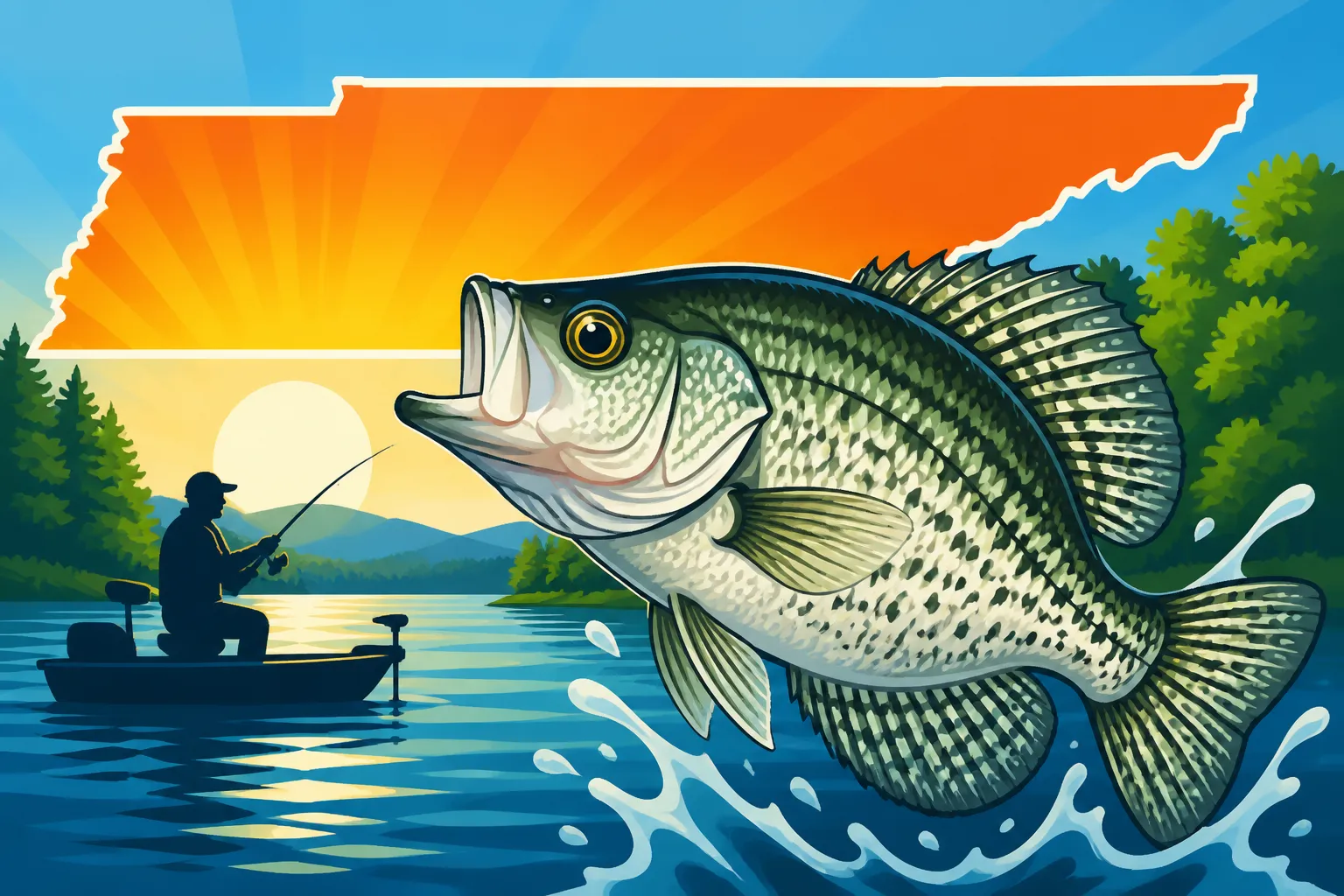
In Tennessee, you'll primarily encounter two species of crappie: the black crappie and the white crappie. While they share many similarities, understanding their subtle differences can significantly impact your fishing strategy. Black crappie tend to prefer clearer, cooler waters with more vegetation or complex cover. They often have a somewhat "speckled" appearance, with irregular dark spots scattered across their silvery-green bodies. You can learn more about how to distinguish them in our guide on How to Identify Black Crappie.
White crappie, on the other hand, are generally more tolerant of murky or turbid waters and tend to favor open water areas with less cover. Their markings are usually more organized, with vertical bars or stripes along their sides, which can be a helpful identifying feature. Both species are schooling fish, meaning where you find one, you're likely to find many more. This schooling behavior is what makes crappie fishing so exciting when you hit a hot spot.
Knowing the preferred habitats of black versus white crappie can help you pinpoint their locations more effectively. For instance, if you're on a clearer lake with lots of submerged timber and aquatic grasses, you're likely to find more black crappie tucked into that cover. In contrast, on a larger, more open reservoir with slightly stained water, white crappie might be holding along creek channels or suspended over deeper humps. Understanding these preferences is the first step toward consistent crappie success.
Top Crappie Fishing Lakes in East Tennessee
East Tennessee is a region of stunning natural beauty, characterized by the Appalachian Mountains and a series of large, deep reservoirs on the Tennessee River and its tributaries. These lakes offer fantastic crappie fishing, each with its own unique charm and challenges.
Watts Bar Lake: A Crappie Powerhouse
Watts Bar Lake, located in East Tennessee near cities like Kingston and Spring City, is a sprawling Tennessee River reservoir renowned for its excellent crappie fishing. Its vast size and diverse aquatic environments, including abundant submerged timber, creek channels, and expansive flats, create a perfect habitat for both black and white crappie to thrive. Anglers here often report consistent catches of good-sized crappie throughout the year.
The lake's consistent productivity stems from its nutrient-rich waters and extensive cover. During the spring spawn, crappie move into the shallower creek arms and coves, making them accessible to bank anglers and boaters alike. The rest of the year, they can be found congregating around brush piles, stumps, and along the ledges of the main river channel. Many local crappie guides make Watts Bar their primary focus, a testament to its slab-producing capabilities.
For those looking to target Watts Bar crappie, focus your efforts on areas with standing timber, especially in the backs of major creeks like White's Creek or Paint Rock Creek. Vertical jigging or slow trolling with jigs and minnows are highly effective methods. The deeper sections of the lake hold crappie even in the heat of summer, making this a truly year-round destination for crappie enthusiasts.
Douglas Lake: Early Season Hotspot
Douglas Lake, nestled near the tourist hubs of Sevierville and Kodak, is another East Tennessee gem, particularly famous for its incredible crappie action in the early spring. This lake is known for its fluctuating water levels, which can be a double-edged sword, but ultimately plays to the angler's advantage when it comes to crappie. When water levels are low, vast amounts of stumps and brush are exposed, only to become submerged crappie magnets when the water rises.
The secret to Douglas Lake's crappie success lies in its vast shallow flats and the abundance of natural and man-made cover. As the water warms in late winter and early spring, crappie flood into these shallower areas, making them relatively easy to locate and catch. The periods immediately following a significant water rise can be especially productive, as crappie move in to feed and spawn around newly flooded cover.
Anglers targeting crappie on Douglas Lake should concentrate on submerged stumps, brush piles, and the numerous creek channels that wind through the lake's expansive flats. Areas around Dandridge and Baneberry are particularly well-known hotspots. Small jigs tipped with minnows or soft plastics are deadly here, especially when presented slowly around cover. Being prepared for varying water levels and adapting your approach accordingly will be key to unlocking the lake's crappie potential.
Norris Lake: Clear Waters, Trophy Potential
Norris Lake stands apart from many other Tennessee reservoirs with its incredibly deep, clear, and pristine waters. Located north of Knoxville, it's famous for its stunning beauty and excellent smallmouth bass fishing, but it also holds a respectable population of crappie, often of impressive size. While crappie fishing on Norris can be more challenging than on stained-water lakes, the rewards—in the form of large, healthy crappie—are well worth the effort.
The clear water of Norris means crappie here tend to go deeper and be more wary, often suspending over structure rather than holding tight to it. This necessitates a more refined approach, often relying heavily on sonar to locate schools of fish and precise presentations. Despite the challenge, the lake's abundant submerged timber and bluff walls offer plenty of hiding spots for crappie, especially during the Norris Lake Tennessee Crappie Spawn Timing in Spring when they move shallower, though still often deeper than on other lakes.
Successful crappie anglers on Norris Lake typically employ vertical jigging techniques over deep submerged timber, brush piles, and along the steep bluff walls. Electronics are absolutely essential for identifying these deep-water haunts and locating active schools. Using lighter line and subtle baits can make a big difference. While you might not fill a cooler as quickly as on other lakes, the satisfaction of pulling a hefty Norris Lake crappie from its clear depths is truly something special.
Central Tennessee's Premier Crappie Destinations
Central Tennessee offers a blend of bustling urban centers and tranquil waterways, including several outstanding crappie fishing lakes that provide consistent action and convenient access. These lakes, often reservoirs on the Cumberland River system, are a fantastic choice for anglers seeking their next crappie adventure.
Old Hickory Lake: Consistent Action Near Nashville
Old Hickory Lake, a U.S. Army Corps of Engineers reservoir on the Cumberland River, is an easily accessible crappie fishing destination just northeast of Nashville. Its extensive network of shallow flats, abundant standing timber, and numerous creek channels make it a consistently productive lake for crappie throughout the year. For anglers in the Nashville area, Old Hickory is a go-to spot for reliable crappie action.
The lake’s structure is ideal for crappie, with countless submerged trees, brush piles, and bridge pilings offering excellent cover. The Tennessee Wildlife Resources Agency (TWRA) also actively maintains and adds man-made brush piles, further enhancing the crappie habitat. This commitment to habitat improvement ensures that anglers have plenty of spots to target, leading to steady catches of both black and white crappie.
When fishing Old Hickory, focus on the abundant cover in the creek arms and around the main river channel. Areas near marinas and docks can also be surprisingly productive, especially during the colder months when crappie seek out sheltered areas. Jigs and minnows, fished vertically or under a float, are highly effective. Many local tournaments attest to the lake's capability of producing impressive crappie catches regularly.
Percy Priest Lake: Accessible and Productive
J. Percy Priest Lake, another Corps of Engineers reservoir located just southeast of Nashville, is a popular spot for recreation and fishing. While it's a favorite for boaters and water sports enthusiasts, it also offers solid crappie fishing, especially for those targeting black crappie. It might not be known for producing monster slabs consistently, but it certainly delivers on numbers and accessibility.
The lake's varied bottom structure, including rock piles, submerged cedar trees, and well-defined creek channel drops, provides ample habitat for crappie. The relatively clear waters often favor black crappie, which can be found relating to brush and timber. Percy Priest offers a great opportunity for anglers who enjoy scouting new spots, as crappie can be found scattered across its many coves and points.
For successful crappie fishing on Percy Priest, concentrate on areas with submerged cover, particularly in the larger creek arms. During the cooler months, crappie often school up in deeper water, suspending over channels or holding tight to structure at depths of 15-25 feet. In spring, they move into the shallower coves for spawning. Spider rigging with multiple rods or single-pole jigging near cover are popular and effective strategies here.
Dale Hollow Lake: Deep Water Crappie Challenges
Dale Hollow Lake, straddling the Tennessee-Kentucky border, is world-renowned for its trophy smallmouth bass. However, this deep, clear impoundment also harbors a healthy population of crappie, offering a unique challenge for those willing to adapt their tactics to its distinct environment. Crappie here, much like on Norris Lake, often prefer deeper water, making electronics and patience crucial.
The crappie in Dale Hollow tend to be suspended over significant depths or holding tight to deep-water structure like bluff walls, main lake points, and submerged brush piles. This requires a different approach than the shallow water tactics often employed on other crappie lakes. While it might take more effort to locate them, the crappie caught in Dale Hollow are typically robust and well-fed, offering a satisfying reward for the diligent angler.
To successfully fish for crappie on Dale Hollow, focus your efforts on the main lake body and the larger creek arms where crappie can be found at depths ranging from 20 to 40 feet, sometimes even deeper. Vertical presentations using heavy jigs or minnows are often necessary to reach them. Investing time in thoroughly scanning potential crappie holding areas with your fish finder will greatly increase your chances of success on this stunning, yet challenging, crappie destination.
West Tennessee's Crappie Riches
West Tennessee is home to some of the most legendary crappie fisheries in the nation. Characterized by expansive, meandering river systems and unique natural lakes, this region consistently produces both quantity and quality crappie, drawing anglers from far and wide.
Kentucky Lake: A Crappie Legend
When you talk about crappie fishing in Tennessee, Kentucky Lake almost always tops the list. This massive reservoir, part of the Tennessee River system, stretches for miles across the western part of the state and into Kentucky, forming an undisputed crappie mecca. Its sheer size, diverse habitat, and incredible crappie populations have cemented its reputation as a premier destination for slab seekers.
Kentucky Lake's legendary status is well-deserved. It boasts an almost endless supply of crappie habitat, including vast expanses of flooded timber, numerous creek channels, and countless man-made brush piles. The lake's nutrient-rich waters contribute to fast growth rates, resulting in both incredible numbers of fish and the potential for true trophy crappie. Towns like Paris Landing on the Tennessee side are often bustling with crappie anglers, especially during peak seasons. For specific seasonal patterns, check out our guide on the Best Time of Year to Catch Crappie on Tennessee's Kentucky Lake.
Anglers employ a variety of techniques to tackle Kentucky Lake's crappie. Spider rigging with multiple rods, slow trolling with jigs or minnows, and vertical jigging around submerged cover are all highly effective. Given the lake's immense size, hiring a local guide can be incredibly beneficial for first-time visitors or those looking to quickly get on the fish. Services like FishingBooker can help you connect with experienced crappie guides who know the lake inside and out and can put you on the best spots quickly.
Reelfoot Lake: Unique Environment, Abundant Crappie
Reelfoot Lake is unlike any other fishing destination in Tennessee, or perhaps even the world. Formed by a series of earthquakes in the early 19th century, this shallow, cypress-filled lake in Northwest Tennessee offers a truly unique crappie fishing experience. Its distinctive landscape of flooded cypress trees, lily pads, and submerged stumps creates a crappie paradise that feels ancient and wild.
The crappie fishing on Reelfoot is phenomenal, offering incredibly abundant catches amidst a picturesque backdrop. The shallow, fertile waters support a thriving ecosystem, leading to robust crappie populations. Fishing here is an adventure; you'll be navigating through a maze of cypress trees, making it feel less like traditional lake fishing and more like exploring a flooded forest. It's a bucket-list crappie destination for many.
Due to its shallow nature and dense cover, Reelfoot is best fished from smaller boats, jon boats, or kayaks designed to navigate tight spaces. Anglers often target crappie directly within the flooded cypress trees, around stump fields, and along the edges of weed lines. Small jigs and minnows are standard fare, often fished vertically or under a short bobber. The sheer number of crappie caught here makes it an unforgettable experience.
Pickwick Lake: Border Waters, Big Crappie
Pickwick Lake, located in the extreme southwestern corner of Tennessee, is another fantastic Tennessee River reservoir known for its excellent crappie fishing. Sharing its waters with Mississippi and Alabama, Pickwick offers a vast and productive fishery with strong populations of both black and white crappie. It's particularly well-regarded for producing good numbers of fish, often with impressive size potential.
The lake’s diverse structure, including main river channel ledges, numerous creek arms, and plenty of submerged brush and timber, creates ideal conditions for crappie to thrive. The upper sections of Pickwick, especially the tributary creeks and bays, are often prime crappie territory during the spawning season and throughout the warmer months. It’s a lake that consistently delivers for crappie enthusiasts seeking both action and quality.
Anglers on Pickwick often find success by focusing on the large creek arms, such as Yellow Creek, where crappie congregate around brush piles, stumps, and along channel drops. The many bridge pilings found throughout the lake also serve as excellent crappie magnets. Whether you prefer slow trolling, vertical jigging, or casting to visible cover, Pickwick Lake offers ample opportunities to fill your livewell with slabs.
Essential Crappie Fishing Techniques and Gear
Catching crappie consistently means understanding their behavior and having the right tools for the job. Crappie are finicky, and their patterns change with the seasons, making adaptability a key trait for successful anglers.
Mastering Seasonal Crappie Patterns
Crappie behavior is heavily influenced by water temperature and the changing seasons. What works in spring won't necessarily work in summer, and vice-versa. Understanding these shifts is paramount to consistent success. In spring, crappie move shallow to spawn, often congregating in protected coves, creek arms, and around submerged brush or docks. This is often the easiest time to catch them, as they become more aggressive and predictable. Our Tennessee Crappie Fishing Guide by Season offers a detailed breakdown.
As summer heats up, crappie generally retreat to deeper, cooler waters. They'll often suspend over creek channels, humps, or hold tight to deep brush piles and standing timber. This requires more precise presentations and often a reliance on electronics to locate them. In the fall, as water temperatures begin to drop, crappie will often move shallower again for a pre-winter feeding frenzy, making them accessible once more. However, they may not be as aggressive as during the spring spawn.
Winter presents its own unique challenge, with crappie typically holding very deep and becoming lethargic. Slow, subtle presentations are key during this time. Techniques like How to Spider Rig for Crappie allow you to cover vast areas and present multiple baits at different depths, which is fantastic for searching. Alternatively, for pinpoint accuracy on specific structure like How to Catch Crappie Around Brush Piles, single-pole jigging is often the ticket. The more you observe and adapt to these seasonal patterns, the more successful you'll be.
Rods, Reels, and Lures for Tennessee Crappie
When it comes to crappie fishing, the right gear can make all the difference. Most crappie anglers opt for light to medium-light spinning gear, which offers the sensitivity needed to detect those subtle crappie bites and the backbone to handle a good slab. Rod length can vary depending on your technique; a longer rod might be preferred for spider rigging, while a shorter one works well for single-pole jigging around cover. For a deeper dive, check out our insights on What Rod Length Works Best for Tennessee Crappie Fishing?.
The world of crappie lures is vast, but some staples consistently produce. Small jigs, typically ranging from 1/32 to 1/8 ounce, are incredibly versatile. Colors like chartreuse, pink, white, and black/chartreuse are perennial favorites, but having a variety to match water clarity and conditions is always a good idea. Soft plastic bodies, such as tube jigs, grub tails, and small paddle tails, can be fished alone or tipped with a live minnow, which remains one of the most effective crappie baits of all time.
Beyond jigs and minnows, slip bobbers are fantastic for suspending your bait at a precise depth, especially when crappie are holding in the middle of the water column. For those targeting crappie vertically, How to Jig for Crappie is a must-read, covering the subtle movements that trigger bites. Building a versatile Tackle Box Setup for Crappie Fishing will ensure you’re prepared for whatever Tennessee’s crappie throw your way. If you’re ever unsure about the best tackle for a specific lake or season, a quick chat with a local guide found through FishingBooker can provide invaluable, up-to-the-minute advice on what’s working best.
| Lake Name | Region | Key Features for Crappie | Best Season | Typical Depth | Notes |
|---|---|---|---|---|---|
| Watts Bar Lake | East Tennessee | Submerged timber, creek channels, diverse habitat | Year-round | 10-30 feet | Consistent numbers and good size, especially in creek arms. |
| Douglas Lake | East Tennessee | Fluctuating water, stumps, shallow flats | Early Spring | 5-15 feet | Incredible early season bite, great for shallow water tactics. |
| Norris Lake | East Tennessee | Deep, clear water, bluff walls, submerged timber | Spring/Fall | 20-50+ feet | Challenges anglers, but yields trophy-sized crappie. |
| Old Hickory Lake | Central Tennessee | Standing timber, marinas, brush piles, creek channels | Year-round | 8-25 feet | Consistent producer, easily accessible from Nashville. |
| Percy Priest Lake | Central Tennessee | Rock piles, cedar trees, channel drops | Spring/Winter | 10-25 feet | Good numbers of black crappie, popular recreational lake. |
| Dale Hollow Lake | Central Tennessee | Deep, clear water, main lake points, bluff walls | Spring/Fall | 20-40+ feet | Primarily known for smallmouth, but holds quality deep crappie. |
| Kentucky Lake | West Tennessee | Vast flooded timber, creek channels, brush piles | Year-round | 8-30 feet | The ultimate crappie destination, huge numbers and size. |
| Reelfoot Lake | West Tennessee | Cypress trees, lily pads, shallow swamp lake | Spring/Fall | 3-10 feet | Unique experience, abundant crappie in dense cover. |
| Pickwick Lake | West Tennessee | River ledges, creek arms, brush, bridge pilings | Year-round | 10-30 feet | Excellent numbers, good size potential, multi-state waters. |
Navigating Regulations and Maximizing Your Catch
Successfully fishing for crappie in Tennessee isn't just about knowing where to go or what techniques to use; it's also about understanding and adhering to the state's fishing regulations. Staying informed about catch limits and specific lake rules ensures you're fishing legally and sustainably.
Tennessee's Crappie Limits and Rules
Before you even make your first cast, it is absolutely essential to familiarize yourself with Tennessee's fishing regulations. The Tennessee Wildlife Resources Agency (TWRA) sets these rules to ensure healthy fish populations for generations to come. For crappie, the statewide daily creel limit is typically 20 fish per day, a generous limit that allows anglers to bring home a good mess for the table. Knowing that you can keep Crappie limit in Tennessee is 20 fish per day is important for planning your trip.
However, there's a crucial caveat to that daily limit: a size restriction. Of those 20 crappie you catch, no more than 5 of them may be over 12 inches in length. This "slot limit" or size restriction helps protect larger, often more reproductively important, crappie, allowing them to grow and spawn. So, while you can keep Only 5 of your 20 daily crappie may be over 12 inches, the rest must be under that 12-inch mark. It's always wise to carry a measuring device to ensure compliance.
It's also vital to remember that some specific lakes may have their own unique, lake-specific regulations that supersede the statewide rules. Always check the current TWRA Fishing Guide or their website before heading out to any particular body of water. Ignorance of the rules is not an excuse, and violating them can lead to fines and even loss of fishing privileges. And, of course, don't forget your valid Tennessee fishing license – it's the foundation of legal angling in our state.
Planning Your Trip with Local Expertise
A successful crappie fishing trip often begins long before you hit the water. Gathering current information and planning effectively can make a significant difference in your catch rates. Start by checking recent fishing reports online or calling local bait shops, as they often have the most up-to-date intel on where the crappie are biting and what baits are working. Understanding recent weather patterns, water levels, and temperatures can also provide valuable clues about crappie behavior.
For anglers new to a particular lake, or those looking to maximize their chances for a trophy, considering a guided fishing trip is an excellent option. Local guides possess an intimate knowledge of the waterways, seasonal patterns, and specific crappie hotspots that can take years to learn on your own. Platforms like FishingBooker make it easy to find and book experienced crappie guides across Tennessee, offering invaluable local expertise and ensuring you spend less time searching and more time fishing.
Finally, prepare your gear meticulously. Having a well-organized Tackle Box Setup for Crappie Fishing that includes a variety of jig sizes, colors, soft plastics, and live bait options will ensure you're ready for any condition. Don't forget essential items like a measuring tape, pliers, and a cooler with ice to keep your catch fresh. With good planning, adherence to regulations, and perhaps a little help from local experts, your Tennessee crappie adventure is sure to be a memorable one.
Disclaimer
Please note that fishing conditions, regulations, and fish populations can change. Always consult the official Tennessee Wildlife Resources Agency (TWRA) website or their current fishing guide for the most up-to-date and accurate information before planning your fishing trip. Local bait shops and guides can also provide current, on-the-ground insights.