How to Catch Striped Bass at Night
There's nothing quite like the tranquility of a Tennessee lake under a blanket of stars, but that peaceful scene can quickly turn into a frustrating struggle if you're trying to fish in the dark without a plan. Many anglers, myself included, have felt the challenge of trying to locate and entice fish when visibility is low and the familiar daytime cues are gone. But don't despair! Night fishing for striped bass in Tennessee can be incredibly rewarding, offering some of the most exciting battles and biggest catches you'll experience. This guide will walk you through everything you need to know to transform your nighttime outings into successful striper hunts, from gear essentials to tactical approaches and crucial safety tips.
Why Night Fishing for Striped Bass is a Game Changer in Tennessee
If you've ever found yourself struggling to find active striped bass during the scorching heat of a Tennessee summer day, you're not alone. Stripers, like many predatory fish, are highly sensitive to light and temperature. When the sun beats down, they often retreat to deeper, cooler waters, becoming lethargic and harder to tempt with baits or lures. This natural behavior makes them prime targets once the sun dips below the horizon, and the lake transforms into a whole new world.
The Nocturnal Advantage of Striped Bass
Striped bass are opportunists, and their hunting instincts kick into high gear as night falls. The reasons are pretty straightforward: cooler water temperatures and reduced light. During the dog days of summer, the surface waters of large reservoirs like Norris Lake or Watts Bar Lake can warm significantly. While stripers are tolerant of a range of temperatures, they prefer cooler conditions, which are more prevalent in the deeper thermoclines during the day. However, once evening arrives and surface temperatures begin to drop, these powerful fish often push shallower, becoming much more active.
Beyond temperature, the cover of darkness provides a significant advantage for stripers. Their eyes are well-adapted for low-light conditions, giving them a superior edge over their prey, especially baitfish like threadfin or gizzard shad. The reduced visibility also makes them feel safer, more willing to venture into open water and shallower feeding grounds where they might be hesitant during bright daylight. This means less boat traffic and fewer distractions, creating a quieter environment where the fish are less pressured and more likely to strike. Many experienced anglers find that their biggest striped bass catches often happen under the moon and stars, making the effort of a night trip truly worth it.
Overcoming Common Night Fishing Frustrations
Let's be honest, fishing at night can be intimidating. The challenges are real: reduced visibility, navigating in the dark, and the eerie quiet broken only by the sounds of the night. It's easy to get discouraged when you can't see your line, or you're fumbling with gear in the dark. Many people give up before they even start, thinking it's too much hassle or too dangerous.
However, with a bit of preparation and the right mindset, these frustrations can be easily managed. Think of it less as a disadvantage and more as a different set of rules for a rewarding game. The lack of visual cues forces you to rely on other senses – the feel of a strike, the sound of a fish breaking the surface, the hum of your trolling motor. It sharpens your instincts and makes every hook-up feel even more earned. Plus, there's a unique camaraderie among night anglers, a shared appreciation for the challenge and the often-spectacular results. By anticipating these challenges and having the right tools and techniques, you'll find that the frustrations melt away, replaced by the thrill of the hunt.
Essential Gear for Successful Night Striper Fishing
Preparing for a night fishing trip requires a bit more thought than just grabbing your rod and reel. Safety and efficiency become paramount when you're operating in the dark. Having the right gear not only keeps you safe but also drastically improves your chances of hooking into some hefty striped bass. You don't want to be fumbling around when a big striper decides to hit!
Lighting the Way: Headlamps, Boat Lights, and Tackle Box Illumination
Proper lighting is arguably the most critical component for any night fishing expedition. You need illumination for navigation, rigging, and handling fish, but you also need to be mindful of how your light affects the fish. The goal is to see without spooking your quarry.
First and foremost, a reliable headlamp is non-negotiable. Look for one with adjustable brightness settings and, crucially, a red light option. White light can instantly kill your night vision, making it harder to see subtle movements or tie knots after you've looked directly at your line. Red light preserves your night vision, allowing your eyes to stay accustomed to the dark. Many great options, including those with red light modes, can be found readily on platforms like Amazon. Additionally, clip-on lights for your hat brim are handy for quick, hands-free tasks.
For your boat, navigation lights are not just a convenience, they are a legal requirement and essential for safety on the water after dark. Ensure your bow (red and green) and stern (white) lights are fully functional and visible. Beyond navigation, a general area light, such as an LED strip under your gunwales or a portable lantern, can provide ambient light for your fishing area without being overly intrusive. Some anglers even use subtle green or blue underwater lights to attract baitfish around their boat, which can then draw in the stripers. Having a small, dedicated light for your tackle box or livewell is also a brilliant idea, saving you from rummaging blindly for hooks or bait.
Rods, Reels, and Line Built for Darkness
When targeting striped bass, especially the larger specimens that are more active at night, you need robust gear that can handle a serious fight. This isn't the time for your ultralight panfish setup! A medium-heavy to heavy action rod, typically 7 to 8 feet long, will provide the backbone needed to cast heavy lures and reel in powerful stripers. Look for rods with a good balance of sensitivity and power.
Pair your rod with a reliable baitcasting or spinning reel that has a smooth, strong drag system. Striper runs can be explosive, and a sticky drag is a recipe for a lost fish or broken line. Reels capable of holding at least 200 yards of 20-30 pound test line are generally a good starting point. Many anglers prefer braided line for its incredible sensitivity and strength-to-diameter ratio, allowing them to feel subtle bites even in the dark. A 30-50 pound braid is common. However, some prefer monofilament or fluorocarbon for its stretch, which acts as a shock absorber during violent head shakes, and its superior abrasion resistance around structure. A good compromise is often a braided main line with a 3-6 foot fluorocarbon leader. Remember to check all your knots meticulously under a strong headlamp before you even launch your boat – visibility issues can make finding a faulty knot in the dark nearly impossible.
Baits and Lures That Shine in the Dark
The choice of bait and lures for night fishing should focus on what stripers can detect and home in on in low light. This means appealing to their other senses: vibration, sound, and scent.
Live bait is often king for night stripers. Freshly caught gizzard or threadfin shad, blueback herring, or even large shiners are incredibly effective. These lively baits create natural vibrations and scent in the water that stripers can easily detect. Keeping your live bait healthy is crucial, so a good aerated livewell is essential. When you're ready to deploy, consider free-lining them or using a slip bobber rig, especially if you're fishing under dock lights or around areas where stripers are pushing bait to the surface.
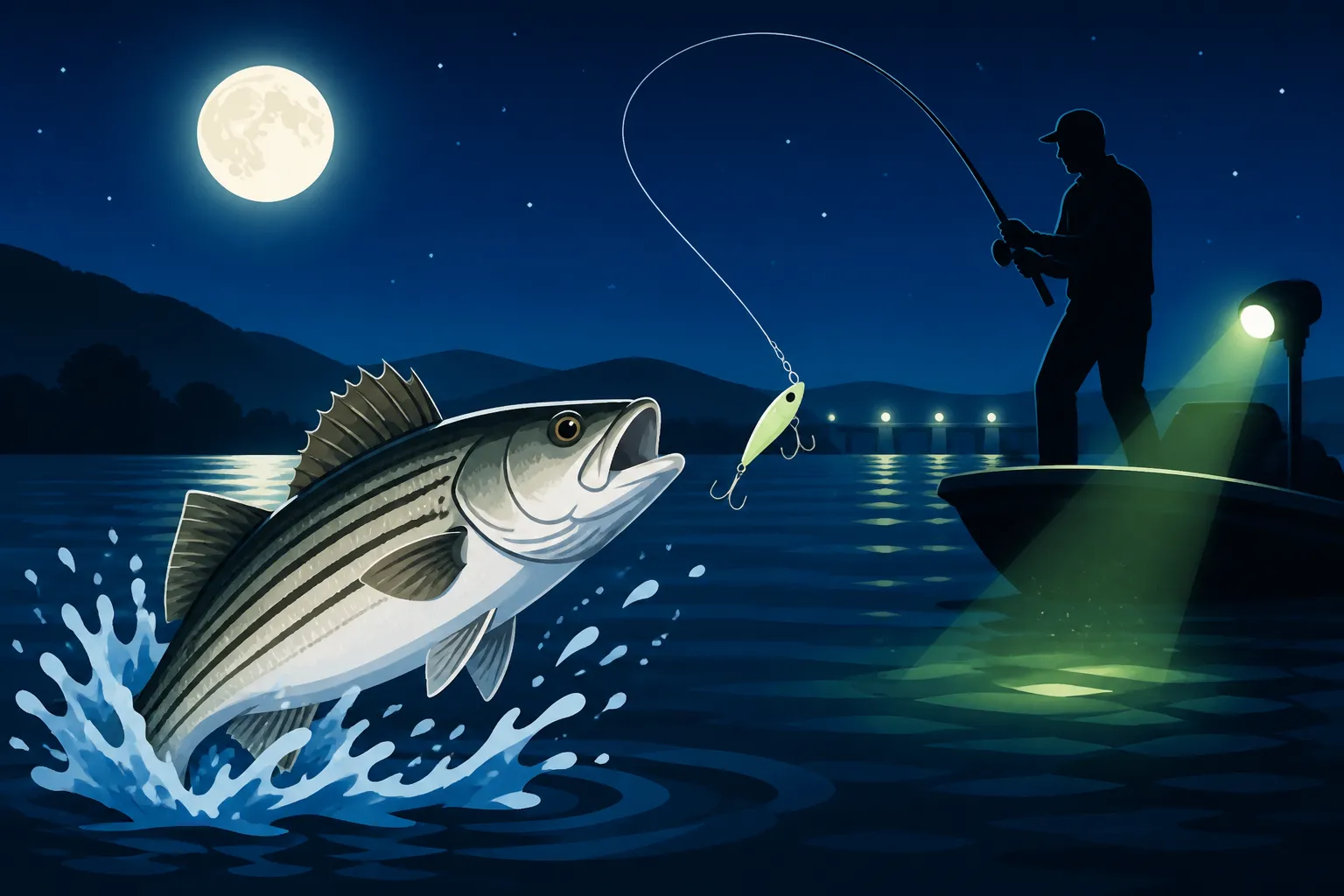
For artificial lures, opt for large profile baits that displace a lot of water and create significant vibration. Large swimbaits, especially paddle tail varieties, are excellent choices, as are big bucktail jigs tipped with a soft plastic trailer. Topwater lures can also be incredibly exciting at night, especially during warmer months. The commotion they make on the surface, mimicking struggling baitfish, can trigger explosive strikes that you'll often hear before you see. Consider lures with glow-in-the-dark properties or those that reflect UV light, as these can be more visible to fish in low light. You can even find glow-in-the-dark soft plastics and jig heads on Amazon to enhance your presentation. When fishing under the moon and stars, consider larger baits than you might use during the day, as stripers are often less hesitant to attack a big meal under the cloak of darkness.
Prime Locations and Techniques for Nighttime Stripers in Tennessee
Knowing how to fish at night is one thing, but knowing where and with what strategy makes all the difference. Tennessee's vast reservoirs offer incredible opportunities, but success often boils down to understanding striper behavior in the dark and tailoring your approach. The shift from day to night completely changes the game.
Where to Find Stripers After Dark in Tennessee Reservoirs
During the day, striped bass often hold in deep, open water, particularly in the lower columns of the water table where cooler temperatures and higher oxygen levels prevail. But as dusk settles over a lake like Kentucky Lake or Percy Priest Lake, these powerful fish begin to move. They're often on the hunt, pushing baitfish into shallower areas or congregating around structural elements where they can ambush prey.
Focus your efforts on main lake points, especially those that extend into deep water. These act as highways for migrating baitfish and funnel points for stripers. Humps and ledges are also prime spots, particularly if they have quick access to deep water. Stripers will often push baitfish up against these vertical structures. Don't overlook submerged islands or channel swings where current is present. The moving water often concentrates bait, and therefore, stripers. You'll also find them patrolling near creek and river channel bends within the main lake. Look for areas with a good supply of baitfish, which you can often spot on your sonar even in the dark, or sometimes hear them flipping at the surface. Another often-overlooked hot spot is around bridges or dock lights. The lights attract plankton, which attract baitfish, which in turn attract the stripers. These areas can be incredibly productive, but also require a stealthy approach to avoid spooking the fish.
Trolling and Casting Strategies for Night Owls
Once you've identified promising locations, it's time to deploy your tactics. Two of the most effective methods for night stripers are slow trolling and casting. Each has its place and time, depending on the conditions and the fish's mood.
Slow trolling is a fantastic way to cover water and present your baits at various depths. You can troll live bait, large swimbaits, deep-diving crankbaits, or even bucktail jigs. The key is to maintain a slow, consistent speed, typically between 1.5 to 3 mph, using your trolling motor. This quiet approach is crucial at night, as loud outboards can easily scare away wary stripers. Pay close attention to your sonar; if you mark fish, adjust your trolling depth or turn around for another pass. Many anglers use planer boards to spread out their lines and cover a wider area, especially when presenting multiple live baits. Remember to vary your lure colors, even at night, as some colors might silhouette better than others against the moon or boat lights. For more on this, check out our guide on Deep Water Techniques for Striped Bass.
Casting strategies are most effective when stripers are actively busting bait on the surface or when you're targeting specific structures like points or illuminated docks. Large topwater lures, such as poppers or prop baits, can create an irresistible commotion that stripers can't ignore. Heavy swimbaits or bucktails can be cast and retrieved with a steady retrieve or a jigging motion to imitate fleeing baitfish. If you're near a lighted area, cast beyond the light and retrieve your lure through the illuminated zone. The transition from dark to light can often trigger a strike. Keep your eyes and ears open for any signs of feeding activity, like splashes or boils. The ability to quickly and accurately cast to these feeding frenzies can be the difference between a memorable night and a slow one. For more strategies, our article on Tennessee Striped Bass Fishing Techniques provides a great overview.
Safety First: Navigating Tennessee Waters at Night
Night fishing is exhilarating, but it also carries inherent risks that demand extra vigilance. Your safety, and the safety of your passengers, should always be your top priority. Navigating Tennessee waters after dark requires careful planning and adherence to regulations.
First, always ensure your boat's navigation lights are in perfect working order before you leave the dock. Red and green lights on the bow, and a white all-around light on the stern, are mandatory. Carry spare bulbs if possible. Equally important are personal flotation devices (PFDs) for everyone on board. It’s a good practice for everyone to wear them while underway at night, even if not legally required for adults. In Tennessee, children under 12 must wear a PFD when the boat is underway. Before you even head out, familiarize yourself thoroughly with the body of water you're fishing during daylight hours. Identify potential hazards like submerged stumps, rock piles, or shallow areas. A reliable GPS unit, perhaps one you found on Amazon, is indispensable for marking waypoints, navigating safely, and finding your way back to the ramp. Many modern fish finders also include detailed mapping functions that are incredibly helpful for nighttime navigation.
Monitor the weather forecast closely. Conditions can change rapidly, and a sudden storm or heavy fog can quickly turn a pleasant night into a dangerous situation. Having a marine radio or fully charged cell phone (in a waterproof case) for emergencies is also wise. Always tell someone your float plan – where you're going, when you expect to return, and the names of everyone on board. Lastly, always keep a first-aid kit readily accessible. A simple slip or cut can be more challenging to deal with in the dark. By taking these precautions, you can focus on the fishing, knowing you've minimized the risks involved.
Mastering the Art of Night Fishing for Striped Bass
Night fishing for striped bass isn't just about throwing lines in the water; it's an immersive experience that requires a different kind of focus and patience. It's about tuning into the subtle cues that the nocturnal environment offers and learning to react instinctively. The rewards for mastering this art are truly unparalleled.
Patience and Observation Under the Stars
The pace of night fishing for striped bass is often slower and more deliberate than daytime angling. Patience becomes a virtue. You won't have the visual distractions of a bustling lake or bright sunshine, allowing you to truly concentrate on the water. Listen intently for any sounds – the slurp of a striper taking a baitfish from the surface, the splashing of a feeding frenzy, or the nervous flickering of baitfish. These auditory cues can pinpoint active fish even before you see them.
Observation extends to your electronics as well. Your fish finder isn't just for locating fish; it's a window into the underwater world. Watch for bait schools, thermoclines, and, of course, the distinctive arches of striped bass. Learn how to interpret these readings in relation to your depth and location. Sometimes, stripers will be suspended in the water column, other times they'll be tight to the bottom structure. Adjust your presentation accordingly. Don't be afraid to experiment with different depths, retrieve speeds, and lure types if one approach isn't working. Remember, the stripers are out there, and with quiet patience and keen observation, you'll eventually find their pattern. It’s a different rhythm, but a deeply rewarding one when you connect with a big fish under the night sky.
Handling and Releasing Your Catch Safely at Night
Once you've hooked into a powerful striped bass in the dark, the real challenge of handling and, if necessary, releasing it safely begins. Reduced visibility makes these tasks trickier, so preparation is key to minimizing stress on both you and the fish.
Always have a large, knotless landing net easily accessible. A long-handled net is especially useful to avoid leaning too far over the boat edge. Once the fish is in the net, try to quickly subdue it before bringing it fully into the boat. If you plan to release the fish, minimize its time out of the water. Use a headlamp with a red light setting to illuminate your work area just enough to see. Have your de-hooking tools – pliers, de-hookers – ready and within reach. Avoid excessive handling, especially by the gills, and support the fish horizontally. For very large stripers, a lip gripper can be invaluable for control. If the fish is too large to easily lift into the boat, you might consider de-hooking it while it's still in the water, if safe to do so. Before you even cast a line, it's a good idea to refresh your knowledge on Tennessee's Fishing License Requirements and catch limits for stripers to ensure you're compliant with regulations, especially regarding minimum size and creel limits. Releasing fish unharmed ensures healthy populations for future angling adventures.
Common Mistakes and How to Avoid Them
Even experienced anglers can make mistakes when venturing out into the dark for stripers. Avoiding these common pitfalls can greatly improve your success and enjoyment.
One of the biggest mistakes is being too loud or too bright. Striped bass, particularly in calm night conditions, can be incredibly sensitive to sudden noises and harsh lights. Avoid slamming tackle box lids, stomping your feet, or shining bright white lights directly onto the water more than absolutely necessary. Use your trolling motor judiciously and try to approach your spots quietly. Another common error is inadequate preparation. This isn't a spur-of-the-moment trip. Check all your gear, from navigation lights to spare batteries for your headlamp, and ensure everything is organized. Fumbling for a flashlight or a specific lure in the dark is frustrating and wastes valuable fishing time. Having spare parts and tools can prevent a minor issue from becoming a trip-ending problem. A quick checklist, perhaps on a waterproof notepad, can be a lifesaver. Before heading out, a quick browse on Amazon can help you stock up on any essentials you might be missing, from extra line to glow sticks for marking your area. Finally, don't forget to keep an eye on your boat's position. It's easy to drift or get disoriented in the dark, so regularly check your GPS to stay on course and avoid hazardous areas. Mastering these aspects will elevate your night fishing experience to a whole new level.
Disclaimer
This article is for general informational purposes only and does not constitute professional advice. Laws, prices and regulations vary by location and change over time. Consult a qualified professional for guidance on your specific situation.