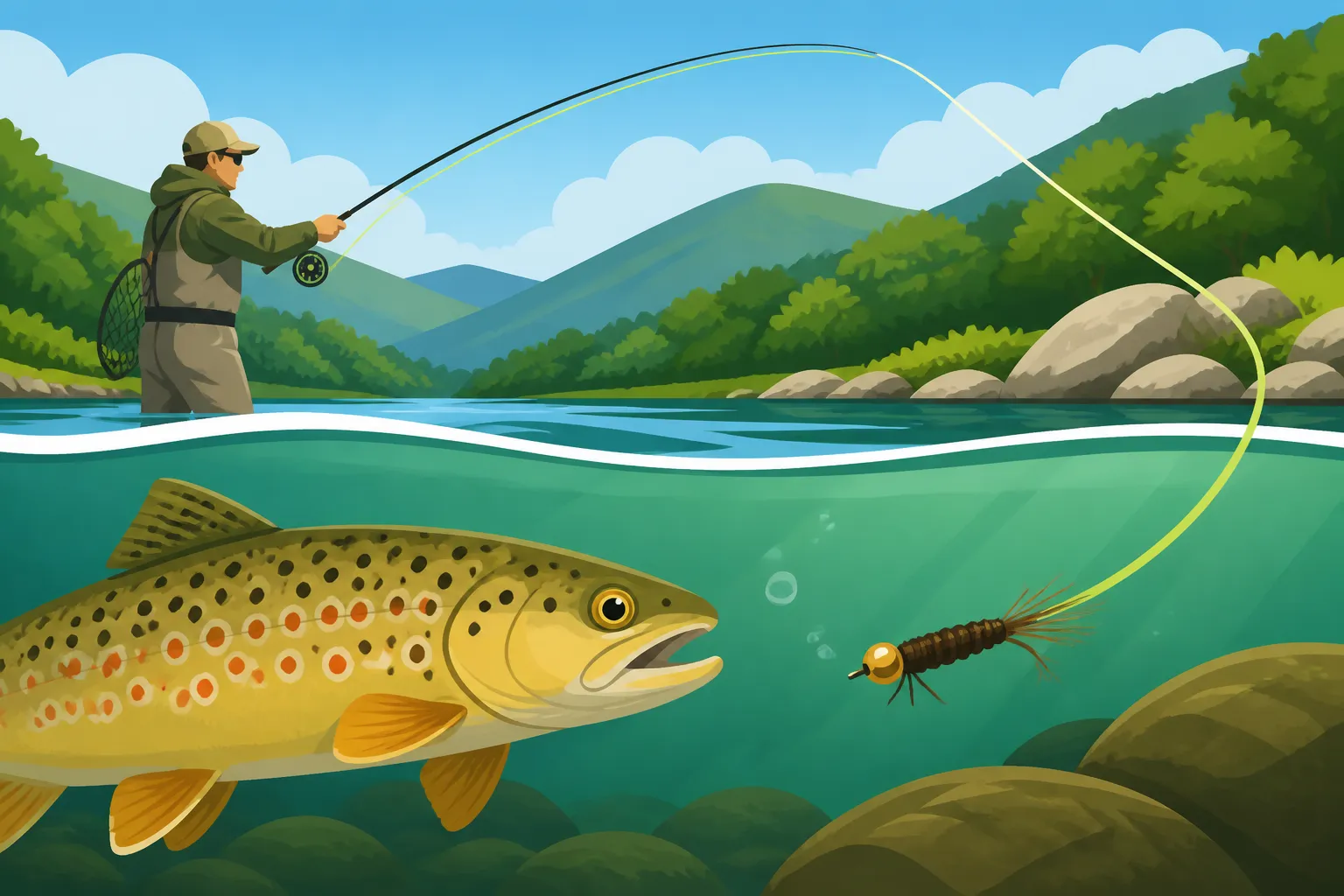
How to Nymph Fish for Trout
It can be incredibly frustrating when you’re out on a beautiful Tennessee trout stream, seeing fish rise or hold in clear water, and nothing you throw at them seems to get a bite. Sometimes, those fish just aren’t looking up for dry flies. More often than not, trout are feeding subsurface, and that’s where nymph fishing truly shines. This comprehensive guide will walk you through the ins and outs of nymph fishing for trout, helping you understand this highly effective technique so you can consistently put more fish in your net in our gorgeous Appalachian waters.
Understanding Nymph Fishing and Why It's a Game Changer for Tennessee Trout
Let's be honest, nothing beats the thrill of a trout rising to your dry fly. But if you spend all your time waiting for that perfect hatch, you're missing out on about 90% of a trout's diet. Nymph fishing imitates the aquatic insect larvae and pupae that make up the bulk of a trout's food source. These insects live on the stream bottom, under rocks, in weeds, or drift freely in the current, and trout are constantly on the lookout for them.
Why Trout Prefer Subsurface Meals
Think about it from a trout's perspective. It takes a lot less energy to simply open their mouth and let a delicious, slow-moving nymph drift right into it than to chase down a fleeing minnow or launch themselves out of the water for a tiny dry fly. Our Tennessee trout, whether they are wild brookies in a high-elevation stream or stocked rainbow trout in the Clinch River, are opportunistic feeders. They're constantly evaluating the energy return versus the effort expended. When aquatic insects are abundant, which is most of the time, trout are very accustomed to looking for food just below the surface, in the middle of the water column, or right on the stream bed. This natural feeding behavior makes nymphing incredibly effective, especially when there's no obvious hatch occurring. Ignoring this fact is probably one of the biggest reasons anglers go home empty-handed.
The Year-Round Effectiveness of Nymphing
One of the greatest advantages of nymph fishing is its consistent effectiveness across all seasons. While dry fly fishing might dominate the scene during specific hatches in spring or fall, and streamer fishing shines when targeting aggressive, larger fish, nymphs are productive year-round. In the colder months, when trout activity slows down, nymphs often represent the most reliable food source. During summer, when water temperatures rise, trout might retreat to deeper, cooler pools, and nymphs can still reach them. Even during a robust hatch, many trout will continue to feed on nymphs before they emerge, giving you a chance to hook up even if the dry fly bite is slow. This versatility means that if you master nymphing, you'll significantly increase your chances of success on any given day on any of Tennessee's fantastic trout waters, from the small mountain streams in the Smokies to the tailwaters like the Caney Fork. For more on seasonal changes, check out our guide on How Cold Water Changes Trout Fishing in Tennessee's Smoky Mountains.
Essential Gear for Nymph Fishing in Tennessee Streams
Getting set up for nymph fishing doesn't require a complete overhaul of your fly fishing arsenal, but there are a few key adjustments and specialized pieces of gear that will make a world of difference. The right setup helps you detect those subtle takes and present your flies effectively.
Rods, Reels, and Fly Line
For most Tennessee trout streams, a fast to medium-fast action fly rod in a 3-weight to 5-weight range, typically 8 to 10 feet long, is ideal. The extra length gives you better line control, which is crucial for achieving a drag-free drift and mending your line effectively. A longer rod helps keep more line off the water, reducing drag and making it easier to manage your leader. While a standard 9-foot 5-weight might work, upgrading to a 10-foot 3-weight or 4-weight will instantly improve your nymphing game. You can find some excellent rod and reel combos for a range of budgets on Amazon. The reel itself doesn't need to be anything fancy; a basic large arbor reel that balances your rod and holds your line is perfectly fine. As for fly line, a weight-forward floating line is generally preferred. Some anglers opt for specialized nymphing lines, which often have a thinner diameter and less stretch, but a good quality floating line will serve you well. Our guide on Best Fly Rods and Waders for Tennessee Trout Streams offers more specific recommendations.
Leaders, Tippet, and Strike Indicators
This is where the rubber meets the road for nymphing. Your leader setup is absolutely critical. A standard 9-foot tapered leader (3X-5X, depending on fish size and water conditions) can be a starting point, but many dedicated nymph anglers build their own or use specialized "sighter" leaders. A sighter leader often incorporates brightly colored monofilament sections that help you detect subtle strikes. These are easily visible against the water and background, even in challenging light. Attached to your leader will be your tippet, usually 18-36 inches of fluorocarbon. Fluorocarbon is less visible underwater and sinks faster than monofilament, which is a huge advantage when you want your nymphs to get down quickly.
Strike indicators are your eyes on the water for subsurface takes. There are many types:
- Thingamabobber: A buoyant, round foam indicator that’s highly visible and easy to adjust.
- Yarn Indicator: Very sensitive, lands softly, and can be treated with floatant to stay high.
- Pinch-on Foam Indicators: Small, discreet, and great for lighter rigs or shallower water.
- Slinky or Palsa Indicators: Very sensitive and allow for natural drift.
Experiment with different types to find what works best for you in various conditions. Often, when you think your fly is simply snagged on the bottom, that little twitch of your indicator was actually a fish taking your nymph! It's one of the most common frustrations for beginners, so pay close attention.
Nymphs and Weight
Of course, you can't nymph without nymphs! These flies are designed to imitate various aquatic insects, from mayfly and caddisfly larvae to stonefly nymphs and scuds. They come in a vast array of patterns, sizes, and colors. It's wise to carry a selection that represents the common forage in your chosen Tennessee stream. For example, patterns like the Pheasant Tail, Hare's Ear, Prince Nymph, and Caddis Larva are staples that should always be in your fly box.
Weight is paramount for getting your nymphs to the fish. This can be achieved in a few ways:
- Bead-head or Weighted Nymphs: Many nymphs are tied with tungsten or brass beads, or lead wire wrapped on the shank to help them sink.
- Split Shot: Small lead-free split shot can be crimped onto your leader, a few inches above your top nymph, to add extra weight. Start with a small amount and add more as needed until your flies are consistently ticking the bottom.
- Sighter Tippet: As mentioned, fluorocarbon tippet sinks naturally.
The key is to use enough weight to get your flies into the strike zone – usually right on or near the bottom – but not so much that you're constantly snagging. A good starting point is enough weight that your indicator occasionally pauses or twitches as your nymph bumps the bottom. Finding that sweet spot is a skill that comes with practice and can dramatically increase your catch rate. For more insights on specific fly patterns, check out our guide to Best Fly Patterns for Tennessee Smoky Mountains Streams.
Mastering the Drift: Techniques for Presenting Nymphs Effectively
Getting your nymph to the fish in a natural way is the holy grail of successful nymph fishing. Trout are incredibly sensitive to drag, which makes your fly move unnaturally, signaling to them that something is amiss. Achieving a "drag-free drift" is the goal, making your nymph look like an unattached, helpless insect tumbling in the current.
The Art of Casting and Mending
Nymph casting isn't about distance; it's about accuracy and control. You're usually targeting specific seams, pockets, or riffles where trout hold. A simple roll cast or a short, open-loop overhead cast is often all you need. The goal is to lay your leader and tippet upstream of where you expect the fish to be, allowing your nymphs to sink and then drift naturally through the strike zone.
Mending is the cornerstone of drag-free nymphing. As your line floats downstream, different current speeds will pull on your fly line, creating drag. Mending involves repositioning your fly line on the water without moving your nymphs.
- Upstream Mend: This is the most common. As your line starts to be pulled downstream faster than your nymphs, you lift your rod tip and flip an upstream curve of line onto the water. This gives your nymphs more time to drift freely before the current pulls on your line again.
- Downstream Mend: Less common but useful in specific situations, such as when fishing across a fast current into a slower one.
- Reach Cast: Instead of casting straight, you "reach" your rod tip upstream or downstream as the line lands, placing the initial mend before your fly even hits the water.
Learning to read the water, identify current seams, and anticipate where your line will be pulled is critical for effective mending. Our guide on How to Read Water When Trout Fishing can provide even more detail on this essential skill.
Reading Water and Strike Detection
Where do trout hold? In a river or stream, trout prefer places where they can expend minimal energy to hold their position while still having access to a constant food supply. Look for:
- Current Seams: The lines where fast water meets slow water.
- Behind Boulders or Structure: Creates a current break.
- Deep Pools: Especially in warmer weather, trout seek cooler depths.
- Riffles and Runs: Often excellent feeding lanes, particularly if there’s an uneven bottom creating small pockets.
- Under Overhanging Banks or Vegetation: Offers cover and shade.
Once you’ve identified a likely spot, your primary job is to get your nymphs to that depth and drift them through naturally.
Now for strike detection, which is often the most challenging aspect for new nymph anglers. Unlike a splashy dry fly take, a nymph strike can be incredibly subtle:
- Indicator Dips or Pauses: The most obvious sign. Even a slight hesitation or twitch means a fish has likely taken your fly.
- Line Movement: Watch your fly line and leader where it enters the water. Any sudden sideways movement, straightening, or quick stop can indicate a strike.
- "Feel": With practice, you'll learn to feel the subtle tug or bump of a fish taking your fly. This is where a sensitive rod really helps.
When you see any of these signs, set the hook immediately with a firm, upstream wrist flick. Many strikes are missed because anglers wait too long. Remember, trout can inhale and spit out a fly in a fraction of a second.
Choosing the Right Nymphs for Tennessee Waters
With so many nymph patterns available, it's easy to get overwhelmed. The key is to have a selection that imitates the most common aquatic insects found in Tennessee's trout streams and to understand when and why to use them.
Common Nymph Patterns for Tennessee Trout
Tennessee's trout streams, from the tailwaters to the high-country creeks, host a variety of aquatic insects. Having a diverse fly box will keep you prepared. Here are some indispensable patterns:
| Nymph Pattern | Imitates | Best Used For | Key Features |
|---|---|---|---|
| Pheasant Tail Nymph | Mayfly Nymphs | All-purpose, highly effective year-round | Slender body, sparse tail, often bead-head |
| Hare's Ear Nymph | Mayfly/Caddisfly Nymphs | Versatile, buggy, excellent for searching | Dubbed body, often bead-head, shaggy texture |
| Prince Nymph | Stoneflies/Mayflies | Good for larger trout in faster water | Dark body, white biot wings, bead-head |
| Caddis Larva/Pupa | Caddisfly Larvae/Pupae | Great during caddis hatches, often fished high | Green, tan, or olive body, sometimes ribbed |
| Squirmy Wormy | Annelid Worms | High-visibility, often a "last resort" | Bright, wiggly, often pink or red |
| Zebra Midge | Midge Larvae/Pupae | Excellent for picky trout, especially in winter | Small, slender, often black/silver bead-head |
| Stonefly Nymphs | Stonefly Nymphs | Best for larger trout in faster, rocky rivers | Large, flat profile, often dark or brown |
When it comes to purchasing, you'll find a wide selection of these essential nymphs on Amazon, often in multi-packs, making it easy to stock your fly box with various sizes and weights.
Matching the Hatch (Subsurface Edition) and Adjusting to Conditions
While dry fly fishing often involves precise "match the hatch" tactics, nymphing is a bit more forgiving. However, paying attention to what's happening under the water can still make a huge difference. If you see stonefly shucks on rocks, bigger stonefly nymphs might be the ticket. If tiny midges are flying around, a small Zebra Midge or a similarly sized pattern might be exactly what the trout are looking for.
Always carry nymphs in a range of sizes (from tiny #20-24 midges to chunky #8-12 stoneflies) and weights (bead-head vs. unweighted).
- Faster, Deeper Water: You'll need heavier, perhaps multiple, weighted nymphs or more split shot to get down quickly.
- Slower, Shallower Water: Lighter, unweighted, or lightly weighted nymphs are better to avoid snagging and maintain a natural drift.
- Clear Water: Use smaller, more natural-looking patterns and lighter tippet (5X-6X).
- Murky Water: Sometimes brighter, larger, or more "buggy" patterns can get noticed.
Don't be afraid to experiment with different patterns and weights until you find what the fish are keying into. A common setup is a "tandem nymph rig," where you tie a heavier "point fly" (often a stonefly or a larger bead-head nymph) to your tippet, and then tie a lighter, smaller "dropper fly" (like a Pheasant Tail or Midge) to the bend of the hook of the point fly. This allows you to fish two different patterns at once and easily adjust your weight. Remember to keep an eye on Tennessee Trout Limits and Season Rules for any specific water you're fishing.
Ultimately, nymph fishing is a journey of continuous learning and adaptation. It requires patience, keen observation, and a willingness to experiment. But once you start to crack the code and consistently bring in trout when others are struggling, you'll find it an incredibly rewarding technique. So, gear up, hit our beautiful Tennessee waters, and enjoy the subsurface world of trout fishing!
Disclaimer
This article is for general informational purposes only and does not constitute professional advice. Laws, prices and regulations vary by location and change over time. Consult a qualified professional for guidance on your specific situation.