Smallmouth Bass Growth Rate Compared to Largemouth
Smallmouth and largemouth bass growth rates in Tennessee lakes, explaining why largemouth gain weight faster and reach ten pounds.
Know what’s on the line.
Gamefish and panfish profiles — identification, behavior, feeding habits, and species-specific strategies for every catch.
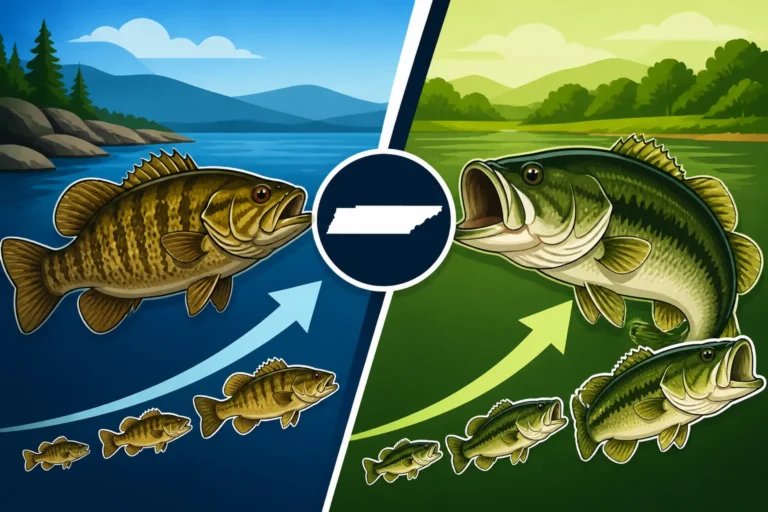
Smallmouth and largemouth bass growth rates in Tennessee lakes, explaining why largemouth gain weight faster and reach ten pounds.

Smallmouth bass fishing in rocky Tennessee streams requires specific gear and techniques to find fish hiding near boulders.

Tennessee smallmouth bass fishing spans all twelve months, requiring anglers to track water temperatures and seasonal behavior changes.

Smallmouth bass flavor, habitat, and meat quality explained for anglers deciding if this game fish makes good table fare.

Cold water smallmouth bass behavior, winter holding structures, and Tennessee seasonal fishing locations help anglers catch lethargic fish.

Tennessee smallmouth bass records, certified by the wildlife agency, explain the weight and measurement criteria for trophy fish.
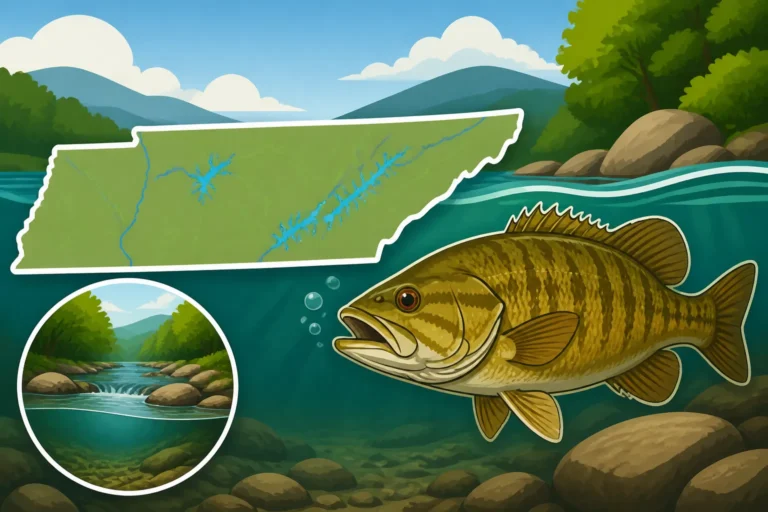
Smallmouth bass habitat preferences in Tennessee include clear, cool water and rocky structures like boulders and ledges.

Tennessee river smallmouth bass fishing locations, habitats, and effective techniques for catching trophy-sized fish in the Holston system.
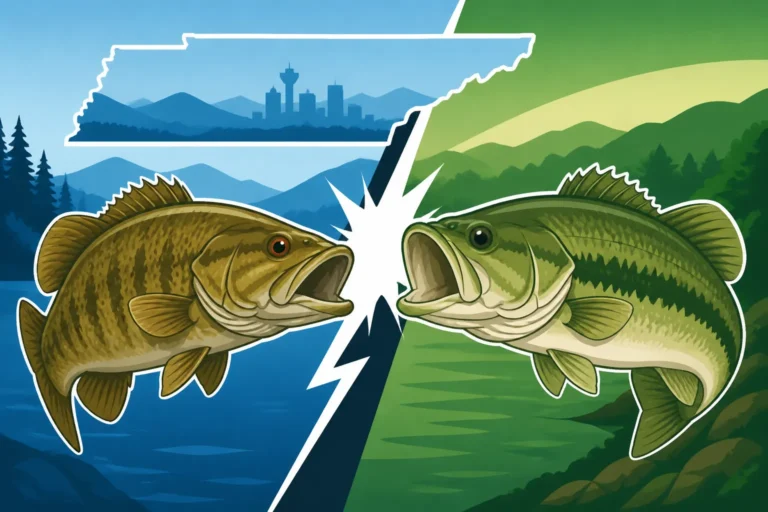
Smallmouth bass and largemouth bass identification involves comparing jawlines, dorsal fins, and distinct body color patterns.

Tennessee smallmouth bass identification methods and physical traits help anglers distinguish this state fish from other species.