How to Catch Trout in Cold Water
There’s nothing quite like the crisp air of a Tennessee winter morning, but let's be honest, trying to coax a bite out of a trout when the water feels like ice can be downright frustrating. Many anglers pack up their gear once the leaves fall, thinking the fishing is over until spring. But I’m here to tell you that some of the most rewarding trout fishing in Tennessee happens in cold water, you just need a few tricks up your sleeve. This guide will help you understand trout behavior in chilly conditions, select the right gear, and master the techniques that will put fish on your line, even when the mercury drops.
Understanding Cold Water and Trout Behavior
When those winter fronts roll through Tennessee, transforming our vibrant fall landscapes into stark, beautiful scenes, the fishing changes dramatically. Trout don't just disappear; they adapt. Knowing how they react to colder temperatures is the first step to successful winter angling.
The Impact of Water Temperature on Trout
Think about it: when it's cold outside, are you running marathons or snuggling up on the couch? Trout are a lot like us in that regard. As water temperatures drop, usually below 50 degrees Fahrenheit, a trout's metabolism slows down significantly. This means they're not nearly as active as they are in warmer months. They don't need to eat as much, and when they do, they're not going to expend a lot of energy chasing down fast-moving prey. They become much more opportunistic and energy-conscious feeders. You'll notice they’re less aggressive, their strikes are more subtle, and they're generally less willing to move far from their comfort zones. This fundamental shift in behavior dictates everything from where they hold to what baits they'll prefer. It's a game of patience and precision.
Where Trout Go When Temperatures Drop
Just like you seek shelter from the cold, trout will seek out areas in the water that offer stability and relative warmth. In rivers and streams, this often means deep pools, slow-moving runs, and areas with significant cover. Think about the deepest part of that bend in the Caney Fork River, or those undercut banks on the Clinch River. These spots offer a few key advantages for trout. First, deeper water tends to maintain a more consistent temperature than shallow areas, which can fluctuate wildly with air temperature. Second, slower currents require less energy for trout to hold their position, which is crucial when their metabolism is low. And third, structure like submerged logs, large rocks, or overhanging branches provide cover from predators and relief from strong currents, acting as a winter sanctuary. Knowing these prime hiding spots is half the battle when you're learning how to catch trout in cold water. You won't find them darting about in shallow riffles as much as you would during the spring or fall.
Essential Gear and Tackle Adjustments for Cold Water
Cold water fishing isn't just about technique; it's also about having the right tools. Your everyday summer setup might not give you the sensitivity or control you need to feel those subtle winter bites. Making a few strategic adjustments to your gear can dramatically increase your chances of success.
Rods, Reels, and Line for Sensitivity
When trout are sluggish, their bites can be incredibly light – sometimes it feels like nothing more than a slight pause in your line's drift. This is where sensitivity becomes paramount. You'll want a rod with a light to ultra-light action, preferably between 6 to 7 feet long. Graphite rods are excellent for this as they transmit even the slightest tap directly to your hands. Pair that with a small, lightweight spinning reel spooled with light line, generally 2 to 4-pound test fluorocarbon or monofilament. Fluorocarbon is often preferred because it's nearly invisible underwater and has less stretch than mono, which enhances sensitivity. When you're fishing those clear, cold Tennessee trout streams, invisibility can be a game-changer. You might even consider checking out options for ultralight rods on Amazon, as they often have a wide selection perfect for this kind of subtle fishing. Having the right rod and reel can truly make the difference between feeling a bite and thinking you just snagged a leaf.
Lure and Bait Choices for Sluggish Trout
Forget the flashy, fast-moving lures you might use in summer. Cold water trout prefer a slow, easy meal. Small, natural baits are often the most effective. Live worms, corn, and salmon eggs are classic choices that consistently produce. For artificials, think tiny. Small trout magnets, micro jigs (often in sizes 1/64 to 1/32 ounce), or very small spoons and spinners work best. The key is to present them slowly and naturally. For instance, a small, weighted nymph or an imitation worm that drifts naturally with the current can be incredibly effective. Consider colors that are natural or subtle, like browns, greens, or even white, which can mimic natural prey. You can find a huge variety of these specialized baits and lures on Amazon, perfect for those finicky trout. Remember, you're trying to appeal to a trout that's conserving energy, so a tantalizingly slow presentation of an easily digestible meal is your best bet.
Proven Cold Water Trout Fishing Techniques
Now that you understand where trout are and what gear you need, it's time to talk tactics. Cold water trout fishing is less about casting distance and more about pinpoint accuracy and delicate presentation.
Slow Presentations and Drifting
This is the golden rule of cold water trout fishing. Because trout are less active, they're not going to chase down a lure. You need to bring the bait directly to them, often right into their holding lie.
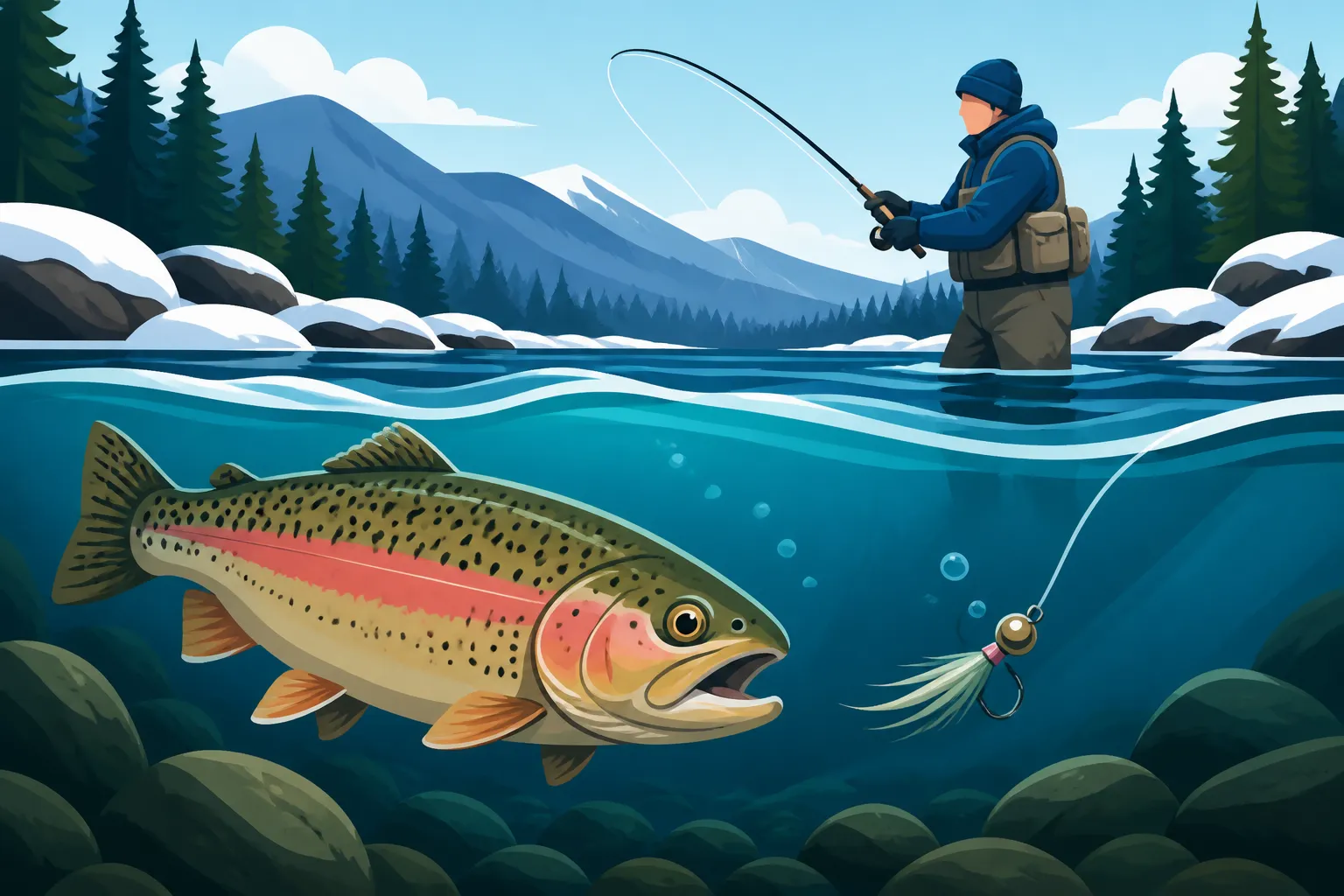
One of the most effective methods is drift fishing with natural bait or small artificials like nymphs or trout magnets. Use just enough weight to get your offering down to the fish without snagging constantly. A small split shot or two, positioned a foot or so above your hook, is usually sufficient. Let the current do the work, carrying your bait naturally through deep pools and runs. Watch your line like a hawk for any unusual movement – a twitch, a slight stop, or even your line just going slack can indicate a bite. Consider a small, highly visible indicator (like a bobber) to help detect these subtle takes, especially if you're nymph fishing. The goal is to make your bait look like an easy meal floating by, effortlessly. This technique is particularly effective in spots like the Clinch River, where the current can carry your bait right into a waiting trout's strike zone. For more on this, check out our guide on how to drift fish for trout in a stream ().
Targeting Deep Pools and Structure
As we discussed, trout retreat to deeper, slower waters in the cold. Your strategy needs to reflect this. Instead of casting across wide, open areas, focus your efforts on the deepest parts of pools, directly behind large rocks, or near any submerged structure. These are the fish's winter homes.
Casting slightly upstream and allowing your bait to sink and drift into these areas is crucial. You'll need to adjust your weight and presentation to ensure your bait is getting down to where the fish are holding, which could be right on the bottom. If you're not getting snags occasionally, you might not be fishing deep enough. Fan casting a deep pool, starting from the closest bank and working your way across, can help you locate where the fish are concentrated. Be methodical and patient; trout in these conditions might not respond to the first drift, but a well-presented offering on the third or fourth pass might just entice a bite. Remember, these fish are trying to conserve energy, so putting the food right in front of them is key.
Fly Fishing Considerations in Winter
Fly fishing in cold water requires a nuanced approach, often leaning heavily into nymphing techniques. The dry fly action of summer is long gone, as insects are far less active on the surface.
Nymphing is King: Your primary method will be nymphing. Use weighted nymphs, often tungsten-beaded, to get them down quickly in the water column. Patterns mimicking small aquatic insects like midges, stoneflies, and caddis larvae are highly effective. A common setup involves a strike indicator, a lead nymph, and a smaller dropper nymph trailing below it. The indicator helps you detect the subtle takes that are common in cold water. You can often find great selections of effective fly patterns for stocked trout () that work wonders in Tennessee's winter streams.
Streamer Fishing: While less common than nymphing, slow-retrieved streamers can also provoke a strike from a larger, more aggressive trout. The key is a very slow retrieve, often with long pauses, to mimic a struggling baitfish. Don't be afraid to let the streamer sink deep and twitch it gently rather than strip it quickly. For those looking to get into the specifics, our guide on fly fishing for trout for beginners () has some excellent foundational advice that applies even in cold weather.
Warmth and Comfort: Waders become even more essential in winter fly fishing. Our guide to the best waders for Smoky Mountains trout streams () highlights the importance of staying dry and warm, which is paramount when standing in cold water for hours.
Safety First: Staying Warm and Prepared
Let's face it, fishing in cold weather isn't just about catching fish; it's also about staying safe and comfortable. Tennessee winters can be unpredictable, with temperatures swinging wildly. Being prepared is not just smart, it's essential for an enjoyable and safe day on the water.
Layering for Tennessee's Winter Weather
The biggest mistake you can make when heading out for cold water fishing is underestimating the chill. The air might feel mild, but standing in or near cold water, especially when the wind picks up, can quickly lead to discomfort or worse. Layering is your best friend.
Start with a good base layer – something that wicks moisture away from your skin, like merino wool or synthetic thermals. Avoid cotton next to your skin, as it retains moisture and will make you colder. Next, add a mid-layer for insulation, such as a fleece jacket or a down vest. Your outer layer should be waterproof and windproof. A good quality fishing jacket and waterproof pants are non-negotiable. Remember, you can always shed layers if you get too warm, but you can’t add what you didn’t bring. Always pack an extra layer or two, especially if you're heading to higher elevations or remote areas like the Great Smoky Mountains where conditions can change rapidly. For more on how cold water changes trout fishing in Tennessee's Smoky Mountains (), proper layering is definitely part of the answer.
Essential Cold-Weather Gear
Beyond your layered clothing, there are a few other items that will make your cold-water fishing experience much more pleasant and safe.
Insulated Waders and Boots: If you plan on wading, insulated waders are a must. They provide a crucial barrier against the cold water. Pair them with warm, waterproof boots. Your feet will thank you.
Warm Hat and Gloves: You lose a lot of heat through your head, so a warm hat is critical. Fingerless gloves or convertible mittens can keep your hands warm while still allowing dexterity for tying knots and handling tackle. You can find some excellent options for these on Amazon, often with features designed specifically for anglers.
Hot Drinks and Snacks: A thermos full of hot coffee, tea, or cocoa can be a lifesaver, providing warmth from the inside out. High-energy snacks like granola bars, nuts, or fruit will keep your energy levels up.
Hand Warmers: Disposable hand warmers tucked into your pockets or gloves can provide hours of warmth and are a relatively inexpensive luxury.
First-Aid Kit: Always carry a basic first-aid kit, especially when fishing in remote locations. Minor cuts or scrapes can become bigger issues when your hands are numb from the cold.
Being prepared for the elements ensures that your focus remains on the fishing, not on shivering.
Comparing Cold vs. Warm Water Trout Fishing
To give you a clearer picture of how much things change, here's a quick comparison of general approaches for trout fishing in cold versus warmer water. This table highlights the key differences you’ll likely encounter.
| Feature | Cold Water Fishing (Below 50°F) | Warm Water Fishing (Above 50°F) |
|---|---|---|
| Trout Activity | Slow, sluggish, energy-conserving, subtle strikes | Active, aggressive, chase prey, more pronounced strikes |
| Preferred Lies | Deep pools, slow runs, heavy cover, bottom-oriented | Riffles, oxygenated runs, structure, more spread out |
| Lure/Bait Type | Small, natural baits (worms, corn, eggs), small nymphs, micro jigs | Larger spinners, crankbaits, topwater, larger flies, live bait |
| Presentation | Very slow, dead drifts, delicate, on the bottom | Faster retrieves, erratic movements, varied depths |
| Rod/Reel/Line | Light/ultra-light rod, small reel, 2-4lb fluorocarbon/mono | Medium-light rod, various reels, 4-8lb mono/fluoro |
| Apparel | Layered, insulated waders, waterproof, windproof, hat, gloves | Lighter clothing, breathable, sun protection, wading boots |
| Best Time of Day | Midday (warmest part of the day) | Early morning, late evening (cooler, active periods) |
Catching trout in cold water isn't just possible, it's incredibly rewarding. It demands a different kind of angling — one focused on patience, precision, and understanding the subtle nuances of trout behavior in chilly conditions. So don't let the dropping temperatures keep you indoors. Bundle up, adjust your approach, and experience the unique thrill of winter trout fishing in Tennessee. You might just find your new favorite season to hit the water!
Disclaimer
This article is for general informational purposes only and does not constitute professional advice. Laws, prices and regulations vary by location and change over time. Consult a qualified professional for guidance on your specific situation.