How to Fish Deep Water for Striped Bass
Oh, the thrill of chasing striped bass in Tennessee! There's nothing quite like the powerful fight of a striper, but let's be honest, finding them when they've decided to go deep can feel like searching for a needle in a haystack. Many anglers get frustrated, spending hours casting into empty water or just catching smaller fish. This guide is all about cutting through that frustration, giving you the insider knowledge and proven strategies to locate and successfully fish for striped bass when they're holding in those deeper, cooler water columns of our magnificent Tennessee reservoirs.
Why Striped Bass Go Deep: Understanding Their Habitat
Striped bass are incredible fish, built for power and speed. But just like us, they have certain environmental needs that dictate where they hang out. When the surface waters start heating up, especially in the dog days of summer, stripers will often seek refuge in deeper, cooler parts of the lake. It's not just about comfort, though; it's a matter of survival.
The Thermal Stratification Effect
Imagine a lake as a layered cake, especially in the warmer months. You've got the warm top layer, called the epilimnion, which is great for swimming but often lower in oxygen. Then there's the thermocline, a transitional zone where the temperature drops rapidly. Below that is the hypolimnion, the deep, cold layer. Striped bass are what we call "cool-water" fish. They thrive in temperatures usually ranging from the low 60s to mid-70s Fahrenheit. When the epilimnion gets too warm, they dive down, looking for that sweet spot in or just below the thermocline where the water is cooler and still has enough dissolved oxygen. This is critical for understanding How Water Temperature Affects Fish Activity. You can't just guess where that thermocline is; many modern fish finders will actually show you the thermocline as a distinct layer.
Following the Baitfish
It's an age-old adage in fishing: find the bait, find the fish. This holds especially true for striped bass. These powerful predators are constantly on the hunt for schools of shad, herring, or other forage fish. And guess what? Those baitfish also have preferences for water temperature and oxygen levels. So, when the stripers move deep, it's often because their dinner has moved deep too. This creates a fascinating dance in the water column, where both predator and prey are seeking optimal conditions. Learning to read your electronics to spot these bait balls is just as important as finding the stripers themselves. If you're seeing dense schools of bait at 40-50 feet, you can bet the stripers won't be far behind.
Essential Gear for Deep Water Striped Bass Fishing
Fishing deep for stripers isn't quite the same as casting a topwater lure in the shallows. You need specialized gear that can handle the depth, the heavier weights, and of course, the sheer power of a big striper. Trying to land a 20-pound striper from 60 feet down with inadequate tackle is a recipe for heartbreak and lost fish.
Rods, Reels, and Line: Built for Battle
For deep-water striped bass, you're going to want heavy-duty equipment. Think sturdy, fast-action rods, typically in the 7 to 8-foot range. A longer rod gives you more leverage when fighting a fish far below the boat and can help absorb the shocks. For reels, durable baitcasting or conventional reels are the way to go, especially those with a high line capacity and a smooth, powerful drag system. You'll be putting a lot of strain on that drag! When it comes to line, braided line is almost a must. It has virtually no stretch, which gives you incredible sensitivity to detect light bites at depth, and its thinner diameter for a given pound test allows you to cut through the water more efficiently with less resistance. Look for braided line with a high pound test rating; Amazon has a wide selection of reputable brands. You might opt for 30-65 lb test, often paired with a fluorocarbon leader for abrasion resistance and invisibility. For those interested in deeper insights, checking out articles like Best Rods for Striped Bass on Tennessee Reservoirs can give you more specific recommendations.
Specialized Deep Water Tackle
This is where deep-water striper fishing gets really interesting. Standard lures and weights just won't cut it when you're trying to present a bait 50, 60, or even 100 feet down.
- Downriggers: These are absolute game-changers for deep trolling. A downrigger uses a heavy cannonball weight on a cable to carry your fishing line down to a precise depth. Your fishing line is attached to the cannonball cable with a release clip. When a fish hits, the line pops free from the clip, and you fight the fish directly, without the heavy weight. This allows you to present lures or live bait at exact depths where the fish are holding, without needing heavy lead weights on your fishing line itself. They are an investment, but invaluable for consistent deep water success. For a detailed primer, read up on Downrigger Basics for Striped Bass.
- Lead Core Line: If you're not ready for downriggers, lead core line is another option. This line has a lead core wrapped in a braided sheath. Each color change on the line (usually every 10 yards) represents roughly 5 feet of depth at typical trolling speeds. So, if you let out 10 colors, your lure might be around 50 feet deep. It's heavier and less sensitive than braid, but it's a more budget-friendly way to get lures deep.
- Heavy Jigs and Spoons: When vertical jigging, you'll need jigs that are heavy enough to get down quickly and stay in the strike zone. Look for jigs in the 1 to 4-ounce range, or even heavier if you're in strong current or extreme depths. Blade baits, bucktail jigs, and heavy slab spoons are all excellent choices. Many anglers find great success with these, often available on Amazon, when the fish are schooled tight.
- Live Bait Rigs: For live bait, you'll need stout circle hooks, heavy swivels, and sinkers ranging from 1 to 8 ounces, depending on current and depth. Carolina rigs or three-way swivel rigs are common. Using a heavy bell sinker or a cannonball sinker will get your bait down quickly. Fresh gizzard shad or herring are often prime choices for striper bait.
Key Techniques for Deep Water Striped Bass
Once you've got the right gear, it's time to learn how to use it effectively. Deep water striper fishing isn't just about dropping a line; it's about strategy, precision, and patience.
Trolling with Downriggers or Lead Core
Trolling is arguably the most effective method for covering water and finding scattered schools of deep-water stripers. It allows you to present multiple baits at different depths and speeds until you dial in what the fish want.
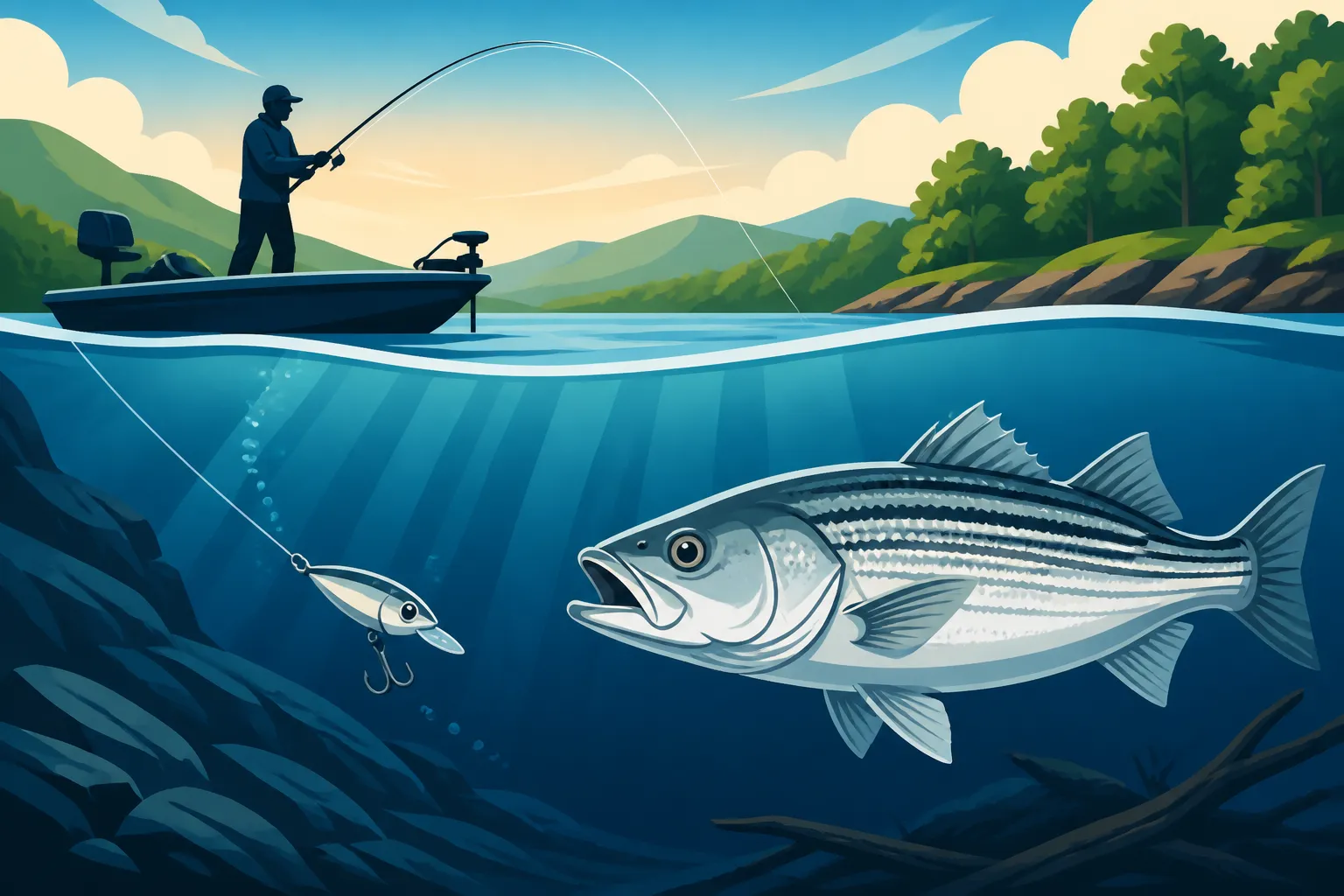
- Downrigger Precision: With downriggers, you can send one lure down to 30 feet, another to 45 feet, and a third to 60 feet. This "spread" lets you explore the entire water column where you expect fish to be. Pay close attention to your fish finder; if you see stripers at 50 feet, adjust your downrigger balls to run your baits right through that depth. Experiment with different lures—large crankbaits, swimbaits, or even live bait on a weighted harness work well. Vary your trolling speed until you get bites; sometimes a slow, deliberate pace is best, other times a faster retrieve triggers a reaction strike.
- Lead Core Strategy: If you're using lead core, getting precise depth takes a bit more finesse. You'll need to learn how many "colors" to let out for your target depth at a given speed. It's often helpful to mark your line. You can effectively troll large spoons, deep-diving crankbaits, or umbrella rigs with lead core. The beauty of it is its simplicity, though it lacks the fine-tuned depth control of a downrigger. Regardless of your method, understanding How to Troll for Striped Bass is paramount.
Vertical Jigging
When you've located a tight school of stripers on your sonar, vertical jigging can be absolutely deadly. This is an active and exciting way to fish.
- Finding the School: This technique relies heavily on your fish finder. Drive over a submerged hump, a deep creek channel, or a school of bait, and if you see those distinct arcs that indicate stripers, get ready. Mark your spot, either with a buoy or your boat's GPS, then position your boat directly over them.
- The Drop and Lift: Drop a heavy spoon, blade bait, or bucktail jig straight down into the school. Let it hit the bottom, then reel up a few feet. The key is to impart an erratic, enticing action. Lift the rod tip sharply, then let the jig flutter back down on a semi-slack line. Stripers often hit on the fall, so pay close attention. Experiment with the aggressiveness of your jigging motion and the length of your pauses. Sometimes a subtle lift is all it takes, other times a violent rip will trigger a strike. It takes practice, but once you get the feel for it, you'll be hooked!
Live Bait Presentations
For many seasoned striper anglers, nothing beats live bait, especially when the fish are deep and finicky.
- Freeline or Weighted Rigs: If the stripers are suspending at a specific depth, you can freeline a large gizzard shad or herring down to them, allowing the bait's natural swimming action to attract attention. More often in deep water, you'll need to use a weighted rig. A Carolina rig with a heavy egg sinker (2-6 oz) or a three-way swivel rig that lets you attach a heavy bell sinker and a leader to your live bait are excellent choices. Let your bait swim freely on a long leader (2-4 feet) from the weight.
- Downlining: This is a fantastic method for delivering live bait directly to deep-holding stripers. Using your fish finder, identify the depth of the fish. Then, lower a live bait, rigged on a circle hook with an appropriate weight, straight down to that exact depth. Keep your rod in a holder, or hold it gently, ready for that unmistakable thump of a striper taking your bait. This technique is particularly effective when the fish are lethargic or wary of artificial lures.
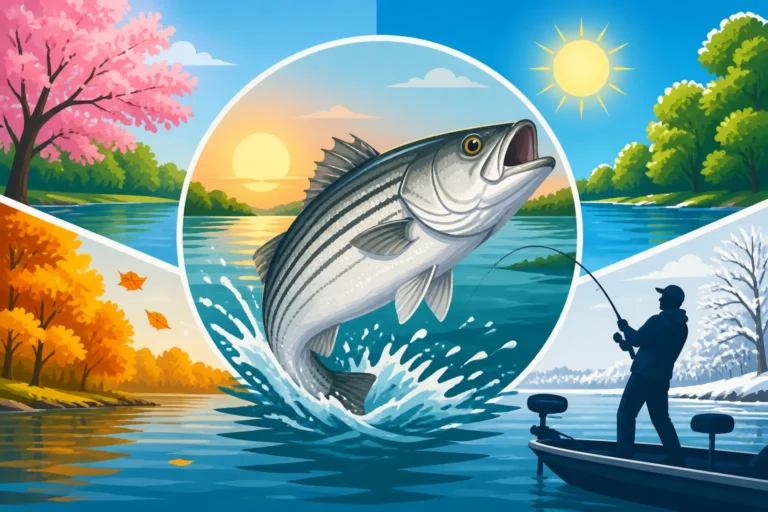
Seasonal Considerations for Deep Water Stripers
While deep water fishing for striped bass is often associated with summer, these powerful fish can be found in the depths throughout much of the year in Tennessee, though their precise locations and behaviors will change.
Summer's Deep Retreat
As mentioned earlier, summer is prime time for deep water striper fishing in Tennessee. The scorching surface temperatures push these cool-water predators into the cooler, oxygenated depths. Lakes like Norris Lake Fishing Guide, Tennessee's Clearest Water and Percy Priest Lake Fishing Near Nashville, Tennessee become hotspots for this type of fishing. During this time, they often suspend over deep creek channels, submerged humps, or near the dam where deep water is readily available. This is when your downriggers and heavy vertical jigs will shine, as you chase schools of baitfish holding in the thermocline. Pay extra attention to your electronics, as finding the thermocline and the bait is the entire battle.
Fall and Winter Movements
Don't put away your deep-water gear when the leaves start to turn! As fall progresses and water temperatures begin to cool, the thermocline will start to break up, and stripers might move shallower for periods, especially during the morning and evening. However, they will still frequently dive back into deeper water, often holding along steep bluff walls, main lake points, or deep creek channels as the baitfish continue to move. In winter, with the entire water column becoming more uniform in temperature, stripers can be found anywhere from the surface to the deepest parts of the lake. Often, they will school up tightly in these deeper basins, making vertical jigging a highly effective tactic if you can locate them. Knowing Best Month to Catch Striped Bass on Tennessee's Norris Lake or Percy Priest Lake Tennessee Best Season for Striped Bass will significantly increase your odds of success. They can often be found congregated in river bends or over significant submerged structure in very deep water.
Spring Transitions
Spring offers a mixed bag. Early spring might still see stripers in deeper water, particularly if there's a late cold snap. As the water warms, they'll move shallower, following the baitfish that are often staging for their own spawning cycles. However, even in spring, stripers will use deeper channels and points as travel corridors or resting areas, especially after a feeding spree in the shallows. So, keeping an eye on those deeper contours is still a smart move, even if you're primarily targeting shallower fish.
No matter the season, remember that Tennessee's lakes are vast, and striped bass are always on the move. Adapting your techniques and understanding their seasonal patterns is key to consistent success.
Here's a quick comparison of deep-water striper techniques:
| Technique | Best For | Key Gear | Pros | Cons |
|---|---|---|---|---|
| Downrigger Trolling | Scattered fish, precise depth targeting | Downriggers, specific lures, live bait | Extremely precise depth control, covers lots of water | Expensive setup, can be complex for beginners |
| Lead Core Trolling | Covering water, budget-friendly deep trolling | Lead core line, heavy lures, spoons | More affordable than downriggers, good for mid-depths | Less precise depth control, heavy line reduces sensitivity |
| Vertical Jigging | Tight schools of fish located by sonar | Heavy jigs/spoons, sensitive rod | Highly effective on schooled fish, active and engaging | Requires accurate boat positioning, can be physically demanding |
| Downlining Live Bait | Finicky fish, exact depth presentation | Live bait, circle hooks, heavy weights | Often irresistible to stripers, can be very productive | Requires live bait well, bait can be costly/hard to acquire |
Always remember that fishing for deep-water striped bass is often about putting in the time and learning to read the water, and especially your electronics. The rewards of hooking into one of these powerful fish are well worth the effort.
Disclaimer
This article is for general informational purposes only and does not constitute professional advice. Laws, prices and regulations vary by location and change over time. Consult a qualified professional for guidance on your specific situation.