How to Catch Catfish in a Reservoir
Catching catfish in a reservoir can be a puzzle, especially when you're used to river systems or smaller ponds. The vastness of these large bodies of water, combined with fluctuating depths and currents, often leaves anglers scratching their heads about where to even start. This guide aims to demystify reservoir catfish fishing in Tennessee, offering practical advice and techniques to help you consistently hook into some whiskered giants.
Understanding Reservoir Catfish Behavior
Before you can consistently catch catfish in a reservoir, you really need to get inside their heads – or at least understand their general tendencies. Reservoirs are essentially dammed rivers, creating unique habitats that catfish adapt to. Unlike a fast-flowing river where current is king, reservoirs introduce vast open waters, deep channels, and plenty of submerged structure.
Seasonal Movements and Feeding Patterns
Catfish in Tennessee reservoirs are highly influenced by the seasons, much like other species. In spring, as water temperatures begin to rise, catfish become incredibly active. They move into shallower coves and flats to feed heavily in preparation for spawning. This is often one of the best times to target them, as they're hungry and more concentrated in accessible areas. Look for areas with incoming warmer water or shallower points.
As summer heats up, catfish will often move to deeper, cooler waters, especially during the day. This doesn't mean they're impossible to catch; it just means you'll need to adjust your approach. They'll often stage in submerged creek channels, around deep timber, or near the thermocline if the reservoir develops one. Night fishing for catfish can be particularly productive during these warmer months, as the fish often move shallower to feed under the cover of darkness. For more on year-round patterns, check out our guide on Tennessee Catfish Fishing Techniques and Seasons.
Come fall, as temperatures cool, catfish will again become more active, feeding heavily to build up reserves for winter. They might spread out a bit more, but they'll still be associated with structure and forage. During winter, their metabolism slows down significantly. They'll typically move to the deepest parts of the reservoir, often congregating in large schools in the main river channel or deep holes, becoming much less active.
Key Reservoir Structures Catfish Love
Reservoirs are full of hidden gems for catfish, if you know where to look. They aren't just big, empty bowls of water. They have intricate underwater topography that mimics their original riverine environment, along with newly submerged features.
One of the most productive structures for finding catfish in reservoirs is the old river channel. Before the reservoir was filled, there was a river flowing through, and that channel remains a vital highway for fish. Catfish will use these channels as travel corridors and holding areas, especially when moving between feeding flats and deeper wintering holes. Drop-offs and ledges along these channels are prime ambush points.
Beyond the main channel, look for submerged timber and brush piles. These offer cover, shade, and a place for baitfish to hide, which in turn attracts predatory catfish. Old roadbeds, foundations of former homes, and even underwater bridges can create significant structure that holds fish. These artificial structures are often overlooked by casual anglers but can be goldmines for active catfish. Areas where creeks or rivers feed into the reservoir also tend to be hotspots, as they bring in nutrients and often create deeper scour holes or current breaks that catfish find appealing.
Essential Gear for Reservoir Catfish
Having the right equipment can make all the difference between a frustrating day on the water and a successful one. Catfish in reservoirs can grow quite large, so your gear needs to be up to the task of handling powerful runs and heavy weights.
Rods, Reels, and Line: Building a Strong Foundation
For reservoir catfish, you're going to want robust equipment. Forget about your ultralight trout setup; we're talking about serious pulling power here. A medium-heavy to heavy action rod, typically between 7 to 10 feet long, is ideal. The extra length helps with casting heavier baits, setting the hook over long distances, and absorbing the shock of a hard-fighting fish. Fiberglass rods are often preferred for their durability and forgiving parabolic bend, which helps prevent hooks from tearing out of a fish's mouth.
Pair your heavy rod with a sturdy baitcasting reel or a large spinning reel. Baitcasters are often favored by experienced catfish anglers because they offer superior cranking power and control when fighting large fish. Look for reels with a strong drag system and a high line capacity. You'll need to hold a lot of line for those deep-water battles or long casts from the bank. For a look at what specific rods might work, our guide on Best Rods for Catfish Fishing can offer more ideas.
When it comes to line, prioritize strength and abrasion resistance. Monofilament lines in the 20 to 50-pound test range are a popular choice due to their stretch, which acts as a shock absorber, and their relative affordability. However, many anglers are increasingly turning to braided lines of similar or even higher strength. Braid has almost no stretch, offering incredible sensitivity, which can be crucial for feeling subtle bites in deep water. Its thinner diameter also means you can spool more strong line onto your reel. Just be aware that braid needs a good, stout rod to compensate for its lack of stretch. Fluorocarbon leader material is also a good idea if you're fishing clear waters, as it's nearly invisible underwater, but it adds a bit of cost.
Hooks, Sinkers, and Terminal Tackle
Your terminal tackle needs to be just as robust as your rod and reel. Catfish have tough mouths, so sharp, strong hooks are non-negotiable. Circle hooks are highly recommended for catfish fishing, especially if you plan on releasing your catch. They are designed to hook fish in the corner of the mouth, which is safer for the fish and makes for easier unhooking. Sizes typically range from 5/0 to 10/0, depending on the size of the bait and the target species. A quality set of hooks can often be found on platforms like Amazon, ensuring you get reliable gear.
Sinkers are crucial for getting your bait down to where the catfish are holding, especially in reservoirs with deep water or current. Egg sinkers, no-roll sinkers, and flat-sided pyramid sinkers are all popular choices. The weight you choose will depend on the depth, current, and how far you need to cast. You might need anywhere from a 1/2 ounce to several ounces. Always carry a variety.
For your overall rig, the slip-sinker rig (often called a Carolina rig for catfish) is incredibly popular and effective. It allows the fish to pick up the bait and run without feeling the weight of the sinker, leading to more confident bites. Other effective rigs include a three-way swivel rig, which is excellent for presenting bait near the bottom in current, or a simple float rig if you're fishing shallower areas or want to suspend your bait.
Proven Techniques for Reservoir Catfish
Fishing a reservoir effectively requires a blend of strategy and adaptability. Whether you're casting from the bank or cruising the depths in a boat, a few core techniques will consistently put catfish in your net.
Bank Fishing Strategies for Reservoirs
Don't let the vastness of a reservoir intimidate you if you're a bank angler. Many excellent spots are accessible from shore, and you can still have incredibly productive days. The key is to find areas where deep water is accessible from the bank. Look for old roadbeds, submerged creek channels, or sharp drop-offs near the shore. Public parks and access points often have these features, but you might need to scout around a bit.
Casting long distances is often beneficial when bank fishing in reservoirs. A long rod and a heavy sinker will help you reach those deeper channels or ledges further out. Using a slip-sinker rig is highly effective here; cast it out, let it settle, and then leave your rod in a sturdy rod holder with the bail open or the drag slightly loosened. This allows a catfish to pick up the bait and move away without feeling resistance, giving you a better chance to set the hook when you grab the rod. Keep an eye on your line for any movement or use a bell on your rod tip for audible alerts. Our article on How to Catch Catfish From the Bank offers even more specialized tips.
It's also worth considering the time of day. During the hot summer months, catfish often move into shallower areas to feed as the sun sets and throughout the night. This means that a spot that was dead during the day could become a hotspot after dark. Bank fishing at night can be a thrilling experience, and platforms like Amazon offer excellent headlamps and portable lights to make it safer and more practical.
Boat Fishing: Reaching Deeper Waters and Structure
Boat anglers have a distinct advantage in reservoirs: mobility. This allows you to cover vast areas and target structures that are inaccessible from shore. Utilizing your boat's electronics, such as a fish finder, becomes critical. These devices can show you depth changes, submerged timber, old river channels, and even schools of baitfish and larger fish, helping you pinpoint exactly where the catfish might be holding.
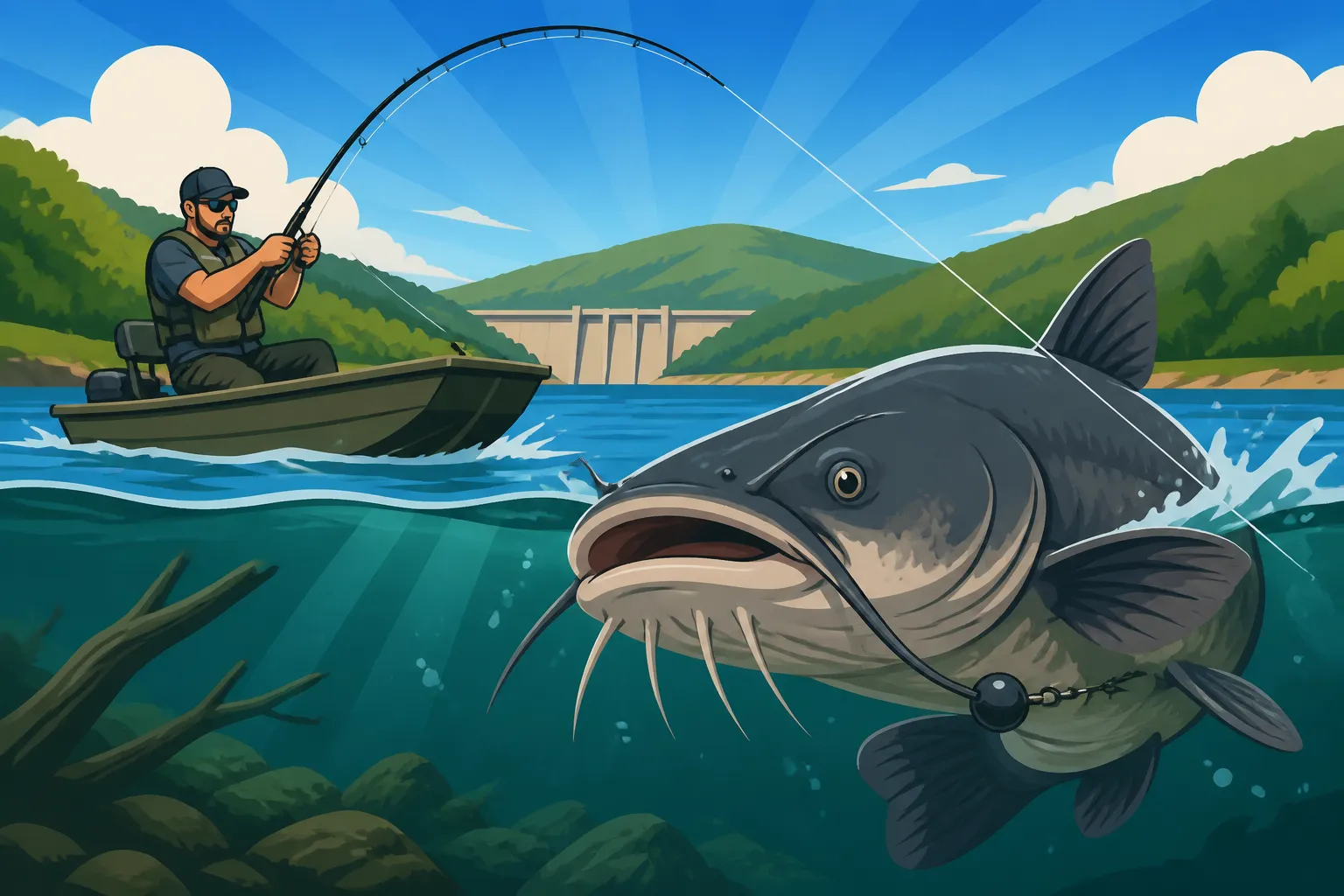
One of the most effective techniques from a boat is bottom fishing in deeper water. Anchor up-current from a promising structure like a channel bend or a large brush pile. Cast multiple lines with different baits and sinker weights to cover various depths and areas. You can also drift fish, allowing your boat to slowly move across a large flat or along a channel edge while your baits drag along the bottom. This is an excellent way to cover ground and find actively feeding fish. For those pursuing bigger catches, understanding Blue Catfish Identification and Habitat in Tennessee is key, as these often dwell in deeper reservoir sections.
When boat fishing, don't overlook trolling as an option, especially for covering large areas quickly. While often associated with species like stripers, slow trolling with live or cut bait can be incredibly effective for reservoir catfish, particularly when they are scattered. Use heavy weights to keep your bait near the bottom, even at slow speeds. Always make sure your boat is equipped with the necessary safety gear and that you understand Boat Fishing Rules and License Requirements in Tennessee before heading out.
Bait Selection: What Catfish Crave
Catfish are notoriously unfussy eaters, but certain baits are undeniably more effective in reservoirs. When choosing bait, think about what a catfish naturally eats, but also what stands out and emits a strong scent.
Natural baits are almost always a winner. Cut bait, particularly from oily fish like shad, herring, or even smaller panfish, is a top choice. The oil and blood release a scent trail that catfish can detect from a long distance, making it incredibly effective. Just make sure to check local regulations on what fish can be used as bait. Chicken liver, a classic catfish bait, is also highly effective due to its strong scent and soft texture, though it can be messy to work with. Earthworms, especially larger nightcrawlers, are another reliable option, appealing to a wide range of catfish sizes.
Prepared baits, often called "stink baits" or "punch baits," are also very popular, especially for channel catfish. These factory-made baits are designed to have a powerful, lingering scent that drives catfish wild. Many anglers swear by specific brands, and you can find a huge variety available on Amazon. Some anglers even make their own concoctions using ingredients like cheese, blood, and various strong-smelling oils. No matter which you choose, remember that fresh bait is often the most effective bait, so keep it cool and change it out regularly. Exploring Best Bait for Bottom Fishing Catfish provides even more insight into popular choices.
Maximizing Your Catch and Staying Safe
Catching catfish in a reservoir is a rewarding experience, but a few additional considerations can significantly improve your chances and ensure a safe trip.
Timing Your Trip and Locating Fish
Beyond understanding seasonal movements, the specific time of day can dramatically impact your success. As mentioned, night fishing is often prime for reservoir catfish, especially during the warmer months. The fish move into shallower feeding grounds, and the low light conditions make them less wary. For more on this specific technique, our guide on How to Catch Catfish at Night can be very helpful. However, early mornings and late evenings during spring and fall can also be incredibly productive as catfish feed actively during these cooler periods.
Locating fish in a vast reservoir can feel like searching for a needle in a haystack, but diligent scouting and observation pay off. Pay attention to signs of baitfish, such as disturbances on the surface or birds diving. Where there's bait, there are usually predators, including catfish. Use your fish finder to mark submerged channels, humps, and brush piles. If you see signs of other anglers consistently catching fish in a particular area, it's worth checking out (respectfully, of course). Reservoirs like Watts Bar Lake Catfish Fishing Spots or Kentucky Lake Catfish Fishing Spots are renowned for their catfish populations, so starting with well-known hotspots can provide a great advantage.
Weather patterns also play a role. Catfish often become more active before a cold front moves in, as they sense the change and feed heavily. Conversely, a sudden drop in temperature after a front can shut down the bite for a day or two. Overcast days can extend the productive shallow-water feeding periods, as the sun's intensity is reduced.
Safety on the Water and Respect for Regulations
Safety should always be your top priority, especially on large reservoirs. If you're fishing from a boat, ensure all required safety gear is onboard and in good working order. This includes life jackets for everyone, a fire extinguisher, signaling devices, and navigation lights for night fishing. Always tell someone where you're going and when you expect to return. Tennessee reservoirs can experience sudden weather changes, so be prepared for rain, wind, or even thunderstorms.
Finally, always be aware of and respect Tennessee's fishing regulations. This includes understanding Crappie Limits Under Tennessee Fishing Rules or any other species you might incidentally catch, as well as specific size and creel limits for catfish. Always carry your valid Tennessee fishing license, and if you plan on keeping fish, know the regulations for the specific body of water you're on, as some lakes have unique rules that override statewide defaults. Being a responsible angler not only protects the resource but also ensures you have a positive experience every time you hit the water.
Disclaimer
This article is for general informational purposes only and does not constitute professional advice. Laws, prices and regulations vary by location and change over time. Consult a qualified professional for guidance on your specific situation.