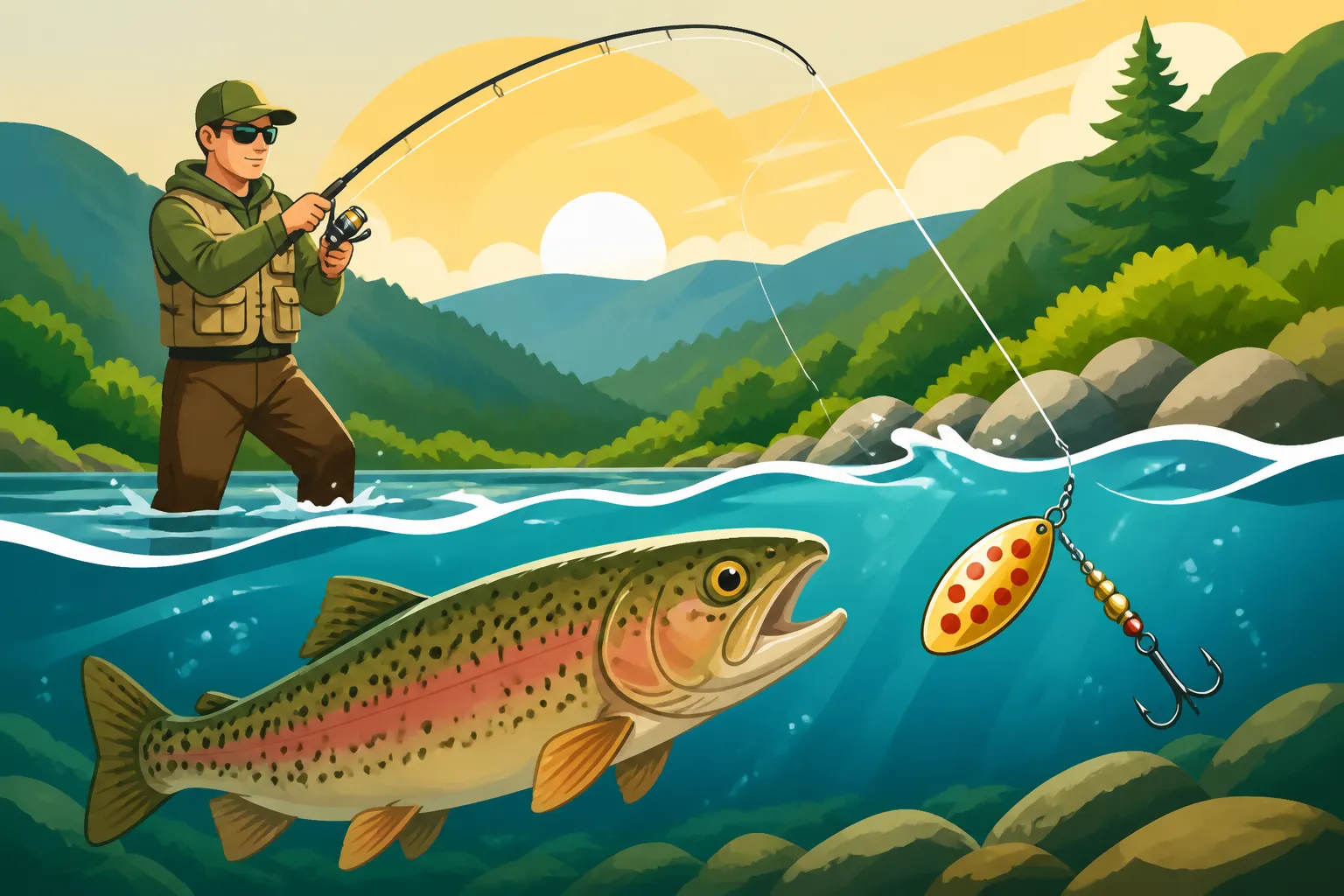
How to Spin Fish for Trout
So many folks think that if you want to catch trout in Tennessee, you have to don a vest, wade into a pristine mountain stream, and delicately cast a tiny fly. And while fly fishing is certainly a beautiful art, it's also incredibly intimidating for many. The truth is, you don't need to learn a whole new casting technique or invest in specialized, often expensive, equipment to enjoy the thrill of trout fishing. Spin fishing offers a wonderfully accessible and highly effective way to target those beautiful, elusive trout right here in our incredible Tennessee waters. This guide is all about demystifying the process, showing you exactly how to get started and succeed with spin fishing for trout, no matter your experience level.
Why Spin Fishing for Trout is a Great Option
When you picture trout fishing, your mind might immediately conjure images of seasoned anglers in chest waders, gracefully whipping fly lines back and forth. It's a classic image, no doubt, but it often leads new anglers, or those just looking for a simpler approach, to believe that trout fishing is an exclusive club requiring years of dedication to join. This couldn't be further from the truth. Spin fishing for trout is not only incredibly effective but also much more approachable for most people.
Dispelling the Fly Fishing Myth
Let's be real, the world of fly fishing has a certain mystique around it, and sometimes that can feel a bit exclusive. You hear about different "hatches," specific fly patterns, and complex casting techniques, and it's easy to think, "Well, that's beyond me." This perception often discourages folks from even attempting to fish for trout, assuming it's too difficult or requires too much specialized knowledge and gear. But honestly, for every purist who insists on a dry fly, there are countless happy anglers successfully catching trout with a simple spinning rod.
Spin fishing strips away much of that perceived complexity. You don't need to worry about intricate knots for tiny flies, or mastering a roll cast. You're working with gear that's familiar to most freshwater anglers, allowing you to focus on the basics of locating fish, presenting your bait or lure, and feeling that satisfying tug on your line. It's about getting out there and enjoying the experience, not passing a proficiency test.
Benefits of Spin Fishing for Beginners and Pros
Whether you're just dipping your toes into fishing or you're a seasoned angler looking for a different challenge, spin fishing for trout offers a ton of advantages. For beginners, the learning curve is much gentler. The casting motion is intuitive, and the equipment is generally less expensive to get started with than a full fly fishing setup. You can often use gear you already own for other types of freshwater fishing, making it incredibly convenient.
Even experienced anglers find value in spin fishing for trout. Sometimes, conditions just call for it – a heavy rain, high winds, or murky water can make fly fishing incredibly difficult, but a well-presented spinner or bait can still entice a strike. Plus, spin fishing allows for a wider range of baits and lures, giving you more versatility to match what the trout are feeding on. It's also a fantastic way to cover more water efficiently, which can be key when you're trying to locate scattered fish in a larger river or reservoir.
Essential Spin Fishing Gear for Tennessee Trout
Alright, now that we're all on board with the awesomeness of spin fishing for trout, let's talk about what you need to get started. Don't worry, we're not talking about a fortune here, but having the right tools for the job makes all the difference between a frustrating day and a fantastic one. Think of it as preparing for a hike; you wouldn't go without proper shoes, right? Fishing is no different.
Rods, Reels, and Line: The Core Setup
When it comes to your rod, reel, and line, you're looking for a setup that offers sensitivity and lightness. Trout, especially those wily wild ones, can be quite subtle nibblers, so feeling those light bites is crucial.
For a rod, I'd recommend an ultralight or light action spinning rod, somewhere between 5 and 7 feet in length. An ultralight rod will give you maximum sensitivity, making those smaller trout feel like giants, and it'll cast lighter lures a mile. A light action rod offers a bit more backbone if you're expecting slightly larger fish or fishing in areas with more snags. You can find some excellent and affordable options on Amazon, which is a great place to start your search if you're on a budget. The shorter rods are great for tight, brushy streams like you might find in the Great Smoky Mountains, while longer rods offer better casting distance on bigger rivers or lakes.
Pair that rod with a small spinning reel (size 1000 or 2000 is usually perfect). The key is to keep it balanced with your rod – you don't want a heavy reel on an ultralight rod, or your setup will feel clunky. Look for a smooth drag system, as trout can put up a surprisingly strong fight, and you'll want that drag to give line smoothly to prevent break-offs.
For line, fluorocarbon or monofilament in the 2 to 6-pound test range is ideal. Fluorocarbon is nearly invisible underwater and sinks, which can be an advantage, while monofilament is more forgiving due to its stretch and tends to be more affordable. Some anglers even use braided line with a fluorocarbon leader, giving them the best of both worlds – the sensitivity and strength of braid, and the invisibility of fluorocarbon. The lighter the line, the more natural your presentation, and the more likely you are to get a bite.
Lures, Baits, and Tackle: What Trout Like
This is where the fun really begins! Trout can be finicky, but they also have some consistent preferences. You'll want a small assortment of lures and natural baits.
Spinners: These are classic trout magnets. Brands like Mepps and Rooster Tail are practically synonymous with trout fishing. The flash and vibration mimic small baitfish or insects, triggering strikes. Carry a few different sizes (1/16 oz to 1/8 oz) and colors. Gold, silver, and bright colors like chartreuse are always good to have on hand. Spinners are especially effective in moving water.
Spoons: Small casting spoons, like those made by Little Cleo or Kastmaster, also create flash and wobble. They're great for casting longer distances and can be jigged vertically in deeper holes.
Soft Plastics: Tiny grubs, worms, or trout magnets rigged on a small jig head can be incredibly effective, especially for picky trout. These mimic aquatic insects or small forage. Think bright colors like pink, orange, or chartreuse, as well as natural shades like brown and green.
Natural Baits: Sometimes, nothing beats the real thing. PowerBait, corn, salmon eggs, and small worms (like red wigglers) are incredibly popular, particularly for stocked trout. Rig these on a small hook (size 10-14 is common) under a bobber or with a small split shot to let them drift naturally. Live minnows, where permitted, can also be dynamite for larger, aggressive trout.
Don't forget the small stuff:
- Hooks: Size 8-14, single barbless hooks are often preferred or even required in some catch-and-release waters.
- Split Shot: Small weights to help your bait sink or get your lure deeper.
- Swivels: Tiny barrel or snap swivels to prevent line twist, especially when using spinners.
- Bobbers: Small, sensitive bobbers are excellent for suspending natural baits.
You can easily fill a small tackle box with all these essentials, and Amazon or your local bait shop will have plenty of options.
Waders and Accessories for Comfort and Safety
While not strictly "fishing gear," having the right apparel and accessories can make or break your trout fishing experience, especially in Tennessee's varied waters.
If you plan on wading into streams – which is often the best way to approach wild trout – a good pair of waders is invaluable. Chest waders will keep you dry and warm in colder waters, allowing you to access prime fishing spots that bank anglers can't reach. Choose breathable waders for warmer weather, and neoprene for colder conditions. Don't forget wading boots with good grip, as stream bottoms can be slippery with rocks and algae. Safety is paramount, so consider a wading belt, which helps prevent your waders from filling with water if you take a tumble.
Beyond waders, consider these accessories:
- Polarized Sunglasses: These are a game-changer. They cut glare, allowing you to see deeper into the water to spot structure and even fish. You'll wonder how you ever fished without them.
- Small Backpack or Vest: To carry your tackle, water, snacks, and any fish you might keep.
- Nippers/Line Cutters: Essential for tying knots and cutting line.
- Forceps or Pliers: For removing hooks safely, especially if you're practicing catch and release.
- Measuring Tape/Scale: If you plan on keeping fish, know your local regulations for length and creel limits. You can find information on Tennessee's trout limits and season rules, which is crucial for responsible angling.
- Net: A small, soft-mesh net is great for landing trout quickly and safely, minimizing stress on the fish.
Mastering Spin Fishing Techniques for Tennessee Trout
Having all the right gear is a great start, but knowing how to use it effectively is what truly puts fish in the net. Spin fishing for trout isn't just about casting and reeling; it's about understanding the environment, presenting your offering naturally, and adapting to what the fish want. It's a bit like a dance, where you lead, but the trout dictates the rhythm.
Reading the Water: Where Trout Hide
Trout are creatures of habit and structure. They seek out places where they feel safe, where food is abundant, and where the current isn't too strong, yet still delivers oxygen and meals. Learning to "read the water" means understanding these preferences and spotting those prime hiding spots.
Look for areas with current breaks: the calm water behind large rocks, fallen trees, or eddies where the current swirls. These spots offer trout a respite from the main flow while still providing a conveyor belt of food. Deeper pools, especially those with some overhead cover from trees or undercut banks, are also excellent holding areas. These provide security from predators and often cooler water in warmer months. Seams where fast water meets slow water are super highways for food, and trout will position themselves just outside the main current to ambush passing morsels.
Keep an eye out for changes in bottom composition too. A gravel bottom next to a section of mud or silt can be a hotspot. Even subtle depth changes, like a drop-off or a small trench, can concentrate fish. In larger rivers and reservoirs, you'll be looking for points, submerged structures, and creek channels. Understanding how water temperature affects fish activity can also help you pinpoint where trout might be holding during different times of the year, a key part of the Tennessee trout fishing season explained.
Casting and Presentation: Making it Look Natural
Casting might seem simple, but for trout, presentation is everything. They are wary fish, and a splashy, unnatural cast can spook them instantly.
The goal is a soft, accurate cast that places your lure or bait upstream of your target area, allowing it to drift naturally into the zone. If you're using bait or a small, lightweight lure, cast it far enough upstream so it has time to sink and settle into the current before it reaches the fish. For spinners or spoons, you want them to start working their magic as soon as they hit the water. Try to land your offering as gently as possible, minimizing disturbance. Often, you'll want to cast to the banks or structure and let the current carry your presentation along naturally.
Consider your retrieve angle too. If you're casting straight across the current, your lure might swing unnaturally fast. Casting slightly upstream and allowing it to drift downstream with a controlled retrieve often works best, mimicking how real food items would move. Pay attention to how the current affects your line; too much slack will make it hard to feel bites, but too tight will make your lure move unnaturally. It's a delicate balance.
Retrieval Techniques: Lure Action and Speed
Once your lure or bait is in the water, your retrieval technique is what brings it to life. This isn't just about reeling in your line; it's about imparting action and controlling speed to mimic natural prey or stimulate a strike.
For Spinners: A steady, slow to medium retrieve is usually best. You want the blade to spin consistently, creating flash and vibration. Sometimes, a slight pause or twitch can trigger a follow-up strike if a trout is just curious. Experiment with retrieving against, with, or across the current. Retrieving against the current will make your spinner rotate slower, while retrieving with it will speed it up. Often, trout hit as the spinner swings into or out of a current seam.
For Spoons: Spoons are versatile. You can retrieve them steadily, allowing them to wobble and flash. You can also "jig" them by lifting and dropping your rod tip, letting them flutter on the fall. This is especially effective in deeper pools or when casting over submerged structure.
For Soft Plastics: These often require a slower, more subtle approach. A slow, steady retrieve with occasional twitches or pauses can make them look like a struggling insect or baitfish. Many anglers use a "drag and twitch" retrieve, slowly dragging the jig along the bottom, then giving it a small pop. Remember, many of the best lures for stocked rainbow trout are small and subtle.
For Natural Baits: The key here is natural drift. If you're using a bobber, adjust the depth so your bait drifts just above the bottom. If you're bottom fishing with split shot, let the current gently tumble your bait along. The less unnatural resistance, the better.
Always experiment with speed and action. What works one day might not work the next. Pay attention to what triggers bites and try to replicate it.
Targeting Tennessee's Trout Waters
Tennessee is blessed with an incredible variety of trout waters, from cold, pristine mountain streams to large, fertile reservoirs. Each type of water presents its own challenges and rewards for the spin angler, and knowing where and when to fish can drastically improve your chances. Understanding the nuances of these different environments is key to success.
Fishing Stocked Streams and Ponds
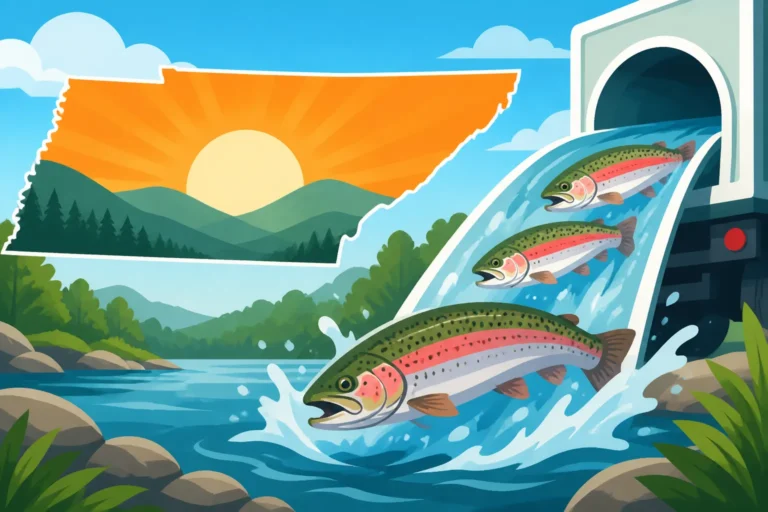
Many of Tennessee's trout fishing opportunities come from regularly stocked waters. The Tennessee Wildlife Resources Agency (TWRA) does an amazing job of stocking streams, rivers, and even some ponds with rainbow trout, and sometimes brown trout, making them accessible to anglers of all skill levels. You can find their comprehensive Tennessee trout stocking schedule and season information online, which is an invaluable resource.
When fishing stocked waters, especially right after a stocking event, trout can be eager to bite. They're often less wary than their wild counterparts and are looking for an easy meal. This is where baits like PowerBait, corn, and salmon eggs really shine, often fished on a small hook with a light split shot or under a bobber. Drift fishing these baits through pools and runs where the trout have been released is usually very effective. Small spinners and spoons also work well.
As time passes after a stocking, these trout can become more acclimated and sometimes a bit pickier. They might start keying in on natural forage, making small soft plastics or even tiny worms more effective. Look for them to spread out from the initial stocking points, often moving into nearby cover or deeper pockets. These waters are often very family-friendly, and you'll find easy bank access in many areas, making them perfect for a relaxed day of fishing.
Tackling Wild Trout in Mountain Streams
For those who love a bit of adventure and a true challenge, Tennessee's wild trout streams are a gem. These are typically smaller, colder streams found in the higher elevations, particularly within the Appalachian Mountains and the Great Smoky Mountains National Park. Here, you'll encounter native brook trout, as well as wild rainbow and brown trout that have reproduced naturally. Fishing for these fish is an entirely different ballgame.
Wild trout are incredibly wary. They've learned to survive, and they spook easily. Stealth is your best friend. Approach the stream quietly, keeping a low profile, and avoid casting a shadow over the water. Precision casting is crucial here, as you often have very small windows to present your lure or bait. Short, accurate casts with ultralight gear are the order of the day.
Small spinners (1/16 oz or even smaller), tiny spoons, or very small soft plastic jigs are your go-to lures. Present them naturally, allowing them to drift into plunge pools, undercut banks, and around boulders where trout ambush prey. Often, the strike will come almost immediately upon presentation. Natural baits like small worms or hellgrammites, if you can find them, can also be deadly. Remember, many wild trout waters have special regulations, including catch-and-release only, artificial lures only, or single barbless hook rules, so always check the local rules before you cast. For specific locations, you might want to research the best trout streams in the Great Smoky Mountains, Tennessee.
Understanding Seasonal Changes for Trout
Trout behavior changes dramatically with the seasons, largely influenced by water temperature, oxygen levels, and food availability. Being aware of these patterns can help you adjust your tactics and find more success.
Spring: As waters begin to warm after winter, trout become more active and start feeding aggressively. This is an excellent time for both stocked and wild trout. Spring often sees increased water flow from snowmelt and rains, which can dislodge insects and other food items, creating prime feeding opportunities. Look for trout to be in shallower areas, especially in the mornings and evenings. The Tennessee trout season split explained means that from March through September, general statewide limits apply, making spring a productive time.
Summer: As air and water temperatures rise, trout seek out cooler, more oxygenated water. In streams, this means deeper pools, shaded areas, or sections with strong currents that aerate the water. In larger lakes and reservoirs, they'll often move to deeper sections or near the thermocline. Early mornings and late evenings will be your best bet during the summer heat. Downsizing your lures and slowing down your presentation can be effective when trout are lethargic.
Fall: Many anglers consider fall to be one of the best times for trout fishing, especially for larger brown trout, which begin their spawning runs. Water temperatures cool, and trout become very active again, feeding heavily to prepare for winter or spawning. They can be found in a variety of water depths and are often more aggressive, readily hitting spinners, spoons, and even larger soft plastics. Fall also brings beautiful scenery, making for an enjoyable day on the water.
Winter: While often overlooked, winter trout fishing can be highly rewarding if you know where to look. Trout are still active, though their metabolism slows. They'll typically congregate in deeper, slower-moving pools where they expend less energy. Your presentation should be slow and deliberate, often involving small jigs or natural baits fished slowly along the bottom. The Tennessee trout limits and season rules change during winter months, often shifting to water-specific rules from October through February, so pay close attention to local regulations during this time.
Understanding these seasonal shifts allows you to adapt your approach and ensure you're always fishing effectively, no matter what time of year you head out to Tennessee's beautiful trout waters.
| Lure Type | Best Use Cases | Retrieve Style | Ideal Conditions | Trout Type Preference |
|---|---|---|---|---|
| Spinners | Moving water, actively feeding trout, covering water | Steady retrieve, vary speed, occasional twitch | Clear to slightly stained water, moderate current | Rainbow, Brown, Brook |
| Spoons | Deeper pools, longer casts, jigging | Steady retrieve, lift-and-drop (jigging), flutter | Clear water, deeper sections, still or slow current | Rainbow, Brown |
| Soft Plastics | Picky trout, subtle bites, mimicking natural forage | Slow drag, twitch, dead drift, very subtle movement | Clear water, low pressure, post-stocking | Rainbow, Brown, Brook |
| PowerBait / Eggs | Stocked trout, stillwater, scent attraction | Still fishing, drift fishing with light weight | Stocked ponds, slow moving rivers, clearer water | Stocked Rainbow, Brown |
| Worms | All trout, highly versatile, natural bait | Drift naturally, under bobber, slow retrieve | Any condition, good for wary wild trout | Rainbow, Brown, Brook |
Disclaimer
This article is for general informational purposes only and does not constitute professional advice. Laws, prices and regulations vary by location and change over time. Consult a qualified professional for guidance on your specific situation.