Rainbow Trout vs Brown Trout: How to Tell Them Apart
Many anglers, both seasoned and novice, often find themselves scratching their heads when trying to tell the difference between a Rainbow Trout and a Brown Trout, especially when they're fresh out of the water and wet. It's a common point of confusion that can impact everything from adhering to catch limits to understanding where these fish prefer to hold. This comprehensive guide will illuminate the subtle yet significant distinctions between these two popular Tennessee game fish, ensuring you can confidently identify your next catch.
The Distinctive Look: Unpacking Their Visual Cues
At first glance, a trout is a trout, right? Not quite! While both Rainbow and Brown Trout share some general fish characteristics, their individual markings, coloration, and physical attributes offer clear indicators if you know what to look for. It's like telling apart two different types of apples – they're both apples, but one might be red and crisp while the other is green and tart.
Rainbow Trout's Signature Style
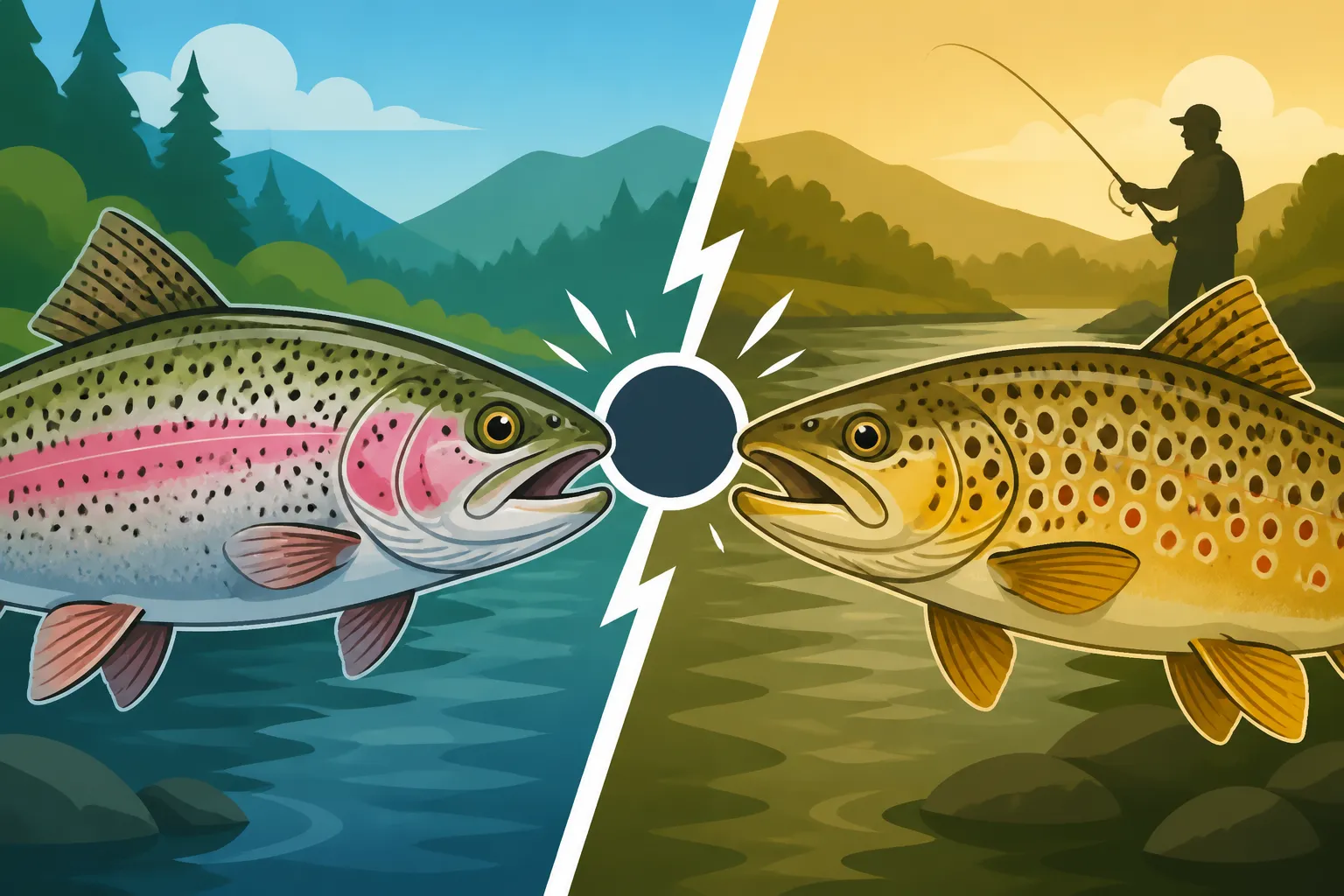
Rainbow Trout, or Oncorhynchus mykiss, are often recognized by their beautiful, iridescent sheen, which can range from olive green to silvery-blue along their backs, fading to a silvery-white belly. But their most iconic feature, and the reason for their name, is the prominent, often vivid pink or red stripe that runs horizontally along their side, from their gill plate all the way to their tail. This stripe can be incredibly vibrant in some fish, particularly males during spawning season, or more subtle in others, depending on their diet and environment.
Beyond the stripe, Rainbow Trout are typically covered in numerous small, distinct black spots. These spots are usually found on their back, sides, and especially on their dorsal fin and their square-shaped tail fin. The spots on the tail are often a key identifier, as they are evenly distributed across the entire fin, giving it a somewhat speckled appearance. Their scales tend to be smaller than a Brown Trout's, feeling smoother to the touch. When you're admiring a freshly caught Rainbow from a crisp mountain stream, that pink lateral band truly shines, making them a joy to behold. Many anglers find that a good waterproof camera, easily found on Amazon, helps capture these colors accurately before release.
Brown Trout's Earthy Tones and Unique Spots
Brown Trout, or Salmo trutta, present a different aesthetic altogether. Their base coloration typically leans towards an olive-brown, golden-brown, or even a coppery hue on their backs, transitioning to a lighter, yellowish or cream-colored belly. Unlike the Rainbow's continuous pink stripe, Brown Trout are characterized by a scattering of dark spots, often with pale halos around them, along their sides. These spots can be black, brown, or even reddish-orange. The most telling feature, however, is the presence of distinct red or orange spots, almost like little jewels, often encircled by a lighter, almost glowing halo, particularly on their sides. You might even notice some irregular, worm-like markings on their back, a pattern often referred to as "vermiculations," though these are more pronounced in Brook Trout.
Their tail fin, unlike the Rainbow's, usually has few to no spots and often appears more squared off or slightly forked. Brown Trout scales are generally larger than those of a Rainbow. Their jaw can be quite pronounced, especially in larger, older males, which can develop a distinct "kype" or hook on the lower jaw during spawning. Think of a fish with rich, earthy colors, like the moss and stones of a riverbed, dotted with vibrant, jeweled spots, and you're likely picturing a Brown Trout. Anglers often find Brown Trout to be more elusive, blending into their surroundings with their camouflaged patterns.
Habitat and Behavior: Where They Live and How They Act
Beyond their appearance, Rainbow and Brown Trout often exhibit different preferences for where they live and how they behave, which can also help you distinguish them and improve your angling success. Understanding these preferences is key to targeting the right species in Tennessee's varied waters. Tennessee Trout Fishing Season Explained covers when you're most likely to encounter these species.
Rainbow Trout's Preferred Waters and Habits
Rainbow Trout, especially the stocked varieties so prevalent in Tennessee, tend to thrive in colder, well-oxygenated water. They are often found in streams and rivers with good current, such as the famous Clinch River, or the pristine waters of the Great Smoky Mountains National Park. They are known for being more tolerant of varying water conditions than Brook Trout, but still prefer a clean, cool environment.
Behaviorally, Rainbows are often considered more active and aggressive feeders, especially in areas where they are regularly stocked. They are more likely to rise to the surface to take insects, making them a favorite target for fly anglers. They also tend to occupy different parts of the water column, often feeding higher up or mid-depth. When hooked, Rainbow Trout are famous for their acrobatic jumps and powerful runs, giving anglers a thrilling fight. You might find them schooling more readily in certain conditions, making it possible to catch several from a good hole. For those interested in where these fish are introduced, you can find information on the Rainbow Trout Stocking Schedule Across Tennessee.
Brown Trout's Secretive Haunts and Elusive Nature
Brown Trout, while also requiring cool, clean water, are often more adaptable and can tolerate slightly warmer temperatures than Rainbows, and are less sensitive to turbidity. This means you might find them in a wider range of habitats, including larger rivers and even some reservoirs. They are particularly fond of holding near structure – submerged logs, undercut banks, deep pools, and rocky ledges provide both cover and ambush points for their prey. This preference for structure makes them a bit more challenging to locate sometimes, but also means that when you find a good Brown Trout spot, it can be incredibly rewarding.
Unlike the often-daytime activity of Rainbows, Brown Trout are known for being more nocturnal or crepuscular (active during dawn and dusk). They are incredibly wary and often feed under the cover of darkness, targeting larger prey items like minnows, crawfish, and even small rodents or amphibians. Their elusive nature means they tend to be harder to catch, and a truly large Brown Trout is often the prize of a patient and skilled angler. While they don't jump as much as Rainbows, they put up a powerful, deep fight, often trying to burrow into structure. Where to Catch Brown Trout in Tennessee can give you some hints on specific locations known for these fish.
Practical Identification Tips and Angling Implications
So, you've got a fish on the line, and you're trying to figure out if it's a Rainbow or a Brown. Here’s a quick summary of what to look for, and why getting it right matters for your fishing trip.
Key Differences at a Glance
Let's put the main distinguishing features side-by-side to make identification easier. This table can be a handy reference tool to keep in mind while out on the water.
| Feature | Rainbow Trout | Brown Trout |
|---|---|---|
| Lateral Markings | Prominent pink or red stripe along the side | No continuous stripe; may have red/orange spots with halos |
| Body Spots | Numerous small, distinct black spots on back, sides, dorsal fin, and tail | Black/brown spots (often with halos) and distinct red/orange spots on sides |
| Tail Spots | Heavily spotted, spots evenly distributed | Few to no spots, especially towards the edges |
| Overall Color | Iridescent, silvery-blue to olive green on back, silvery belly | Earthy tones: golden-brown, olive-brown, coppery on back, yellowish belly |
| Tail Shape | Typically square or slightly emarginate (shallow fork) | Square to slightly forked |
| Mouth/Jaw | Generally smaller mouth, less pronounced jaw | Larger mouth, can develop a distinct "kype" (hooked jaw) in males |
| Scales | Smaller, feels smoother | Larger, feels rougher |
Remember, individual fish can vary based on their specific environment, diet, and genetics. A wild Rainbow Trout might not have as vibrant a pink stripe as a stocked one, and some Brown Trout can have very muted red spots. However, looking at a combination of these factors will generally lead you to the correct identification. If you're looking for a good field guide to keep in your tackle box, you can find many excellent options on Amazon that often include detailed illustrations.
Why Identification Matters for Anglers
Knowing the difference between a Rainbow and a Brown Trout isn't just about showing off your fish identification skills; it has real implications for responsible angling and successful fishing.
Firstly, regulations often differ between species. While Tennessee generally has statewide trout limits, certain waters might have specific regulations, size limits, or daily creel limits that are species-specific. For example, Tennessee Trout Limits and Season Rules clarifies that brown trout sometimes face a stricter cap than other trout species in summer. Exceeding these limits, even by accident, can lead to penalties. Always check the local regulations for the specific body of water you're fishing before casting your line.
Secondly, fishing strategy can be refined once you know which species you're targeting. If you're looking for a challenging fight and bigger, more elusive fish, you might focus on areas with more cover and fish during low-light conditions, typical for Brown Trout. If you're after a more active bite and potential for higher numbers, especially in stocked waters, you might adjust your tactics for Rainbows, perhaps using a wider variety of baits and lures, or targeting areas with more open water and current. Understanding their habitat preferences, as discussed earlier, helps you choose the right spot.
Finally, conservation is always a consideration. Some populations of wild Brown Trout are self-sustaining and crucial to the ecosystem, while many Rainbow Trout populations are maintained through stocking programs. Being able to identify what you've caught allows you to make informed decisions about catch-and-release, especially for native or wild fish that may be more vulnerable. Carrying a small, portable scale, often available on Amazon, can help you quickly weigh your catch before releasing it gently.
In essence, whether you're fly fishing in a pristine mountain stream or spin fishing a larger river, appreciating the unique characteristics of Rainbow and Brown Trout will deepen your connection to the water and enhance your overall fishing experience. It's a fundamental part of becoming a knowledgeable and ethical angler in Tennessee.
Disclaimer
This article is for general informational purposes only and does not constitute professional advice. Laws, prices and regulations vary by location and change over time. Consult a qualified professional for guidance on your specific situation.