A Complete Guide to Fishing Licenses in Tennessee
Oh, the sheer excitement of packing your gear, checking the weather, and dreaming of that perfect cast in one of Tennessee's stunning lakes or rivers! But then, a nagging thought creeps in: "Do I have my fishing license? Which one do I even need? Is it still valid?" It's a common frustration, and honestly, the world of fishing regulations can feel like a labyrinth, especially in a state as diverse in its waterways as Tennessee. That little piece of paper, or digital proof, is essential not just for legal reasons, but for the health and future of our beloved fishing spots. This comprehensive guide is here to untangle all those complexities, walking you through every aspect of securing and understanding your Tennessee fishing license, ensuring your next trip is worry-free and fully compliant.
Why Fishing Licenses Matter in Tennessee Beyond Just the Law
It's easy to see a fishing license as just another hurdle, another fee, another piece of bureaucracy standing between you and the water. We've all been there, wondering if it's truly necessary. But when you peel back the layers, that license is so much more than a simple permit. It’s a vital cornerstone of conservation and responsible resource management, directly impacting the quality of the fishing experiences we all cherish in Tennessee.
The Importance of Conservation and Funding
Let's get real for a moment: those beautiful, thriving fisheries we enjoy across Tennessee—from the bass-rich waters of Chickamauga Lake to the cold, clear trout streams of the Great Smoky Mountains—don't maintain themselves. They require constant care, scientific management, and significant financial investment. This is where your fishing license money truly shines. The funds collected from license sales are the lifeblood of the Tennessee Wildlife Resources Agency (TWRA).
These agencies use your contributions for everything from stocking fish, like the rainbow trout released into various streams and ponds, to conducting critical research on fish populations. They monitor water quality, manage habitats, and enforce regulations that ensure fish can reproduce and grow, preventing overfishing and ecological damage. Without these funds, the vibrant ecosystems we rely on for our angling adventures would quickly deteriorate. So, every time you purchase a license, you're not just buying a permit; you're investing in the future of fishing in Tennessee, directly contributing to the health and abundance of the fish you hope to catch. It’s a collective effort, and your part is absolutely crucial.
Peace of Mind and Avoiding Fines
Beyond the noble cause of conservation, there's a very practical, immediate benefit to having your fishing license in order: peace of mind. There's nothing worse than being out on the water, having a fantastic day, only for that little voice in your head to whisper, "Did I remember my license?" or worse, to have a game warden approach you and realize you're not compliant.
Fishing without a valid Tennessee license can quickly turn a relaxing day into a costly headache. Game wardens are out there, not to spoil your fun, but to ensure everyone is playing by the rules, protecting our shared resources. If you're caught fishing without the proper license, you could face hefty fines and even have your equipment confiscated. These penalties are designed to be a deterrent, making the cost of a license seem trivial in comparison. Imagine reeling in the fish of a lifetime, only to have your trip marred by a citation. It simply isn't worth the risk. A valid license means you can focus entirely on the thrill of the catch, knowing you're legally squared away. If you're curious about the specifics, we have a detailed article covering the Penalties for Fishing Without a License in Tennessee that breaks down exactly what you could be up against. Better safe than sorry, as they say!
Understanding the Different Types of Tennessee Fishing Licenses
Navigating the various types of fishing licenses available in Tennessee can feel a bit like trying to read a menu in a fancy restaurant where you don't speak the language. There are options for residents, nonresidents, annual passes, short-term permits, and even combination licenses. It’s important to select the right one for your specific needs to avoid any confusion or legal issues down the line. Let's break down the main categories so you can confidently choose the perfect license for your next angling adventure.
Resident Licenses: Annual, Combination, and Senior Options
For those of us who call Tennessee home, the options are generally more comprehensive and, thankfully, more affordable. The most common choice is the Annual Resident Hunting and Fishing Combination License. This is often the best bang for your buck if you enjoy both activities throughout the year. For a single price, you’re covered for both hunting and fishing, which simplifies things greatly. It’s the go-to for many of us who love exploring all the outdoor opportunities Tennessee offers. You can find more details on its specific benefits in our guide to the Tennessee Resident Combination Hunt and Fish License.
However, if fishing is your sole passion, you can opt for a Resident Annual Fishing License only. This is ideal if you don't hunt or simply prefer to keep your licenses separate.
Tennessee also recognizes the contributions of its senior residents. If you're 65 or older, you qualify for significantly discounted options, including the Tennessee Senior Annual Fishing License. This is a wonderful program that makes it easier for experienced anglers to continue enjoying our state's incredible waters well into their golden years. There are even lifetime options for seniors, which can be a fantastic investment.
For those spontaneous trips or if you only fish occasionally, a Tennessee Single-Day Fishing License Options might be more up your alley. These are perfect for a spur-of-the-moment outing or when you're just dipping your toes back into the hobby. They offer flexibility without the commitment of an annual pass, and you can often add trout privileges to them if you plan to hit one of our stocked streams. It’s all about finding the balance between convenience and cost-effectiveness for how you like to fish.
Nonresident Licenses: Short-Term and Annual Choices
If you're visiting our beautiful state from elsewhere and want to experience the fantastic fishing Tennessee has to offer, you'll need a nonresident license. We welcome anglers from all over, but the rules are a bit different, and the prices reflect that. Nonresident licenses generally come in two main flavors: short-term and annual.
The Nonresident Annual Fishing License is perfect if you plan multiple trips to Tennessee throughout the year or if your stay is extended. While it's more expensive than a resident license, it provides year-round coverage, so you don't have to worry about buying a new one every time you cross the state line. You can explore the full breakdown of prices and what's included in our article on Nonresident Fishing License Costs in Tennessee. It's worth doing the math to see if an annual pass saves you money compared to buying several short-term licenses if you're a frequent visitor.
For those shorter visits, Tennessee offers Nonresident 3-Day and 10-Day License Options for Tennessee. These are incredibly popular for weekend getaways or week-long fishing vacations. A 3-day license is ideal for a quick trip, perhaps to chase smallmouth bass on Dale Hollow Lake. If you're planning a longer stay, like a week spent exploring the crappie opportunities on Kentucky Lake, the 10-day option is likely more suitable and often more economical than stringing together multiple 3-day permits. It's always a good idea to factor in whether you'll be targeting trout, as that often requires an additional endorsement, even on short-term nonresident licenses. Always double-check the specifics to ensure you’re fully covered for your planned adventures!
Specialty Licenses and Endorsements
Sometimes, a basic fishing license, whether resident or nonresident, isn't quite enough to cover all your angling ambitions. Tennessee, with its diverse fisheries, has a few specialty permits and endorsements that you might need, depending on what and where you plan to fish. These aren't usually standalone licenses but rather add-ons to your primary fishing permit.
The most common and often crucial endorsement is the Trout Permit. If you plan to fish for trout in any of the designated public trout streams or waters where trout are regularly stocked by the TWRA, you must have this permit in addition to your regular fishing license. This applies whether you’re casting flies in the Clinch River or spin fishing a stocked pond. The funds from trout permits specifically go towards the intensive stocking programs and management of Tennessee’s cold-water fisheries, ensuring there are plenty of beautiful trout for everyone to enjoy. It’s a small extra cost for a big impact on the quality of our trout fishing. We have an entire guide dedicated to clarifying Do You Need a Trout Permit With Your Tennessee License which is a must-read if you plan on targeting these prized fish.
Beyond trout, there are occasionally specific permits for certain Wildlife Management Areas (WMAs). While your general fishing license covers most public waters, some WMAs might have unique regulations or require a WMA permit for specific activities or access. These areas are managed intensely for wildlife, including fish, and sometimes need additional funding or control. Always check the specific WMA regulations before you go, especially if you're venturing into lesser-known spots. You can find detailed information on these unique regulations in our article on Wildlife Management Area Fishing Rules in Tennessee. These specialty permits ensure that even our most pristine and managed areas remain fantastic fishing destinations for generations to come.
Who Needs a Fishing License in Tennessee And Who Doesn't
One of the most frequently asked questions about fishing in Tennessee revolves around who actually needs a license. It’s a common point of confusion, especially when you consider age, special events, and property ownership. Getting this wrong can lead to unnecessary fines or, just as frustratingly, missing out on fishing because you thought you needed a license when you didn't. Let’s clear up these murky waters so you know exactly where you stand.
Age Requirements and Youth Exemptions
When it comes to fishing licenses, age definitely plays a role in Tennessee. For the most part, if you're an adult wanting to cast a line in public waters, you're going to need a license. However, the good news is that Tennessee is very supportive of getting kids outdoors and introducing them to the joys of fishing.
Generally, youth under the age of 13 are exempt from needing a fishing license in Tennessee. This is a fantastic initiative to encourage families to go fishing together without the added financial burden or administrative hassle for the youngest anglers. It means you can take your little ones out to a local pond or lake, hand them a rod, and watch them experience the thrill of a bite without having to buy them a separate permit.
Once a child turns 13, the requirement for a license typically kicks in. This age threshold is important to remember as your children grow. A 12-year-old might be fine, but their 13-year-old sibling will need to be properly licensed. This is a common point of confusion, and we see many parents asking, "Do kids need a fishing license in Tennessee?" The answer is, it depends on their age. It's a progressive system designed to ease young people into the responsibilities of being an angler while still making the sport accessible. Always double-check the current TWRA regulations for any slight changes, but the 13-year-old rule has been a consistent guideline for quite some time.
Special Free Fishing Days and Weeks
Tennessee is not just about rules and regulations; it's also about celebrating the joy of fishing and making it accessible to everyone, at least for a few special days each year. That’s why the state, through the TWRA, designates specific periods when no license is required, opening up our beautiful waters to all.
The most famous of these is Bobby Wilson Free Fishing Day, which occurs annually on the first Saturday in June. This is a fantastic opportunity for everyone, residents and nonresidents alike, to fish Tennessee's public waters, including TWRA lakes and state park ponds, completely free of charge. No license, no trout permit – just pure, unadulterated fishing fun. It's an incredible chance to introduce a friend to fishing, revisit an old hobby, or just enjoy a day on the water without any administrative overhead. We have a detailed post all about Bobby Wilson Free Fishing Day in Tennessee that explains everything you need to know, including when it falls this year.
But it doesn't stop there for the younger generation! The Saturday after Bobby Wilson Free Fishing Day marks the start of Tennessee's Free Fishing Week for Kids. This entire week, from that Saturday through the following Friday, allows all children aged 15 and under to fish free of charge. It’s an extended opportunity for youth to explore their passion for angling, giving them more than just one day to hook into some fish. This initiative is pivotal in fostering a love for the outdoors in young people, creating future stewards of our natural resources. These free fishing periods are truly a gift to the community, so mark your calendars and take full advantage!
Landowners and Private Waters
Another area that often sparks questions is fishing on private land or in private ponds. The general rule of thumb in Tennessee is that if you are a resident landowner, you (and often your immediate family members) can fish on your own property without a fishing license, provided the body of water is entirely enclosed within your property and doesn't connect to public waterways. This means if you have a pond on your farm that doesn't flow into a creek or river, you typically don't need a license to fish it.
However, the moment that water connects to a public stream, river, or lake, or if you are fishing on someone else's private property (even with permission), the standard licensing rules usually apply. For instance, if you own property along the Tennessee River, you still need a license to fish in the river itself because it's a public waterway. Similarly, if you're visiting a friend's private pond that is fed by a public stream, you'd likely need your license.
The key distinction lies in whether the water is truly "private" and contained, or if it is merely an extension or part of the larger public water system. The term "public water" can sometimes be confusing, but essentially, it refers to any lake, river, or stream that is navigable or managed by the state. When in doubt, it’s always best to err on the side of caution and either obtain a license or confirm the specific legal status of the water body with the TWRA. This ensures you're never in violation and can enjoy your fishing outing without any unexpected surprises.
How to Easily Obtain Your Tennessee Fishing License
The thought of obtaining a fishing license can sometimes conjure images of long lines, complicated paperwork, and endless forms. Thankfully, in Tennessee, the process has become incredibly streamlined and user-friendly, offering several convenient options to get you licensed and on the water in no time. Whether you prefer the digital convenience of your computer or a more traditional in-person interaction, the TWRA has made sure there’s an easy path for every angler.
Online Purchase: Convenience at Your Fingertips
Without a doubt, the easiest and most popular way to get your Tennessee fishing license today is by purchasing it online. This method offers unparalleled convenience, allowing you to secure your permit from the comfort of your home, office, or even from your phone while sitting by the lake! The Tennessee Wildlife Resources Agency (TWRA) maintains a robust online licensing system that is intuitive and secure.
Here’s how it typically works: You visit the official TWRA licensing website, select the type of license you need (annual, short-term, resident, nonresident, with or without trout, etc.), fill in your personal information, and complete the payment using a credit or debit card. The entire process usually takes just a few minutes. Once your purchase is complete, you'll receive an immediate confirmation, often with a temporary license or your permanent license number, which is valid right away. You can then print a copy or, even better, save it to your phone. This instant gratification means no waiting for mail and no last-minute trips to a store. It’s truly fishing license acquisition in the 21st century. If you're looking for a step-by-step guide, our article on How to Buy or Renew a Tennessee Fishing License Online walks you through the entire digital process.
Many anglers even make sure to buy or renew their licenses while planning their fishing trips for the coming year. You can grab your annual pass, add your trout permit, and even pick up a few essential fishing items like new lures or tackle boxes from places like Amazon all in one planning session. The online system makes preparing for your season incredibly efficient.
In-Person Options: Retailers and TWRA Offices
While online purchasing is incredibly convenient, some folks prefer the traditional route, or perhaps they've found themselves in a bind, needing a license right before hitting the water. For these situations, Tennessee offers plenty of in-person options. You're never too far from a place where you can pick up your fishing license.
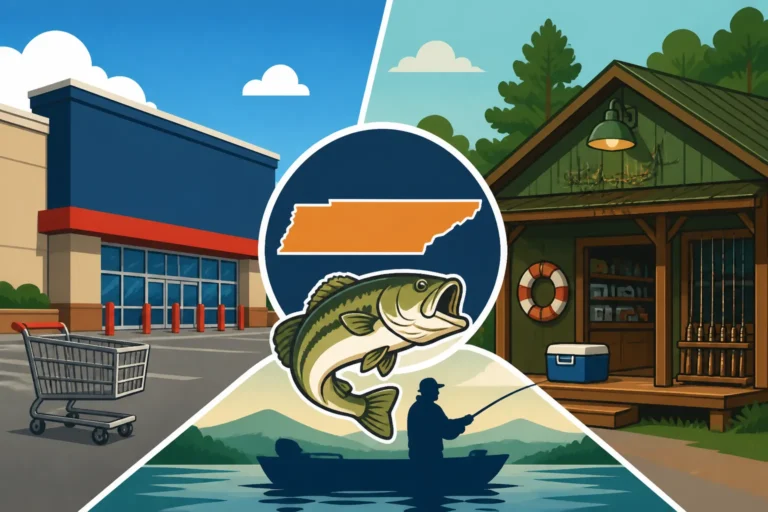
Sporting goods stores are your most common and accessible option. Major retailers like Walmart, Academy Sports + Outdoors, and many local bait and tackle shops are authorized TWRA license agents. These places are usually well-versed in the different license types and can guide you through the process, especially if you have questions. It’s also a great opportunity to pick up any last-minute bait, hooks, or even a new fishing rod you might need for your trip. This localized network ensures that even in more rural areas, you'll likely find a spot to get your license. We have a helpful resource titled Where to Buy a Fishing License in Tennessee that lists common types of vendors and tips for finding a location near you.
Additionally, you can always visit a local TWRA regional office during business hours. While these aren't as widespread as retail agents, the staff at TWRA offices are experts and can provide detailed information, answer complex questions, and process any type of license or permit you need. This can be particularly useful if you have a unique situation or need clarification on specific regulations, such as those pertaining to Wildlife Management Areas. No matter your preference, Tennessee has made sure that getting your fishing license is never an obstacle to enjoying our state's fantastic waterways.
Digital vs Printed Licenses
With the advent of technology, the classic paper fishing license is increasingly sharing space with its digital counterpart. This evolution offers anglers more flexibility, but it also raises questions about what constitutes valid proof of licensure. Thankfully, Tennessee embraces both, providing options to suit everyone's preference.
When you purchase your fishing license online, you typically have the option to immediately print a physical copy at home. This traditional paper license, properly signed and carried with you, is always a valid form of proof. Many anglers still prefer this method, tucking their license into their wallet or tackle box, just like they always have. It's reliable, doesn't require battery power, and is easily presented to a game warden if requested.
However, the convenience of digital licenses is undeniable. After an online purchase, you often receive a confirmation email with your license number or a digital image of your license. You can save this image directly to your smartphone, or in some cases, the TWRA might even offer a dedicated mobile app. Presenting your digital license on your phone is perfectly acceptable and valid in Tennessee. This is a huge benefit for those who don’t want to worry about losing a paper copy or getting it wet. Just make sure your phone is charged! This modern approach makes it incredibly easy to ensure you always have proof of your license, provided your device is accessible. If you're weighing the pros and cons, our article on Digital vs Printed Fishing Licenses in Tennessee dives deeper into the advantages of each and how to properly carry them. The bottom line is, whether you prefer the feel of paper in your hand or the convenience of your phone, Tennessee has you covered.
Navigating Special Permits and Endorsements Like Trout
Tennessee fishing is incredibly diverse, offering everything from trophy bass in warmwater lakes to elusive trout in cold mountain streams. This diversity means that sometimes, your basic fishing license, while fundamental, might not be the only thing you need. Certain species or specific fishing locations require additional endorsements or permits, ensuring that these specialized fisheries receive the dedicated funding and management they need. Ignoring these extra requirements can lead to disappointment or, worse, a fine, so it’s crucial to understand when and why you might need them.
The All-Important Trout Permit
If your heart yearns for the thrill of catching rainbow, brown, or brook trout in Tennessee, then you absolutely need to be aware of the Trout Permit. This isn't just a suggestion; it's a mandatory endorsement for anyone, regardless of age (unless specifically exempt, like on Free Fishing Day), who plans to fish for trout in designated public trout streams or waters where trout are stocked. This includes many of our most popular cold-water fisheries like the Clinch River, Caney Fork River, and numerous streams in the Great Smoky Mountains National Park.
The cost of a trout permit is relatively modest, but its impact is immense. The revenue generated specifically funds the TWRA’s robust trout stocking programs. These programs are essential because many of Tennessee’s streams, while beautiful, don't naturally support large, self-sustaining populations of trout due to water temperature fluctuations or habitat limitations. Your trout permit helps ensure that thousands of healthy trout are released regularly, providing consistent angling opportunities throughout the season. Without this dedicated funding, the quality and quantity of our trout fisheries would dramatically decline.
It’s easy to add a trout permit when you purchase your main fishing license online or at a license agent. Just make sure to select the "Trout" option. If you already have a license and decide mid-season to try your hand at trout, you can usually add the permit separately through the online system. Don't forget, even during Tennessee's Free Fishing Day Weekend in Early June, trout permit requirements are sometimes waived for that specific day, but for the rest of the year, it's non-negotiable if you're targeting trout. For a complete understanding of why this permit is so vital and when it's required, you'll want to read our dedicated article: Do You Need a Trout Permit With Your Tennessee License.
Wildlife Management Area WMA Permits
Tennessee boasts an incredible network of Wildlife Management Areas (WMAs), expansive tracts of land and water managed by the TWRA specifically for wildlife conservation, hunting, and fishing. While your standard Tennessee fishing license will get you access to fish in many of these areas, some WMAs, or certain activities within them, might require an additional WMA Permit or specific passes.
These WMA permits are typically used for more specific management goals or to control access in sensitive areas. For instance, a WMA might have a special permit requirement for certain hunting seasons, or they might have unique fishing regulations that deviate from statewide limits, perhaps to protect a recovering fish population or manage a specific type of fishery. The funds collected from these permits go directly into the intense management of these particular areas, supporting habitat improvements, access maintenance, and targeted conservation efforts.
It's absolutely critical that before you head out to fish in any WMA, you consult the current TWRA regulations specific to that particular area. These rules can change annually and are often more stringent than general statewide regulations. You wouldn’t want to drive all the way to a remote WMA, only to find out you need an extra permit you didn’t get, or that the catch limits are different from what you expected. Always do your homework! A great place to start is our comprehensive overview of Wildlife Management Area Fishing Rules in Tennessee, which highlights the general principles and advises how to find specific WMA regulations. These permits, while an extra step, are vital to preserving these unique and often pristine fishing environments for all of us to enjoy.
Common Misconceptions and FAQs About Tennessee Fishing Licenses
Even for seasoned anglers, the world of fishing licenses can be ripe with misconceptions and frequently asked questions. It's easy to assume things based on past experiences in other states, or to misinterpret a rule here and there. Clearing up these common points of confusion is essential for a stress-free and compliant fishing experience in Tennessee. Let's tackle some of the most common questions that pop up.
License Validity Periods
A common point of confusion for many anglers, especially those new to Tennessee or coming from states with different systems, is how long a fishing license actually lasts. It might seem straightforward, but the nuances can catch you off guard. In Tennessee, a standard annual fishing license is typically valid for 12 months from the date of purchase. This isn't a calendar year system where all licenses expire on December 31st, which is a key distinction.
For example, if you purchase your annual license on May 15th, 2024, it will be valid until May 14th, 2025. This "rolling" 12-month validity is quite convenient as it means your license's expiration date is always easy to remember – it’s the anniversary of your purchase. However, it also means you need to be mindful of that date. It's easy to forget when exactly you bought it a year ago.
This system differs from some states that operate on a strict calendar year, where all licenses expire simultaneously. Because of Tennessee’s rolling system, you won’t always see a big rush at the beginning of the year for renewals. Instead, renewals are staggered throughout the year based on individual purchase dates. It’s always a good practice to set a reminder on your phone or mark your calendar a month or so before your license is set to expire. Being proactive ensures you don't accidentally find yourself fishing without a valid license, which could lead to unnecessary penalties. Our guide on How Long a Tennessee Fishing License Stays Valid provides even more clarity on this often-misunderstood aspect of licensing.
Public vs. Private Waters
Another frequent source of bewilderment centers around the distinction between public and private waters and how it impacts license requirements. Many anglers incorrectly assume that if they have permission to fish on private property, they automatically don't need a license. While there are some exceptions, as discussed earlier with landowners fishing on their own completely enclosed ponds, the general rule is much broader.
In Tennessee, a fishing license is required to fish in any "public water." But what exactly counts as public water? Essentially, it encompasses the vast majority of lakes, rivers, and streams that are navigable, flow through or border multiple properties, or are managed by the state (like TWRA lakes or state park ponds). This means if you're fishing in a river that runs through private land, you still need a license because the river itself is a public waterway. Similarly, if you're fishing in a lake that has public access, even if part of its shoreline is privately owned, you need a license.
The key question isn't whether the bank you're standing on is private, but whether the water you're fishing in is public. Even if you're fishing from a private dock on Kentucky Lake, you're fishing in public water, and a license is required. The exceptions for completely private, enclosed ponds are quite specific and don't apply to most fishing scenarios. When in doubt, it’s always safest to assume you need a license. For a deeper dive into this important distinction and specific examples, check out our comprehensive article on What Counts as a Public Water for License Purposes. Understanding this helps ensure your fishing adventures are always on the right side of the law.
Keeping Your License Current and Avoiding Penalties
Life gets busy, and it's easy to let important things slip your mind. Your Tennessee fishing license expiration date is one of those things that can easily sneak up on you, potentially leading to an awkward encounter with a game warden or, worse, a fine. Being proactive about keeping your license current and always having proof of it can save you a lot of hassle and ensure your time on the water remains enjoyable and worry-free.
Renewal Reminders and Best Practices
Since Tennessee fishing licenses operate on a rolling 12-month validity period (meaning they expire a year from the date of purchase, not necessarily at the end of the calendar year), it's crucial to stay on top of your renewal date. It's far too common for anglers to mistakenly believe their license expires on December 31st, only to find themselves out of compliance months earlier or later.
The best practice is to set a personal reminder. Whether it's a note on your calendar, a recurring alert on your phone, or an old-fashioned sticky note on your tackle box, having a reminder a month or two before your expiration date can be a lifesaver. This gives you ample time to go online and renew your license without feeling rushed. The TWRA also often sends out email reminders if you’ve provided your contact information during previous purchases, so keeping your email address updated in their system is a smart move.
Another excellent habit is to simply make license renewal an annual ritual around a specific time, perhaps when you're getting your gear ready for spring or fall fishing. Even if it's a month or two early, renewing ensures continuous coverage. As our article Renewing before your current license expires avoids a lapse in coverage wisely points out, a small act of foresight can prevent a significant headache. By integrating this simple step into your fishing routine, you guarantee that you're always ready to cast your line legally and confidently.
Carrying Proof of License
Having a valid fishing license is one thing; being able to prove you have it when asked is another. It’s not enough to simply have purchased it; you must have verifiable proof with you while actively fishing. This is where many anglers can run into trouble, especially if they rely solely on a paper copy that might be prone to getting lost or damaged.
The TWRA is quite accommodating when it comes to proof of license. You can carry a physical, printed copy of your license, preferably laminated or kept in a waterproof holder to protect it from the elements. Many anglers keep it in their wallet, tackle box, or even a small, waterproof pouch attached to their vest.
Alternatively, and increasingly popular, is carrying a digital copy on your smartphone. When you purchase online, you'll receive a confirmation email with your license details, which you can screenshot and save to your phone's photo gallery, or access through the TWRA mobile app if available. This is incredibly convenient, as most of us have our phones with us on the water anyway. Just be sure your phone is charged! A dead battery won't fly as an excuse if a game warden asks to see your license.
It's also worth noting that in certain situations, a driver's license or state ID might be enough for a game warden to verify your license status electronically in the field, especially if you're a resident. However, don't rely on this as your primary method; always aim to have direct proof ready. While it's rare to be specifically asked to show proof during a casual outing, game wardens have the authority to do so at any time. Being prepared ensures a smooth and pleasant interaction, allowing you to quickly get back to enjoying your time fishing.
Reciprocity and Border Waters: Fishing Across State Lines
Tennessee shares its borders with eight different states, and along many of these borders lie fantastic fishing waters that are either shared or incredibly close. This geographical reality often leads to a common and critical question for anglers: "Does my Tennessee fishing license work in another state, or vice versa?" The answer, as with many regulations, is nuanced and depends heavily on specific reciprocity agreements. It's a complex area, and understanding it is vital to avoid unwittingly breaking the law when fishing near state lines.
Understanding Reciprocity Agreements
Reciprocity in fishing licenses refers to agreements between states that allow an angler licensed in one state to fish in specific shared waters without needing a separate license from the neighboring state. These agreements are not universal, and they almost never mean your Tennessee license is valid for all waters in, say, Kentucky or Alabama. Instead, they are typically limited to very specific bodies of water that form the actual state boundary.
For example, Tennessee might have a reciprocity agreement with Mississippi regarding Pickwick Lake, which is a massive body of water spanning both states. Under such an agreement, if you have a valid Tennessee fishing license, you might be allowed to fish the entire lake, including the Mississippi portions, without purchasing a separate Mississippi license. However, if you were to venture into a river or lake entirely within Mississippi, you would absolutely need a Mississippi license.
These agreements are put in place to simplify fishing for anglers who frequently cross state lines on large, contiguous bodies of water. Without them, fishing could become prohibitively complex and expensive for many, forcing them to buy multiple licenses for a single fishing trip. It's a practical solution to a common problem, but the devil is always in the details. Always consult the official TWRA regulations or the regulations of the neighboring state for the most up-to-date information. Our article on Fishing License Reciprocity Between Tennessee and Neighboring States provides a comprehensive look at how these agreements function and what to watch out for.
Specifics for Neighboring States
Given Tennessee's long borders, it's essential to understand that reciprocity agreements aren't uniform across all neighboring states or even all shared waters. Each state-to-state agreement is unique, so what applies to the Tennessee-Kentucky border might not apply to the Tennessee-Georgia border.
For instance, Tennessee has agreements with several neighboring states concerning certain boundary waters. A common scenario is fishing on the Tennessee River or the Mississippi River where they form a state line. Anglers often inquire about specific lakes like Kentucky Lake, Dale Hollow Lake, or Pickwick Lake, which straddle state lines. In many cases, if you possess a valid license from either of the bordering states, you might be allowed to fish the entire main body of water. However, this often comes with caveats. For example, specific tributaries that flow into these lakes might require the license of the state in which that tributary is entirely located. Furthermore, the catch limits and size restrictions often default to the regulations of the state whose license you hold, or sometimes, the more restrictive of the two states' rules.
It cannot be stressed enough: do not assume reciprocity. Before you drop a line into any border water, especially if you're not entirely sure which state's jurisdiction you're in, take the time to verify the specific regulations. A quick search on the TWRA website or the wildlife agency website of the bordering state can save you from a potential citation. Nonresidents from bordering states still need a Tennessee license if they venture inland. It's a small amount of research that can make a huge difference in having a legal and enjoyable fishing experience.
| License Type | Resident Annual Price (Approx.) | Nonresident Annual Price (Approx.) | Validity Period | Trout Permit Required? | Best For |
|---|---|---|---|---|---|
| All-Game (Hunt/Fish Combo) | $33 | N/A | 12 months from purchase date | Yes (if targeting trout) | Tennessee residents who both hunt and fish year-round. |
| Annual Fishing | $30 | $49 (without trout) | 12 months from purchase date | Yes (if targeting trout) | Residents who only fish; nonresidents making multiple trips to TN. |
| Junior Hunt/Fish (ages 13-15) | $10 | N/A | 12 months from purchase date | Yes (if targeting trout) | Young resident anglers getting started. |
| 1-Day Fishing | $6 | $6 (without trout) | 1 day | Yes ($5 extra, if targeting trout) | Residents or nonresidents for a single, spontaneous fishing trip. |
| 3-Day Nonresident Fishing | N/A | $20 (without trout) | 3 consecutive days | Yes ($20 extra, if targeting trout) | Nonresidents visiting for a short weekend fishing trip. |
| 10-Day Nonresident Fishing | N/A | $30 (without trout) | 10 consecutive days | Yes ($31 extra, if targeting trout) | Nonresidents planning a week-long fishing vacation. |
| Senior (ages 65+) | $4 | N/A | 12 months from purchase date | Yes (if targeting trout) | Tennessee resident seniors seeking a discounted annual option. |
| Lifetime Senior Resident | $49 (one-time fee) | N/A | Lifetime | Yes (included) | Tennessee resident seniors looking for comprehensive, permanent coverage for hunting, fishing, and trapping. |
| Trout Permit | $24 | Included with trout licenses | Co-terminus with base license | N/A | Required for anyone (including youth 13+) fishing for trout in designated waters. |
Prices are approximate and subject to change by TWRA. Always check the official TWRA website for current pricing and regulations.
Disclaimer
The information provided in this guide is for general informational purposes only and is not intended as legal advice. Fishing regulations in Tennessee are subject to change by the Tennessee Wildlife Resources Agency (TWRA). While we strive to keep this information accurate and up-to-date, it is the sole responsibility of the angler to understand and comply with all current state and local fishing laws and regulations before engaging in any fishing activities. Always consult the official TWRA website or contact them directly for the most current and authoritative information.