Brook Trout: Tennessee’s Native Cold-Water Species
It's easy to get excited about fishing in Tennessee with all the amazing lakes and rivers, but sometimes the sheer variety of fish species can be a bit overwhelming, especially when you start digging into which ones are truly native. If you've ever found yourself wondering about the smaller, often more colorful trout hiding away in the highest elevations, chances are you're thinking about the elusive and cherished Brook Trout. This guide is dedicated to shedding light on Tennessee's own native cold-water species, helping you understand what makes them unique, where to find them, and how to protect them for future generations of anglers.
What Makes Brook Trout So Special in Tennessee?
Brook trout hold a truly unique place in the hearts of Tennessee anglers, and for good reason. Unlike rainbow and brown trout, which were introduced to our waters, brook trout are the genuine natives, a living link to the pristine mountain streams of centuries past. Their presence speaks to the health and untouched nature of the waters they inhabit, and their beauty is simply captivating.
The 'Char' Distinction and Why It Matters
Now, here's a fun fact that often surprises people: despite their name, brook trout aren't actually true trout! Scientifically, they belong to the Salvelinus genus, making them a type of char, much like arctic char or lake trout. What's the big deal about being a char instead of a trout? Well, for starters, it speaks to their evolutionary history and their specific environmental needs. Chars typically prefer colder, cleaner water with higher oxygen levels than true trout. This preference is crucial when you're looking to find them because it dictates exactly where they can survive and thrive. Understanding this distinction helps us appreciate their sensitivity to habitat changes and why preserving their cold-water havens is so important. When you're standing knee-deep in a chilly mountain stream, pulling out a brightly colored brookie, you're not just catching a fish; you're connecting with a piece of Tennessee's natural heritage that demands respect.
Identifying Tennessee's Native Brookies
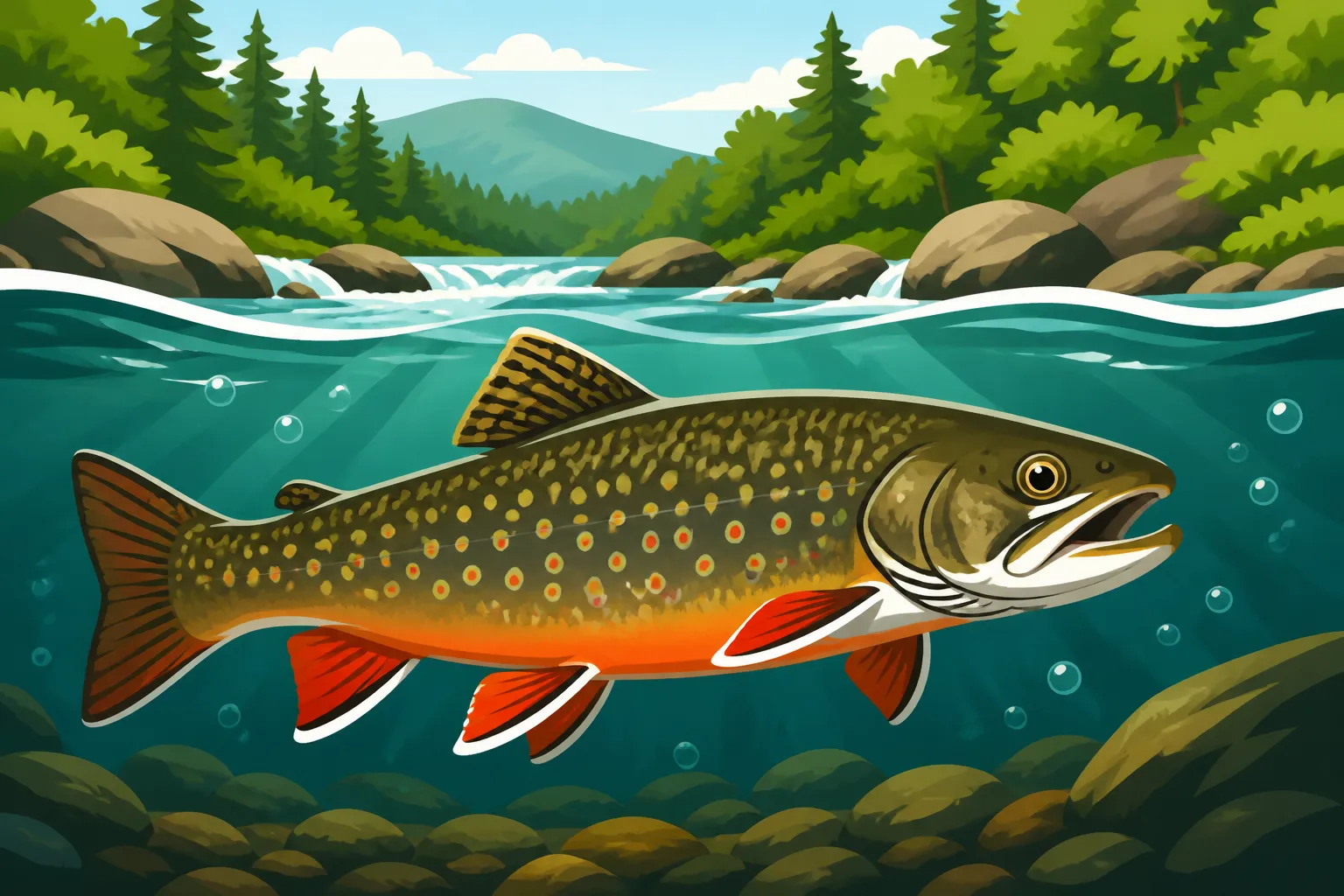
Spotting a native brook trout is an unforgettable experience, thanks to their stunning coloration. They're often referred to as "speckled trout" for a reason! Look for a dark, worm-like pattern, called vermiculation, across their olive-green back and dorsal fin. Their flanks are adorned with vibrant spots, including red spots with blue halos (known as "halos" or "areolae"), which are a key identifier. Their lower fins, particularly the pectoral, pelvic, and anal fins, are typically orange-red with a distinct white leading edge, often followed by a black stripe. This white leading edge is one of the most reliable ways to differentiate them from other trout species you might encounter. They tend to be smaller than their rainbow and brown counterparts, usually in the 6-10 inch range in our mountain streams, though larger individuals can occasionally be found in prime habitat. When you're comparing fish like this, it's really helpful to have a quick guide:
| Feature | Brook Trout (Char) | Rainbow Trout | Brown Trout |
|---|---|---|---|
| Back Pattern | Dark, worm-like vermiculation | Small black spots, few on tail | Dark spots, some with halos, often on tail |
| Flank Spots | Red with blue halos ("halos") | Black spots, sometimes pink lateral stripe | Dark brown/black spots, red/orange spots |
| Lower Fins | Orange-red with white leading edge & black stripe | Clear to dusky, no white edge | Yellowish to brownish, no white edge |
| Tail Shape | Slightly forked | Square to slightly forked | Square |
| Overall Color | Olive-green to dark brown back, bright flanks | Silver to olive, often iridescent stripe | Golden brown to olive back, cream belly |
| Native Status | Native to Tennessee | Introduced | Introduced |
Recognizing these unique characteristics not only helps you appreciate the individual fish but also plays a vital role in understanding Tennessee Trout Guide: Rainbow, Brown, and Brook Trout and adhering to local regulations.
The Ecological Importance of Brook Trout
Beyond their beauty, brook trout serve as a critical indicator species for the health of our aquatic ecosystems. Because they demand such cold, clean, and well-oxygenated water, their presence signals a thriving, undisturbed environment. If brook trout populations decline or disappear from a stream, it's often a red flag that something is amiss—perhaps increased water temperature, pollution, or habitat degradation. They are also an integral part of the food web, both as predators of insects and smaller fish, and as prey for larger fish, birds, and mammals. Protecting brook trout habitat isn't just about saving a fish species; it's about safeguarding entire watersheds, ensuring clean water for wildlife and humans alike. Their well-being reflects the overall ecological health of Tennessee's precious mountain streams.
Where to Find Tennessee's Elusive Brook Trout
Finding brook trout isn't like casting a line in a stocked pond. These fish are true wild mountain dwellers, requiring a bit more effort and often some bushwhacking to reach their secluded homes. But the reward of catching a native brookie in its natural habitat is well worth the journey.
High-Elevation Streams: Their Last Stronghold
In Tennessee, brook trout are primarily found in the highest elevation streams of the Appalachian Mountains, particularly within the Great Smoky Mountains National Park and the Cherokee National Forest. These are typically headwater streams, often no wider than a car, tumbling over rocks and forming small, clear pools. The cold water flowing from the mountain springs and snowmelt provides the ideal, consistent temperatures they need to survive. You won't find brook trout in the major reservoirs or wider, warmer rivers of middle and west Tennessee; they simply cannot tolerate those conditions. Instead, think about those remote, pristine trickles high up in the mountains, often requiring a good hike to access. Trout Fishing in the Great Smoky Mountains, Tennessee is a prime example of where these incredible fish make their home.
Ideal Habitat Conditions for Brook Trout
When you're searching for brook trout, you're essentially looking for specific habitat characteristics. Beyond cold water, they need excellent water quality—meaning very little silt or pollution. The streambed should be rocky, with plenty of boulders, cobble, and gravel for spawning and cover. Overhead canopy from trees and rhododendrons is crucial as it helps shade the stream, keeping water temperatures low, and provides a constant input of terrestrial insects that form a significant part of their diet. Deep pools, undercut banks, and fallen logs create vital holding lies where brook trout can ambush prey and find refuge from predators and strong currents. These aren't lazy fish; they thrive in dynamic, complex stream environments that offer both shelter and abundant food sources.
Respecting Sensitive Brook Trout Waters
Because brook trout inhabit such fragile ecosystems, it's incredibly important to practice responsible angling. These streams are often narrow, and wading carelessly can disturb the streambed, stir up silt, and even harm spawning areas. Always be mindful of your footing and try to minimize your impact. Stick to established trails where possible and avoid creating new paths. Pack out everything you pack in, and perhaps even a little extra trash you might find. These are truly special places, and it's our responsibility as anglers to be stewards of these precious habitats. Learning Tennessee Fishing Regulations Explained and understanding specific rules for these sensitive areas, which often include tackle restrictions or catch-and-release only policies, is paramount.
Techniques and Considerations for Catching Brook Trout
Catching brook trout isn't about brute force or flashy lures. It's about finesse, stealth, and a deep appreciation for the delicate balance of their environment. These wild fish are wary and live in tight quarters, so a thoughtful approach is key to success.
Light Tackle and Delicate Presentations
Given their typically smaller size and the tight, brushy streams they inhabit, ultralight tackle is the name of the game for brook trout. A lightweight spinning rod, perhaps 5 to 6 feet long, paired with a small spinning reel spooled with 2 to 4-pound test line, is often perfect. This setup allows for accurate casting into small pockets and pools, and the lighter line helps present your bait or lure more naturally. If you're using conventional baits, think small: tiny worms, salmon eggs, or even a single kernel of corn can be incredibly effective. Small spinners or spoons, like a size 0 or 1 Panther Martin or Mepps Aglia, are also popular choices. The key is to make a soft presentation, avoiding splashing, and allowing your offering to drift naturally with the current. Many anglers find great success simply by watching how natural insects or debris float downstream and trying to mimic that motion. You can find a fantastic selection of ultralight rods and tiny spinners on Amazon that are perfectly suited for this type of fishing.
Fly Fishing for Tennessee Brook Trout
For many, fly fishing is the quintessential method for pursuing brook trout. The delicate presentation of a fly rod, combined with the challenge of matching the hatch (or at least presenting a generalist pattern), aligns perfectly with the subtle nature of these fish. A 2-weight or 3-weight fly rod, about 6 to 7.5 feet long, is ideal for these small streams, allowing you to cast in tight quarters without snagging every branch. Short casts, often just pitching or roll casting, are more common than long, graceful loops.
Dry flies like an Adams, Parachute Adams, Elk Hair Caddis, or Royal Wulff in sizes 14-20 are excellent when fish are rising. If they're not looking up, small nymphs such as a Pheasant Tail, Hare's Ear, or a simple Copper John in sizes 16-20 are incredibly effective, drifted naturally beneath a small indicator. Sometimes, a tiny wet fly or soft hackle swung through a run can also trigger a strike. Learning Fly Fishing Basics for Trout is an excellent starting point, but remember that creek fishing for brookies often requires an even more refined touch than larger river trout. Picking up a good quality fly box from Amazon before your trip to organize your smaller patterns is a great idea.
Embracing Catch and Release
Brook trout populations are generally more sensitive than introduced species, and while many streams allow for a limited harvest, practicing catch and release is highly encouraged, especially for the larger, breeding-size fish. If you do plan to keep a few for a meal, always check current Tennessee Fishing Season and Catch Limits for the specific stream you're fishing. When releasing fish, handle them as little as possible with wet hands to protect their slime coat, which is their natural defense against disease. Minimize their time out of the water, and ensure they are revived and swim away strongly before letting them go. The goal is to ensure these beautiful native fish continue to thrive for future generations of anglers.
Conservation Efforts and the Future of Brook Trout in Tennessee
The story of brook trout in Tennessee is one of resilience and ongoing conservation. While they once populated a much wider range of streams, habitat loss and the introduction of competitive species have pushed them to their current strongholds. Protecting these native treasures is a shared responsibility.
Threats to Brook Trout Populations
Brook trout face several significant threats in Tennessee. Habitat degradation, primarily from deforestation, development, and poor land-use practices, leads to increased stream temperatures, sedimentation, and pollution, all of which are detrimental to their survival. Another major challenge comes from competition and hybridization with introduced trout species, particularly rainbow trout. Rainbows often outcompete brook trout for food and space, and in some areas, interbreeding can occur, further diluting the native gene pool. Climate change also poses a long-term threat, as warming air temperatures can lead to warmer stream temperatures, further shrinking the already limited cold-water habitats necessary for brook trout. Understanding these threats is the first step toward effective conservation.
What Anglers Can Do to Help
Anglers have a vital role to play in brook trout conservation. First and foremost, practice responsible angling techniques, including careful wading and minimal handling of fish, especially when practicing catch and release. Adhering to all Tennessee Fishing Rules Every Angler Should Know and specific stream regulations, which may include special tackle restrictions or catch limits designed to protect native trout, is critical. Consider using single, barbless hooks, which make releasing fish much easier and less stressful. Beyond your time on the water, you can support conservation organizations that focus on habitat restoration and protection in mountain watersheds. Participating in stream cleanups or advocating for responsible land management practices in and around critical brook trout habitat also makes a big difference. Every effort, no matter how small, contributes to the survival of this iconic species.
TWRA's Role in Brook Trout Preservation
The Tennessee Wildlife Resources Agency (TWRA) is actively involved in efforts to protect and restore brook trout populations. This includes habitat restoration projects, such as planting trees along stream banks to provide shade and reduce erosion, and removing barriers that prevent fish movement. TWRA also conducts surveys and research to monitor brook trout populations, assess habitat quality, and understand the impact of various management strategies. In some areas, efforts are made to remove introduced trout species from critical brook trout streams, creating "brook trout only" zones to help native populations rebound. Their work is a cornerstone of ensuring that Tennessee's native cold-water species not only survive but thrive for many generations to come. Understanding Wild vs Stocked Trout: What's the Difference in Tennessee? can give you more insight into these management strategies.
Disclaimer
This article is for general informational purposes only and does not constitute professional advice. Laws, prices and regulations vary by location and change over time. Consult a qualified professional for guidance on your specific situation.