Best Umbrella Rigs for Tennessee Striped Bass
When you're out on the vast, beautiful waters of Tennessee, specifically targeting those hard-fighting striped bass, there's a unique challenge: finding them and getting them to commit. These schooling predators can be elusive, often chasing massive schools of baitfish in open water or deep channels. That's where the right tackle makes all the difference, and for many seasoned anglers, a well-chosen umbrella rig is the game-changer for consistently putting these powerful fish in the boat. This guide is all about helping you understand, select, and effectively deploy the best umbrella rigs to conquer Tennessee's striped bass fisheries.
Understanding the Umbrella Rig for Tennessee Stripers
Let's face it, fishing for striped bass, especially the big ones that patrol the deep, open waters of our Tennessee reservoirs, can feel like searching for a needle in a haystack. They roam, they chase, and they follow bait, often in places where a single lure just won't cut it. That's where the magic of the umbrella rig comes into play, creating an illusion that's hard for a hungry striper to resist.
What Exactly is an Umbrella Rig?
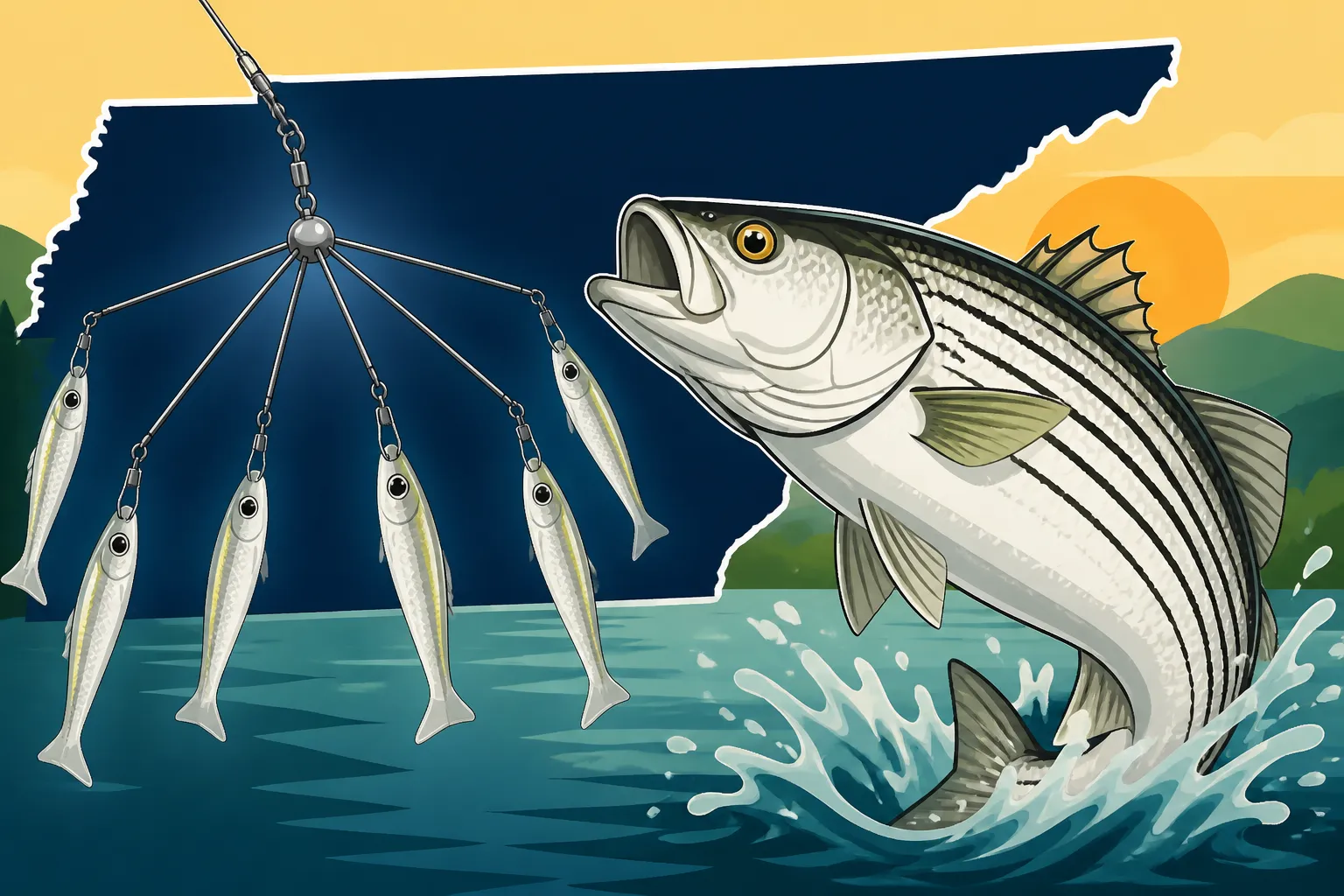
At its heart, an umbrella rig is designed to imitate a small school of baitfish. Imagine a compact, underwater bait ball – that's what a good umbrella rig strives to create. It typically consists of a central hub with multiple wire arms extending outwards, much like the spokes of an umbrella or the skeleton of a kite. To the ends of these arms, you attach various lures, often curly-tailed grubs, swimbaits, or bucktail jigs, creating a spread of lures that look like a cluster of panicked baitfish fleeing a predator. Some rigs might feature four arms, others six, each with the potential to hold a lure. The idea is that instead of presenting a single, lonely bait, you're offering a tempting group that screams "easy meal" to a lurking striper. It's a fantastic tactic for triggering the predatory instinct of these powerful fish.
Why Stripers Fall for Them
Tennessee's large reservoirs like Kentucky Lake, Watts Bar, and Norris Lake are perfect hunting grounds for striped bass. These lakes hold immense populations of baitfish like gizzard shad and alewife, and stripers are constantly on the move, chasing these schools. A single lure, no matter how realistic, can often get lost in the vastness of the water column or go unnoticed by a striper focused on a large, natural school. An umbrella rig, however, presents a much larger, more visible target. It mimics that irresistible ball of bait that stripers are hardwired to attack.
Think about it from a striper's perspective: an individual baitfish might be too much effort for a massive fish looking for a substantial meal. But seeing four to six "fish" swimming together? That's a target worth expending energy on. The umbrella rig taps into the striper's schooling behavior, where they'll often push bait to the surface or into coves. When a rig is trolled through a school or along a migration path, it looks like a vulnerable, disorganized group, an easy target that can lead to multiple hook-ups on a single pass. This is especially effective when you're looking for Tennessee Striped Bass Fishing Techniques that cover a lot of water.
Key Components of a Superior Umbrella Rig
When you're investing in an umbrella rig, you're not just buying a piece of wire; you're buying a system. The quality and design of each component significantly impact its performance, durability, and most importantly, its ability to catch fish. Skimping on materials can lead to frustration, lost fish, and a wasted day on the water.
The Main Arms and Leaders
The foundation of any good umbrella rig lies in its arms. These are typically made of stainless steel wire, chosen for its strength, corrosion resistance, and flexibility to hold shape under load. The number of arms can vary, but most effective striper rigs for Tennessee waters feature four to six arms, usually extending about 6 to 12 inches. The stiffness of these wires is crucial; they need to be strong enough to maintain their spread, even when trolling at higher speeds or fighting a fish, but also flexible enough to absorb some shock.
Attached to the end of each arm, and sometimes from the central hub, are leaders that connect to your lures. These leaders should be made of a strong monofilament or fluorocarbon line, typically heavier than your main trolling line, to withstand the force of multiple fish and prevent abrasion. Swivels are absolutely essential at both ends of each leader—one connecting to the rig arm and another to your lure. This helps prevent line twist, which is a common headache with multiple spinning lures. Investing in quality ball-bearing swivels will save you a lot of grief in the long run. Many anglers prefer leaders made of fluorocarbon due to its low visibility underwater, giving the appearance of free-swimming baitfish.
Teasers, Baits, and Hooks
This is where the artistry of umbrella rigging comes into play. The "teasers" are the lures or baits attached to the leaders, creating the illusion of a school. For striped bass in Tennessee, soft plastic swimbaits, curly-tailed grubs, or small bucktail jigs are immensely popular. The key is to match the size and color of the local baitfish—this is often referred to as "matching the hatch." If stripers are feeding on small shad, use smaller, silver or white swimbaits. If they're targeting larger alewife, scale up your offerings.
Often, only a few of the lures on an umbrella rig will have hooks; these are known as "hook baits." The others are "teaser baits" that simply add to the illusion and draw fish in. Common practice is to rig the two bottom lures with hooks, or perhaps the center lure and the two outer ones. This prevents unnecessary snagging and makes landing fish easier. Speaking of hooks, they must be sharp and strong. Stripers have tough mouths, and a dull or weak hook will result in lost fish. Many anglers upgrade the factory hooks on their jigs and swimbaits to stronger, sharper trebles or single hooks designed for heavy saltwater use (which work just as well in freshwater for these powerful fish). For a great selection, you can often browse options at your local Bass Pro Shops or check online through Amazon.
Weighting and Swivels
Weight is critical for getting your umbrella rig down to the feeding zone, especially when targeting Deep Water Techniques for Striped Bass in places like Norris or Center Hill lakes. Many umbrella rigs come with a built-in lead head or a weighted central core. However, additional weight is often needed to reach depths of 30, 40, or even 60 feet where stripers often hold. This can be achieved with a heavy inline sinker attached a few feet in front of the rig, or by using a downrigger. The weight needs to be carefully balanced so that the rig trolls correctly without tumbling or spinning uncontrollably.
As mentioned before, high-quality swivels are non-negotiable. Beyond the leader connections, a heavy-duty barrel swivel or ball-bearing swivel should be used at the very front of the rig where it connects to your main trolling line. This connection takes all the strain of the rig, the lures, and any fish hooked, so it needs to be robust. These swivels also minimize line twist, which can compromise line strength and create frustrating tangles. When you're dealing with multiple lures and the immense pressure of trolling, every component plays a vital role in preventing failure.
Choosing the Best Rig for Tennessee's Waters
Selecting the right umbrella rig isn't a one-size-fits-all situation. The diverse environments of Tennessee's reservoirs—from the deep, clear waters of Dale Hollow to the stained, current-driven stretches of the Tennessee River system—demand thoughtful consideration of your rig's characteristics.
Considering Water Depth and Clarity
The depth at which stripers are holding is paramount. If fish are suspended 20-30 feet deep over a 60-foot channel, you need a rig that can reach that zone efficiently. Heavier rigs with significant lead in the head or a heavier inline sinker are necessary for these deeper presentations. However, if stripers are crashing bait near the surface, a lighter, unweighted rig might be more appropriate. Water clarity also influences your choices. In clearer lakes like Norris, natural baitfish colors and subtle actions are often more effective. In more stained or turbid waters, brighter colors or baits with more vibration might be needed to grab attention.
For example, when fishing a relatively shallow flat in early morning on Percy Priest Lake, you might opt for a lighter rig with 1/4 oz jig heads on each arm. But later in the day, when the sun drives stripers to deeper thermal clines or channels, you'll need to swap to a rig that can handle 3 to 6 ounces of lead, or integrate it with a downrigger setup to reach depths of How to Fish Deep Water for Striped Bass.
Matching the Hatch: Baitfish Imitation
Striped bass are voracious predators, but they are also opportunists. They feed on what's available and what's easiest to catch. In Tennessee, this typically means various species of shad (threadfin and gizzard) and alewife. Observant anglers will pay close attention to the size of baitfish on their sonar or what's spitting out of a striper's mouth when boated.
A good umbrella rig will have teasers that closely mimic these natural forage fish. Soft plastic swimbaits in silver, white, chartreuse, or even a pearl blue can be deadly. Sizes typically range from 3 to 6 inches, depending on the prevalent bait. It's often effective to have a "hot lure" – one lure that's slightly different in color or size from the others on the rig, or even a different type of lure like a bucktail jig, which can act as a trigger. This single distinct bait often gets the most strikes as stripers key in on anything that appears weak or out of place in the school.
Here's a quick comparison of common umbrella rig setups:
| Rig Type / Feature | Best Use Case in Tennessee | Pros | Cons |
|---|---|---|---|
| Lightweight (Unweighted) | Surface/Shallow Dives, Calm Water | Less strenuous to troll, Easier to retrieve | Struggles in current/deep water, Slower dive |
| Weighted (Built-in) | Mid-Depth (10-30 ft), Moderate Current | Reaches depth without extra weight | Less customizable depth control |
| Heavy (for Downrigger) | Deep Water (30+ ft), Strong Current | Precise depth control, Efficient deep fishing | Requires specialized downrigger gear |
| 4-Arm Rig | General Purpose, Smaller Baitfish | Easier to handle, Less drag | Smaller "school" profile |
| 6-Arm Rig | Larger Baitfish Schools, Aggressive Fish | Larger "school" profile, More targets | More drag, More prone to tangles |
| Soft Plastic Swimbait | Versatile, Mimics Shad/Alewife | Natural action, Wide color range | Can be torn by short strikes |
| Bucktail Jig | Aggressive Strikes, Deeper Water | Durable, Good vibration, Heavy | Less natural action than soft plastics |
Top Rigs and Where to Find Them
Several manufacturers produce excellent umbrella rigs that are well-suited for Tennessee's striped bass fisheries. Look for rigs with strong, flexible stainless steel arms, robust swivels, and durable components. Brands like YUM, Captain Mack's, and Alabama Rig have become household names among striper anglers.
When sourcing your rigs, you have a few good options. Local tackle shops that cater to serious striper anglers often have excellent, hand-tied rigs tailored to specific local lakes. This is a great way to support local businesses and get expert advice. For a wider selection, larger retailers like Bass Pro Shops typically carry a good range of commercially produced rigs and all the individual components you might need to build or customize your own. And of course, the convenience of online shopping means you can find a vast array of options on Amazon, often with reviews from other anglers that can help guide your decision. Remember, a good umbrella rig isn't just about the brand; it's about the construction and how well it matches the conditions you're fishing.
Mastering Umbrella Rig Deployment
Getting your umbrella rig in the water and presenting it effectively is just as important as choosing the right one. Trolling is the name of the game here, and understanding the nuances of speed, depth, and presentation will elevate your success with Tennessee stripers.
Setting Up Your Trolling Spread
Trolling an umbrella rig requires a robust rod and reel setup, often a medium-heavy to heavy casting or conventional rod with a line counter reel spooled with strong monofilament or braid. You'll want to deploy your rig far enough behind the boat to avoid spooking fish, but not so far that it becomes unmanageable or difficult to determine depth. Many anglers start with a distance of 80-150 feet behind the boat, adjusting based on fish activity and water clarity.
If you're running multiple rods, creating a "trolling spread" is key to avoiding tangles and covering different depths or patterns. This might involve using different lead weights on different rigs, or varying the line lengths. Some anglers also use planer boards or outriggers to spread their lines horizontally, allowing them to troll more rigs at once and cover a wider path. This takes practice, but once you get the hang of it, you'll be able to effectively search for stripers over large areas. Remember to check out Rod Holder and Planer Board Setup for Reservoir Striper Trolling for more advanced techniques.
Optimal Trolling Speed and Tactics
The ideal trolling speed for umbrella rigs targeting Tennessee striped bass can vary, but generally falls between 2.0 to 3.5 miles per hour. However, this is not a fixed rule. Stripers are often reactive, and varying your speed can trigger strikes. A sudden acceleration, a slight turn that causes the rig to sweep, or even a brief pause can make your umbrella rig look like a fleeing school of baitfish, prompting a predatory strike.
When you're trolling, pay close attention to your electronics. Your fish finder isn't just for locating fish; it's also your depth gauge and your map of underwater structure. Look for suspended schools of baitfish, main lake channels, humps, points, and sudden depth changes where stripers often ambush their prey. If you mark fish at a certain depth, adjust your weight or line length to get your umbrella rig into that strike zone.
Don't be afraid to experiment with turns and S-curves while trolling. These maneuvers cause the inner lures of the rig to slow down and drop, while the outer ones speed up and rise, creating an erratic action that can be incredibly enticing to a following striper. For a deeper dive into this, consider reading What Speed Should You Troll for Striped Bass in Tennessee?. The more varied and lifelike your presentation, the better your chances of getting those explosive strikes from Tennessee's mighty striped bass.
Disclaimer
This article is for general informational purposes only and does not constitute professional advice. Laws, prices and regulations vary by location and change over time. Consult a qualified professional for guidance on your specific situation.