Best Trailer Ramp Angle for Launching at Chickamauga Lake
There's nothing quite as frustrating as showing up to a beautiful lake like Chickamauga, eager to get your boat in the water, only to struggle at the ramp. Whether your boat slides off too early, refuses to budge, or you end up with your trailer tires sinking into the muck, getting the trailer angle just right for launching and retrieving can feel like a dark art. This guide is here to demystify that process, helping you understand how to find the best trailer ramp angle specifically for Chickamauga Lake, ensuring smoother launches and retrievals for every fishing trip.
Understanding the Factors That Influence Ramp Angle
Launching and retrieving your boat isn't a one-size-fits-all endeavor, especially when you're dealing with a dynamic body of water like Chickamauga Lake. Several critical factors come into play, and understanding them is your first step to becoming a ramp master. It's not just about backing up until "it feels right"; it's about making informed adjustments.
Water Level Fluctuations on Chickamauga Lake
Chickamauga Lake, like many reservoirs in Tennessee, experiences significant water level fluctuations throughout the year. What might be a perfect launch angle in the spring, when the water is high, could be a recipe for disaster in late summer or fall when levels drop considerably. A ramp that looked steep and easy might suddenly become a shallow, challenging slope, or vice versa.
Imagine pulling up to a ramp you used last month, only to find the water is now several feet lower. If you back down to the same spot, your boat might still be high and dry on the bunks, stubbornly refusing to float off. Conversely, if the water is unexpectedly high and you back down too far, your boat could float off prematurely or even hit the back of your tow vehicle. This is why paying attention to current conditions is paramount. Checking the Tennessee Valley Authority (TVA) lake level reports before you head out is a smart habit to develop. These changes dictate how much of your trailer you need to submerge to get your boat to float properly. Tennessee Fishing Regulations Explained touches on how conditions can change.
Your Boat and Trailer Configuration
Not all boats and trailers are created equal, and their design plays a huge role in the ideal ramp angle. What works for a lightweight jon boat on a single-axle roller trailer won't be the same for a heavy bass boat resting on a tandem-axle bunk trailer.
- Bunk Trailers: Most common for larger bass boats and fiberglass vessels, bunk trailers support the boat's hull on carpeted wooden or synthetic bunks. For a successful launch, these bunks typically need to be submerged enough for the boat to float freely off them. This often means backing the trailer further into the water, sometimes until the fender tops are just at or below the waterline, depending on the boat's draft. The friction between the hull and the bunks requires a deeper submersion to break free. Trying to force a boat off bunks that aren't adequately wet or submerged can damage both the boat and the bunks.
- Roller Trailers: Often used for aluminum boats or those frequently launched in shallow water, roller trailers support the boat on a series of rollers. These generally require less water depth for launching and retrieving because there's less friction. The boat can typically roll off with minimal effort once the stern hits the water. However, this also means you need to be more careful, as the boat can roll off too quickly if you're not prepared, especially on a steep ramp.
- Boat Type and Weight: A smaller, lighter aluminum boat will float in less water and require less effort to launch than a heavy, deep-V fiberglass fishing machine. Consider the overall weight and how deep your boat sits in the water (its draft). A pontoon boat, for example, will typically need more water under its pontoons to float off than a V-hull bass boat. Best Fishing Boats for Tennessee's Big Reservoirs delves into these differences.
Understanding these distinctions helps you predict how much of your trailer needs to be submerged for a smooth operation.
The Specific Chickamauga Lake Ramp Conditions
Chickamauga Lake boasts numerous public and private boat ramps, and no two are exactly alike. The ramp you use near Harrison Bay might be different from one closer to Soddy-Daisy or farther south near Dayton. Some are concrete and well-maintained, while others might be older, steeper, shorter, or prone to collecting mud, silt, or submerged debris.
Before you even back your trailer down, take a moment to observe the ramp. Walk down to the water's edge if possible and check the following:
- Steepness: A very steep ramp will require less backing up to achieve the necessary water depth for your boat, but it can also increase the risk of your tow vehicle's tires losing traction, especially if the ramp is wet or slimy. A gentle slope will require you to back further into the water.
- Length and Drop-off: Some ramps have a sudden drop-off near the end, while others gradually extend into the lake. You don't want your trailer wheels to go off the end of a short ramp into a deep hole, as this can damage your trailer and make retrieval incredibly difficult.
- Bottom Composition: Is the ramp clean concrete, or is it covered in slippery algae, gravel, or soft mud? Muddy or gravelly bottoms can make it hard for your tow vehicle to maintain traction during retrieval, especially if you're pulling a heavy boat. It can also cause your trailer tires to sink.
- Obstacles: Look for submerged rocks, stumps, or old tires near the ramp that could damage your prop or hull during launch or retrieve. Best Boat Ramps on Chickamauga Lake details what to expect at different locations.
These on-the-spot observations are crucial for making real-time adjustments to your launch strategy and finding that ideal angle.
Finding Your Ideal Trailer Angle: A Step-by-Step Approach
Once you've assessed the conditions, it's time to put that knowledge into action. The goal is to submerge just enough of your trailer to allow the boat to float freely, without over-submerging or creating unnecessary strain.
The "Sweet Spot" for Bunk-Style Trailers
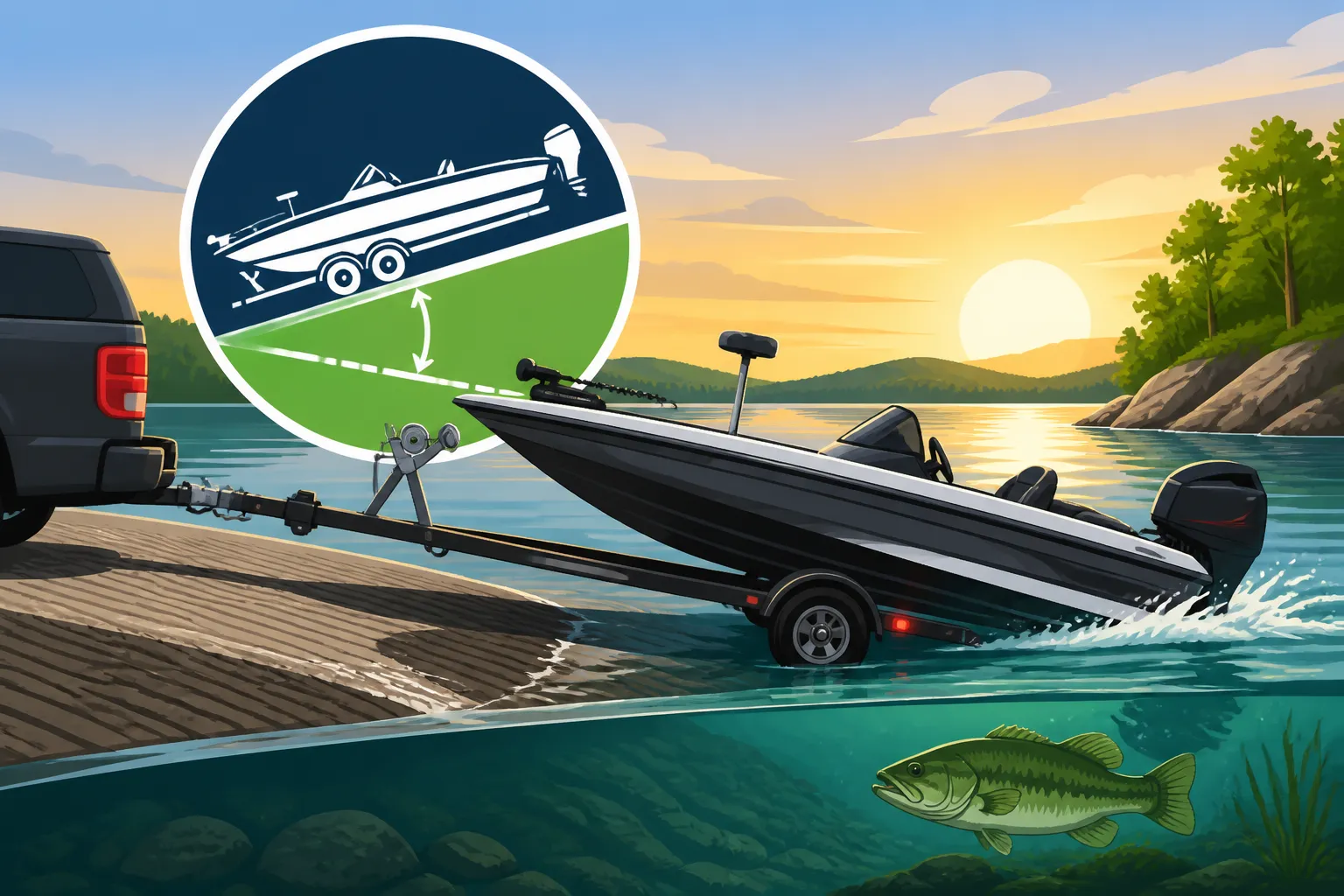
Launching a boat from a bunk trailer requires a bit more finesse than with rollers due to the friction between the boat's hull and the bunks. The "sweet spot" is typically when the rear third to half of the bunks are submerged, allowing the boat's stern to begin to float.
- Preparation is Key: Before you even get to the water's edge, remove your transom tie-downs and any stern-leveling devices. Keep the bow strap securely attached to the winch post. This prevents the boat from sliding back too far on the ramp and also ensures it stays connected while you position the trailer. Boat Trailer Tips for Tennessee Anglers stresses this safety aspect.
- Slow and Steady Backing: Slowly back your trailer down the ramp. Have a spotter if possible, especially on unfamiliar ramps. Watch your trailer tires in your side mirrors. For many bunk setups, you'll want to back until the tops of your trailer fenders are just at or slightly below the waterline. This usually submerges enough of the bunks.
- Test the Float: Once positioned, engage your parking brake and put your vehicle in park. Head to the boat. Give the bow a gentle push to see if the boat slides easily. If it doesn't budge or only moves slightly, back down a little further (a foot or two at a time) and re-test. You're looking for that moment when the boat feels light and wants to float off with minimal effort.
- Disconnect and Launch: Only when the boat is clearly floating and ready to move should you undo the bow safety chain and winch strap. Gently push the boat off the trailer. Use a bow line to guide it away from the ramp while you go park your vehicle.
- Common Mistakes:
- Too Shallow: If you don't back in far enough, the boat will be "stuck" on the bunks. Trying to force it off can damage the bunks, the boat's hull, or even cause the trailer to slide sideways on a slippery ramp.
- Too Deep: Backing in too far can cause the boat to float off prematurely or hit the front of the trailer's winch post. It also submerges your vehicle's exhaust or vital electrical components, which can be costly. Additionally, it makes it harder to properly center the boat during retrieve.
Roller Trailer Techniques for a Smooth Launch
Roller trailers are designed for easier launches, often requiring less submersion. The key here is control, as the boat can become "live" very quickly.
- Initial Setup: Like with bunk trailers, remove transom tie-downs before backing down. Keep the bow strap and safety chain connected to the winch post.
- Minimal Submersion: Back your trailer until the rear rollers are just at or slightly below the waterline. For many roller trailers, this might mean only the very rear of your trailer is submerged. The boat should still be firmly on the forward rollers.
- Release with Caution: Once positioned, engage your parking brake. Have someone ready to guide the boat if you have a helper. Carefully undo the bow strap and safety chain.
- Controlled Release: With a gentle push, or by easing the vehicle forward slightly (if safe to do so), the boat should roll smoothly off the trailer. Ensure you have a bow line to control its movement immediately.
- Preventing Premature Slide-off: This is the biggest concern with roller trailers. Always keep the bow strap and safety chain attached until you are at the correct depth and ready to launch. Never disconnect them on dry land or too early on the ramp, especially on a steep one!
Mastering the Retrieve: Angle for Easy Loading
Retrieving your boat is essentially the reverse of launching, but with its own set of considerations. The goal is to align the boat perfectly with the trailer, allowing it to slide smoothly onto the bunks or rollers without bumping, grinding, or getting crooked.
- Positioning the Trailer: Back your empty trailer down the ramp to approximately the same depth you would for launching. The key is to have enough of the bunks or rollers submerged so that when the boat approaches, its stern can float over the rear of the trailer without scraping, but not so deep that the boat floats too high and struggles to center itself. For bunk trailers, the rear bunks should just be kissing the waterline. For roller trailers, the rear rollers should be slightly submerged.
- Approaching the Trailer: Slowly guide your boat towards the center of the trailer. If using your boat's motor, use minimal throttle, just enough to maintain steerage. If you have a Best Trolling Motors for Tennessee Bass Boats system, that can be incredibly helpful for precise control.
- Centering and Winching: Once the bow is over the front of the trailer, slowly power on (or push on) until the boat is snug against the front stop or winch post. Reconnect the bow strap and winch the boat the rest of the way until it's firmly against the post. Ensure the boat is centered on the bunks or rollers as you winch. If it's crooked, pull it back off slightly and reposition.
- Securing for Transport: Once the boat is fully on the trailer and the bow strap is tight, reattach your transom tie-downs. Lift your motor if necessary. Now you can slowly pull your vehicle and trailer up the ramp. How to Back a Boat Trailer Down a Tennessee Boat Ramp offers additional guidance on maneuvering.
| Trailer Type | Water Level (General Guideline) | Ramp Angle Impact | Common Launch Mistake |
|---|---|---|---|
| Bunk Trailer | Fenders at or slightly below waterline | Steeper ramp = less backing; Shallower = more backing | Not enough submersion, boat stuck on bunks |
| Roller Trailer | Rear rollers just at or slightly below waterline | Steeper ramp = very little backing required | Too much submersion, boat rolls off too quickly |
| Low Water | Need to back further than usual | May expose ramp end, increase slope | Trailer wheels off ramp, prop/skeg hitting bottom |
| High Water | Need to back less than usual | May create very gentle slope | Boat floating off too early, hitting vehicle |
Common Challenges and Troubleshooting at Chickamauga Ramps
Even with perfect technique, Chickamauga's varied ramps and conditions can throw a curveball. Being prepared for common challenges will save you headaches and prevent damage.
Dealing with Low Water Levels and Shallow Ramps
Low water at Chickamauga can turn a routine launch into an exercise in patience or even danger. Shallow ramps, or ramps with a sudden drop-off at the end, are the primary culprits.
- Extended Ropes and Pushing: If you can't back your trailer far enough for the boat to float without risking your tow vehicle, you might need to get creative. Use longer bow and stern lines. Back the trailer as far as safely possible, then carefully unhook the boat. With a partner, or by carefully wading if safe, you can often push the boat off the trailer and then into deeper water using the ropes. Just be sure the bottom isn't mucky or full of hidden obstacles.
- Momentum (Carefully Applied): For very stubborn boats on bunk trailers in shallow conditions, a slight bump of the brakes while backing down can sometimes give the boat just enough momentum to slide off the bunks into the water. This should only be done with extreme caution, at very low speeds, and only after the bow strap has been disconnected. Improper use can lead to serious accidents or damage.
- Propeller and Lower Unit Protection: Always be acutely aware of your prop and lower unit when launching in shallow water. Trim your motor up as high as possible. Striking the prop on the concrete ramp or a submerged rock can ruin your day and your wallet. If the prop is churning mud or gravel, you're definitely too shallow. Consider a quality trolling motor, as seen at Bass Pro Shops, which can help navigate away from the ramp in tricky conditions.
Steep Ramps and Preventing "Trailer Slip"
Steep ramps offer a quick path to depth, but they come with their own set of challenges, particularly for your tow vehicle.
- Utilize Four-Wheel Drive: If your tow vehicle has 4WD, engage it when launching or retrieving on a steep ramp, especially if the surface is wet or slimy. This extra traction can be the difference between a smooth operation and a scary slide.
- Engage the Parking Brake: When you stop to unhook or hook up your boat, always firmly engage your parking brake. Never rely solely on "Park" gear, especially on a steep incline with a heavy boat behind you.
- Controlled Throttle: When retrieving, apply gentle, steady throttle to pull your boat up a steep ramp. Avoid sudden accelerations or jerking motions, which can break traction and cause your tires to spin.
- Avoid Wet Tires on a Dry, Steep Ramp: If the concrete ramp is dry and clean but very steep, try to avoid getting your tow vehicle's tires unnecessarily wet. Water on a steep concrete incline can reduce friction significantly.
Launching Solo: Tips for One-Person Operation
Launching by yourself, while sometimes unavoidable, can be intimidating. But with a bit of practice and the right strategy, it's totally manageable.
- Pre-Setting Your Gear: Before you even get near the water, have your fishing rods, tackle box, and cooler loaded into the boat. This minimizes trips back and forth and allows you to focus on the launch itself.
- Long Ropes for Control: Attach a long bow line (20-30 feet) and a stern line to your boat before backing down. This allows you to control the boat from a distance once it's off the trailer, preventing it from drifting away while you park your vehicle. You can often tie the bow line to a cleat on your boat and loop it around a fixed object on the ramp, like a piling or even the trailer itself, before launching.
- Power Pole or Shallow Water Anchor: If your boat is equipped with a power pole or other shallow water anchor, these are invaluable for solo launches. Once the boat is floating, you can deploy the anchor to hold it securely while you go park your vehicle. You can find options for these, along with other boat accessories, on Amazon or at Bass Pro Shops.
- Practice, Practice, Practice: The best way to get comfortable launching and retrieving solo is to simply do it. Start on less crowded ramps and on calm days. Each successful launch builds confidence. Fishing From the Bank vs a Boat can be a consideration if solo boat launching feels too daunting at first.
Mastering the trailer ramp angle for Chickamauga Lake is a skill that comes with observation and practice. By understanding the factors at play and employing smart techniques, you'll spend less time stressing at the ramp and more time enjoying the fantastic fishing Chickamauga has to offer. Remember that every ramp and every day is a little different, so always be prepared to adapt!
Disclaimer
This article is for general informational purposes only and does not constitute professional advice. Laws, prices and regulations vary by location and change over time. Consult a qualified professional for guidance on your specific situation.