How to Back a Boat Trailer Down a Tennessee Boat Ramp
Oh, the boat ramp! It's a place that can either fill you with anticipation for a fantastic day on the water or strike a subtle dread into your heart, especially when it comes to backing up that trailer. Many of us have felt that cold sweat, the eyes of others seemingly judging our every wiggle, or the sheer frustration of jack-knifing the trailer for the tenth time. This comprehensive guide is here to melt away those worries, offering practical, step-by-step advice and real-world tips specifically for navigating Tennessee's diverse boat ramps with confidence and grace.
Understanding the Boat Ramp Challenge in Tennessee
Let's be honest, backing a boat trailer isn't something that comes naturally to most folks. It's an acquired skill, a bit like patting your head and rubbing your stomach at the same time, but with much higher stakes (like not dinging your fiberglass or blocking the ramp for everyone else). Understanding why it feels so counter-intuitive and what types of ramps you'll face in our beautiful state is the first step toward conquering this challenge.
Why Backing a Trailer Feels So Hard at First
The biggest reason backing a trailer feels like trying to write your name with your non-dominant hand while looking in a mirror is the reverse steering. Your brain is wired for forward motion, where turning the steering wheel left makes the front of your vehicle go left. When you're backing, that same action causes the back of your trailer to move in the opposite direction. This mental flip-flop takes practice, and believe me, you're not alone if it trips you up constantly. It's a fundamental challenge that every single boater, from the seasoned captain on Chickamauga Lake: Tennessee's Top Bass Fishing Destination to the weekend warrior on a local pond, has had to overcome.
Another factor is the pivot point. When you drive your car, the front wheels steer, and the car follows. With a trailer, the hitch acts as the pivot point. You're effectively pushing the trailer from the middle of a very long, articulated vehicle. A small movement of the steering wheel at the truck's front translates into a much larger, often exaggerated, movement at the trailer's rear. This makes fine adjustments tricky, and over-correcting is a common pitfall. Add to that the limited visibility, the mirrors showing you a distorted reality, and suddenly, a simple straight line seems like an impossible geometric feat.
Different Types of Tennessee Ramps You'll Encounter
Tennessee is blessed with an incredible variety of waterways, from the mighty Tennessee River to countless reservoirs and smaller lakes. This also means a wide range of boat ramps, each with its own quirks and challenges. Being prepared for what you might encounter can save a lot of stress.
You'll find beautifully maintained, wide, multi-lane ramps at popular destinations like those around Kentucky Lake Fishing on the Tennessee Side or Norris Lake Fishing Guide, Tennessee's Clearest Water. These often have gentle slopes, plenty of maneuvering room, and clear markings. They're great for beginners because there's less pressure to squeeze into tight spaces. However, they can also be the busiest, meaning more eyes on you if you're feeling self-conscious.
Then there are the smaller, older, or less-trafficked ramps. These might be a single lane, steeper, narrower, or have less paved area for turning around. You might encounter ramps with sharp turns leading up to them, limited shoulder space, or even gravel surfaces that can make traction an issue. A ramp on a smaller tributary of the Cumberland River Fishing Spots in Tennessee, for instance, might be quite different from a major state park ramp. Some ramps, especially during low water periods, might have drop-offs at the end or unseen debris, so a quick visual inspection before committing is always a smart move. Always remember that A Tennessee lake with its own posted rules takes priority over standard limits, and this can sometimes extend to specific ramp conditions or usage rules.
The Step-by-Step Guide to Confident Trailer Backing
Alright, let's get down to business. The key to confident trailer backing isn't some secret handshake; it's a combination of preparation, understanding the physics, and practicing a systematic approach. Forget the frantic sawing at the wheel and embrace a calmer, more deliberate method.
Before You Even Start Backing
Preparation is paramount. Seriously, don't just roll up to the ramp and expect magic to happen. Think of it like cooking: you wouldn't start chopping vegetables without having your knife and cutting board ready.
First things first: get your boat ready before you enter the ramp area. This means unplugging trailer lights, raising your motor, taking off tie-downs, loading all your gear, and having your lines and fenders ready to deploy. There's nothing worse than holding up a line of eager anglers while you're fumbling with straps. This is also a good time to double-check that your drain plug is in – yes, we've all forgotten it at least once! Many experienced boaters will pull off to a designated staging area in the parking lot to handle these tasks. Check out our guide on Boat Trailer Tips for Tennessee Anglers for more advice on preparing your setup.
Next, take a moment to assess the ramp. Walk down it if you can. Look for any obstacles, steep drops, or slippery spots. Gauge the wind and current, as these will influence how your boat behaves once it's off the trailer. Observe how other people are launching and retrieving. If it's a busy day, you might see examples of what to do, and perhaps what not to do!
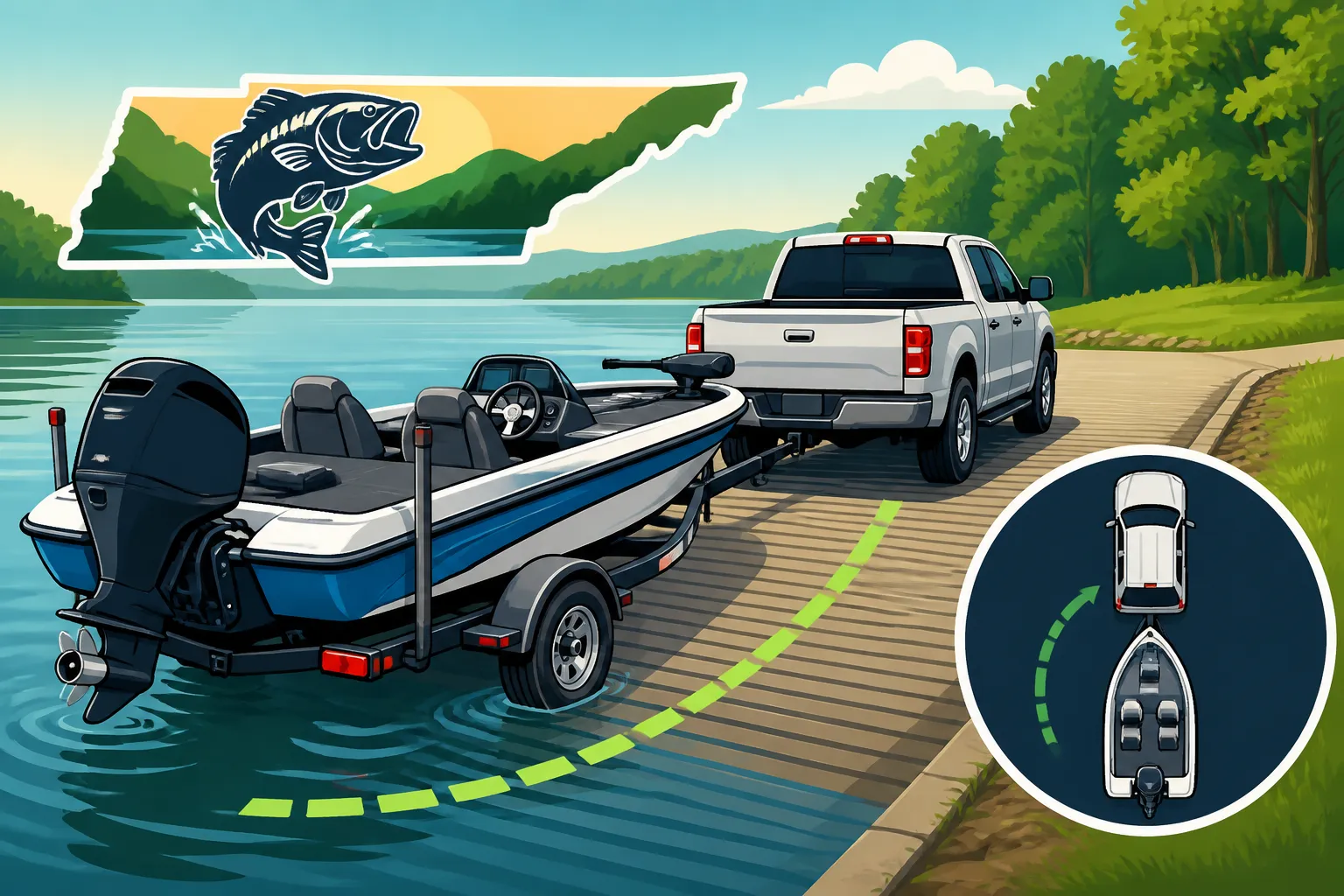
Finally, position your tow vehicle and trailer. Line yourself up as straight as possible with the ramp. The straighter you start, the easier the entire backing process will be. If you have to make a big correction right from the start, you're already fighting an uphill battle. If there's a slight curve, try to "overshoot" the angle slightly so you can pull forward into a straighter line before backing.
The "Steer Opposite" Rule and How It Works
This is the golden rule of trailer backing, and once it clicks, everything else falls into place. When you're backing, the trailer will move in the opposite direction of your steering wheel's bottom spoke.
Think of it this way:
- Want the back of your trailer to go left? Turn the bottom of your steering wheel to the left. (Which means turning the top of the wheel to the right, as you would to turn the front of your car to the right).
- Want the back of your trailer to go right? Turn the bottom of your steering wheel to the right. (Which means turning the top of the wheel to the left, as you would to turn the front of your car to the left).
It feels backward because it is backward compared to driving forward. The easiest way to internalize this is to place your hand at the bottom of the steering wheel. Whichever way you move your hand, that's the direction the back of your trailer will go. Practice this in your head, visualize it, and try to consciously apply it.
Make small, slow corrections. Large, sudden movements of the steering wheel will cause exaggerated and often unrecoverable swings of the trailer. Think about gentle nudges rather than sharp turns. The slower you go, the more time you have to react, and the less likely you are to get into a jack-knife situation. If you start to feel overwhelmed, simply stop, pull forward to straighten out, and start again. There's no shame in it, and it's far better than damaging your equipment or blocking the ramp for an extended period.
Mastering the Straight Back and Gentle Turns
The ultimate goal is to back your trailer straight down the ramp, or to execute a controlled, gentle curve if the ramp requires it.
For a Straight Back:
Once you're lined up straight, make sure your wheels are straight. Then, look in your side mirrors. You want to see roughly equal amounts of trailer on each side, meaning your trailer is straight behind your vehicle. Now, slowly begin to back up. As you go, keep checking those mirrors. If you see more trailer appearing in your left mirror, it means the back of your trailer is drifting right. To correct this, turn the bottom of your steering wheel to the left (or the top of the wheel to the right) just slightly to push the trailer back to the left. If you see more trailer in your right mirror, it's drifting left, so turn the bottom of your steering wheel to the right (or the top of the wheel to the left) just slightly. Remember to straighten your wheel back out once the trailer begins to move in the desired direction. It's a constant dance of small corrections.
For Gentle Turns:
Let's say you need to make a slight turn to approach the ramp. Begin your turn early and gently. If you need the trailer to go left, turn the bottom of your wheel left. As the trailer starts to angle, slowly straighten your wheel and even turn it slightly in the opposite direction to "chase" the trailer. This counter-steering helps prevent over-correction and jack-knifing. The key is to look where you want the back of the trailer to go. If you are backing into a slip or alongside a dock, you want to approach at a shallow angle, not a sharp one. This gives you more room to make adjustments.
One of the best pieces of advice is to use your mirrors primarily, but also take quick glances over your shoulder to get a broader perspective, especially when you're first setting up. Don't stare at one mirror too long. Think of it like driving forward – you're constantly checking all your surroundings. Some anglers find that having someone spot for them can be incredibly helpful, especially when learning. Just make sure you agree on clear hand signals beforehand! This whole process really becomes intuitive after a while, much like learning to ride a bike.
Overcoming Common Backing Hurdles and Advanced Tips
Even after you've got the basics down, Tennessee's varied fishing spots can throw a few curveballs your way. From bustling ramps to tricky currents, there are always new skills to master.
Dealing with Wind, Current, and Crowds
These are the real-world variables that can make even a perfect practice run feel like a chaotic mess.
Wind and Current: On a big body of water like Watts Bar Lake, Tennessee's Largest Lake for Fishing or the Tennessee River, wind and current can be significant. Strong winds can catch the high sides of your boat, pushing it off the trailer prematurely or making it difficult to control once launched. Similarly, a strong current can grab your boat and swing it away from the dock or trailer the moment it floats free. The trick here is anticipation. If there's a strong current, try to launch slightly upstream of where you want to end up so the current can help guide you to the dock. If it's windy, try to keep your boat attached to the trailer longer, using the momentum of your tow vehicle to push you further down the ramp into the water. Having a long dock line already attached to the bow is crucial so you can grab it and secure the boat quickly. This is where a good quality rope from a place like Bass Pro Shops comes in handy, ensuring you have the length and strength needed.
Crowds: A busy ramp can add immense pressure. It's easy to get flustered when there are impatient eyes on you. The best strategy is to simply ignore them. Focus on your task. Take your time. It’s far better to take an extra minute or two and execute a safe, controlled launch or retrieval than to rush, make a mistake, and potentially damage your boat or block the ramp for even longer. If you have a passenger, they can be invaluable for watching the boat and guiding it from the dock. Clear communication is key here. For tips on managing the traffic, check out Best Trailer Parking Tips at Percy Priest Lake, which often sees its fair share of activity.
Practice Makes Perfect: Where and How to Improve
Nobody becomes a pro overnight, and backing a trailer is definitely a skill that benefits from repetition.
Finding Your Practice Spot: Don't wait until you're at a crowded public ramp to try backing for the first time. Find an empty parking lot – a large school lot on a weekend, an unused commercial lot, or even a wide-open field. The more space you have, the less pressure you'll feel. Practice setting up cones (or empty milk jugs) to simulate the width of a ramp or a dock. Practice backing straight, then making gentle turns, and then trying to "dock" your imaginary boat.
Drills to Master:
- Straight Back: Start straight, back straight for a significant distance. Focus on tiny steering corrections.
- L-Turn (90-degree turn): Pull forward, then try to back the trailer into a parking spot or an imaginary garage. This forces you to understand the "steer opposite" rule for turning.
- The S-Curve: This is more advanced, but good for understanding recovery. Back straight, make a left turn, then immediately try to correct and make a right turn, keeping the trailer moving backward the whole time. This really hones your anticipation and quick correction skills.
The more you practice, the more intuitive the movements will become. Eventually, that initial mental flip-flop will become second nature. You'll stop thinking about "left means right" and simply feel where the trailer needs to go. Consider bringing a friend or family member along during practice sessions; they can offer an outside perspective or even act as your spotter.
Essential Gear and Safety Considerations for Tennessee Ramps
Beyond just backing the trailer, having the right gear and a good sense of ramp etiquette will ensure your fishing trips in Tennessee are smooth from start to finish. It's not just about getting the boat in the water; it's about doing it safely and courteously.
Must-Have Gear for Smooth Launches and Retrieves
A well-prepared boater has a few key items at their disposal that make life at the ramp infinitely easier.
- Dock Lines and Fenders: Seriously, have these ready before you back down. A bow line should be easily accessible to grab the boat as it floats off the trailer, especially if you're launching solo or in current. Fenders protect your boat's hull from scraping against the dock or other boats. You can find robust options for both on Amazon or at your local Bass Pro Shops.
- Boat Hook/Paddle: Sometimes the boat drifts just out of reach, or you need to nudge it away from a pilings. A boat hook is incredibly handy. A paddle can serve a dual purpose here, as well as providing emergency propulsion if your motor has an issue.
- Winch Handle (and spare): You never want to be stranded at the ramp with a broken winch handle. It's a small item but absolutely critical for retrieval.
- Trailer Spare Tire & Jack: While not directly for backing, flat tires happen, and usually at the most inconvenient times. Being able to change a flat on your trailer can save a lot of grief and waiting.
- Chocks: If you're on a particularly steep ramp or need to briefly unhitch, wheel chocks can provide peace of mind and prevent your trailer from rolling.
- Waterproof Shoes/Waders: Depending on the depth of the ramp and how far you need to wade, having appropriate footwear keeps you dry and safe. Some ramps can be slippery with algae.
Having these items organized in your tow vehicle or boat, ready to deploy, minimizes fumbling and speeds up your process at the ramp. It also shows respect for others waiting to use the facility.
| Common Backing Mistakes | Problem | Solution |
|---|---|---|
| Over-correcting | Trailer swings too wide, jack-knifes quickly. | Make small, slow steering adjustments. Straighten wheel as soon as trailer starts to move desired way. |
| Going too fast | No time to react, difficult to make fine adjustments. | Go at a snail's pace. The slower you go, the more control you have. When in doubt, stop. |
| Not using mirrors enough | Relying too much on looking back, losing perspective. | Focus on side mirrors. They provide the best perspective on trailer angle. Take quick glances over shoulder. |
| Starting angled | Creates a difficult situation from the outset. | Line up as straight as possible with the ramp before backing. Pull forward to straighten if needed. |
| Ignoring spotter signals | Miscommunication leads to errors or frustration. | Agree on clear hand signals beforehand. Look at your spotter in your mirror. If unsure, stop and clarify. |
| Forgetting to check plug/tie-downs | Embarrassing and potentially damaging mistakes. | Have a pre-launch checklist. Do all prep work in a staging area, not on the ramp. |
Boating Safety and Courtesy at the Ramp
A boat ramp isn't just a place to put your boat in the water; it's a shared resource that requires a bit of good manners and an understanding of basic safety.
Efficiency is Key: As mentioned, do all your prep work in the staging area. Don't start loading coolers, tying lures, or even putting on your life jacket once you're on the ramp itself. The goal is to get your boat in and out as quickly and safely as possible. This is especially true on busy weekends at popular spots like Percy Priest Lake Fishing Near Nashville, Tennessee.
Right of Way: Generally, boats that are launching have the right of way over those retrieving, simply because launching tends to be a quicker process. However, common sense and courtesy should always prevail. If someone is struggling, offer help if you can, or patiently wait. There's plenty of information in our Essential Safety Gear Checklist Before a Tennessee Fishing Trip that covers broader boating safety, but ramp-specific etiquette is just as important.
Parking: Once your boat is launched, immediately move your tow vehicle and trailer to the designated parking area. Do not leave your rig on the ramp or blocking access while you go park your boat. Some ramps, particularly on shared Tennessee River sections, can be quite narrow, so consider this when learning how to back your trailer and where to park it afterwards.
Help Others: If you see someone clearly struggling and the ramp isn't too busy, a polite offer of assistance can go a long way. Maybe they just need an extra hand holding a bow line, or a quick, calm pointer. Remember, we were all beginners once.
Mastering the boat ramp is a rite of passage for any Tennessee angler. It takes practice, patience, and a dash of good humor. But once you've got it down, you'll feel that rush of confidence as you smoothly launch your vessel, ready to enjoy the incredible fishing our state has to offer. So take a deep breath, steer opposite, and get out there!
Disclaimer
This article is for general informational purposes only and does not constitute professional advice. Laws, prices and regulations vary by location and change over time. Consult a qualified professional for guidance on your specific situation.