Fishing from a boat on a Tennessee border lake and which license applies
It's a common headache for anglers: you're out on a beautiful border lake, the fish are biting, and suddenly a nagging question pops into your head – "Am I even legal to be fishing here with this license?" The waters that divide states can be incredibly rich fishing grounds, but they often come with a tangled web of licensing rules that can leave even seasoned veterans scratching their heads. This guide aims to untangle those complexities, specifically focusing on what fishing license applies when you're casting lines from a boat on a Tennessee border lake.
Understanding Border Lake Reciprocity Agreements
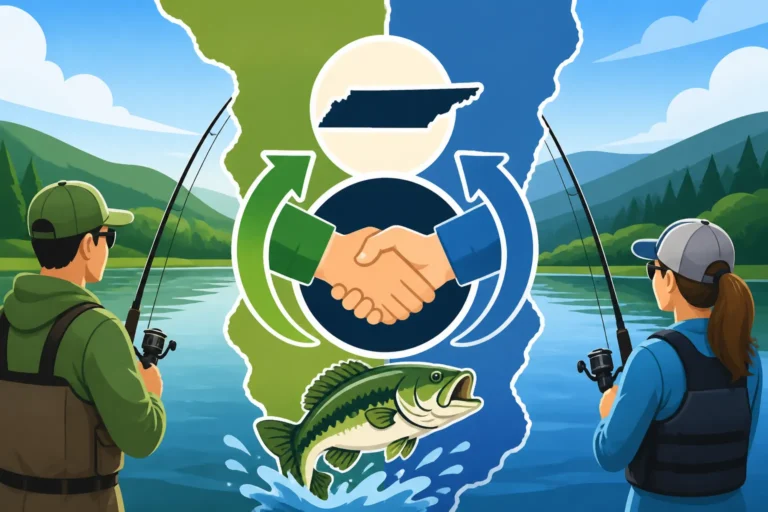
Border lakes and rivers present a unique situation for anglers, as they are shared resources between two or more states. It’s easy to assume that if you’re floating in the middle of a lake that borders Tennessee and, say, Kentucky, you’d need a license from both states. Thankfully, in many cases, state wildlife agencies have established what are called reciprocity agreements. These agreements are essentially treaties between states that allow an angler with a valid fishing license from either bordering state to legally fish in the shared waters, often without needing a second license.
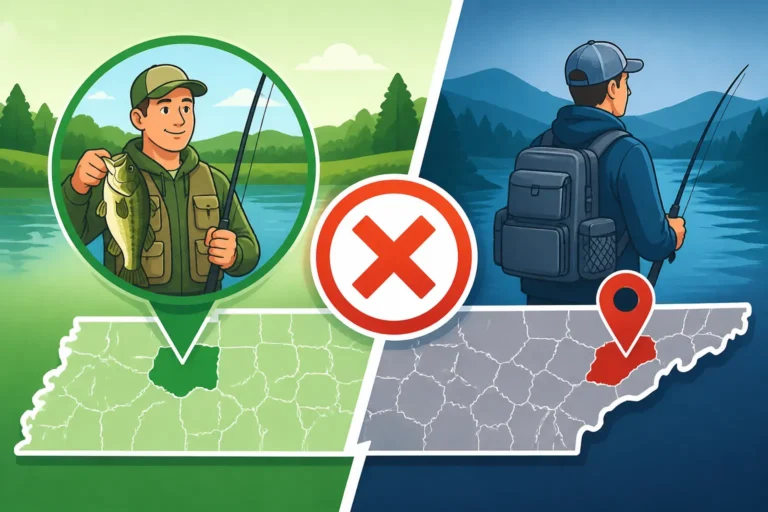
However, and this is a crucial "however," these agreements aren't universal, and they almost always come with specific conditions and limitations. For instance, a reciprocal agreement might cover the main body of a lake or river but not its tributaries that extend inland into one state or another. Or, it might cover fishing from a boat but not bank fishing on either side. These agreements are designed to make it easier for people to enjoy these shared natural resources without having to navigate multiple, often expensive, licensing systems, but they demand that you understand the fine print. Ignoring these details can lead to fines and a ruined fishing trip, which nobody wants after a long drive to the water. Always remember, ignorance of the law is rarely an excuse in the eyes of a game warden.
When you're dealing with shared waters, it's really important to do your homework before you even back your boat down the ramp. A quick call to the Tennessee Wildlife Resources Agency (TWRA) or the equivalent agency in the neighboring state can save you a lot of hassle. While general information is helpful, specific details for each body of water are paramount. You'd be surprised how often rules can differ slightly from one border lake to the next, even within the same state.
Key Tennessee Border Lakes and Their Licensing Nuances
Tennessee shares significant bodies of water with several neighboring states, each with its own set of rules. Let's dive into some of the most popular ones, because the details really matter here.
Kentucky Lake: Tennessee and Kentucky Waters
Kentucky Lake is probably one of the most famous border lakes, renowned for its incredible bass and crappie fishing. It stretches across both Tennessee and Kentucky, offering vast expanses of water. For a long time, there was a robust reciprocal agreement in place between Tennessee and Kentucky for Kentucky Lake, as well as Dale Hollow Lake and Lake Barkley. This agreement generally meant that if you possessed a valid fishing license from either Tennessee or Kentucky, you could legally fish the entire shared main body of these lakes, regardless of which state's side you were on.
However, recent adjustments have changed some aspects, especially regarding launching boats and fishing in embayments or tributaries. While the general principle of honoring each other's licenses on the main lake still largely applies, it's vital to know if you venture into a tributary or embayment that lies entirely within one state's boundary. If you launch your boat from a public ramp that is entirely within Tennessee, for example, your Tennessee license covers you. But if you then decide to fish up a creek that is fully contained within Kentucky's borders, you might need a Kentucky license. Always double-check the latest regulations with the TWRA and Kentucky Department of Fish and Wildlife Resources (KDFWR) before heading out. Fishing from a boat on a Tennessee border lake and which license applies here is usually about the main body of water.
Dale Hollow Lake: Another Tennessee and Kentucky Gem
Much like Kentucky Lake, Dale Hollow Lake is another stunning reservoir shared by Tennessee and Kentucky, famous for its world-class smallmouth bass. The reciprocal agreement for Dale Hollow has traditionally mirrored that of Kentucky Lake. A valid fishing license from either Tennessee or Kentucky would generally allow you to fish the main lake.
Again, the nuance comes into play when considering the tributaries or specific embayments. If you're planning to explore the upper reaches of a specific creek arm that clearly extends into only one state, it's wise to have the license for that state. The intent of these agreements is to simplify fishing on the shared waters, not necessarily to give you free rein over all waters of both states. Always verify specific geographical boundaries where these reciprocal agreements cease to apply. Knowing the exact details can prevent a misunderstanding with a game warden, who is just doing their job to enforce regulations designed to protect the resource.
Mississippi River: Tennessee, Arkansas, and Missouri
The mighty Mississippi River is a beast of a different color. Here, Tennessee shares waters with both Arkansas and Missouri. The agreements on the Mississippi River can be even more intricate due to the river's dynamic nature, its shifting sandbars, and the numerous backwaters and chutes that can be ambiguous in terms of state lines.
Generally, a valid resident or nonresident fishing license from any of the bordering states (Tennessee, Arkansas, or Missouri) allows you to fish the main channel of the Mississippi River, including its adjacent backwaters and sloughs that are accessible from the main channel without going through dry land. However, this often does not extend to permanently isolated oxbow lakes or other bodies of water that are clearly on one side of the historic main channel and have no direct, navigable connection. For instance, if you're fishing a specific oxbow lake that is definitively recognized as being entirely within Arkansas, a Tennessee license might not cover you. The rule of thumb here is: if you can boat to it directly from the main channel without portaging, you're likely covered. But as soon as you have to leave the main flow to access an area, the local state's rules usually apply.
| Border Lake/River | Shared States | General Reciprocity (Main Body) | Key Considerations |
|---|---|---|---|
| Kentucky Lake | TN, KY | Yes (TN or KY license) | Tributaries/embayments fully within one state may require that state's license. |
| Dale Hollow Lake | TN, KY | Yes (TN or KY license) | Similar to Kentucky Lake, be cautious in specific creek arms. |
| Mississippi River | TN, AR, MO | Yes (TN, AR, or MO license) | Applies to main channel and accessible backwaters; isolated oxbows may require specific state license. |
| Pickwick Lake | TN, AL, MS | Varies by segment/agreement | While part of the Tennessee River system, specific reciprocal agreements are less broad here; individual state licenses often apply for portions within their borders. |
Note: Always verify current regulations directly with the TWRA and the corresponding state's wildlife agency before fishing any border water, as rules can change.
Pickwick Lake, which is part of the Tennessee River system, actually borders Tennessee, Alabama, and Mississippi. The reciprocity here is a bit more complex and not as broadly encompassing as with Kentucky Lake or Dale Hollow. While Tennessee and Alabama have some agreements regarding the shared Tennessee River, it's generally safer to assume that if you're fishing waters clearly within Alabama's or Mississippi's territorial boundaries on Pickwick, you'll need that state's license. For example, if you launch from a ramp in Iuka, Mississippi, and stay predominantly in the Mississippi portion of the lake, you'll need a Mississippi license. This often means that if you plan to explore the entire lake, holding a license for each state you intend to fish in is the safest bet to avoid any issues. This is a common point of confusion, and anglers often realize too late that the general reciprocity they assume for other lakes doesn't fully extend here.
Navigating Licensing for Out-of-State Anglers on Border Waters
So, you're visiting Tennessee, maybe from Ohio or Georgia, and you want to fish a border lake. What's the deal with your nonresident license? This is where it gets interesting, and often, more complicated than for residents of bordering states.
When Your Home State License Isn't Enough
If you're a nonresident and your home state doesn't border Tennessee, your home state license holds no weight on Tennessee waters, regardless of whether it's a border lake or not. Even if you're fishing on Kentucky Lake, where a Tennessee resident license holder might be able to fish the Kentucky side, your out-of-state license (say, from Florida) won't let you fish the Tennessee side. In this scenario, you absolutely need a Tennessee fishing license to fish any portion of the lake within Tennessee boundaries. This is where things can feel a little unfair, but it's standard practice for wildlife agencies.
You can often purchase a Nonresident Fishing License Costs in Tennessee for different durations, such as a 3-day or 10-day option, which might be more economical for a short trip than an annual license. If you're planning a longer stay or frequent trips, comparing the cost of a few short-term licenses against an annual one is a good idea. Sometimes, getting an annual nonresident license pays for itself faster than you'd think.
Buying a Tennessee Nonresident License
Fortunately, getting a Tennessee fishing license these days is pretty straightforward. You don't have to hunt down a physical store if you're in a pinch. You can often purchase one online through the TWRA website. It literally takes just a few minutes, and you can usually print a temporary license or save a digital copy to your phone immediately. This means you can decide to fish a specific border lake last minute and still get legal without much fuss. Many sporting goods stores like those found in larger retail chains, and even smaller local bait shops across the state, also sell licenses.
When considering which license to buy, think about your target species. Do you plan on chasing trout? If so, you'll generally need to ensure your license includes the appropriate trout permit, as this is often an add-on. For more details, check out Do You Need a Trout Permit With Your Tennessee License. This is crucial because many of our border lakes, especially Dale Hollow, have excellent trout fisheries, and a standard license might not cover those specific activities.
Practical Tips for Fishing Tennessee Border Waters
Navigating border lake regulations can feel like a labyrinth, but with a little preparation, you can enjoy your time on the water without worry.
Always Check Current Regulations
I cannot stress this enough: regulations change. What was true last year might have changed this year. State wildlife agencies regularly review and update their rules. Before every trip to a border lake, take a few minutes to visit the TWRA website and the website of the neighboring state's wildlife agency. Look for specific sections on reciprocal agreements for the lake you plan to fish. You can also find comprehensive information in the official Tennessee Fishing Regulations Explained guide, which is updated annually.
A quick call to the local TWRA office or a ranger station near your fishing destination can also provide invaluable, up-to-the-minute information. These folks are on the water constantly and know the nuances better than anyone. They'd much rather answer a quick question than deal with an avoidable violation later.
Carry All Necessary Documentation
Even if you believe you’re covered by a reciprocal agreement, it’s always a good idea to carry both your home state license and, if you have one, your Tennessee license or the license for the bordering state. This can save a lot of time and potential misunderstanding if you encounter a game warden.
Modern technology makes this easier than ever. Most states offer digital versions of your license that you can display on your smartphone. Keep a screenshot or a PDF copy handy, as cell service isn't always reliable on remote stretches of water. You might also want to have a printed copy, just in case your phone decides to go for a swim! Having your physical license, or a digital copy, is critical for proving your legality on the water, so make sure you understand Digital vs Printed Fishing Licenses in Tennessee.
Know the Boundaries
While reciprocal agreements often cover the main body of a shared lake, they frequently have limits when it comes to tributaries, rivers, or embayments that extend deep into one state's territory. For example, on Kentucky Lake, while the main lake is usually reciprocal, if you venture miles up the Big Sandy River, which flows entirely within Tennessee, you absolutely need a Tennessee license.
Familiarize yourself with maps of the lake, ideally those that clearly mark state boundaries. Many GPS-enabled fish finders now show state lines, which can be incredibly helpful. Before you launch, take a moment to review where those lines are drawn, especially if you plan on exploring new areas. This is particularly important for vast bodies of water like the Kentucky Lake Fishing on the Tennessee Side.
Equipping Your Boat for Border Lake Fishing
When you're out on these big border lakes, especially from a boat, you need to be prepared for anything. Beyond your license, make sure your boat is properly registered and equipped with all necessary safety gear, including life jackets for everyone on board. For details, you can refer to the Tennessee Boat Registration Requirements Explained.
Consider having a waterproof fishing map readily available, or reliable GPS navigation on your boat electronics. You can find excellent maps and waterproof cases for your phone on Amazon, which can be a lifesaver in unfamiliar waters or when navigating state lines. A good pair of polarized sunglasses, also easily found on Amazon, will help you cut through the glare and spot potential hazards or fish habitat.
Fishing these expansive waters often means you'll be out for long periods, so bring plenty of water, snacks, and extra layers of clothing. A reliable cooler, available on Amazon, is essential for keeping your catch fresh, especially if you're hitting your Tennessee Crappie Limits Under Tennessee Fishing Rules or landing some impressive bass. Always be aware of the weather, as conditions can change rapidly on large reservoirs.
Finally, remember that the whole point of these rules and regulations is conservation. They are designed to ensure that these incredible fishing opportunities remain abundant for generations to come. Respect the resource, respect the rules, and enjoy the adventure that Tennessee's border lakes have to offer!
Disclaimer
The information provided in this guide is for general informational purposes only and does not constitute legal advice. Fishing regulations are subject to change and vary by specific location and species. Always consult the official Tennessee Wildlife Resources Agency (TWRA) regulations and the regulations of any bordering state's wildlife agency before engaging in fishing activities on border waters.