Best Trout Fishing in the Great Smoky Mountains Near Pigeon Forge
Trying to find those elusive, biting trout amidst the bustling energy of Pigeon Forge can feel like searching for a needle in a haystack, especially if you're not familiar with the local waters. It’s easy to get overwhelmed by the sheer number of streams and the varying regulations. This comprehensive guide will cut through the noise, showing you exactly where to go for the best trout fishing experience in the Great Smoky Mountains National Park, close to Pigeon Forge, and equip you with the knowledge to make your trip a successful one.
The Magnetic Pull of Trout Fishing in the Great Smoky Mountains
There's something truly special about trout fishing in the Great Smoky Mountains. It's more than just catching fish; it's about immersing yourself in the ancient, misty forests, feeling the cool mountain air, and listening to the rhythmic rush of clear, cold water over mossy rocks. Many anglers, myself included, find a deep sense of peace and connection to nature that’s hard to replicate anywhere else. The accessibility from popular spots like Pigeon Forge only adds to its appeal, allowing you to easily slip away from the crowds and into the wilderness.
Pristine Waters and Diverse Trout Populations
The heart of the appeal lies in the purity of the water. Fed by countless springs and snowmelt, the streams within the Great Smoky Mountains National Park are incredibly clean and cold, providing the ideal habitat for trout. These waters are home to three primary species: Rainbow Trout, Brown Trout, and the cherished, native Brook Trout. Each offers a distinct challenge and reward for the dedicated angler.
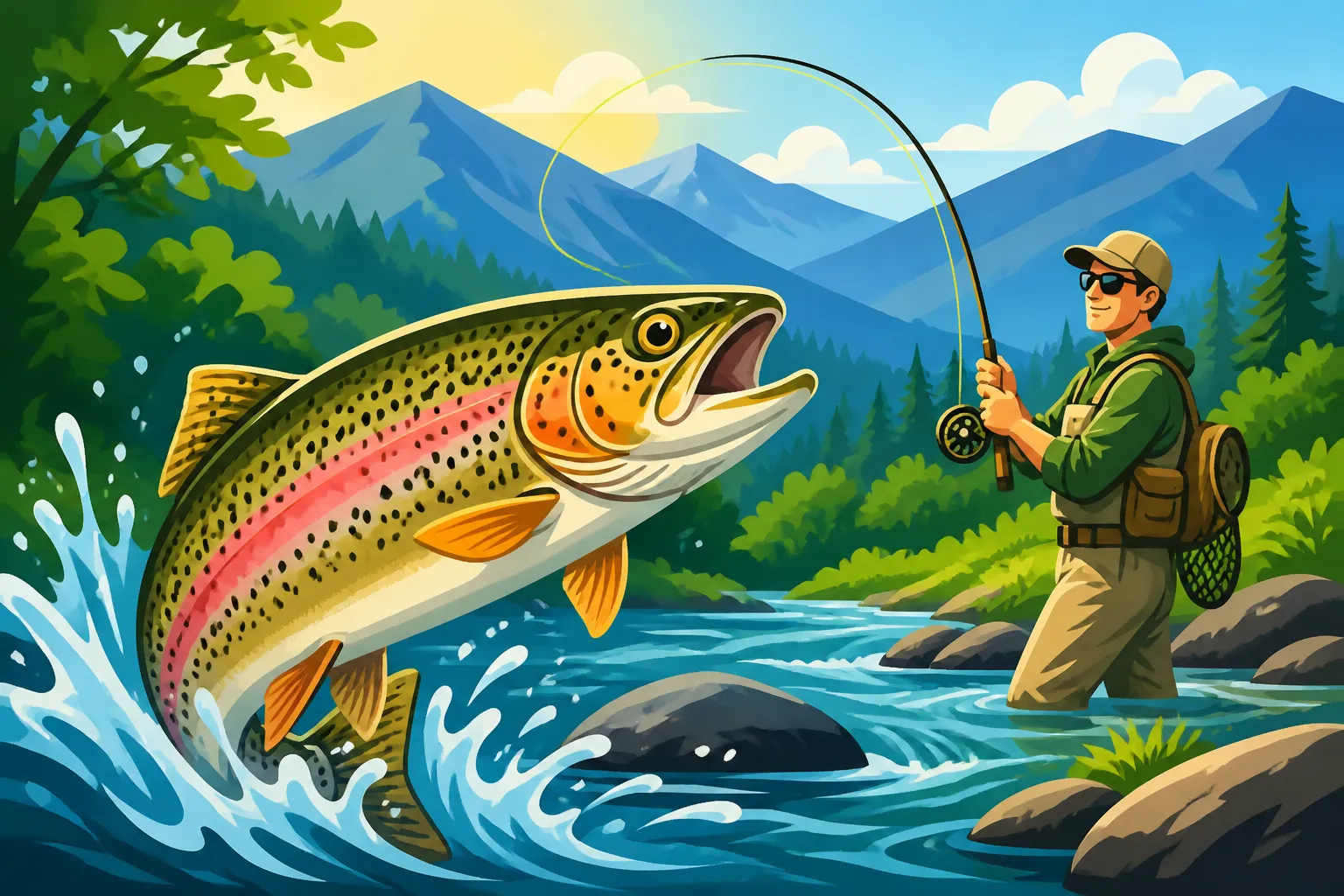
Rainbow Trout are often the most abundant, especially in the more accessible, lower-elevation streams. They're known for their acrobatic fights and vibrant colors. Brown Trout, typically found in slightly larger, slower-moving pools, are often larger and more elusive, requiring a keen eye and delicate presentation. But it's the Brook Trout, the only trout species native to these Appalachian waters, that truly captures the imagination of many. These smaller, strikingly beautiful fish, with their worm-like patterns and bright spots, thrive in the coldest, highest-elevation headwaters, making them a prize for those willing to hike a bit further into the backcountry. The pursuit of these native "speckled beauties" is a pilgrimage for many.
Unique Challenges and Deep Rewards
Fishing these mountain streams isn't like fishing a stocked pond or a wide, slow-moving river. The Great Smoky Mountains present unique challenges that elevate the experience. You'll encounter rocky streambeds, dense rhododendron thickets, varying water flows, and cautious, wild fish that demand skill and stealth. It's not uncommon to spend an entire morning carefully working a stretch of stream, only to be rewarded with a single, hard-earned strike.
This inherent difficulty is precisely what makes the rewards so much sweeter. Landing a vibrant Rainbow, a wily Brown, or especially a native Brook Trout in its natural, breathtaking habitat is an unforgettable moment. It’s a testament to your patience, your technique, and your ability to read the water. The joy comes not just from the catch itself, but from the process, the environment, and the knowledge that you’ve successfully outsmarted a truly wild creature in its own domain. It's a humbling and invigorating experience that keeps anglers coming back year after year.
Prime Trout Fishing Streams Near Pigeon Forge
While Pigeon Forge itself is more known for its attractions, the gateway to some fantastic trout fishing lies just a stone's throw away. The trick is knowing which direction to head and what to expect from each watercourse. The Great Smoky Mountains National Park encompasses a vast network of streams, and many of them offer excellent opportunities for trout, some requiring a bit of a hike, others surprisingly accessible.
Little Pigeon River and Its Tributaries
The Little Pigeon River system is the most immediate and accessible option for those staying in Pigeon Forge. The main stem of the Little Pigeon River flows directly through areas like Sevierville and Pigeon Forge, and while parts of it might seem too "urban" for serious trout fishing, its upper reaches and various tributaries offer excellent prospects.
The lower sections of the Little Pigeon River, closer to town, are primarily stocked with Rainbow Trout by the Tennessee Wildlife Resources Agency (TWRA), especially in designated public access areas. These spots are fantastic for beginners or families looking for a more relaxed experience where success is more likely. However, for a more authentic wild trout encounter, you'll want to head upstream or venture into its less-trafficked feeder streams. These smaller tributaries, often found within the National Park boundaries or on National Forest land adjacent to it, hold populations of wild Rainbow and even some Brown Trout. These wild fish are typically smaller but much more aggressive and rewarding to catch. They require a more delicate approach and smaller presentations, often favoring stealth and accurate casts over brute force.
West Prong of Little Pigeon River
A particularly popular and productive section is the West Prong of the Little Pigeon River. As you drive into Gatlinburg from Pigeon Forge, you’ll see this river winding alongside the road. The section of the West Prong that runs through Gatlinburg is heavily stocked and very popular, especially during the warmer months. Here, you can find a mix of anglers, from those bait fishing with corn and worms to fly anglers trying to tempt a stocked rainbow.
However, if you continue past Gatlinburg and into the Great Smoky Mountains National Park, the West Prong transforms into a truly spectacular trout stream. The regulations shift here, becoming catch-and-release only with single-hook artificial lures. This means the fish tend to be less pressured and can grow larger. The water is pristine, cascading over rocks and through shaded pools. This stretch is a fly angler’s paradise, offering classic pocket water fishing where Rainbow and Brown Trout readily rise to dry flies or aggressively take nymphs. The further you hike up this section, the fewer people you’ll encounter and the more wild trout you're likely to find. Remember, you'll need a valid Tennessee Fishing License Guide and should review the Tennessee Trout Limits and Season Rules before heading out.
Deeper within Great Smoky Mountains National Park
For the truly adventurous angler seeking solitude and the pursuit of native Brook Trout, venturing deeper into the Great Smoky Mountains National Park is a must. While it requires more effort, often involving significant hikes, the reward is unparalleled. Streams like the Little River, Abrams Creek, and numerous other smaller, unnamed feeder streams hold healthy populations of wild Rainbows, Browns, and the elusive native Brook Trout.
The Little River, accessible via the Little River Road from Gatlinburg, is one of the park’s largest and most famous trout streams. Its various sections offer a diverse range of fishing experiences, from wide, slower pools to classic cascading pocket water. Abrams Creek, in the Cades Cove area, is another gem, famous for its large wild Rainbow and Brown Trout, though access can be challenging. For Brook Trout, you'll generally need to seek out the higher elevation tributaries and headwaters. These streams are often narrow, overgrown, and require careful wading and precise casting. A guided trip, which you can easily arrange through services like FishingBooker, can be incredibly beneficial for navigating these more remote areas and learning the nuances of fishing for native trout.
Here's a quick comparison of some popular streams near Pigeon Forge:
| Stream Name | Primary Trout Species | Typical Fishing Method | Proximity to Pigeon Forge | Special Notes |
|---|---|---|---|---|
| Little Pigeon River (Lower) | Stocked Rainbow Trout | Bait, Spin Fishing | Very Close | TWRA stocked, family-friendly, higher pressure |
| Little Pigeon River (Upper Tribs) | Wild Rainbow, Brown Trout | Spin Fishing, Fly Fishing | Close – Moderate | Smaller fish, less pressure, requires more finesse |
| West Prong (Gatlinburg) | Stocked Rainbow Trout | Bait, Spin Fishing, Fly Fishing | Very Close | Heavily stocked, very popular, easy access |
| West Prong (within GSMNP) | Wild Rainbow, Brown Trout | Fly Fishing, Spin Fishing | Moderate | Catch-and-release, artificial lures, beautiful scenery |
| Little River (within GSMNP) | Wild Rainbow, Brown, Brook Trout | Fly Fishing, Spin Fishing | Moderate – Far | Diverse water, good for all skill levels, extensive fishing areas |
| Abrams Creek (within Cades Cove) | Wild Rainbow, Brown Trout | Fly Fishing, Spin Fishing | Far | Larger wild trout, popular, can be crowded in Cades Cove area |
Essential Techniques and Gear for Smoky Mountain Trout
Tackling the diverse waters of the Great Smoky Mountains requires not just the right spot, but also the right approach and equipment. These aren't your typical wide-open casting scenarios; precision, stealth, and adapting to the stream are key. Whether you're a seasoned fly angler or prefer the simplicity of spin fishing, a few fundamental principles will dramatically increase your chances of success.
Fly Fishing for Wild Trout
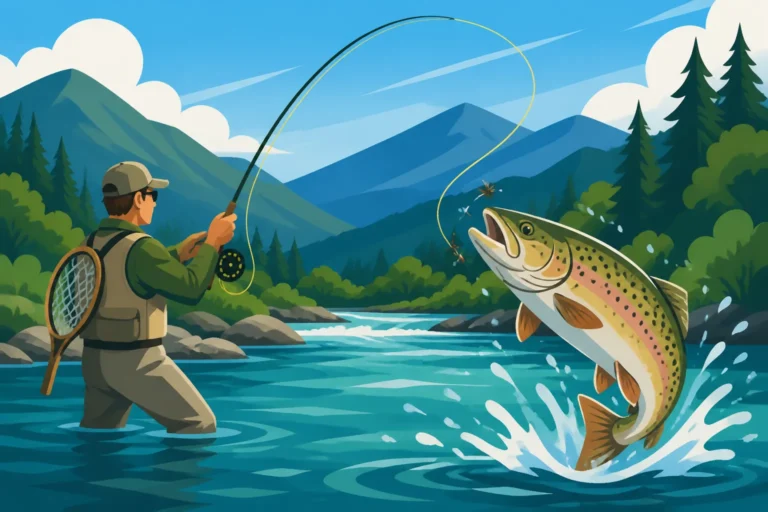
For many, fly fishing is the quintessential method for pursuing trout in the Great Smoky Mountains. It allows for delicate presentations and mimics the natural insect life that wild trout feed on. A lightweight fly rod, typically a 2-weight to 4-weight, in a length of 7 to 8.5 feet, is ideal for navigating the tight casting quarters often found in mountain streams.
When it comes to flies, "matching the hatch" is always a good strategy, but general attractor patterns often work well too. During the warmer months, dry flies like Parachute Adams, Elk Hair Caddis, and Royal Wulff in sizes #12-18 are staples. For nymphing, which is often more productive, patterns such as Pheasant Tail Nymphs, Hare's Ear Nymphs, and Squirmy Wormies in sizes #14-20 are excellent choices. Streamers like Woolly Buggers can also entice larger Brown Trout from deeper pools. Understanding How to Fly Fish for Trout for Beginners can give you a solid foundation, and practicing your roll casts and accurate short-distance casts will be invaluable. The streams can be quite technical, so having the right Best Fly Rods and Waders for Tennessee Trout Streams is also crucial for comfort and maneuverability.
Spin Fishing for Accessibility
Not everyone fly fishes, and that's perfectly fine! Spin fishing can be incredibly effective and often more accessible for many anglers, especially in the more open, stocked sections of the Little Pigeon River or its lower tributaries. The key is to downsize your gear and focus on natural-looking presentations.
An ultralight spinning rod and reel combo, spooled with 4 to 6-pound test monofilament or fluorocarbon line, is your best bet. Small inline spinners, such as Panther Martins, Mepps, or Rooster Tails, in sizes #0 to #2, are incredibly effective. Choose natural colors like silver, gold, or black, or brighter colors if the water is a bit off-color. Small spoons, micro jigs, and even tiny crankbaits can also work wonders. If using bait, consider small worms, mealworms, or corn, especially in stocked areas. Remember to cast upstream and allow your lure or bait to drift naturally downstream, mimicking the flow of the current. This "drift fishing" technique is often highly effective, particularly when targeting the more cautious wild fish.
Reading the Water and Approaching Streams
No matter your chosen method, successfully catching trout in the Smokies hinges on your ability to "read the water" and approach the stream with stealth. Trout are incredibly wary and have excellent eyesight.
Look for areas where trout are likely to hold: behind large rocks or logs, in deeper pools, at the head or tail of a riffle, or along undercut banks. These spots offer current breaks, feeding lanes, and cover from predators. When approaching a stream, move slowly and deliberately. Wear natural, muted colors to avoid startling the fish. Avoid casting a shadow over the water where you plan to fish. Often, the first cast into a promising spot is the most critical. If you spook a fish, it will alert others in the area, significantly reducing your chances. Pay attention to changes in current, depth, and structure. Sometimes, the smallest seam or ripple can hide a feeding trout. Don't be afraid to cover a lot of ground; if a spot isn't producing after a few careful casts, move on to the next promising looking area.
Navigating Regulations and Conservation
Fishing in the Great Smoky Mountains National Park, and indeed throughout Tennessee, comes with a set of rules and responsibilities. Understanding these regulations is not just about avoiding penalties; it's about preserving these incredible fisheries for future generations. The rules vary slightly depending on whether you are in the National Park or outside of it, so it’s essential to be informed.
Tennessee Fishing Licenses and Trout Permits
First and foremost, you absolutely need a valid fishing license. Anyone aged 13 and older must possess a valid Tennessee fishing license to fish in the state's public waters, including those within the Great Smoky Mountains National Park. For those interested in fishing for trout, which is likely your primary goal here, you'll generally need to purchase an annual trout permit in addition to your basic fishing license. This permit helps fund the state's trout stocking programs and conservation efforts.
The good news is that acquiring a license and permit is straightforward. You can easily purchase them online through the TWRA website, at many local sporting goods stores, or at bait shops throughout Tennessee. It's always wise to get your license before you head out. Remember, these licenses are generally valid for a full 12 months from the date of purchase. For non-residents visiting Pigeon Forge for a short trip, there are specific Nonresident Fishing License Costs in Tennessee and Nonresident 3-Day and 10-Day License Options for Tennessee that can be more economical than an annual permit. Always keep your license with you while fishing, either a physical copy or a digital version on your phone.
Catch and Release Ethos for Wild Trout
While Tennessee's statewide regulations for trout generally allow for a creel limit of seven fish per day, with specific rules for species like Tennessee Trout Limits and Season Rules, the Great Smoky Mountains National Park has its own, often stricter, rules. Within the park, nearly all waters are managed as "catch-and-release only" and restrict anglers to "single-hook artificial lures." This policy is crucial for protecting the fragile populations of wild Rainbow, Brown, and especially the native Brook Trout.
Embracing a catch-and-release ethos is vital for conservation. When practicing catch and release, handle fish gently with wet hands, minimize their time out of water, and use de-barbed hooks to reduce injury. If a fish is deeply hooked, it’s often best to cut the line as close to the hook as possible rather than attempting to rip it out. This mindful approach ensures that these beautiful fish survive to be caught another day and continue to contribute to healthy stream ecosystems. Many anglers specifically seek out expert guides through platforms like FishingBooker who are well-versed in ethical catch-and-release practices in the park.
Park-Specific Rules and Zones
It’s crucial to understand that the Great Smoky Mountains National Park has its own set of fishing regulations that can differ significantly from statewide Tennessee Wildlife Resources Agency (TWRA) rules. These park-specific rules are designed to protect the park's unique aquatic environments and its wild trout populations. For instance, as mentioned, most streams within the park are catch-and-release only with artificial lures. Some areas might have specific closures or additional restrictions.
Before heading into the park to fish, always consult the official Great Smoky Mountains National Park fishing regulations, which are usually available at visitor centers, ranger stations, or on the park's official website. These regulations outline legal fishing hours, creel limits (where applicable, though rare for trout), tackle restrictions, and any closed waters. For example, some streams might have different rules depending on whether you're fishing for Brook Trout in Tennessee's Cold-Water Streams versus Rainbows. Disregarding these rules can lead to significant fines and penalties. Staying informed ensures a legal, ethical, and enjoyable fishing trip.
Disclaimer
Please be aware that fishing regulations and conditions can change. Always check the most current regulations from the Tennessee Wildlife Resources Agency (TWRA) and the Great Smoky Mountains National Park before your trip. Fishing inherently carries risks, so always prioritize safety when on the water.