Fly Fishing Techniques for Trout
Oh, the allure of a pristine Tennessee stream, the whisper of the fly line, the delicate dance of a dry fly on the water's surface – it’s a picture many of us hold dear. Yet, for all its beauty, diving into fly fishing for trout can feel incredibly daunting. You might find yourself staring at a wall of unfamiliar gear, wondering which tiny bug imitation to tie on, or struggling to even get your line to go where you want it. Trust me, we’ve all been there! This guide is designed to demystify fly fishing for trout, breaking down the essential techniques and strategies you’ll need to confidently cast your line and find success on Tennessee’s incredible waters.
Understanding Tennessee's Diverse Trout Waters
Tennessee is a jewel for trout anglers, offering a truly varied landscape from tranquil mountain streams to powerful tailwaters. Knowing what kind of water you're fishing isn't just a nicety; it's absolutely crucial for choosing the right approach, flies, and techniques. It’s like knowing if you’re cooking a delicate soufflé or a hearty stew – the ingredients and method are completely different!
Tailwaters Versus Freestone Streams
First, let's talk about the two main types of trout water you'll encounter here in the Volunteer State. You have your tailwaters and your freestone streams, and each has its own personality, literally dictating how trout behave and where they hold.
Tailwaters are those fantastic stretches of river located directly below large dams. Think about places like the Clinch River Trout Fishing in East Tennessee or the Caney Fork River. These rivers get their water from the bottom of deep reservoirs, which means two things: super consistent, cold water temperatures year-round (perfect for trout!), and incredibly stable water flows (unless the dam is actively generating power, which can change things in a hurry). Because of these stable conditions, tailwaters are often rich in aquatic insect life, leading to prolific hatches and often larger, more abundant trout. The downside? Fish in tailwaters can be notoriously picky, used to a constant food supply, and often wary of unnatural presentations. They’ve seen it all, or so it seems!
Freestone Streams, on the other hand, are your classic mountain creeks and rivers – the ones that get their water directly from rainfall and snowmelt. Imagine the wild, tumbling waters found in the Trout Fishing in the Great Smoky Mountains, Tennessee. These streams are truly beautiful, but their conditions can fluctuate wildly with the weather. Heavy rains mean high, turbid water, while a dry spell can reduce them to a trickle. Water temperatures also follow the seasons more closely, getting colder in winter and warmer in summer. Trout in freestone streams tend to be smaller, wilder, and often less selective than their tailwater cousins, simply because their food sources can be more sporadic. They might not be as huge, but the challenge and raw beauty of these environments are incredibly rewarding.
Identifying Trout Species and Their Habits
Tennessee is home to a fantastic array of trout, and understanding their individual traits is key to finding them and coaxing a bite. You'll primarily encounter Rainbow, Brown, and Brook Trout, each with distinct preferences.
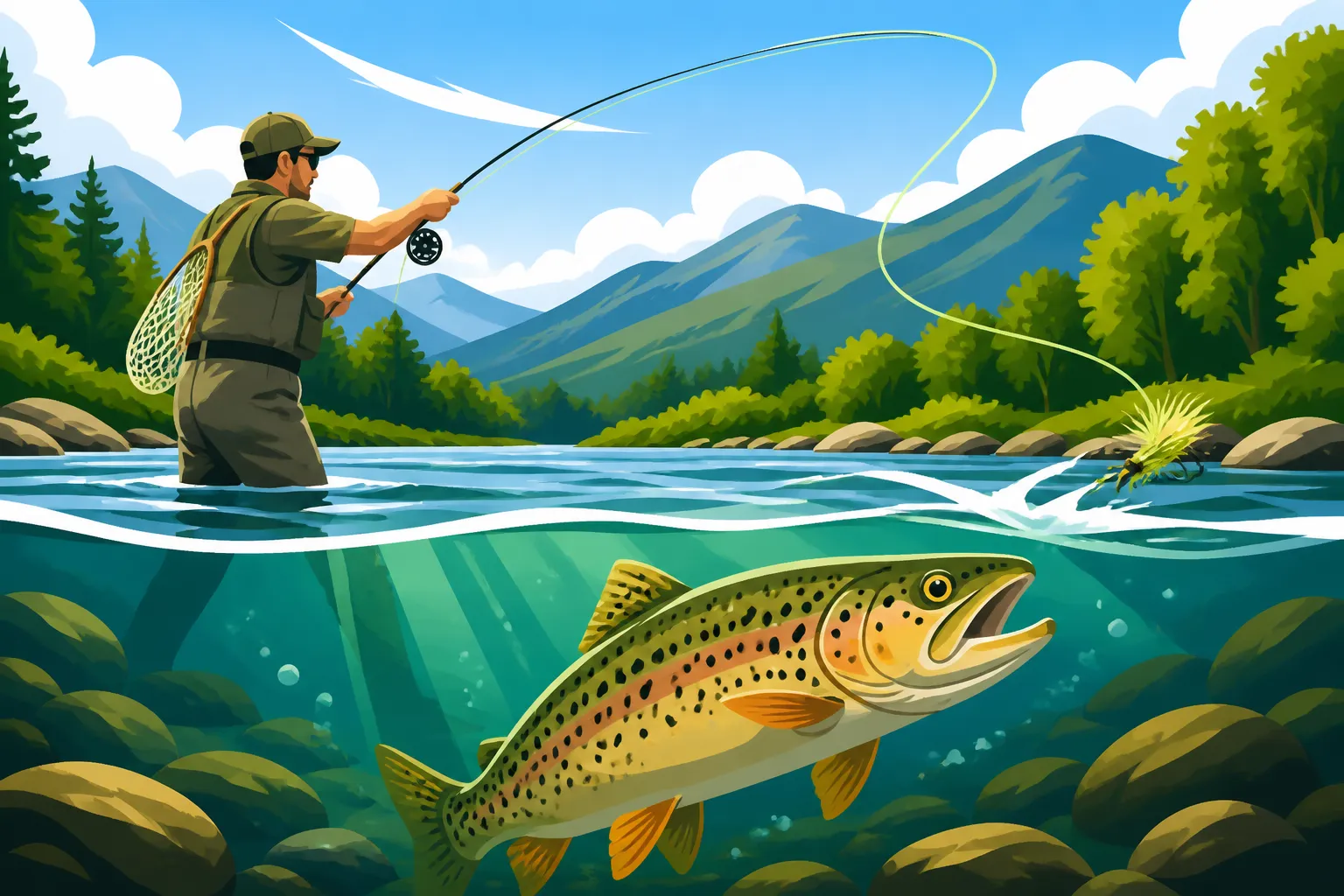
Rainbow Trout are perhaps the most common, especially in stocked waters. They're often identified by that iridescent, pinkish-red stripe running down their side and their characteristic dark spots. Rainbows are generally quite aggressive and opportunistic feeders, making them a great target for beginners. They'll readily strike at a variety of flies, from nymphs to dry flies and even streamers, and are known for their acrobatic jumps when hooked. You’ll find them in almost all trout waters, especially where the Tennessee Wildlife Resources Agency (TWRA) conducts its regular Tennessee Trout Stocking Schedule and Season.
Brown Trout are known for their cunning and solitary nature, often growing to impressive sizes. Their coloration varies but typically includes dark spots surrounded by lighter halos, often with some red spots mixed in. They’re less forgiving than rainbows and tend to be more active at dawn, dusk, or even at night, especially the larger ones. Big brown trout are predatory and often prefer larger meals like baitfish (which means streamer patterns are effective) or large terrestrials. You'll often find them holding in deeper, more complex structure like undercut banks, fallen logs, or large boulders, often waiting in ambush. Learning the Brown Trout vs Rainbow Trout: Key Differences will certainly help you improve your catch rates.
Brook Trout are Tennessee's only native trout species, true gems of the cold, clean headwater streams. They are easily recognized by their intricate, worm-like markings (vermiculations) on their backs, red spots with blue halos, and a brilliant white leading edge on their fins. Brookies are generally smaller, feisty, and less pressured than the other species due to their remote habitat. They thrive in oxygen-rich, undisturbed mountain streams with stable, cold temperatures. If you're looking for an authentic Tennessee wilderness experience, chasing brook trout in their native haunts is hard to beat. Just remember, these are delicate fish in delicate ecosystems, so handle them with utmost care. You'll want to explore the sections on Brook Trout in Tennessee's Cold-Water Streams to really get into their specific habitat.
Key Tennessee Trout Fishing Spots
Tennessee boasts an impressive list of top-tier trout fishing locations. Knowing these prime spots will give you a fantastic head start on your angling adventures. Each location offers a unique experience and challenges, making Tennessee a truly diverse fishing destination.
For incredible tailwater fishing, the Clinch River below Norris Dam is practically legendary. Its consistent cold water and abundant insect life make it a consistent producer of large rainbow and brown trout. Anglers frequently float this river, but there are also numerous public access points for wade fishing. Another fantastic tailwater is the Caney Fork River Trout Fishing below Center Hill Dam, known for its strong hatches and solid populations of rainbows and browns. Both of these rivers demand precise presentations and often smaller flies due to the educated fish they hold.
If you're seeking the wild beauty of freestone streams, look no further than the Great Smoky Mountains National Park. The park is home to hundreds of miles of pristine, cold-water streams teeming with rainbow, brown, and native brook trout. Streams like Little River, Abrams Creek, and Hazel Creek offer incredible opportunities for wade fishing in stunning natural settings. These waters often require a more adventurous spirit, hiking into remote areas, but the reward of catching a wild trout in such an unspoiled environment is unparalleled. Exploring these streams will also put you in touch with Tennessee's Best Trout Streams.
Beyond these marquee destinations, many smaller tributaries and streams throughout East Tennessee also hold trout, especially after stocking efforts. Places like the Holston River, Watauga River, and various state park ponds offer excellent opportunities. It's always a good idea to check the TWRA's stocking schedule and local regulations before you go, as some waters may have specific rules that override statewide limits.
Essential Fly Fishing Gear for Tennessee Trout
Alright, let's talk about the tools of the trade. Don't let the sheer volume of fly fishing gear intimidate you. While it can get complex, the basics are straightforward, and you certainly don't need to break the bank to get started. Think of it like learning to play the guitar – you don't need a custom-made instrument to learn your first chords, but a decent one makes the process much more enjoyable!
Selecting the Right Rod, Reel, and Line
Choosing the right rod, reel, and line is foundational to your fly fishing success. This trinity needs to work together harmoniously to give you the control and presentation you need.
For most Tennessee trout fishing, a 7'6" to 9' fly rod in a 3, 4, or 5-weight is your sweet spot. A 3-weight is ideal for smaller streams and delicate presentations to wary trout, especially if you're targeting those smaller brook trout in mountain creeks. A 4-weight is a fantastic all-around choice, offering a good balance of delicacy and power for larger freestone streams or smaller tailwaters. If you plan on fishing larger tailwaters like the Clinch River, where bigger fish might be present and you need to cast larger flies or fight stronger currents, a 5-weight rod will give you that extra backbone. Many anglers find a 9-foot, 5-weight rod to be a versatile workhorse for general trout fishing. When choosing, consider the rod's action: fast action rods cast farther but require more precise timing, while medium or slow action rods are more forgiving for beginners and excel at delicate, short-range presentations. For a deeper dive into optimal choices, check out our guide on Best Fly Rods and Waders for Tennessee Trout Streams.
Your fly reel primarily serves to hold your line and provide drag when a fish runs. For trout fishing, it doesn't need to be overly complicated or expensive. A simple, reliable reel with a smooth, adjustable drag system will suffice. Most modern reels are "large arbor," meaning the spool has a larger diameter, which helps retrieve line faster and reduces line memory (those annoying coils in your line). Just make sure the reel is appropriately sized to balance your chosen rod – a 5-weight rod should be paired with a reel designed for 4-6 weight lines. You can find excellent, durable options on Amazon that won't cost a fortune.
The fly line is arguably the most critical component. Unlike conventional fishing where the lure's weight carries the line, in fly fishing, the weight of the line itself carries the fly. For trout, a weight-forward (WF) floating line is the standard. The "weight-forward" design means the line is heavier towards the front, making it easier to cast. A "floating" line, as the name suggests, stays on the surface, which is essential for dry fly fishing and provides a great visual cue for nymphing. Match your line weight to your rod's recommended weight (e.g., a 5-weight line for a 5-weight rod). Beyond the main fly line, you'll need a leader and tippet. The leader is a clear, tapered monofilament or fluorocarbon line that connects your fly line to your fly, gradually thinning out to be less visible to the fish. The tippet is a fine section of line attached to the end of your leader, to which you tie your fly. This allows you to change flies without shortening your expensive leader too quickly.
Must-Have Flies for Tennessee's Waters
The world of fly patterns is vast and can be overwhelming, but for Tennessee trout, a core selection will cover most situations. Remember, fly fishing is often about "matching the hatch" – imitating the insects that trout are actively feeding on.
For dry flies (flies that float on the surface), essential patterns include the Elk Hair Caddis, Adams, Parachute Adams, and various stimulator patterns. Caddis and Mayfly imitations (like the Adams) are crucial because these insects are prevalent in Tennessee's trout streams. The Stimulator is a great attractor pattern when you don't know exactly what they're eating or when trout are looking for a bigger meal. Having these in sizes ranging from 12 to 18 will cover many hatches.
When it comes to nymphs (flies that imitate aquatic insect larvae or pupae and are fished subsurface), patterns like the Pheasant Tail Nymph, Hare's Ear Nymph, Prince Nymph, and Walt's Worm are absolute workhorses. These imitate a broad range of aquatic insects that are constantly drifting through the water column, making them incredibly effective year-round. Carry these in various sizes (12-20) and weighted versions (with a small bead head) to get them down to the fish. Stonefly nymphs can also be very productive, especially in larger freestone rivers.
Finally, don't forget streamers (flies that imitate baitfish or larger prey). Patterns like the Woolly Bugger (black, olive, brown), Clouser Minnow, and sculpin imitations are fantastic for tempting larger, predatory brown trout. Fished with an aggressive retrieve, streamers can provoke reaction strikes even when trout aren't actively feeding. Always keep a few in your fly box for those times when you want to target a trophy. For a deeper dive into selection, you might want to look at Best Fly Patterns for Stocked Trout. Many of these foundational patterns are available in convenient assortments on Amazon.
Waders, Boots, and Essential Accessories
Beyond your rod, reel, and flies, a few other items are crucial for comfort, safety, and efficiency on the water.
Waders and wading boots are almost non-negotiable for serious trout fishing in Tennessee. They allow you to safely enter the water, access prime fishing spots, and stay comfortable in cold water for extended periods. Neoprene waders are great for colder weather, while breathable waders are much more comfortable for warmer days or longer hikes. Make sure your wading boots have good ankle support and felt or rubber soles with studs for traction on slippery rocks. Always wear a wading belt to prevent your waders from filling with water should you fall.
Essential accessories include a net (preferably a rubber or "ghost" net to protect fish), forceps or hemostats for hook removal, nippers for cutting line, a leader/tippet holder with spools of tippet (2X to 6X will cover most situations), and a fly box to organize your patterns. A vest, chest pack, or sling pack will help you keep all these items easily accessible. Don't forget polarized sunglasses to help you spot fish and protect your eyes, and a hat for sun protection. A small thermometer can also be useful for checking water temperature, as fish activity is highly influenced by it. Lastly, always carry water, snacks, and a first-aid kit, especially if you're venturing into remote areas.
Core Fly Casting Techniques for Beginners
Getting the fly to go where you want it to can be the most frustrating part for new fly anglers. It looks graceful and effortless when a seasoned pro does it, but in reality, it takes practice. Don’t get discouraged! Think of it like learning to ride a bike – it feels awkward at first, but with persistence, it becomes second nature.
The Basic Overhead Cast
The overhead cast is the foundation of fly casting. Master this, and you’re well on your way. It’s all about smooth acceleration, crisp stops, and letting the line do the work.
- The Grip: Hold the rod like you’re shaking hands, with your thumb on top of the cork handle, aligned with the rod. Don't grip it too tightly; a relaxed grip allows for better feel and control.
- Starting Position: Point the rod tip towards the water, with about 15-20 feet of fly line (plus your leader and tippet) extended in front of you. This "working line" is what you'll be casting.
- The Back Cast (10 o'clock): Initiate the cast by smoothly raising the rod tip, accelerating backward. Think of your arm as a lever, and your wrist as the hinge. Stop the rod sharply at about the 10 o'clock position (just past vertical). This sharp stop is crucial – it "loads" the rod, bending it and storing energy, which then propels the line backward. Watch your line unfurl behind you.
- The Pause: As the line straightens out behind you, pause briefly. This pause allows the energy to transfer down the line. The length of the pause depends on how much line you have out; more line requires a longer pause. Resist the urge to rush!
- The Forward Cast (1 o'clock): As the line straightens behind you, smoothly accelerate the rod forward, stopping sharply at about the 1 o'clock position (just above horizontal). Again, that sharp stop is key to propelling the line forward. Direct the line towards your target.
- The Drift: Once the line is on its way forward, "drift" your rod tip down towards the water. This allows the line to land softly and naturally, preventing a harsh splash.
Practice this sequence on grass or an open field first, without a fly on your line (just tie a small piece of yarn to your tippet). Focus on the rhythm: back, pause, forward, drift. Consistency is more important than distance initially.
Roll Cast for Tight Spots
There will be countless times, especially in the brushy banks of a small mountain stream or when fishing under overhanging trees, where an overhead cast just isn't possible. That's when the roll cast becomes your best friend. It allows you to cast without much backcasting room.
- Starting Position: Let your line lie on the water in front of you. Bring the rod tip up and slightly back, forming a "D-loop" with your fly line behind and to the side of your rod tip. The line should be mostly on the water in front of you, with a gentle curve forming behind the rod.
- The Forward Stroke: Without any back cast, smoothly accelerate the rod forward and downward. Think of "painting" the line forward and down onto the water. The energy from this forward motion rolls the line out in front of you.
- The Stop: Finish with a crisp stop, pointing your rod tip towards your target. The line should roll out in a loop and land gently.
The roll cast is a true lifesaver for navigating challenging environments, and mastering it will open up many more fishing opportunities in tight Tennessee spots.
False Casting and Line Management
False casting is what most people picture when they think of fly fishing – the line flying back and forth in the air. While it looks impressive, it serves several practical purposes: drying your fly, changing direction, or extending your line.
False Casting: After an initial pick-up, you make a back cast and then, instead of letting the line fall, you immediately make another forward cast without touching the water. You can do this multiple times, allowing you to dry a waterlogged dry fly or to gradually extend more line before your final, "presentation" cast. The key is to maintain the same rhythm and crisp stops as your basic overhead cast. Don't let the line drop too low on the forward or back cast; keep it in the air.
Line Management is critical to efficient casting and fighting fish. This mostly refers to managing the loose fly line that's typically stripped off your reel and held in your non-casting hand (your line hand).
- Stripping Line: To extend your cast, you'll need to strip line from your reel. As you make false casts, pull out coils of line and hold them in your line hand. On your final forward cast, you can "shoot" this extra line by releasing it, allowing the momentum of the cast to carry it further.
- Mending Line: Once your fly is on the water, currents will grab your line and pull your fly unnaturally. This is called "drag." To counteract this, you'll need to "mend" your line. This involves lifting a section of your line off the water and repositioning it upstream or downstream to create a longer, drag-free drift. More on this later, but it’s a crucial aspect of getting a good presentation.
- Fighting Fish: When a fish strikes, your line hand is crucial. You'll strip set (pull the line sharply with your line hand) to set the hook, rather than raising the rod tip like with conventional gear. Once the fish is hooked, you'll fight it primarily with the reel's drag, but you can also use your line hand to strip in line quickly or provide extra pressure when needed.
Practice these fundamental casting techniques. There are many fantastic instructional videos on Amazon or YouTube, but nothing beats hands-on practice. Even 15-20 minutes a few times a week in your yard can make a huge difference in your confidence and ability. For beginners, getting an idea of How to Fly Fish for Trout for Beginners is a fantastic place to start building these skills.
Mastering Different Fly Fishing Presentations
Once you can cast, the next step is learning how to present your fly to the fish in a way that looks natural and tempting. This is where the artistry of fly fishing truly comes into play, and it's also where you'll find different techniques shine in different situations.
Dry Fly Fishing for Surface Feeders
Dry fly fishing is arguably the most visually exciting and often the most rewarding form of fly fishing. There’s nothing quite like watching a trout rise from the depths to sip your imitation off the surface. It's truly a magical experience.
When to Use It: Dry flies are most effective when trout are actively feeding on adult insects that have hatched and are either floating on the water's surface or are just emerging. This is known as "the hatch." You'll notice fish rising (making splashes or subtle rings on the water) or see adult insects fluttering around or drifting downstream. Ideal conditions usually include calmer water, overcast skies, or during the morning and evening hours when hatches are most common.
The Presentation: The goal of dry fly fishing is to achieve a drag-free drift. This means your fly should float downstream at the same speed as the natural currents, just like a real insect. Any unnatural drag will immediately alert a trout that something is amiss, and they'll refuse your fly.
- Casting: Cast slightly upstream and across the current, aiming to land your fly gently a few feet above where you expect a fish to be holding.
- Mending: As soon as your line hits the water, and often multiple times during the drift, you'll need to "mend" your line. This involves lifting a loop of fly line off the water and repositioning it upstream (an upstream mend) to prevent the faster surface currents from pulling your fly faster than the natural current. This creates slack upstream of your fly, allowing it to float freely.
- Watching for the Strike: Keep your eyes peeled on your fly. A subtle dimple, a splash, or even just your fly disappearing from sight can indicate a strike.
- Setting the Hook: When a fish takes your dry fly, resist the urge to violently pull the rod back. Instead, use a gentle, upward "lift" of the rod tip, accompanied by a slight strip-set with your line hand. This ensures a solid hook-set without breaking your delicate tippet.
Timing is everything with dry flies. Be patient, observe the water, and make sure your presentation is as natural as possible.
Nymphing: Getting Down to the Fish
While dry fly fishing gets all the glory, nymphing is arguably the most consistently effective technique for catching trout, simply because trout feed subsurface about 80-90% of the time. They're constantly munching on aquatic insect larvae, nymphs, and pupae drifting in the current.
When to Use It: Nymphing is effective almost any time of year, especially when you don't see fish actively rising or when the water is slightly off-color or high. It’s a fantastic method for fishing deeper runs, riffles, and pockets where trout are likely holding near the bottom.
The Setup: A typical nymphing rig involves tying one or two nymphs (often with some weight, like a bead head) to your tippet. You might also add a small split shot weight a few inches above your first fly to help them sink faster. A crucial component is a strike indicator, a small piece of foam or yarn that floats on the surface, acting like a bobber. It helps you detect subtle takes and keeps your nymphs at the desired depth.
The Presentation: The goal of nymphing is also a drag-free drift, but this time, it's subsurface. Your nymphs need to tumble and drift naturally along the bottom, just like real insects dislodged by the current.
- Casting: Cast upstream and across the current, allowing your nymphs and indicator to land softly.
- Depth Control: Your nymphs need to be drifting near the bottom without constantly snagging. Adjust your leader length, the amount of weight (split shot), and the position of your strike indicator until you occasionally tick the bottom.
- Mending: As with dry fly fishing, you'll need to mend your line frequently to ensure your indicator and nymphs are drifting at the same speed as the current. This is even more critical with nymphs, as any drag will cause your flies to "swing" unnaturally.
- Detecting the Strike: This is the tricky part. Watch your strike indicator like a hawk! Any hesitation, twitch, stop, or sudden movement of the indicator that isn't consistent with the current usually means a fish has taken your fly. Sometimes, it’s just a slight pause in the drift.
- Setting the Hook: When you see a strike, immediately lift your rod tip upward and downstream, setting the hook with your line hand.
Nymphing requires patience and a keen eye, but once you get the hang of reading the indicator, your catch rates will soar.
Streamer Fishing for Aggressive Trout
Streamer fishing is the closest thing fly fishing has to conventional lure fishing. It's about imitating baitfish, leeches, or other larger prey, and it's fantastic for targeting bigger, more aggressive trout, especially brown trout.
When to Use It: Streamers are excellent when trout are actively predatory, such as during periods of high water, low light conditions (dawn, dusk, overcast days), or when targeting larger fish that prefer a substantial meal. They are particularly effective when the water is slightly off-color or when you want to cover a lot of water quickly.
The Setup: Streamer fishing often involves larger, heavier flies (like a Woolly Bugger or a Dungeons streamer). You'll typically use a slightly heavier tippet (e.g., 2X-0X) to handle the larger flies and more aggressive fish. Some anglers use a sinking tip fly line or an intermediate line to get their streamers down quickly in deep or fast water.
The Presentation: Unlike dry flies or nymphs, streamer fishing isn't about a drag-free drift. It's about imparting movement and life to your fly.
- Casting: Cast your streamer across or slightly downstream.
- Retrieve: As the streamer swings through the current, strip your line in with varying speeds and pauses. This makes the streamer dart, dive, and undulate, mimicking a swimming baitfish. Experiment with different retrieves: short, fast strips; long, slow pulls; or a jerky, stop-and-go motion.
- Targeting Structure: Cast streamers towards fishy-looking structure like undercut banks, fallen trees, large rocks, or deep pockets. These are prime ambush points for larger trout.
- The Strike: Strikes on streamers can be vicious! They often feel like a strong tug or a sudden stop.
- Setting the Hook: When you feel a strike, continue stripping the line firmly with your line hand to set the hook. A strong strip-set is generally more effective with streamers than a gentle lift.
Streamer fishing can be incredibly exciting and often rewards you with the biggest fish of the day. It’s a great way to cover water and actively hunt for those elusive, trophy-sized trout.
Seasonal Strategies for Tennessee Trout
Tennessee's trout waters offer year-round opportunities, but success often hinges on adapting your approach to the changing seasons. Just like we change our clothes with the weather, you need to change your fly fishing tactics! Knowing the Tennessee Trout Fishing Season Explained is crucial.
Spring: High Water and Hatch Matching
Spring is a time of renewal and often some of the best fishing of the year. Melting snow and spring rains can lead to higher, often murkier water, but it also means an abundance of new life.
High Water Tactics: When water levels are high, trout often move closer to the banks, seeking refuge from the strong currents and looking for dislodged food. Focus your efforts on slower eddies, seams where fast and slow water meet, and calmer pockets behind structure. Heavier nymphs or even small streamers fished close to the bottom can be very effective in these conditions. Don't be afraid to add extra weight to get your flies down.
Hatch Matching: As the water begins to warm and stabilize, spring brings prolific insect hatches. Mayflies, Caddisflies, and Stoneflies will emerge in abundance. This is prime time for dry fly fishing if you can accurately "match the hatch." Pay attention to what bugs are flying around or floating on the water. If you see tiny blue-winged olives, tie on a Blue-Winged Olive (BWO) imitation. If you see bigger stoneflies, use a larger dry fly or a stonefly nymph. Observe the size, color, and profile of the natural insects and try to imitate them as closely as possible.
Summer: Terrestrials and Deep Runs
Summer in Tennessee can bring warm temperatures, which means many trout streams become challenging, especially freestone streams where water temperatures can rise to stressful levels for trout. Tailwaters, with their consistent cold water, truly shine during this season.
Tailwater Advantage: On cooler tailwaters like the Clinch or Caney Fork, summer can still offer fantastic fishing. Look for consistent hatches of midges and small mayflies, often requiring delicate presentations with tiny nymphs and dry flies (size 20-24). Early mornings and late evenings are often the most productive times.
Terrestrial Time: As the weather warms, terrestrial insects like grasshoppers, crickets, and ants become a significant food source as they accidentally fall into the water. Fishing with larger dry flies that imitate these bugs (like a Dave's Hopper, a Fat Albert, or various ant patterns) can be incredibly effective, especially along grassy banks and under overhanging foliage.
Deep Water: During the heat of the day, trout will seek the coldest, most oxygenated water, which often means deeper runs, plunge pools, and shaded areas. Nymphing with weighted patterns, or even slow-moving streamers, through these deep pockets can yield results when surface activity is minimal.
Fall: Spawning Browns and Active Rainbows
Fall is, for many, the absolute best time to fish for trout in Tennessee. The air is crisp, the leaves are changing, and the trout become incredibly active as they prepare for winter.
Brown Trout Spawn: This is prime time to target large brown trout. They become highly aggressive as they stage for their spawn (usually late fall into early winter). While it's important to avoid disturbing redds (spawning beds), streamers and larger nymphs can be incredibly effective for these territorial fish in nearby holding water. Many browns will move into shallower riffles and gravelly areas.
Active Rainbows: Rainbow trout also feed heavily in the fall, bulking up for the colder months. Hatches of various caddis and mayflies continue, and terrestrials are often still present in good numbers early in the season. Fall can offer a fantastic mix of dry fly, nymph, and streamer fishing opportunities. Look for active feeding in riffles and runs.
Optimal Conditions: Cooler water temperatures mean trout are comfortable throughout the day and are often spread out across the water column. The fall can offer consistent action and the chance at a truly memorable fish.
Winter: Slow and Subtle Approaches
Winter fishing can be challenging, but it can also be incredibly rewarding for the dedicated angler, especially on Tennessee's tailwaters. Freestone streams may be too cold or low for consistent action unless you hit a warmer spell.
Slow Metabolism: Trout's metabolism slows significantly in cold water, meaning they are less active and less willing to expend energy to chase a meal. Your presentations need to be slow, subtle, and right in their face.
Small and Deep: Think small flies, heavy weight, and deep drifts. Tiny midge and blue-winged olive nymphs (size 20-24) fished with minimal weight or small split shot are often the ticket. Fish them slowly through deep runs and pools where trout are holding in concentrated groups. You'll often need a very sensitive strike indicator to detect the incredibly subtle takes.
Short, Accurate Casts: Long casts are often unnecessary and can lead to too much line on the water, making strike detection difficult. Focus on short, accurate casts to target specific holding water. Warmer winter days or midday hours might bring a brief hatch of midges, offering a chance for some delicate dry fly action with tiny patterns.
Reading the Water and Troubleshooting Common Issues
Beyond casting and choosing the right fly, the true art of fly fishing lies in understanding the water itself. Learning to "read the water" is like learning to read a book; it tells you where the fish are, what they're eating, and how to best present your fly.
Finding the Lies: Where Trout Hide
Trout are constantly looking for two things: food and shelter. "Lies" are the places where trout hold, and they're usually characterized by a combination of current, depth, and cover.
- Current Seams: These are where fast water meets slow water. Trout will often sit in the slower water, conserving energy, while waiting for food to drift by in the faster current. Look for distinct lines on the water where the current changes speed.
- Riffles and Runs: Riffles are shallow, fast-moving sections of water that break over rocks, aerating the water and dislodging insects. Runs are deeper, smoother sections that follow riffles. Trout will often feed at the head or tail of a riffle, or in the deeper parts of a run.
- Pools: Pools are deeper, slower sections of water. Trout often hold in the deepest parts of pools, especially during bright, sunny days or when spooked. The "head" (top) of the pool, where the current enters, and the "tail" (bottom), where it narrows, are often productive.
- Cover and Structure: Trout feel safe near rocks, logs, undercut banks, overhanging branches, or any structure that provides shelter from predators and strong currents. These are prime ambush points.
As a general rule, trout typically face upstream, waiting for food to drift down to them. When reading the water, visualize how food would travel downstream and where a trout would most likely position itself to intercept it without expending too much energy. Learning How to Read Water When Trout Fishing is arguably one of the most important skills you can develop.
Mending Line and Drag Control
We've touched on this, but it's worth reiterating: drag is the enemy of a natural presentation. When the current pulls your fly line faster or slower than your fly, it creates an unnatural tension that screams "fake!" to a trout. Mending is your primary tool to combat this.
What is Mending? Mending is the act of repositioning your fly line on the water after it has landed, without moving your fly itself. By flipping an upstream loop of line, you effectively create slack between your rod tip and your fly, allowing your fly to drift naturally for a longer period.
How to Mend:
- Anticipate: As soon as your cast lands, observe the different current speeds between your fly and your indicator/line.
- Lift and Flip: With your rod tip still pointed somewhat at your fly, gently lift a section of your fly line off the water and flip it either upstream or downstream, depending on where you need to introduce slack.
- Timing is Key: Mends are most effective when done early in the drift. A small, subtle mend is often better than a large, aggressive one that might pull your fly out of the zone.
- Reach Mend: Sometimes, you can perform a "reach cast" where you extend your arm upstream as the fly lands, placing the line in a favorable position to begin with, minimizing the need for immediate mends.
Practicing mending will dramatically improve your ability to get long, drag-free drifts, leading to more strikes. It's a skill that separates average fly anglers from truly effective ones.
Dealing with Wind and Obstacles
Wind and physical obstacles are common frustrations for fly anglers, but they don't have to ruin your day. With a few adjustments, you can still make effective presentations.
Casting in the Wind: Wind is a fly angler's nemesis, but you can learn to work with it.
- Adjust Your Loop: In windy conditions, a tighter, narrower loop on your cast is crucial. This slices through the wind more effectively.
- Lower Trajectory: Keep your casts lower to the water to avoid catching too much wind.
- Cast with the Wind: Whenever possible, try to position yourself so you're casting with the wind at your back, letting it assist your cast.
- Punch Through: If you must cast into a headwind, a sharp, powerful forward stroke with a very aggressive stop will help "punch" the line through the wind.
- Roll Cast: Don't forget the roll cast for situations where the wind makes an overhead cast impossible.
Navigating Obstacles: Overhanging branches, dense bushes, and other streamside obstacles are a reality in many of Tennessee's wilder trout streams.
- Angle Your Casts: Adjust your casting angle to avoid snagging branches. Sometimes, a sidearm cast, keeping the rod horizontal, can sneak a fly under low-hanging limbs.
- Roll Cast and Spey Casts: As mentioned, the roll cast is invaluable. Spey casts (a family of casts that also don't require a backcast) can also be learned for more advanced obstacle navigation.
- Wade Smart: Sometimes the best solution is to carefully wade to a different position that offers a clearer casting lane. Always prioritize safety when wading, especially in swift currents.
- Shorten Your Leader: In very brushy, tight quarters, sometimes shortening your leader and tippet to reduce tangles can be a practical solution.
- Don't Force It: If a spot is simply too tangled to cast effectively, move on. There's always another fishy lie just around the bend.
Dealing with these challenges effectively is part of the learning curve and part of the adventure of fly fishing. The more time you spend on the water, the more intuitive these adjustments will become. For those who frequently visit outfitters or even stores on Amazon for their gear, investing in durable, reliable equipment can make a difference in enduring these tough conditions.
By understanding Tennessee's diverse waters, equipping yourself with the right gear, mastering foundational casting techniques, and adapting your presentations and strategies to the seasons and conditions, you'll be well on your way to becoming a confident and successful fly angler. The journey is as rewarding as the catch, and Tennessee offers an incredible classroom for both.
| Fly Type | Primary Purpose | Best Seasons | Typical Sizes | Key Tennessee Locations |
|---|---|---|---|---|
| Dry Fly | Imitate adult insects on surface | Spring, Summer, Fall | #12 – #24 | Clinch River, Great Smoky Mountains |
| Nymph | Imitate aquatic larvae/pupae subsurface | Year-round | #10 – #24 | Caney Fork River, Holston River |
| Streamer | Imitate baitfish or large prey | Fall, Winter, High Water | #4 – #10 | Watauga River, Larger Tailwaters |
Disclaimer
Please remember that fishing regulations in Tennessee can change. Always consult the latest rules and licensing requirements from the Tennessee Wildlife Resources Agency (TWRA) before heading out. This guide provides general information and recommendations, but local conditions and specific regulations should always be verified. Stay safe, respect the environment, and practice catch and release, especially for wild trout, to preserve these precious resources for future generations.