Night Fishing Techniques for Catfish
You've been out there, battling the scorching Tennessee sun, casting into crowded waters, and wondering why those big catfish just aren't biting during the day. It's a common frustration, isn't it? The truth is, sometimes the best fishing happens when most folks are tucked in bed. If you're ready to unlock a whole new world of angling adventure and finally land those elusive whiskered giants, then night fishing for catfish in Tennessee is your ticket. This guide will walk you through everything you need to know, from the right gear to the best spots and techniques, to make your nocturnal pursuit a resounding success.
Why Night Fishing for Catfish is a Game-Changer in Tennessee
There's a reason why so many experienced anglers swear by night fishing for catfish, especially in the warm Tennessee months. It's not just about escaping the heat; it's about tapping into the natural instincts of these incredible fish and experiencing a completely different kind of tranquility on the water.
The Catfish Advantage at Night
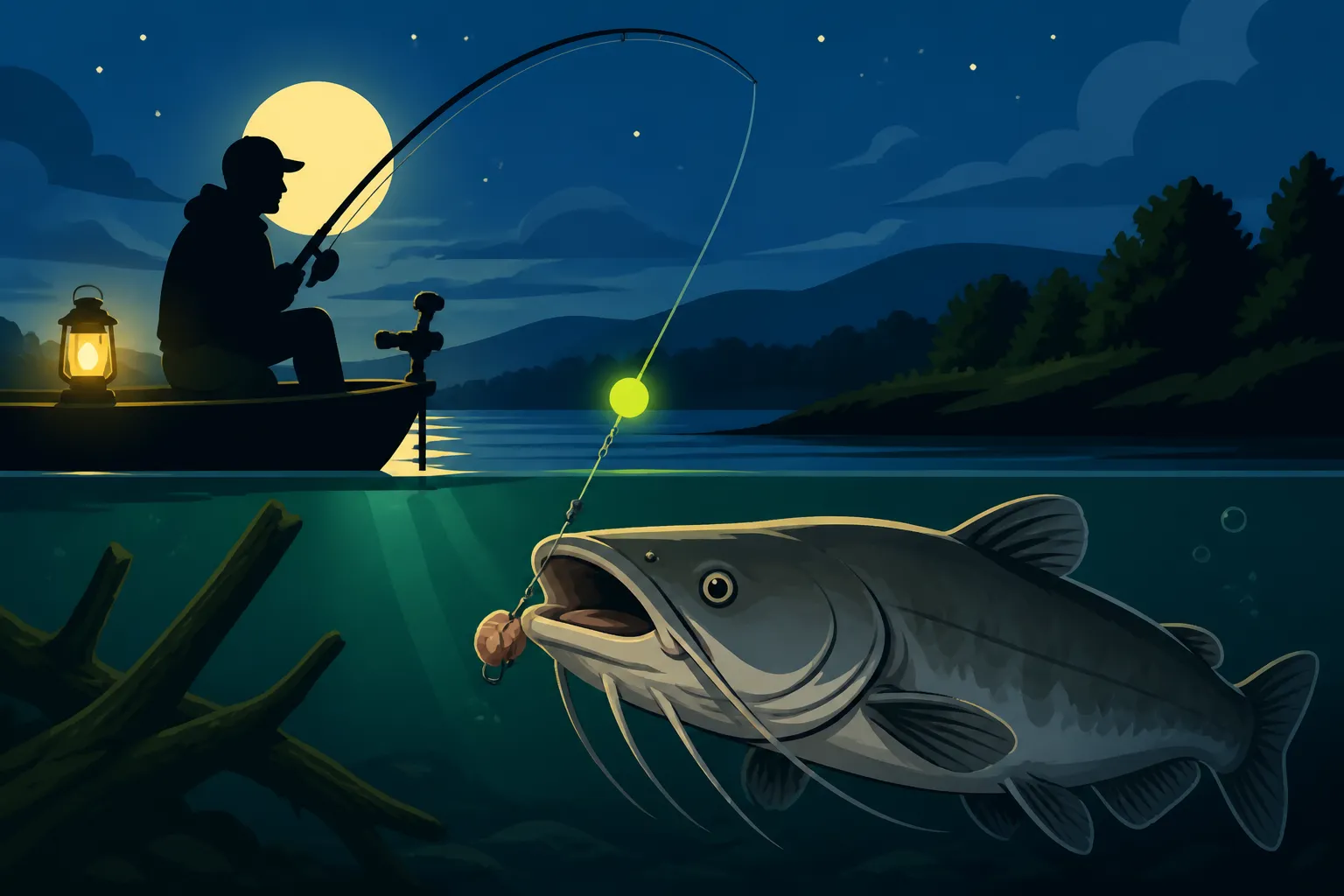
Catfish, particularly the larger blues and flatheads, are primarily nocturnal predators. Think about it: during the bright daylight hours, they often retreat to deeper, cooler water or dense cover to avoid predators and intense light. But as soon as the sun dips below the horizon, a switch flips. The water temperature begins to cool, and the lower light conditions give these fish a distinct advantage. Their highly developed senses – incredible smell, taste, and the ability to detect vibrations with their lateral lines – become even more effective in the darkness.
This increased activity means they're on the prowl for food, moving out of their daytime hiding spots and into shallower feeding areas. You're simply playing to their strengths when you fish at night. Instead of trying to coax a sluggish, light-sensitive catfish out of its lair in the glare of noon, you're meeting them when they're actively hunting, which dramatically increases your chances of a hook-up. It’s like waiting for a grizzly bear to come out of hibernation – you wouldn't expect it to be very active during its nap!
Escaping the Daytime Hustle and Heat
Let's be real, Tennessee summers are beautiful but they can be brutal. The sun beats down, temperatures soar, and the lakes and rivers can become highways for pleasure craft and recreational boaters. Trying to find peace and quiet, let alone a good fishing spot, can feel like an impossible task. Night fishing offers a blissful escape from all of that.
The cooler nighttime temperatures make for a much more comfortable fishing experience, free from sunburn and oppressive humidity. The crowds dissipate, leaving you with serene waters and often, just the sounds of nature. Imagine casting your line into the calm, dark waters of Kentucky Lake or Chickamauga, with only the chirping of crickets and the occasional splash of a jumping fish breaking the silence. It’s not just fishing; it’s an experience for the soul, a chance to reconnect with the natural world in a way that daytime fishing rarely allows. Plus, the reduced boat traffic means your lines are less likely to get tangled, and the fish are less pressured, making them bolder and more likely to investigate your bait.
Essential Gear for Your Tennessee Night Catfish Expedition
Hitting the water after dark requires a bit more preparation than your typical daytime trip. Specific gear can make all the difference in your comfort, safety, and success. Don't worry, it's not overly complicated, but having the right tools for the job is absolutely crucial.
Lighting Up Your Night Operation
Visibility is your number one priority for safety and functionality. You'll need more than just a smartphone flashlight.
First off, a good headlamp is non-negotiable. Look for one with adjustable brightness and, ideally, a red light option. The red light preserves your night vision, is less startling to fish, and doesn't attract as many bugs. Keep it around your neck or easily accessible for baiting hooks, tying knots, and navigating your immediate area. Beyond personal lighting, a reliable lantern (battery-powered or propane, but be careful with open flames in a boat) is fantastic for illuminating your entire fishing area, whether you're on the bank or in a boat. Brands like Coleman offer solid choices that can be found easily on sites like Amazon. For those fishing from a boat, understanding Do You Need Navigation Lights for Night Fishing in Tennessee? is vital, as proper navigational lights are not just good practice, they are legally required to prevent accidents.
Another handy tool is a small, waterproof spotlight. This is invaluable for locating submerged structure, spotting buoys, or signaling other boats if needed. Always make sure your lighting sources have fresh batteries or a full tank of fuel before you head out. Losing light in the middle of the night can quickly turn a fun trip into a stressful situation.
Rods, Reels, and Line for the Darkness
Catfish aren't dainty eaters, and the big ones can put up a serious fight, especially in the dark. You'll want robust gear that can handle the abuse.
For rods, think medium-heavy to heavy action, typically 7 to 9 feet long. This length gives you good casting distance and enough backbone to muscle in large fish without breaking your rod. Brands like Ugly Stik have always been a favorite among catfish anglers for their legendary durability. Paired with this, you'll need a heavy-duty baitcasting or spinning reel capable of holding a substantial amount of line. Look for models with a strong drag system, as you'll be setting it tight to prevent big fish from stripping line too quickly into snags.
When it comes to line, 20-50 pound test monofilament or braided line is typically recommended. Braided line offers superior sensitivity and strength for its diameter, which can be a huge advantage when feeling subtle bites in the dark. However, it requires a bit more care with knots. Many anglers opt for a monofilament leader with braided mainline for a good balance of strength and abrasion resistance. A good quality fishing line is something you don't want to skimp on, and reputable brands are widely available on platforms like Amazon.
Bait Selection: What Catfish Crave After Dark
This is where the real fun begins! Catfish are opportunistic eaters, and their diet can vary, but at night, they're often looking for a strong scent trail.
For blue and channel catfish, cut bait is king. Fresh shad, skipjack herring, or even bluegill cut into chunks release a potent scent that catfish can't resist. You can learn more about How to Rig Cut Bait for Catfish to ensure your presentation is effective. Stink baits, like those from Team Catfish or Sudden Impact, also work wonders, especially for channel cats, creating an irresistible aroma plume in the water. For flathead catfish, live bait is almost always preferred. A frisky bluegill, sunfish, or even a small carp hooked through the back or lips will attract their attention. They often prefer live, struggling prey over dead offerings. Always check local regulations on what live bait is permitted in Tennessee waters.
No matter your choice, ensure your bait is fresh and kept cool until use. The effectiveness of your bait drops significantly if it's been sitting out in warm air for too long. For those considering Chicken Liver vs Cut Bait for Catfish, remember that while chicken liver is easy to acquire and can be effective, especially for smaller channel cats, cut bait often holds up better on the hook and attracts larger blue and flathead catfish.
Comfort and Safety Necessities
Beyond your primary fishing gear, there are several items that will significantly improve your night fishing experience and keep you safe.
Personal Comfort:
- Bug Spray: Mosquitoes and other biting insects come alive at night. Don't forget a strong repellent to avoid being eaten alive.
- Warm Clothes: Even on a hot day, temperatures can drop significantly after sunset. Bring layers, including a waterproof jacket, to stay comfortable.
- Snacks and Drinks: Keep hydrated and energized throughout the night.
- Comfortable Chair: If bank fishing, a portable chair can make hours of waiting much more enjoyable.
Safety Gear:
- First Aid Kit: Minor cuts from hooks or fins are common. A well-stocked kit is a must.
- Personal Flotation Device (PFD): Always wear a PFD when boating at night, even if you're a strong swimmer. Accidents happen fast in the dark.
- Knife/Line Cutters: Essential for freeing tangled lines or processing your catch.
- Pliers: For hook removal and other tasks.
- Communication Device: A fully charged cell phone (in a waterproof case) or a marine radio (VHF) can be a lifesaver in an emergency.
Remember, preparation is key when you’re out after dark. A little forethought goes a long way in ensuring a memorable and safe night on the water.
Prime Locations for Night Catfish in Tennessee
Finding the fish is half the battle, and this holds especially true for night fishing. Catfish behave differently once the sun goes down, moving from their daytime haunts to their nocturnal feeding grounds. Understanding these movements is crucial for success.
River Channels and Deep Holes
If you're fishing on one of Tennessee's magnificent rivers like the Tennessee River or the Cumberland River, the main river channels and adjacent deep holes are absolute hotspots for catfish at night. During the day, larger catfish, especially big blues and flatheads, will often hold in these deeper, cooler areas, conserving energy. As darkness falls, they'll begin to move up and out of these deep troughs, but they rarely stray too far from their comfort zones.
Position your boat or bank setup near the edge of these channels, where the depth abruptly changes. This transition zone is a superhighway for feeding catfish. Look for areas with current breaks, like the downstream side of an island or a bend in the river. Catfish will often stage in these calmer waters, waiting for baitfish or other food to be swept by. Knowing How to Anchor for Catfish in a River effectively can make a huge difference in holding your position precisely over these productive spots.
Reservoir Flats and Structure
Tennessee is dotted with incredible reservoirs like Watts Bar Lake, Chickamauga Lake, and Percy Priest Lake. While the channels are important here too, don't overlook the expansive flats and submerged structure that become prime feeding areas at night.
During the day, these shallower flats might seem barren, but as temperatures drop in the evening, baitfish move onto them to feed, and the catfish follow. Look for areas where a deep channel runs close to a large, relatively flat area of 10-20 feet deep. Submerged humps, old roadbeds, creek channels, and even just subtle changes in bottom contour can hold massive schools of bait and, consequently, hungry catfish. Using your electronics to identify these features during daylight hours will give you a significant advantage when you return in the dark. Catfish will often patrol these areas, especially where there's some cover like stumps, brush piles, or rock formations.
Bridge Pilings and Submerged Cover
Man-made structures like bridge pilings are magnets for catfish, day or night. The pilings themselves create current breaks and eddies where baitfish gather, and the structure often provides a complex habitat for all sorts of aquatic life, which in turn attracts catfish.
At night, the shadows cast by bridges, even from distant lights, can offer catfish a sense of security, allowing them to move into shallower water to feed. Anchor your boat upstream of the pilings and let your bait drift naturally into the current breaks and around the structure. Similarly, any kind of submerged cover – fallen trees, rock piles, old foundations – will hold catfish. These areas provide excellent ambush points. For species like flatheads, they also offer crucial hiding spots. Always approach these areas with caution, especially at night, as snags are common. Using a sturdy hook and line is essential when fishing around such heavy cover to prevent break-offs.
Mastering Night Catfish Techniques and Rigging
Once you've found your spot, the next step is to present your bait effectively. Night fishing requires a keen sense of touch, attention to detail, and a bit of patience. But with the right techniques and rigging, you'll be well on your way to success.
Bottom Fishing with a Carolina Rig
The Carolina rig is a staple for catfish anglers, and it's particularly effective at night. It's simple, allows your bait to move naturally with the current, and keeps your bait on the bottom where catfish often feed.
To set up a basic Carolina rig, you'll slide an egg sinker (1/2 oz to 3 oz, depending on current and depth) onto your main line, followed by a bead (to protect your knot), and then tie on a barrel swivel. To the other end of the swivel, attach a fluorocarbon or monofilament leader (12-24 inches long) and finally, your hook. The leader length allows your bait to drift enticingly just above the sinker, presenting a natural meal. For hooks, use a sharp, strong circle hook (3/0 to 8/0) to minimize gut-hooking and ensure a solid hookset without needing to "set the hook" aggressively – the fish simply hooks itself as it swims away. For a deeper dive into this fundamental setup, check out our guide on Catfish Bottom Fishing Basics.
One of the great advantages of the Carolina rig at night is its simplicity. You can feel the weight of the sinker on the bottom, and any subtle tap or tug on your line usually means a catfish is investigating your bait. With the reduced visibility, relying on feel becomes paramount.
Using Slip Bobbers for Suspended Catfish
While catfish are often thought of as bottom feeders, they will absolutely feed at various depths, especially if baitfish are suspended. This is where a slip bobber rig becomes incredibly useful.
A slip bobber rig allows you to present your bait at a precise depth, anywhere from just under the surface to several feet off the bottom, without the limitations of a fixed bobber. You slide a bobber stop onto your main line, then a bead, followed by the slip bobber, another bead, and finally tie on your hook or a small swivel with a leader. The bobber stop determines the depth your bait will suspend at. This is particularly effective when you see baitfish on your fish finder at a certain depth, or when catfish are holding just above a submerged hump or structure.
Night fishing with slip bobbers requires a bit more active attention. You’ll need a lighted bobber (or a small chemical light stick attached to a regular bobber) so you can see it in the dark. When that light disappears or starts moving erratically, you know it's time to reel! This technique can be especially productive around submerged trees or brush piles where catfish might be lurking a few feet off the bottom.
Setting Up Trotlines and Jugs
For anglers looking for a more passive, multi-line approach, trotlines and jug fishing can be incredibly productive for night catfish. However, it's absolutely crucial to understand and adhere to all Tennessee Wildlife Resources Agency (TWRA) regulations regarding these methods, as rules vary by waterbody and often require specific tagging and line limits.
Trotlines: A trotline consists of a main line stretched across a body of water or suspended between two anchor points, with multiple baited hooks attached at intervals using gangions (short lines). This allows you to cover a large area and present numerous baits simultaneously. Setting up a trotline at night involves carefully deploying the main line, baiting each hook, and securing both ends. It's a method that requires good planning and a boat, as you'll need to check the line periodically throughout the night. For detailed instructions, refer to our guide on How to Set Up a Trotline for Catfish.
Jug Fishing: This method involves individual baited lines attached to floating jugs or bottles. Each jug is essentially a standalone fishing rig. You simply bait the hook, attach it to the jug, and toss it into the water. The jugs drift with the current, presenting bait to fish as they move. When a fish bites, the jug starts to move, often erratically, signaling a strike. Both trotlines and jugs offer an exciting way to target multiple catfish, but again, always prioritize safety and legality. Our guide on Jug Fishing for Catfish Explained offers a comprehensive overview.
Anchor Management and Current Reading
Effective anchor management is critical for boat anglers, especially when night fishing in rivers or strong currents. You need to hold your position steady to keep your bait in the strike zone.
When fishing a river, anchor from the bow (front) of your boat, preferably with two anchors if the current is strong, setting them at slightly different angles to create a stable "V" shape. This prevents your boat from swinging too much and keeps your lines from getting tangled. Understand how the current behaves around different structures – where it slows, where eddies form, and where it funnels. These are all places catfish will use to ambush prey. Drop your bait slightly upstream of where you expect the fish to be, allowing the current to carry the scent and the bait naturally into their feeding zone. In reservoirs, anchoring can be simpler, but understanding wind and subtle currents is still important to stay over your desired structure.
| Bait Type | Target Species | Scent Level | Ease of Use | Notes |
|---|---|---|---|---|
| Cut Bait (Shad, Herring) | Blue Catfish, Channel Catfish | High | Medium | Excellent scent trail, very effective for larger cats. Can be messy to handle. |
| Live Bait (Bluegill, Sunfish) | Flathead Catfish | Medium | Medium | Best for flatheads. Keep bait fresh and lively. Check local regulations on legal live bait. |
| Stink Bait | Channel Catfish | Very High | Easy | Designed for scent. Can be messy. Often comes in dip baits or prepared chunks. |
| Chicken Liver | Channel Catfish | High | Easy | Affordable, good scent. Can be soft and easily fall off the hook. |
| Worms (Nightcrawlers) | Channel Catfish, Small Catfish | Low-Medium | Easy | Universal bait, but often catches smaller fish. Good for panfish that catfish might also eat. |
Safety First: Night Fishing Best Practices
Fishing at night offers a unique tranquility, but it also comes with increased risks. Prioritizing safety isn't just about following rules; it's about common sense and ensuring everyone returns home safe and sound.
Navigational Lights and Visibility
This is perhaps the most critical safety aspect for boat anglers at night. Proper navigational lights are not merely a suggestion; they are a legal requirement for good reason. Your boat must display specific lights to be visible to other vessels and to signal your position and direction of travel. Typically, this includes a red light on the port (left) side, a green light on the starboard (right) side, and a white all-around light or stern light.
Before every night trip, double-check that all your navigational lights are functioning correctly and that your battery has enough charge to power them for the entire duration of your outing. If you're anchored, ensure your anchor light (an all-around white light) is clearly visible. For bank anglers, wearing a reflective vest and having a light source is a good idea, especially if you're near roads or boat ramps where visibility might be limited. It's about seeing and being seen.
Buddy System and Communication
While the solitude of night fishing can be appealing, it's always safer to fish with a buddy, especially when you're out after dark. Having an extra set of hands for landing a big fish, dealing with equipment issues, or responding to an emergency can be invaluable.
If fishing alone is your only option, make sure someone knows your float plan. Tell them where you're going, when you expect to be back, and what to do if they don't hear from you. Carry a fully charged cell phone in a waterproof case, and consider a marine radio (VHF) if you're on a large body of water. Cell service can be spotty in remote areas, so don't rely solely on your phone. These communication tools can be vital for summoning help if you encounter an unexpected problem.
Weather Watch and Emergency Preparedness
Weather can change rapidly in Tennessee, and a sudden storm or cold front can be much more dangerous at night. Always check the forecast before you head out, and continue to monitor it throughout the night if possible. Pay attention to sudden drops in temperature, changes in wind direction or strength, and any signs of distant lightning.
Have a plan for what you'll do if the weather turns. Know your escape routes, where the nearest safe harbor or boat ramp is, and how long it will take to get there. In addition to your first aid kit, consider carrying a basic emergency kit with items like:
- Signaling devices: Whistle, flare, or air horn.
- Extra warm clothes and rain gear: Even if not forecast, conditions can change.
- Emergency blanket.
- Water and non-perishable food.
- A backup light source.
Thinking ahead about potential hazards and having the right gear and knowledge to respond to them will ensure your night fishing adventures are both successful and safe.
Disclaimer
The information provided in this guide is for general informational purposes only and does not constitute legal advice. Fishing regulations in Tennessee are subject to change, and specific rules may vary by waterbody or time of year. Always consult the latest regulations published by the Tennessee Wildlife Resources Agency (TWRA) before engaging in any fishing activities. Adherence to all local, state, and federal laws is the responsibility of the angler. Fishing, especially at night, inherently carries risks; always prioritize your safety and the safety of others.