How to Fish Deep Structure for Bass in Winter
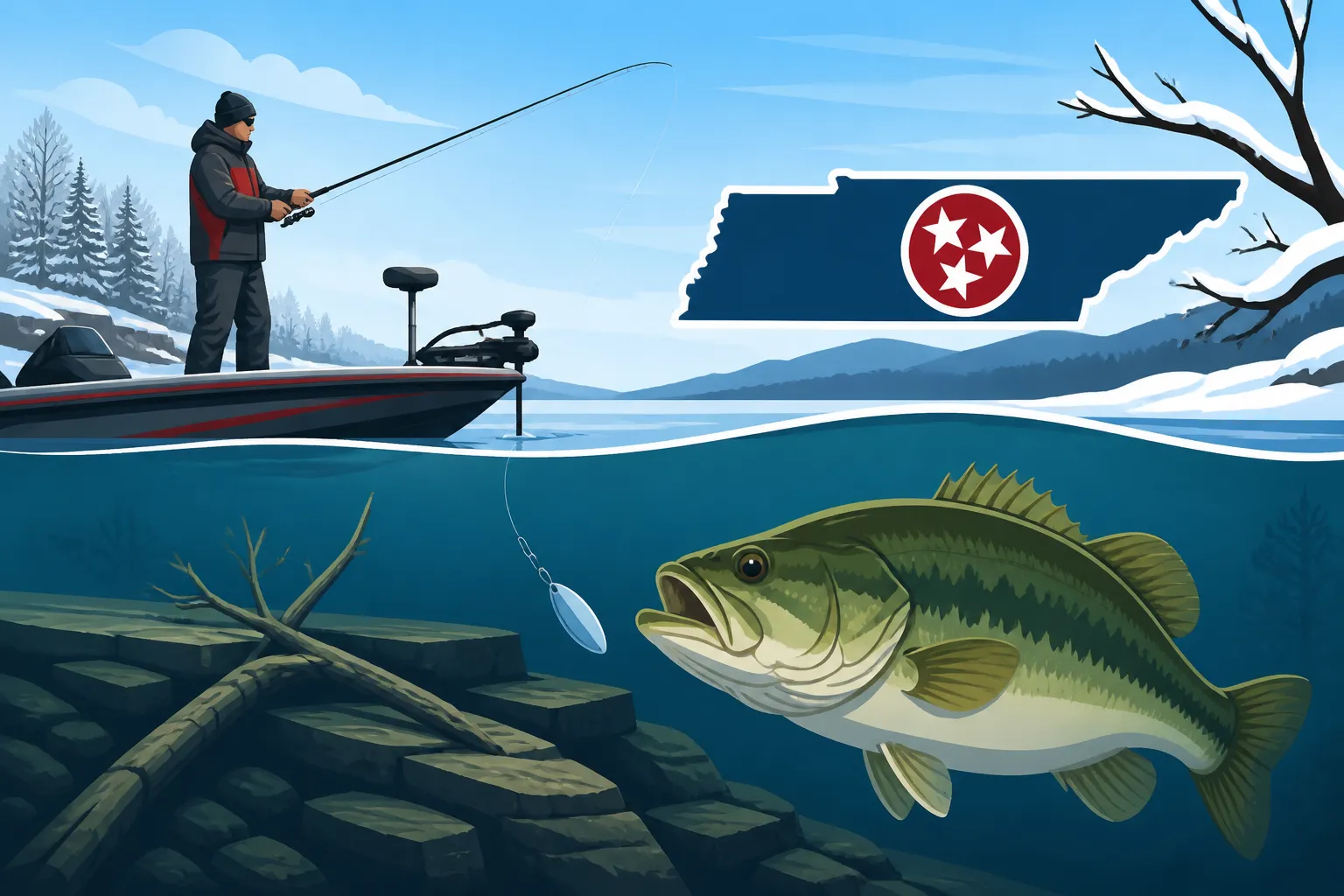
Fishing for bass in Tennessee during the winter can feel like an entirely different sport than during the warmer months. You've probably experienced those frustrating days when the water's cold, the boat ramp is empty, and the bass seem to have vanished into thin air. It’s tough, I know, but those fish haven't disappeared; they’ve simply shifted their patterns, usually moving to deeper, more stable environments. This comprehensive guide will pull back the curtain on how to effectively locate and catch those elusive bass holding tight to deep structure, turning your winter blues into big bass bragging rights.
Deciphering Winter Bass Behavior in Deep Water
Winter bass fishing isn't just about finding deep water; it's about understanding why bass move deep and what they're doing once they get there. It's a game of patience, precision, and truly reading the water – or, more accurately, reading your electronics.
Why Bass Seek Deeper Holds in the Cold
When those frigid cold fronts roll through Tennessee, the water temperature drops significantly, especially in the shallower sections of our lakes and reservoirs. This isn't just uncomfortable for bass; it profoundly affects their metabolism. Their bodies slow down, and they need to conserve energy. Deep water offers a more stable thermal refuge. Water is densest at around 39 degrees Fahrenheit (4 degrees Celsius), so even if the surface is freezing, the deeper parts of the lake will often hover around this critical temperature, providing a relatively consistent and "comfortable" zone for bass.
It’s not just about temperature, though. Baitfish, like shad and alewives, which are the primary food source for largemouth and smallmouth bass, also move to deeper water in winter, often congregating in massive schools. Bass, being opportunistic predators, will follow their food source. So, by finding the bait, you're usually finding the bass. Imagine yourself bundling up for winter; fish do something similar by seeking out the most comfortable and food-rich environments available, which inevitably leads them down deep.
This behavior is a stark contrast to the aggressive, shallow-water feeding frenzies we often see in spring or fall. In winter, bass aren't chasing; they're conserving. They'll hold tight to cover, waiting for an easy meal to pass right by their noses. Understanding this fundamental shift in their survival strategy is the first step to success.
Identifying Prime Deep-Water Winter Bass Locations
So, bass are deep, but "deep" is a big place! You can't just drop a line anywhere and expect results. The key is to find structure within that deep water. Bass are creatures of habit and will relate to specific features. Think ledges, humps, points, and creek or river channel breaks. These aren't random spots; they're underwater highways and ambush points. A prime example would be a sharp drop-off along a main lake channel on Chickamauga Lake, where bass can quickly move up to feed on passing baitfish, then retreat to the safety of deeper water.
Beyond these major topographical features, look for subtle nuances. A single brush pile, a cluster of submerged timber, or even a small rock pile on an otherwise flat bottom can concentrate fish. These act as vital cover, providing a place for bass to hide, ambush prey, and escape strong currents. Your fish finder will be your absolute best friend here, helping you "see" these underwater features. Pay close attention to any irregularities; a slight bend in a channel or an abrupt change in bottom composition (like rock meeting mud) can be a goldmine.
Sometimes, the best spots aren't even visible on the surface. They could be an old road bed, a submerged bridge, or the remnants of an old homestead. These hidden gems create unique habitat that attracts bait and, consequently, bass. Learning to read your lake map and understanding the history of the impoundment can give you a significant edge in identifying these less obvious, yet highly productive, deep-water sanctuaries.
The Impact of Cold Fronts and Pressure Changes
Ah, the dreaded cold front. We've all been there: a beautiful day of fishing followed by a sudden drop in temperature and a day of utter frustration. Cold fronts are notorious for shutting down fishing, and it’s especially true in winter. The high-pressure system that typically follows a cold front makes bass lethargic and less willing to bite. They often push tighter to cover, become less active, and are far less likely to chase a lure. It's like they've got a headache and just want to be left alone.
When a cold front hits, you need to slow down your presentation even further. What was a slow retrieve before the front might now be considered a fast one by a sluggish bass. Focus on targeting the very densest cover or the deepest parts of the structure you’ve identified. Bass might suspend in tight groups directly on top of a brush pile or hug the bottom of a steep ledge. This is when finesse presentations really shine.
On the flip side, keep an eye on the weather patterns before a cold front. Often, a day or two leading up to a major front, fish can become more active, sensing the change and feeding aggressively. This is often referred to as a "pre-front bite" and can be some of the best fishing days of the winter. Understanding How Water Temperature Affects Bass Feeding is crucial here; even a slight bump in temperature or stable conditions can trigger a feeding window. So, while cold fronts can be a challenge, they also offer opportunities for those who adjust their approach.
Equipping Your Winter Deep Bass Arsenal
You wouldn't try to build a house with a butter knife, right? The same goes for winter deep-water bass fishing. You need the right tools for the job, especially when you're trying to detect subtle bites in cold, deep water.
Rods, Reels, and Line for Sensitivity and Power
When you're fishing deep in winter, sensitivity is paramount. Those bites can be incredibly subtle – a slight tick, a feeling of "mush," or simply added weight. You’ll want a longer rod, typically in the 7-foot to 7-foot-6 inch range, which provides better casting distance, more leverage for hooksets, and helps with line control. A medium-heavy to heavy power rod with a fast action tip made of high-quality graphite will transmit those faint bites directly to your hand. These rods offer the backbone needed to drive a hook home through a bass's tough mouth in deep water, yet maintain the sensitivity to feel the lightest tap. If you're looking to upgrade, check out options like those on Amazon.
For reels, baitcasters are often preferred for heavier lines and larger lures, offering excellent control and power. However, for lighter, more finesse presentations, a high-quality spinning reel can be invaluable. The key for winter deep fishing is often a slower gear ratio (around 6.x:1 or even 5.x:1 for baitcasters) to encourage a slow, deliberate retrieve, which is exactly what lethargic winter bass prefer. You can find some fantastic Best Baitcasting Reels for Bass Anglers perfect for this application.
Line choice is equally critical. Fluorocarbon is often the top pick because of its low stretch, invisibility underwater, and exceptional sensitivity. Its density also helps lures sink faster and stay deep. For really deep presentations or fishing in heavy cover, some anglers opt for braided line with a fluorocarbon leader. Braid offers zero stretch and incredible sensitivity, but the leader provides the necessary invisibility. Think about a 10-15 lb fluorocarbon for finesse, and 15-20 lb for jigs and crankbaits. The best setup ensures you can feel everything your lure is doing, from bumping bottom to a bass breathing on it.
Lure Choices for Deep Structure Bass
The baits you throw in winter deep water are quite different from those buzzing spinnerbaits or topwaters of summer. Here, the emphasis is on baits that can be worked slowly, imitate dying or sluggish baitfish, and present a substantial, easy meal.
- Jigs: Football jigs, ranging from 1/2 oz to 1 oz, are absolute staples for deep-water winter bass. Their head design helps them maintain bottom contact and resist snags in rocky areas. Black and blue, brown and green pumpkin, or subtle crawfish patterns are usually excellent choices. Pair them with a bulkier plastic trailer to slow the fall and add a natural profile. Casting jigs can also be effective, especially when hopped or dragged.
- Blade Baits & Spoons: These are phenomenal for vertical presentations when bass are suspended or tightly grouped. Lures like the Sebile Vibrato, Damiki rig (a lead head with a soft plastic minnow), or a flutter spoon offer erratic, dying-baitfish actions. The key is a lift-and-fall retrieve, letting the bait flutter and enticing those reaction strikes. Spoon jigging is particularly effective when you find schools of baitfish with bass lurking below.
- Deep-Diving Crankbaits: Don't count out crankbaits, but you need the right kind and the right retrieve. Opt for crankbaits designed to dive deep – 15 to 25+ feet. Think baits from brands like Strike King, Rapala, or Berkley's Dredger series. The trick is a "slow roll" where you crawl the crankbait along the bottom, making it deflect off structure. Natural shad, crawfish, or chartreuse patterns can be deadly. It's not about speed; it's about making contact.
- Soft Plastics: Carolina rigs with lizards, worms, or creature baits can cover water efficiently while keeping your bait slightly suspended off the bottom, ideal for wary bass. Drop shots with smaller minnow-style baits are incredible for precision fishing, allowing you to keep a bait in the strike zone longer, especially when fish are suspended on vertical structure. For the ultimate in finesse, a simple Ned Rig can also entice bites from lock-jawed fish. This is where you might find some unique options on Amazon that aren't readily available everywhere.
Remember, the colder the water, the slower and more subtle your presentation needs to be. Sometimes, even the Best Lures for Post-Spawn Bass Fishing won't cut it if the bass are in full winter mode.
Electronics and Navigation for Precision
In the world of deep-water winter bass fishing, your electronics are not just helpful; they are absolutely indispensable. Trying to fish deep without a quality fish finder and GPS is like trying to navigate a dark maze blindfolded.
Your fish finder, with its sonar, down imaging, and especially side imaging capabilities, allows you to "see" the underwater world. You can identify those crucial ledges, humps, creek channels, and even individual brush piles or rock piles where bass are likely holding. Side imaging is particularly useful for scanning wide areas to locate baitfish schools and isolated pieces of cover that might be missed directly under the boat. You can literally see bass suspended around structure before you even cast a line. For exploring different options, many reputable brands like Humminbird and Lowrance are available on Amazon.
Once you find a promising piece of structure or a school of fish, your GPS becomes your best friend. Use it to mark waypoints precisely. This allows you to return to that exact spot repeatedly, cast from the ideal angle, and work the structure thoroughly. Modern marine mapping software, such as LakeMaster or Navionics, installed on your units, provides highly detailed contour maps, showing depth changes and bottom irregularities that help you plan your approach even before you launch your boat. This is vital for effectively fishing Tennessee's Top Bass Fishing Lakes where understanding contours is paramount.
Practicing with your electronics in different conditions will build your confidence. Learn to differentiate between baitfish, larger bass arches, and actual structure. Without these tools, finding the sweet spots for winter bass in the vastness of Tennessee's reservoirs would be an exercise in futility.
Masterful Techniques for Cold-Water Bass Presentation
Okay, you've found the bass on your electronics, you have the right gear. Now, how do you get them to bite? This is where technique truly makes the difference, requiring patience and a keen sense of feel.
Vertical Jigging and Subtle Presentations
When bass are schooled up tight on deep structure or suspended, vertical jigging can be incredibly effective. The "Damiki Rig" has gained popularity for this exact scenario. It involves a small, minnow-shaped soft plastic bait threaded onto a specialized jig head, then dropped directly down to the fish. The retrieve is minimal: just small twitches of the rod tip, often with long pauses, letting the bait subtly swim and suspend. It perfectly mimics a lethargic baitfish, an easy meal for an energy-conserving bass.
Similarly, jigging spoons and blade baits are excellent for vertical presentations. Drop a 3/4 to 1-ounce jigging spoon or a blade bait to the depth where you're seeing fish. Then, give your rod tip a sharp, short lift, letting the lure fall back on a semi-slack line. The erratic flutter and vibration on the fall are what often trigger strikes. Pay close attention on the fall, as many bites happen when the lure is dropping – often feeling like a slight "tick" or simply a feeling of weightlessness as a bass inhales it.
The key to all these vertical presentations is patience and precision. Keep your boat positioned directly over the fish using your trolling motor and electronics. Maintain constant contact with your lure, even on the fall, to detect those incredibly subtle winter bites. It’s not uncommon for a bite to feel like nothing more than your line getting heavy or moving sideways.
Slow-Rolling Deep-Diving Crankbaits
While jigs and spoons excel vertically, deep-diving crankbaits are fantastic for covering larger sections of a deep ledge or point. The technique here is called "slow-rolling," and it's exactly what it sounds like. Instead of burning your crankbait, you retrieve it incredibly slowly, just fast enough to get it to dive to its maximum depth and tick the bottom.
You want to feel that crankbait digging into the bottom, deflecting off rocks, stumps, or other cover. These deflections are critical because they often trigger a reaction strike from otherwise uninterested bass. Vary your retrieve with short pauses; sometimes, a momentary stop will make the bait "float" or "suspend" just long enough for a bass to commit. Experiment with different colors, but natural baitfish patterns, crawfish, or even dull chartreuse can be effective depending on water clarity and forage.
This method allows you to systematically work long stretches of deep structure, feeling out the bottom composition and identifying those hard-to-find sweet spots. It’s a technique that requires a good feel for your rod and lure, but once mastered, it can produce some impressive winter bass, especially on expansive impoundments like Kentucky Lake or Watts Bar Lake, which are known for their deep ledges.
Dragging Jigs and Carolina Rigs
When bass are really hugging the bottom and are spread out on a flat or a less pronounced contour, dragging a football jig or a Carolina rig can be your best bet.
Football Jigs: These jigs, with their wide head, are designed to maintain excellent bottom contact and crawl over rocky terrain without snagging excessively. Cast your football jig (1/2 oz to 1 oz) out and let it sink to the bottom. The retrieve is a slow, deliberate drag, occasionally giving a slight hop or shake of the rod tip. You want to feel every rock, shell bed, or stick it comes into contact with. Again, scent can be a major advantage here, so adding some scent to your jig trailer or using a scented soft plastic is a good idea. The slow, bottom-hugging presentation makes it an irresistible, easy meal for sluggish bass.
Carolina Rigs: The Carolina rig is excellent for covering a lot of deep water and presenting a soft plastic bait naturally, slightly suspended off the bottom. It consists of a heavy sinker (typically 1/2 oz to 1 oz) threaded onto your main line, followed by a bead, a swivel, and then a leader (usually 2 to 4 feet of fluorocarbon) tied to your hook and soft plastic bait. The heavy sinker drags the bottom, while your bait tantalizingly floats behind it.
The retrieve for a Carolina rig is a long, slow sweep of the rod, followed by reeling up the slack as you return your rod tip to the starting position. This allows the bait to glide and pause, mimicking a foraging creature. This rig is particularly effective when fish are scattered or on a less defined structure, as it can cover ground while still presenting a subtle, appealing meal. Learning to feel the difference between a rock and a bite on a Carolina rig takes practice, but it's a skill well worth developing for winter fishing.
Prime Tennessee Deep Water Structures for Winter Bass
Tennessee is blessed with an abundance of fantastic fishing opportunities, and many of its lakes and rivers offer incredible deep-water structures that are magnets for bass in winter. Knowing what to look for and where to look for it can dramatically increase your success.
Ledges, Humps, and Points
These are the absolute superstars of winter bass fishing on Tennessee's major reservoirs. Ledges are essentially underwater drop-offs, sometimes subtle, sometimes sheer cliffs. Bass will position themselves on the deeper side of the ledge, looking up to ambush baitfish that travel along the shallower shelves. Humps are underwater hills, often with varying depths, providing different feeding and holding zones. Points are fingers of land that extend into the lake, providing a natural travel corridor and ambush point.
The Tennessee River lakes, like Chickamauga Lake, Tennessee's Top Bass Fishing Destination, Watts Bar Lake, and Kentucky Lake, are legendary for their ledge fishing. Anglers spend countless hours graphing these structures, looking for "sweet spots" – subtle bends in the ledge, an isolated brush pile, or a hard spot on the bottom where bass congregate. A good strategy is to start fishing the deeper end of a point or hump and work your way up, or vice versa, to find the exact depth where fish are holding. Bass often orient to the steepest part of a breakline or the specific contours where current pushes bait.
In the winter, these structures act as major congregation points for both baitfish and the bass that feed on them. Finding a significant school of shad on your electronics near a deep ledge is often all the confirmation you need to know you're in a productive area.
Creek Channels and River Bends
Beyond the main lake structures, don't overlook the importance of creek channels and river bends that wind their way through the reservoirs. These channels, often the remnants of flowing water before the impoundment, offer bass a defined travel route and often hold slightly warmer water than surrounding areas during extreme cold. Bass will follow these channels, particularly where they intersect with points, humps, or other underwater features.
River bends, especially those with steep banks or submerged timber on the outside curve, are natural current breaks and deep-water sanctuaries. Bass will hold in these areas, using the deeper water for warmth and the current breaks as ambush points for baitfish being swept along. On the Cumberland River or other flowing waterways, paying attention to current strength and its effect on fish positioning is key. Look for areas where the channel is flanked by a flatter shelf or where an old creek channel meets the main river channel; these junctions are often productive.
Focus on the deeper holes within these channels or where the channel swings close to a prominent shoreline feature. These areas can concentrate fish in smaller, more predictable zones, making them excellent targets for those vertical presentations we discussed earlier.
Submerged Timber and Brush Piles
While ledges and channels provide the macro structure, submerged timber and brush piles are the micro-structures that often hold the densest concentrations of winter bass. These can be naturally occurring (old standing timber left when the lake was flooded) or man-made (brush piles sunk by anglers or conservation agencies). They offer bass critical cover for ambush, protection from current, and a thermal break from the open water.
Locating these hidden havens is where your electronics, especially side imaging, truly shine. You can literally scan wide areas and pinpoint individual trees or piles of brush. Once located, these spots should be marked as waypoints on your GPS. Fishing heavy cover like this requires patience and the right tackle to avoid constant snags. Weedless jigs, Texas-rigged soft plastics, or even a dropshot positioned just above the snags can be highly effective.
Some of Tennessee's best fishing lakes, like Old Hickory Lake Fishing Spots or Percy Priest Lake, are known for their abundant submerged timber and brush piles, creating fantastic winter hideouts for bass. When you find a good brush pile, don't just make a few casts and move on. Work it thoroughly from different angles, and remember that bass in cold water might need several passes before they commit to a bite. These hidden structures can be frustrating to fish due to snags, but the reward of pulling out a big winter bass from a brush pile is well worth the effort.
Here's a quick look at some effective deep winter bass lures and their best uses:
| Lure Type | Best Conditions | Retrieve Style | Key Advantages |
|---|---|---|---|
| Football Jig | Cold water, rocky bottom, moderate cover | Slow drag, hop, or dead stick | Bottom contact, subtle action, scent-holding |
| Blade Bait | Very cold water, suspended bass | Short lifts and drops, controlled vibration | Mimics dying baitfish, good for inactive fish |
| Deep-Diving Crank | Moderate cold, cleaner water, ledges | Slow roll, bottom contact, pause-and-go | Covers water, deflects well, good reaction bite |
| Jigging Spoon | Schools of baitfish, vertical drops | Vertical jigging, lift and fall | Heavy, sinks fast, erratic action |
| Carolina Rig | Scattered cover, wide search, wary fish | Slow drag, sweep, pause | Bait suspended off bottom, natural presentation |
| Drop Shot | Finesse, high pressure, vertical cover | Slight rod tip shakes, minimal movement | Highly subtle, keeps bait in strike zone longer |
Fishing for bass in deep water during the winter in Tennessee isn't always easy, but it’s incredibly rewarding. It requires a shift in mindset, a reliance on technology, and a commitment to slowing down and presenting baits subtly. By understanding why bass go deep, where they hold, and how to present your lures effectively, you can unlock some truly fantastic cold-water fishing opportunities. So bundle up, brave the cold, and get ready to put some big winter bass in your boat!
Disclaimer
Fishing involves inherent risks. Always prioritize safety, wear appropriate personal flotation devices, and be aware of weather conditions. Consult the Tennessee Wildlife Resources Agency (TWRA) for the latest fishing regulations, license requirements, and safety guidelines before heading out on the water. This guide is for informational purposes only and does not constitute professional advice.