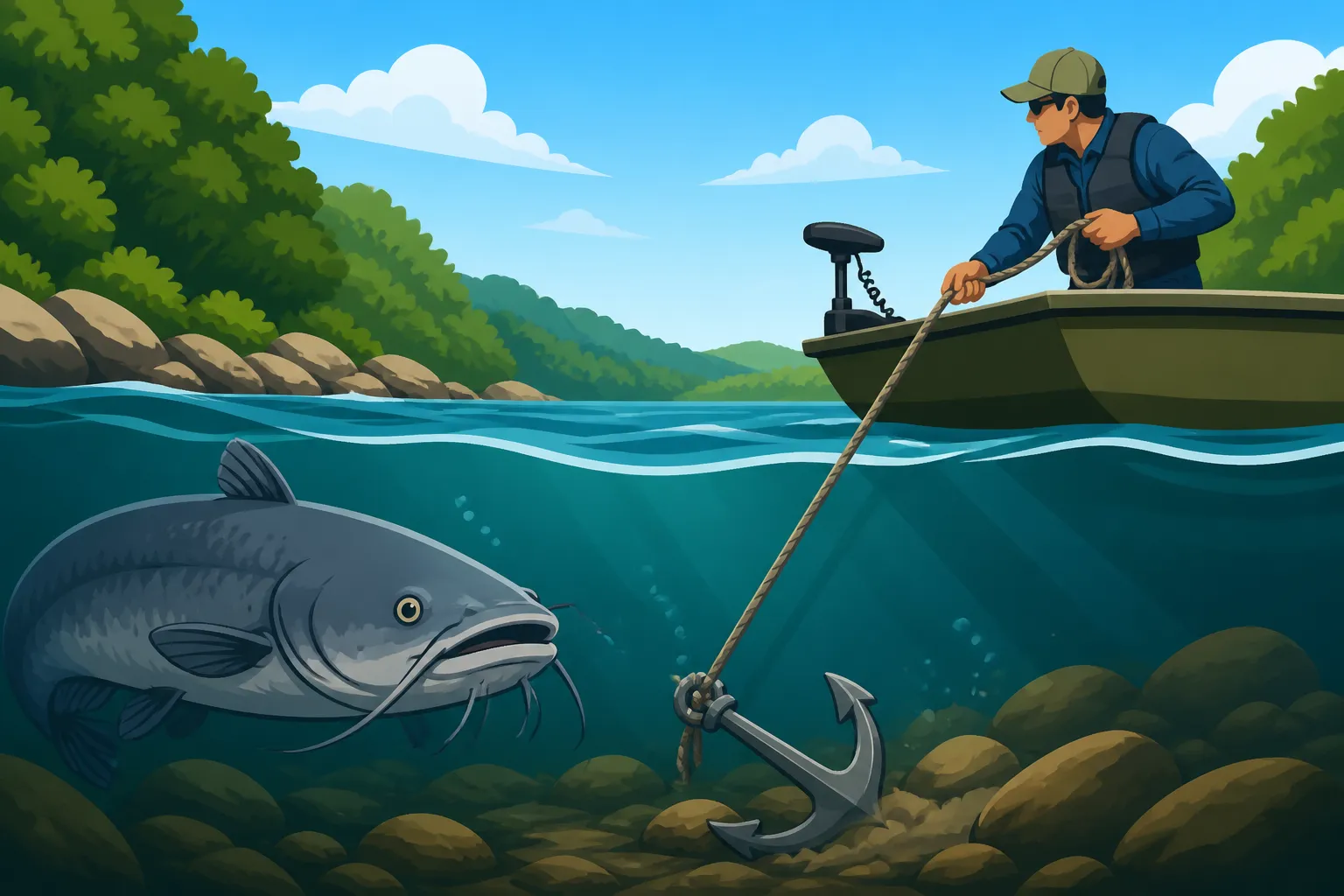
How to Anchor for Catfish in a River
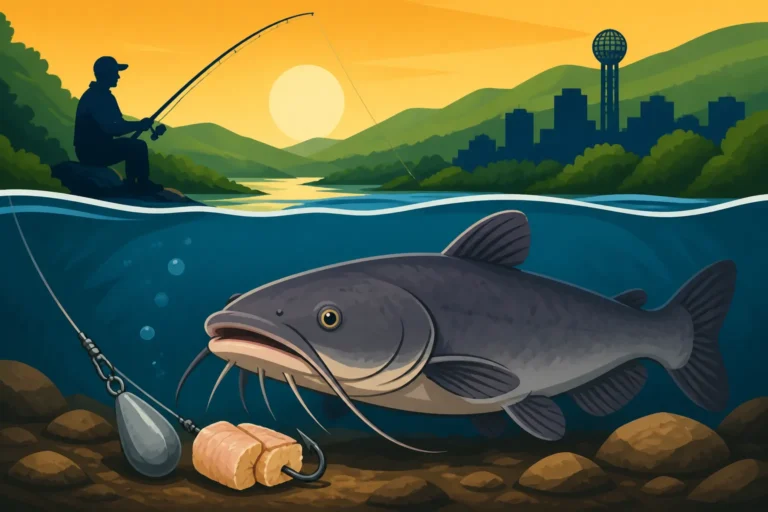
There's nothing quite like the thrill of river catfishing in Tennessee, especially when you're trying to hold your boat precisely over a prime channel break or a submerged log pile. But anyone who’s spent a frustrating afternoon battling a strong current knows that anchoring in a river isn't the same as dropping anchor on a calm lake. Your boat swings, your lines tangle, and suddenly that perfect spot is just out of reach. This guide is going to dive deep into the art and science of anchoring for catfish in a river, so you can stop fighting the current and start reeling in those flatheads and channel cats.
Why River Anchoring for Catfish is a Whole Different Ballgame
When you're out on the wide-open expanse of a lake, anchoring is often a straightforward affair. Drop your anchor, let out some line, and you usually stay put. Rivers, however, are dynamic, ever-changing environments with currents that can push and pull your boat in unpredictable ways. This makes holding a precise position a much more complex challenge, but it's a challenge worth mastering for serious catfishing.
Understanding River Currents and Their Impact
Rivers are rarely just a simple, straight flow of water. They have intricate patterns of current that vary in strength and direction. You'll encounter main channels with swift, powerful currents, slower eddies behind obstructions, and even swirling boils where the water churns upward. These currents aren't just pushing your boat; they're also affecting how your bait presents on the bottom and how your lines drift. If your anchor isn't set right, you could find yourself constantly repositioning, or worse, dragging your anchor right through a prime fishing spot, spooking the very fish you're trying to catch.
Imagine you're trying to fish a specific seam where a slower eddy meets the main current—a classic catfish ambush point. If your boat is constantly being tugged upstream and downstream, or swinging wildly side to side, your baits aren't staying in that sweet spot. They're being swept out of the zone, making it nearly impossible for a hungry catfish to find them. Moreover, a strong current can easily pull your lines downstream, causing them to tangle with other anglers' lines or even drift into snags. You need to be able to counteract these forces to maintain control and keep your presentation exactly where you want it. This isn't just about dropping a weight; it's about understanding hydrodynamics and using them to your advantage.
The Importance of Holding Your Position for Catfish
Catfish, especially trophy-sized flatheads and blue cats, are often structure-oriented in rivers. They'll hug channel edges, hide in log jams, sit behind large boulders, or patrol deep holes. To consistently catch these fish, you need to be able to present your bait right in their wheelhouse. A precise anchor setup allows you to do just that. It's the difference between casting generally into a good area and dropping your bait literally inches from a submerged stump where you know a big cat is lurking.
Consider a scenario on a river like the Tennessee River, where you've found a promising drop-off into a deeper channel. You've identified it on your fish finder, and you know the catfish are likely holding along that transition. If you're drifting even a few feet off your mark, your bait might be in the shallower water or too far into the deeper water, missing the feeding zone entirely. By locking your boat down, you ensure your bait, whether it’s cut bait or a live offering, stays put. This steady presentation is key, especially for species like flatheads, which are often less mobile and more ambush-oriented than channel cats. When your bait remains stationary and natural-looking in the current, it signals an easy meal, increasing your chances of a bite. You can also deploy multiple lines, confident that they won't drift together and tangle, which is a common frustration when fishing moving water without a solid anchor hold. For more insights on targeting these species, you might want to read our comprehensive guide on Flathead Catfish Habitat in Tennessee Rivers.
Choosing the Right Anchor Setup for Tennessee Rivers
Selecting the proper anchor and associated gear is paramount for success on flowing water. It's not a one-size-fits-all situation, and what works wonders on a small pond might be entirely inadequate for the currents of the Cumberland River.
Anchor Types for River Catfishing
When it comes to river anchoring, you need an anchor designed to dig in and hold against persistent current. Here are some popular options:
- Box Anchors (or River Anchors): These are perhaps the most popular choice for river catfishing, and for good reason. They are essentially weighted steel boxes with multiple flukes or "teeth" that dig into the riverbed. Their design offers a tremendous amount of holding power for their weight. A common type might have four large, sharp flukes designed to grab and hold. They tend to perform well in various bottom compositions, from mud to gravel, which is common in many Tennessee rivers. The heavy construction means they won't easily skip or drag over the bottom once set. You'll find a variety of reputable brands offering these, and it's always a good idea to check online marketplaces like Amazon for different sizes and features, keeping an eye on reviews from fellow river anglers.
- Grapple Anchors (or Grapnel Anchors): These anchors feature several long, sharp prongs that can fold for storage or extend for deployment. While excellent for rocky bottoms where their prongs can hook onto crevices, they can sometimes struggle to dig into softer mud or sand in strong currents without significant weight. They are fantastic for retrieving items or holding light boats in less aggressive currents, but for a heavy boat trying to hold against the Tennessee River's main channel, a dedicated box anchor is often preferred.
- Fluke Anchors (or Danforth Anchors): These are common lake anchors, with two large, flat flukes designed to dig into soft bottoms. They work well in sand and mud but can struggle to penetrate hard gravel or rocky beds often found in rivers. In strong currents, they might drag if they don't get a proper bite, especially if the current keeps lifting them before they can set. While they are lightweight and easy to deploy, they might not offer the consistent, steadfast hold needed for serious river catfishing in aggressive flows.
When making your choice, consider the typical bottom composition of the rivers you fish and the weight of your boat. A heavier anchor within your chosen type will almost always offer better holding power against current. Don't cheap out here; a good anchor is an investment in successful fishing.
The Critical Role of Rode Length and Chain
An anchor is only as effective as the rode (the rope or chain connecting it to your boat) you use with it. The concept of "scope" is absolutely vital in river anchoring. Scope refers to the ratio of the length of your anchor rode to the depth of the water (plus any height from the water to where the anchor line attaches to your boat). For river fishing, a scope of at least 7:1 is often recommended, and in very strong currents or rough conditions, you might even aim for 10:1. This means if you're in 10 feet of water, you should aim to have 70 to 100 feet of rode out.
Why so much line? A long scope allows the anchor to pull horizontally along the riverbed, giving its flukes the best chance to dig in and hold. If your scope is too short (e.g., 3:1), the anchor is pulling at too steep an angle, often causing it to skip, drag, or simply not set effectively. Think of trying to pull a tent stake straight up versus pulling it out at a low angle; the latter is much harder.
Equally important is the use of heavy anchor chain. Attaching 6 to 10 feet (or more for heavier boats and stronger currents) of chain between your anchor and your rope rode provides several benefits:
- Increased Holding Power: The weight of the chain helps to keep the anchor pulling horizontally along the bottom, improving its ability to set and preventing it from skipping.
- Abrasion Resistance: The chain protects your rope from being abraded or cut by sharp rocks, shells, or debris on the riverbed. This is a common issue in rivers and can quickly lead to losing an anchor.
- Shock Absorption: The weight of the chain provides a bit of "give" or shock absorption against surges from waves or strong current changes, preventing sudden jolts on your anchor line that could dislodge the anchor.
A good quality galvanized or stainless steel chain, rated for marine use, is essential. Make sure all connections (shackles, swivels) are equally strong and secure. This combination of proper scope and heavy chain makes a monumental difference in how reliably your anchor will hold you in place on a river.
Essential Ancillary Gear
Beyond the anchor and rode, a few other pieces of gear can significantly enhance your river anchoring setup:
- Anchor Trolley System: This is a game-changer for smaller boats like kayaks or jon boats, but also incredibly useful on larger vessels. An anchor trolley is a system of pulleys and a line that runs along the side of your boat, allowing you to deploy your anchor from either the bow or the stern and then slide the attachment point along the gunwale. This means you can adjust your boat's orientation relative to the current and your fishing spot without having to pull up the anchor and re-anchor. If the current shifts, or you want to present your bait from a slightly different angle, you can easily reposition your boat by sliding the trolley. This keeps your lines clear and your boat stable.
- Anchor Buoy and Retrieval Ring: Rivers are notorious for snags. To save yourself from losing an expensive anchor, consider an anchor buoy and retrieval ring setup. The ring slides down your anchor line, and the buoy floats above the anchor. If your anchor gets stuck, you can pull the retrieval line from the buoy. This pulls the anchor up from the opposite direction (from the shank rather than the flukes), often freeing it from snags. This simple setup can prevent a lot of frustration and cost. Many anglers use a bright, visible buoy that's easy to spot, especially if you have to temporarily leave your anchor or want to mark your spot.
- Anchor Line Storage: Managing long lengths of anchor rode in a river environment can be messy and dangerous. A dedicated anchor rope bag or bucket keeps your line neatly coiled and ready for deployment without tangles. This is crucial for safety, preventing trips and ensuring the line runs smoothly when you need to let it out quickly. You certainly don't want a tangled line when trying to react to a sudden current change or when you're in the middle of a hot bite. For organizing all your Best Gear for Tennessee Catfish Fishing, proper storage for your anchor line is a must-have.
Step-by-Step Anchoring Techniques for River Catfishing
Successfully anchoring in a river for catfish isn't just about having the right gear; it's about the technique. Executing each step correctly will make a huge difference in your ability to hold your boat steady and maximize your fishing time.
Approaching Your Catfish Spot
The approach is just as important as the anchor drop itself. You don't want to motor directly over your prime fishing spot, spooking any fish that might be holding there. The key is to approach from upstream and use the current to your advantage.
First, identify your desired fishing location—whether it's a specific drop-off, a log jam, or a channel bend where you expect to find catfish, perhaps after consulting our guide on Channel Catfish: Tennessee's Other Official State Fish. Next, motor well upstream of your target, perhaps 50-100 yards, depending on the strength of the current and your boat speed. Position your boat directly in line with where you want to end up. Then, cut your engine (or at least shift to neutral) and allow the current to slowly drift you downstream. This quiet approach ensures you don't scare off fish. As you drift, keep an eye on landmarks or your GPS to gauge your speed and trajectory. Your goal is to be directly over the spot where you want your anchor to dig in, which will be upstream of your eventual fishing position.
Think of it like this: if you want to fish from point B, you need to drop your anchor at point A, upstream of B. The distance between A and B will depend on your desired scope and the water depth. As you get closer to your ideal anchoring spot (Point A), you'll prepare your anchor for deployment. This upstream drift allows for a stealthy approach and gives you time to react to the current, ensuring you hit your mark without creating unnecessary disturbance.
Setting and Confirming Your Anchor
Once you're at the ideal drop point (Point A), it's time to deploy your anchor. This needs to be done deliberately to ensure a proper set.
- Drop the Anchor: Gently lower your anchor to the riverbed. Don't just heave it overboard, especially if it's heavy, as this can cause a tangled mess or damage your boat. Let it sink steadily until you feel it touch the bottom.
- Release Rode with the Current: As the current continues to push your boat downstream, begin to systematically let out your anchor rode. Pay out line smoothly, allowing the anchor to drag along the bottom. This dragging action helps the anchor's flukes or teeth to dig in. The goal is to let out enough line to achieve your desired scope (e.g., 7:1 or more). As you let out the rode, the boat will slow its drift as the anchor starts to catch.
- Feel for the Set: Once you've paid out sufficient rode, cleat off your anchor line. Now, pay close attention to the feel of the line. You should feel tension, and the boat's downstream movement should significantly slow, or even stop. If you feel a steady pull without any jerking or skipping, the anchor is likely set. If you feel bumps, drags, or sudden releases of tension, the anchor might be skipping or dragging.
- Confirm the Hold (Optional but Recommended): For extra assurance, especially in strong currents, you can engage your boat's engine in reverse for a few seconds (low RPM, just enough to add tension). This helps to "dig in" the anchor more firmly, ensuring it's really seated in the riverbed. Once you feel a solid, unmoving hold, you know you're secure. Then, turn off your engine completely.
Now, your boat should be held securely in place, and you can focus on presenting your baits effectively for Catfish Bottom Fishing Basics. You'll want to pay attention to your boat's position relative to your target fishing spot (Point B), which should now be directly downstream of you, within casting distance.
Utilizing a Two-Anchor System for Stability
In particularly strong currents, or when absolute stability is critical, a single anchor might not be enough. This is where a two-anchor system shines. By deploying both a bow and a stern anchor, you can "pin" your boat in place, eliminating almost all side-to-side swing and significantly reducing any forward or backward drift. This is especially advantageous for targeting specific structures or when using multiple rods, as it prevents lines from tangling or drifting out of the strike zone.
Here’s how to set up a two-anchor system:
- Deploy the Primary Anchor (Bow): First, follow the steps above to set your main anchor (usually the heavier one) from the bow of your boat, positioning yourself upstream of your desired fishing spot. Get a solid, reliable set.
- Drift Past Your Target: Once the bow anchor is firmly set and holding, allow your boat to slowly drift downstream with the current, letting out additional anchor rode from your bow anchor as needed. You want to drift past your primary fishing spot, to a point downstream where you'll deploy your second anchor. The length of this drift will depend on the desired distance between your bow and stern anchors and the current strength.
- Deploy the Secondary Anchor (Stern): When you're in position, deploy your second, stern anchor. Lower it gently and let it settle. Begin to take up slack on your bow anchor line while simultaneously letting out line on your stern anchor. The goal is to pull your boat back upstream slightly, stretching both anchor lines taut.
- Adjust and Tension: Carefully adjust the tension on both lines until your boat is positioned exactly where you want it over your fishing spot. The lines should be tight, holding the boat stable against the current. The bow anchor will be holding against the main upstream pull, while the stern anchor will prevent downstream drift and swing. This creates a much more rigid platform for fishing, perfect for deploying your Best Rods for Catfish Fishing and concentrating on the bite. This setup is particularly effective for targeting species like blue catfish and flatheads that often hold tight to specific riverbed features.
| Anchor Type | Pros | Cons | Ideal River Conditions |
|---|---|---|---|
| Box Anchor | Excellent holding power, digs well in varied bottoms (mud, gravel), very stable. | Bulky, heavy, can be prone to snags in rocky areas. | Moderate to strong currents, varied bottom, precise spot holding. |
| Fluke/Danforth | Lightweight, good in soft mud/sand, easy to store. | Poor in rocky bottoms, can drag in strong currents if not set perfectly. | Weak currents, soft/sandy bottom, less critical for precise holding. |
| Grapple/Grapnel | Excellent in rocky bottoms (hooks crevices), foldable for storage, versatile. | Less effective in soft mud/sand without heavy weight, can bend prongs. | Rocky rivers, light currents, occasional snag retrieval. |
Troubleshooting and Advanced River Anchoring Tips
Even with the best gear and technique, river anchoring can present challenges. Knowing how to troubleshoot common issues and employing a few advanced strategies can save your day on the water.
Dealing with Snags and Retrieving a Stuck Anchor
A stuck anchor is every river angler's nightmare. Rivers, by their very nature, are full of debris, log jams, and rocky ledges that can snag an anchor securely. Losing an anchor can be frustrating and costly, but there are ways to improve your chances of retrieval.
The most common technique for retrieving a snagged anchor is using an anchor retrieval buoy and ring system, as mentioned earlier. Here's a more detailed breakdown: If your anchor gets stuck, run your anchor line through the retrieval ring, and attach a strong, buoyant buoy to the ring. Then, release your anchor line and motor slowly upstream (or let the current carry you) while holding onto the buoy line. The idea is that as you move, the retrieval ring will slide down the main anchor line until it's directly over the anchor. The buoy's upward pull, combined with your boat's movement, will then pull the anchor up from the fluke end, effectively reversing its grab and often freeing it from the snag.
Another common tactic, especially if you don't have a retrieval buoy, is to try pulling the anchor from different angles. If you were anchored upstream, try motoring directly downstream of the snagged anchor and pulling. Sometimes, a change in the angle of pull is all it takes to dislodge it. In some cases, waiting for the current to change or for debris to shift might also help. Always try to keep a spare anchor onboard, just in case, because sometimes, despite your best efforts, an anchor is simply gone.
Adjusting to Changing River Conditions
Rivers are dynamic, and conditions can change rapidly. Current strength can fluctuate with dam releases, rainfall, or tidal influences (in lower river sections). Wind can also become a significant factor, pushing your boat sideways even if your anchor is holding against the current. Being able to adapt to these changes is crucial for maintaining your prime fishing position.
Keep an eye on the water around you. Are other boats swinging more? Is your boat subtly shifting despite a good set? If the current increases, you might need to let out more rode to maintain your scope, or even consider deploying a second anchor if you haven't already. If strong crosswinds develop, an anchor trolley can be invaluable for fine-tuning your boat's angle to reduce windage. Sometimes, the fish themselves might move in response to changing conditions, necessitating a slight shift in your boat's position. Don't be afraid to make small adjustments by letting out or taking in a bit of line, or by using your anchor trolley, to keep your baits in the most productive zone. Remember, your ultimate goal is to keep your bait presentation consistent and appealing, which is key to success regardless of the Tennessee Catfish Fishing Techniques and Seasons you prefer.
Safety First When Anchoring in Rivers
Anchoring in rivers, especially large ones with commercial traffic or swift currents, comes with inherent safety considerations. Your safety and the safety of others should always be your top priority.
First and foremost, always be aware of your surroundings. Avoid anchoring in or near marked navigation channels, as this can create a serious hazard for commercial barges or other vessels. These channels are often where the deepest water and strongest currents are found, making anchoring difficult and dangerous. Always use an anchor light if you're fishing at night, and ensure your boat's navigation lights are functional.
When deploying or retrieving an anchor, be mindful of your hands and feet. A heavy anchor can cause serious injury if it swings unpredictably or if your line gets tangled around a limb. Wear appropriate footwear with good grip. Keep a sharp knife or a pair of strong cutters readily accessible to cut your anchor line in an emergency, such as if your boat starts dragging into a dangerous situation or you need to make a quick escape. Additionally, always have enough life jackets for everyone on board and ensure they are easily accessible. River conditions can change quickly, and strong currents can pose a risk even to experienced boaters. By taking these precautions, you can enjoy your catfishing adventure safely and confidently on Tennessee's magnificent rivers.
Disclaimer
This article is for general informational purposes only and does not constitute professional advice. Laws, prices and regulations vary by location and change over time. Consult a qualified professional for guidance on your specific situation.