Best Month to Catch Striped Bass on Tennessee’s Norris Lake
Trying to pin down the absolute best time to catch striped bass on a massive, deep reservoir like Norris Lake can feel like chasing a ghost. Many anglers get frustrated because what worked last week suddenly isn't cutting it, or they hear conflicting advice from different sources. This guide is going to cut through the noise, revealing the prime month for targeting these powerful fish on Norris Lake and detailing the strategies that truly pay off throughout the year.
Unlocking the Prime Season for Striped Bass on Norris Lake
When it comes to landing those hard-fighting striped bass on Norris Lake, there's definitely a sweet spot in the calendar that most seasoned anglers look forward to. While you can catch stripers year-round, knowing when they're most active and predictable is the key to consistent success.
The Peak Window: Why Late Spring to Early Summer Shines
For many who routinely fish Norris Lake, the period from late May through June often stands out as the absolute best month, or rather, the best short window, to target striped bass with incredible results. This isn't just anecdotal; there are solid biological and environmental reasons why this time is so productive. As the water temperatures begin to steadily climb from the cooler spring months into the warmth of early summer, the striped bass become incredibly active. They're shaking off the lethargy of winter and are often found aggressively feeding as their metabolism increases.
During this prime window, the water in Norris Lake is typically still at a comfortable temperature for the stripers, often in the high 60s to low 70s Fahrenheit in the upper water column. This temperature range invigorates them, and they are frequently on the hunt for baitfish. You'll often find them congregating around main lake points, humps, and submerged islands, especially early in the morning or late in the evening. This is a time when they are willing to chase a variety of baits and lures, making for some truly exhilarating fishing. It's not uncommon to witness impressive surface activity as schools of stripers push baitfish to the top.
The longer daylight hours also play a role, giving anglers more opportunity to be on the water during these productive feeding windows. The clarity of Norris Lake, often touted as Tennessee's Clearest Water, also means that precise bait presentation and understanding fish movements are crucial. While the fish are active, they can still be wary in clear water, so stealth and finesse, even with aggressive fish, can make a difference. This combination of rising temperatures, increased metabolism, and abundant baitfish makes late spring and early summer the undisputed champion for Norris Lake striped bass.
Understanding Seasonal Shifts: Beyond the "Best" Month
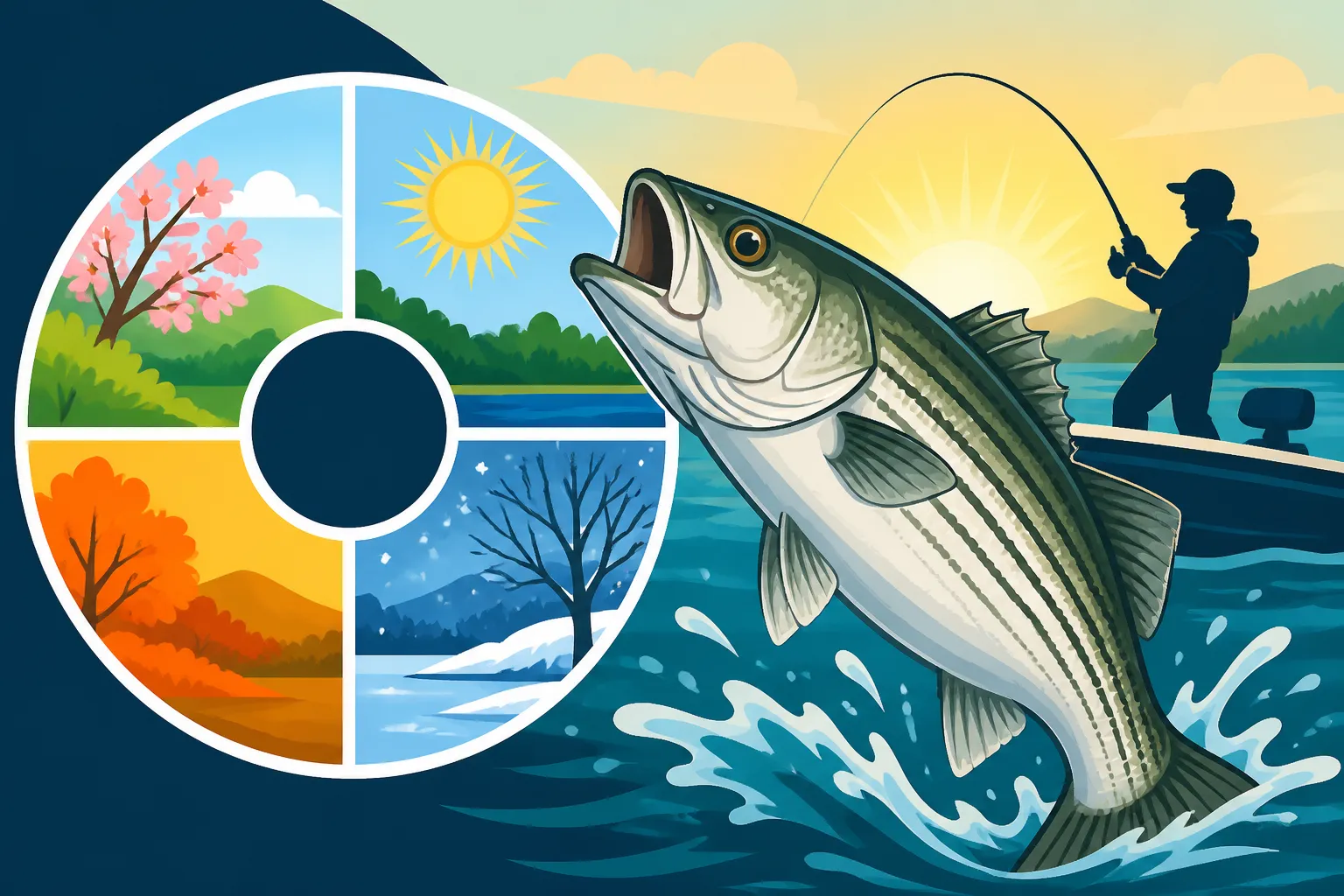
While late spring and early summer offer the prime opportunity, focusing solely on one or two months means missing out on incredible fishing throughout the rest of the year. Striped bass are migratory by nature, even in a landlocked reservoir like Norris Lake, and their behavior changes significantly with the seasons. Understanding these shifts is paramount to consistent success, extending your "best month" mentality to an entire year of potential catches.
Spring (March-April): As the water begins to warm from its winter chill, usually hitting the low to mid-50s, stripers start to move from their deep winter haunts into shallower areas. They're often found in the upper reaches of the lake and in major creek arms, following shad and other baitfish that are also moving to warmer waters. This is a great time for trolling umbrella rigs or large bucktail jigs, as the fish are looking for substantial meals after a slower winter. They might not be as concentrated as during the peak summer bite, but they can be incredibly aggressive when found.
Summer (July-August): Once the intense heat of July and August sets in, and the surface water temperatures climb into the 80s, the game changes dramatically. Striped bass, being cold-water fish by preference, will descend to the cooler, deeper thermocline. This means focusing on Deep Water Techniques for Striped Bass. You'll need to locate them using your electronics and target them with downriggers, lead core line, or heavy planer boards, often fishing at depths of 40 to 80 feet or more. Night fishing becomes incredibly effective during these months as the stripers will move up in the water column under the cover of darkness to feed. The key here is adapting to their depth and nocturnal habits.
Fall (September-November): Many consider fall a second prime season, often rivaling the late spring. As the water temperatures begin to cool down, the lake "turns over," and oxygen levels become more uniform throughout the water column. Stripers become highly active again, chasing baitfish that are fattening up for winter. This is a fantastic time for casting large topwater lures, especially during low light conditions, and for trolling large swimbaits or live gizzard shad. The fish are often more widely dispersed than in summer, but their aggressive feeding sprees can be epic. The scenic beauty of the changing leaves on Norris Lake only adds to the allure of fall fishing.
Winter (December-February): Don't count winter out! While it's certainly a colder and sometimes slower bite, big striped bass are still caught during these months. They will typically hold in very deep water, often in the lower lake or near the dam, congregating around structure like deep points and channel swings. Vertical jigging with heavy spoons or large soft plastics can be effective, as can slow trolling live bait. The fish are less active, but a well-presented bait in the right spot can entice a trophy striper. Understanding How Water Temperature Affects Fish Activity is vital in these colder months.
Essential Techniques for Norris Lake Stripers
Catching striped bass consistently on Norris Lake requires more than just knowing when to go; it demands a mastery of specific techniques tailored to their habits and the lake's unique characteristics. These fish are powerful, intelligent, and often require a strategic approach.
Trolling the Depths with Confidence
Trolling is undeniably one of the most effective ways to cover water and locate schooling striped bass on Norris Lake, especially when they're not actively busting on the surface. This method allows you to present multiple baits at different depths and speeds, mimicking baitfish swimming through the water column. For stripers, you'll often be targeting depths that require specialized gear. Downriggers are common, allowing you to precisely control the depth of your lure, even in very deep water. Lead core line is another popular choice, using the weight of the line itself to get your lures down without additional weights. For shallower presentations, or when the fish are suspended just below the surface, planer boards can spread your lines out, covering a wider swath and avoiding spooking fish with your boat.
When it comes to baits, umbrella rigs are a go-to for many striper anglers. These rigs, often purchased from trusted outdoor retailers or online platforms like Amazon, imitate a school of baitfish, making a tempting target for hungry stripers. Large swimbaits, deep-diving crankbaits from brands like Rapala or Bomber, and bucktail jigs are also highly effective when trolled. The key is to match the hatch – use lures that resemble the predominant baitfish (like gizzard shad or alewives) in size and color. Speed is critical; experiment with trolling speeds between 2.5 to 4.0 mph, adjusting until you find what triggers a bite. Keep a close eye on your fish finder, as subtle changes in depth or structure can hold massive schools of fish. For more detailed insights into this technique, check out our guide on Best Trolling Gear for Tennessee Striped Bass.
The setup for successful trolling isn't just about the lure, but the entire system. You'll want sturdy rods with plenty of backbone, capable of handling the powerful runs of a striper, especially when you're pulling heavy gear. Large capacity reels spooled with strong monofilament or braided line are essential. Consider a line counter reel to keep track of how much line you have out, which directly relates to the depth of your lure. Remember to set your drag correctly – stripers hit hard and run fast! It's also wise to have a selection of leader materials, typically 30-50 lb fluorocarbon, to connect your main line to your lure, providing both abrasion resistance and a degree of stealth in Norris Lake's clear waters.
Live Bait Strategies for Finicky Fish
While artificial lures can be incredibly effective, there are times, especially when stripers are a bit finicky or during certain seasons, when nothing beats the real thing. Live bait is often the silver bullet for enticing reluctant striped bass, and on Norris Lake, the predominant baitfish are gizzard shad and alewives. Catching your own bait can be a rewarding experience, using a cast net in shallower coves or around baitfish schools located with your electronics. If catching your own isn't an option, some bait shops around Norris Lake might sell live shad, but it's always best to call ahead.
Once you have your live bait, rigging it properly is crucial. A popular method is to use a Carolina rig, which consists of a barrel swivel, a leader (usually 2-4 feet of fluorocarbon), and a circle hook. The weight, often an egg sinker, is threaded onto the main line above the swivel, allowing the bait to swim freely. Hooking the bait through the nose or just behind the dorsal fin allows it to swim naturally and stay alive longer. Another effective technique is free-lining live bait, especially when you see stripers busting on the surface or suspended at a certain depth. Simply cast your live bait into the activity or drift it at the desired depth, letting it swim naturally.
Keeping your live bait healthy is just as important as how you rig it. A good livewell with an aerator or a large bait cooler with a bubbler is essential. Healthy, active bait is far more attractive to stripers than sluggish or dying bait. Regularly check on your bait, removing any that have expired. When deploying live bait, pay attention to current and wind, as these factors will dictate how your bait drifts. Sometimes, anchoring up-current from a deep point or a hump and letting your live baits drift down into the strike zone is a highly productive tactic. For further reading on different approaches, our guide on Tennessee Striped Bass Fishing Techniques offers a broader perspective.
Electronics and Location Scouting
In a vast and deep lake like Norris, fishing blind is a recipe for frustration. Modern marine electronics are not just a luxury; they are an absolute necessity for consistently finding and catching striped bass. A quality fish finder, especially one with good down-imaging and side-imaging capabilities, will transform your fishing experience. These units allow you to literally "see" the underwater world – identifying baitfish schools, individual stripers, and critical bottom structure like humps, ledges, and channel swings where these fish love to hide or ambush prey.
Learning to interpret your fish finder screen is a skill developed over time, but it's invaluable. Look for dense schools of baitfish, often appearing as large clouds or blobs on your screen. Striped bass will often appear as distinct arches or lines, sometimes right on the edge or beneath these bait schools. Pay attention to the depth at which you're marking fish; this tells you exactly where to present your lures or live bait. Many modern fish finders also include GPS mapping, allowing you to mark waypoints for productive spots, follow contour lines, and navigate safely on the lake. Brands like Humminbird, Lowrance, and Garmin offer excellent units that can drastically improve your success. You can find a wide range of these devices, from entry-level to advanced models, easily on Amazon.
Beyond just finding fish, electronics help you understand their behavior and patterns. For instance, if you're consistently marking stripers at 60 feet over a 100-foot bottom, you know they're suspended and likely following a thermocline or a deep bait ball. This information guides your trolling depth, how much lead core line to deploy, or how much weight to add to your live bait rig. Regularly scanning areas known for striper activity – deep main lake points, major creek channel intersections, and submerged islands – will increase your chances of finding actively feeding fish. Understanding the contours and depths of Norris Lake is like having a secret map, and your fish finder is the key to unlocking it. Consider exploring guides like Best Fish Finders for Tennessee Reservoir Fishing to help you choose the right unit.
Navigating Norris Lake's Unique Challenges
Norris Lake isn't just any body of water; its specific environmental factors and regulatory landscape can heavily influence how you approach striped bass fishing. Being aware of these elements can give you a significant advantage and ensure a smooth, enjoyable outing.
The Impact of Water Clarity and Depth
Norris Lake is renowned for its exceptional water clarity, often considered one of Tennessee's clearest reservoirs. While beautiful, this clarity presents both opportunities and challenges for striped bass anglers. On one hand, clear water allows for better visibility of underwater structure and baitfish schools through your electronics. On the other hand, it can make fish warier of boats and tackle. Stripers in clear water can be line-shy, so using fluorocarbon leaders is often a necessity. The natural light penetration also means that fish might be deeper during bright daylight hours, seeking refuge in the darker zones.
The lake's depth is another significant factor. With a maximum depth exceeding 200 feet in some areas, Norris offers vast expanses of deep-water habitat that striped bass thrive in, especially during the warmer months. This depth dictates the need for specialized techniques like downrigging or lead core, as discussed earlier. Understanding the thermocline – the layer where warm surface water meets cooler deep water – is crucial, particularly in summer. This is where oxygen levels are often ideal for baitfish and predators alike. Stripers will typically suspend themselves just above, in, or below this layer, making it a prime target zone. Familiarizing yourself with a Norris Lake Fishing Guide, Tennessee's Clearest Water can provide even more location-specific insights.
Furthermore, the extensive coves, islands, and river channels within Norris Lake provide endless opportunities for striped bass to ambush prey. The consistent depth and structure along the main river channel and its major tributaries are prime areas to focus your efforts. These areas serve as migratory highways and feeding grounds for stripers. Always be mindful of boat traffic, especially on weekends, as Norris is popular for various water sports. Early mornings and weekdays often provide a more serene fishing experience on the often-busy waters, increasing your chances of success without the added pressure of numerous other vessels. Remember that choosing the Best Boats for Tennessee's Norris Lake can greatly impact your ability to navigate and effectively fish these diverse waters.
Regulatory Awareness and Conservation
Before you even make your first cast on Norris Lake, or any body of water in Tennessee for that matter, it's absolutely crucial to be aware of the state's fishing regulations. Ignorance of the law is never an excuse, and a run-in with a game warden can quickly turn an otherwise perfect day on the water into a costly one. Every angler, regardless of age, needs to understand the requirements for a fishing license. You can find comprehensive information in resources like the Tennessee Fishing License Guide or the official TWRA website. Make sure your license is current and that you have it readily accessible, whether it's a physical copy or a digital version on your phone.
Beyond the general license, specific regulations apply to certain species, including striped bass. This includes daily creel limits (how many fish you can keep in a day) and size limits (minimum or maximum lengths for kept fish). These limits are in place to ensure sustainable fish populations for future generations of anglers. While statewide limits are common, it's always a good practice to double-check for any lake-specific rules that might override the general regulations for Norris Lake. These special regulations are often posted at boat ramps or available on the TWRA website. A thorough review of Tennessee Fishing Regulations Explained can prevent any unintended violations.
Conservation efforts are vital for maintaining the health and abundance of Norris Lake's striped bass fishery. Practice responsible catch-and-release, especially for fish you don't intend to keep or for larger breeding stock. Use appropriate gear that minimizes harm to the fish, such as circle hooks with live bait. Dispose of all trash properly, and never introduce non-native species into the lake. By adhering to regulations and practicing ethical angling, you contribute to a thriving fishery that everyone can enjoy for years to come.
Seasonal Striped Bass Fishing on Norris Lake
Here's a quick overview of what to expect when targeting striped bass on Norris Lake throughout the year:
| Season | Approximate Months | Water Temperature Range | Key Fishing Depths | Primary Techniques | Notes |
|---|---|---|---|---|---|
| Winter | December – February | 40-50°F | 60-100+ feet | Vertical jigging, Slow trolling live bait | Slower bite, but potential for trophy fish in deep holes. |
| Early Spring | March – April | 50-60°F | 20-50 feet | Trolling umbrella rigs, Jigs | Fish move to shallower creek arms; aggressive post-winter feeding. |
| Late Spring/Early Summer | May – June | 65-75°F | 20-60 feet (or surface) | Trolling, Live Bait, Topwater | PEAK SEASON! High activity, aggressive surface feeds. Focus on main lake points. |
| Mid-Summer | July – August | 75-85°F | 40-80 feet (thermocline) | Downriggers, Night fishing, Deep trolling live bait | Fish go deep to find cool water; excellent night bite. |
| Fall | September – November | 60-70°F | 20-70 feet | Trolling, Live Bait, Topwater, Jigging | Second peak season, aggressive feeding as water cools and lake turns over. |
Disclaimer
The information provided in this guide is for general informational purposes only and is subject to change. Fishing conditions, regulations, and fish behavior can vary based on weather, water levels, and other environmental factors. Always consult the latest regulations from the Tennessee Wildlife Resources Agency (TWRA) before fishing.