Best Season for Catfish on Tennessee’s Kentucky Lake
If you've ever stood on the banks of Kentucky Lake, or stared out across its vast expanse from a boat ramp, you know it's a truly incredible body of water. But when it comes to chasing catfish, it's easy to feel a little overwhelmed. Folks often wonder if there's a "magic season" when the whiskered giants are just begging to bite. The truth is, Kentucky Lake offers fantastic catfishing opportunities almost year-round, but knowing the prime times and how to adapt your strategy will make all the difference. This guide will dive deep into the seasonal patterns, hotspots, and techniques to help you land more catfish on this legendary Tennessee fishery.
Understanding Kentucky Lake's Catfish Dynamics
Kentucky Lake isn't just a lake; it's a massive reservoir, part of the Tennessee River system, stretching over 160,000 acres in Tennessee and Kentucky. Its sheer size, diverse habitat, and constant flow from the Tennessee River mean that catfish here behave a little differently than they might in smaller, more stagnant waters. Understanding these nuances is key to consistent success.
The Different Catfish Species in Kentucky Lake
When we talk about "catfish" on Kentucky Lake, we're not just talking about one kind of fish. This lake is home to three main species, each with its own preferences and seasonal patterns. We're primarily after Channel Catfish, Blue Catfish, and Flathead Catfish, and knowing which one you're targeting can significantly influence your approach. You can learn more about the specific characteristics and habitats of these species in our comprehensive guide on Catfish Species Found in Tennessee Waters.
- Channel Catfish: These are probably the most common and widely distributed catfish in Kentucky Lake. They're often found in more varied habitats, from shallow flats to creek channels, and are known for biting on a wide range of baits. They typically don't grow as large as blues or flatheads, but they offer fantastic action and are excellent table fare. During the warmer months, you'll find them almost everywhere, especially around structure that offers cover and food.
- Blue Catfish: The true giants of Kentucky Lake, blue cats are known for their massive size and powerful fights. They prefer open water, often congregating in deep river channels, bends, and humps. They are primarily piscivorous, meaning they eat other fish, and require heavier tackle to handle their incredible strength. Targeting blue catfish usually involves bigger baits and more specialized techniques, and their activity can be very seasonal, peaking when baitfish are abundant and vulnerable.
- Flathead Catfish: These solitary predators are different from their channel and blue cousins. Flatheads are ambush hunters that almost exclusively prefer live bait. They inhabit heavy cover like log jams, rock piles, and undercut banks, waiting for unsuspecting prey. While they don't reach the extreme sizes of blue cats as often, they can still grow impressively large and offer an incredible challenge. Finding their prime spots requires understanding their preference for structure and current, often in conjunction with deep water.
How Kentucky Lake's Environment Influences Catfish Behavior
Kentucky Lake's environment is dynamic, constantly shaped by water levels, current, and temperature, all of which heavily impact where catfish are and what they're doing. The presence of submerged timber, vast flats, sharp drops, and river channel bends creates an intricate underwater landscape.
- Water Levels and Current: The Tennessee Valley Authority (TVA) manages Kentucky Lake's water levels, which fluctuate seasonally. Higher water levels in spring can spread fish into newly flooded areas, while falling water can concentrate them in main channels. The current in the old Tennessee River channel, especially when generators are running at Kentucky Dam, also plays a huge role. Catfish, particularly blue cats, use current to their advantage for feeding, often positioning themselves just out of the main flow to ambush prey. Understanding these flows is crucial for finding active fish; they'll often hold just outside the strongest current, in eddies or behind submerged structures.
- Temperature Stratification: As summer progresses, Kentucky Lake, like many deep reservoirs, will stratify, meaning layers of water form with different temperatures and oxygen levels. Catfish, especially blue cats, will seek out areas with comfortable temperatures and sufficient oxygen. This often means moving deeper during the day and possibly shallower at night. Finding the "thermocline" – the layer where temperature changes rapidly – can be key to locating active fish in summer. This is also where you might find concentrations of baitfish, which, of course, means catfish won't be far behind.
- Abundant Forage: Kentucky Lake is teeming with baitfish like shad, skipjack herring, and various panfish. The availability and movement of these forage species directly influence catfish behavior. Where the bait goes, the catfish follow. Learning to read your fish finder to spot bait balls, or observing surface activity, can give you huge clues about where to set your lines. This massive food source is a major reason why Kentucky Lake produces such robust populations of trophy catfish.
Prime Catfish Seasons on Kentucky Lake
While you can technically catch catfish on Kentucky Lake any time of year, certain seasons definitely shine brighter for specific species and techniques. Understanding these seasonal shifts is the key to maximizing your success.
Spring: Pre-Spawn and Spawn Period
Spring is arguably one of the most exciting times to target catfish on Kentucky Lake, especially for those seeking a lot of action and a good chance at bigger fish. As water temperatures begin to rise, catfish become increasingly active.
- Pre-Spawn Frenzy (March – April): As the water warms into the 50s and low 60s Fahrenheit, catfish, particularly blue and channel cats, go on a feeding binge. They're trying to pack on weight before the spawn, making them very aggressive. During this time, look for fish to move from deep wintering holes into shallower creek channels, flats, and points, especially those with access to deeper water. Cut bait, like shad or skipjack, is incredibly effective. You can often find large schools of baitfish moving into these areas, and the catfish will be right on their heels. This is an excellent time for setting up multiple rods with bottom rigs in likely feeding lanes.
- The Spawn (May – June): The actual spawning period for catfish on Kentucky Lake typically occurs when water temperatures reach the upper 60s to low 70s. During this time, catfish become very focused on reproduction. Channel cats will seek out dark, secluded areas like hollow logs, rock crevices, or undercut banks for nesting. Blue cats might spawn in similar areas but are often less impacted by the spawn than channels, still feeding periodically. Flatheads also look for cavities to spawn. While some anglers find fishing tougher during the peak of the spawn, others find success by targeting fish moving to and from spawning grounds, or by presenting baits directly to nesting fish, though this can be controversial. After the spawn, they'll often be hungry and recuperating, leading to another surge in feeding activity.
- Techniques and Locations: In spring, focusing on creek mouths, secondary points, and larger flats with scattered timber or brush piles will often yield results. For blue and channel cats, simple bottom rigs with an egg sinker and a circle hook are highly effective. Using fresh cut bait from local bait shops or even catching your own shad can be a game-changer. Flatheads will still be tight to heavy cover, often in the deeper bends of the old river channel where current provides easy meals. Learning basic Catfish Bottom Fishing Basics will serve you well during this season.
Summer: Deep Water and Night Fishing
When the brutal Tennessee summer heat settles over Kentucky Lake, the fishing doesn't stop, but it certainly changes. Catfish adapt to the warm surface temperatures by seeking refuge in cooler, deeper waters, or becoming more active during the cooler hours of the day.
- Daytime Deep Water Tactics (July – August): During the peak of summer, large blue catfish and channel cats will often retreat to the cooler, oxygenated depths of the main river channel, especially around humps, ledges, and deep bends. This is where a good fish finder becomes indispensable for locating schools of baitfish and the catfish lurking beneath them. Trolling large cut baits or even live bluegill can be effective in these deep-water haunts. You might need to experiment with different depths, but don't be afraid to fish in 30, 40, or even 50 feet of water. Having a reliable cooler for your bait, perhaps one you picked up on Amazon, is key to keeping it fresh in the summer sun.
- Night Fishing Extravaganza: Summer nights on Kentucky Lake are legendary for catfishing. As the sun dips below the horizon, catfish move out of their deep-water refuges and into shallower areas to feed. The cooler water temperatures and decreased light levels make them much more comfortable and aggressive. Popular night fishing spots include shallow flats adjacent to deep channels, main lake points, and tributary mouths. Setting up lights to attract baitfish can also draw in hungry catfish. This is the perfect time for techniques like How to Catch Catfish at Night.
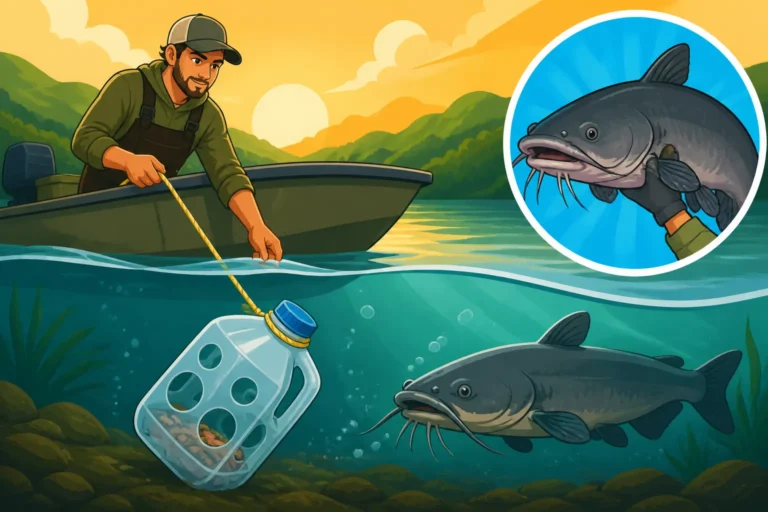
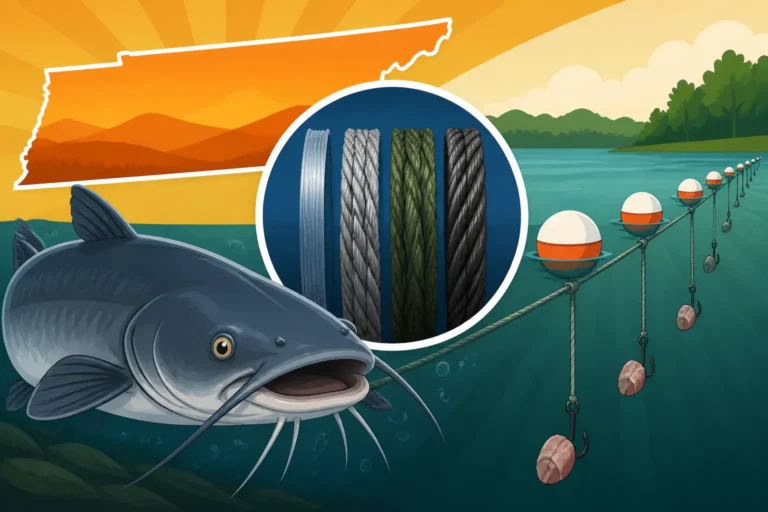
- Jug Fishing and Trotlining: Summer is also prime time for passive fishing methods like jug fishing and trotlining. Jug fishing involves setting out multiple lines suspended from floating jugs, often baited with cut bait or chicken livers. Trotlines, which are longer lines with many baited hooks, can be incredibly productive when set in strategic locations, like creek channels or along the old river channel. Just be sure to check the local regulations for these methods! If you're looking to learn more about this, check out our guide on How to Set Up a Trotline for Catfish or Jug Fishing for Catfish Explained.
Fall: Feeding Frenzy Before Winter
As summer transitions into fall, and water temperatures begin their gradual descent, Kentucky Lake experiences another surge in catfish activity. This is often described as a "feeding frenzy" as fish instinctively begin to bulk up for the leaner winter months.
- Autumn Aggression (September – October): The dropping air and water temperatures (from the 70s down to the 60s and 50s) signal to catfish that winter is coming. They become highly opportunistic feeders, often chasing baitfish that are themselves schooling up. Blue catfish will be actively hunting in the main river channel and over large flats. Channel catfish might still be found in various habitats, and flatheads will continue to be ambush predators around cover. This season offers some of the most consistent fishing for all three species.
- Concentrated Baitfish: During the fall, shad and other baitfish form massive schools, often moving into creek arms and shallower bays as the water cools. Catfish follow these schools closely. Look for birds diving, or signs of baitfish on your electronics. Fishing around these bait balls with fresh cut bait can be incredibly effective. The cooler water also means catfish can be active in shallower water for longer periods during the day compared to summer.
- Versatile Fishing: Fall allows for a wide range of techniques. Drifting with cut bait over flats and ledges is a popular and productive method for blue and channel cats. You can also anchor in prime spots or set up trotlines and jug lines. For flatheads, live bait presented near heavy timber in deeper bends of the river channel remains the go-to strategy. Many anglers consider this one of the Best Time of Year to Catch Catfish for both quantity and quality.
Winter: Slow but Steady Opportunities
Don't let the cold weather deter you; winter catfishing on Kentucky Lake, though challenging, can be highly rewarding, especially for trophy blue catfish. It requires patience and a willingness to brave the chill, but it can produce some truly massive fish.
- Deep Hole Concentrations (November – February): When water temperatures dip into the 40s, catfish movements slow down significantly. They will typically congregate in very deep holes in the main river channel or large creek channels, often stacking up in large schools. They enter a state of reduced metabolism but still need to feed, albeit less frequently. Finding these deep wintering holes is the biggest challenge and the biggest secret to winter success.
- Targeting Monster Blues: Winter is often cited as a prime time for catching truly enormous blue catfish. Because they are grouped up in deep water, once you locate a school, you can often catch multiple large fish. The key is presenting a bait right to them, as they won't expend much energy chasing. Fresh cut bait, particularly large chunks of shad or skipjack, is essential. Slow, precise presentations are more effective than active searching.
- Patience and Electronics: This isn't a season for run-and-gun fishing. You'll need to rely heavily on your fish finder to mark fish and stay on them. Once you find a productive spot, anchoring up and patiently waiting for bites is the name of the game. Using heavy tackle is crucial to haul up these sluggish but powerful fish from the depths. While the bites might be fewer, the rewards can be incredible, sometimes leading to personal bests.
| Season | Primary Target Species | Key Locations (General) | Recommended Baits (General) | Primary Techniques |
|---|---|---|---|---|
| Spring | Channel, Blue, Flathead | Creek channels, flats, points | Cut bait, worms, live shad | Bottom rigs, drift fishing |
| Summer | Blue, Channel, Flathead | Deep channels, main lake points | Cut bait, live bait, chicken liver | Deep dropping, night fishing, jug/trotlines |
| Fall | Blue, Channel, Flathead | Main river channel, creek mouths, flats | Cut bait, live shad, bluegill | Drift fishing, anchoring, trotlines |
| Winter | Blue Catfish (Trophy size) | Deep river channel holes | Large cut bait (shad, skipjack) | Deep anchoring, vertical jigging (slow) |
Essential Gear and Techniques for Kentucky Lake Catfish
Having the right gear and knowing how to use it is just as important as knowing when to go. Kentucky Lake's size and the potential for monster catfish demand sturdy equipment.
Rods, Reels, and Line Selection
Don't skimp on your setup when targeting catfish on Kentucky Lake, especially if you're chasing those trophy blues and flatheads. A small ultralight rod isn't going to cut it here.
- Rods: For general catfishing on Kentucky Lake, a medium-heavy to heavy action rod, 7 to 8 feet long, is a good all-around choice. This length helps with casting longer distances and provides leverage when fighting big fish. Brands like Ugly Stik or Catfish Safari offer durable, affordable options. For truly massive blue cats, some anglers opt for even stiffer, longer rods. You want something with a sensitive tip to detect subtle bites but plenty of backbone to muscle a big fish away from structure.
- Reels: Matching your rod with a sturdy baitcasting reel is preferred for heavy catfishing. Look for reels with a strong drag system and a high line capacity. Abu Garcia Ambassadeur reels or similar models from Penn or Daiwa are popular choices. Spinning reels can work for smaller channel cats, but for handling heavy weights, strong currents, and big fish, a baitcaster is superior. Ensure your reel is spooled with enough line to handle long runs.
- Line: Monofilament line in the 20-30 lb test range is standard for many catfishermen, offering a good balance of strength, abrasion resistance, and stretch. However, for maximum sensitivity and power, many serious anglers, particularly those targeting blue cats in deep water or near heavy cover, opt for braided line in the 50-80 lb test range. Braided line has virtually no stretch, allowing for better hooksets and detection of light bites. Always use a heavy monofilament or fluorocarbon leader (40-80 lb test) with braided line to provide abrasion resistance against rough bottom structures and catfish mouths.
Best Baits and Rigs for Success
Choosing the right bait and rigging it properly is crucial for enticing Kentucky Lake's catfish. Their diet can vary by species and season, so having a diverse bait selection is a smart move. Our article on Best Bait for Bottom Fishing Catfish offers even more detailed advice.
- Cut Bait is King: For blue and channel catfish, fresh cut bait is almost always the most effective. Shad (gizzard or threadfin) and skipjack herring are considered top-tier. You can catch your own with a cast net or purchase them from local bait shops. Cut the bait into chunks appropriate for the size of fish you're targeting – smaller pieces for channel cats, larger steaks for trophy blues. Other effective cut baits include bluegill, carp, and even chicken breast marinated in garlic or a commercial "stink bait" additive.
- Live Bait for Flatheads: If you're specifically targeting flathead catfish, live bait is almost non-negotiable. Live bluegill, shad, or even smaller carp are excellent choices. Present these baits alive and uninjured, using a large circle hook through the back or lips to keep them lively. Flatheads are ambush predators, and a struggling live baitfish is often what triggers their strike.
- Stink Baits and Prepared Baits: While not as effective for trophy blues or flatheads, a variety of commercially prepared baits and "stink baits" can be very productive for channel catfish. These include punch baits, dough baits, and various dips that have a strong odor. These are particularly good for recreational anglers and can be found readily at most tackle shops or on Amazon. Just remember, these generally won't attract the bigger fish.
- Rigging: The simplest and most effective rig for bottom fishing is a slip-sinker rig. This consists of an egg sinker (or flat 'no-roll' sinker in current) threaded onto your main line, followed by a swivel, and then a leader (12-24 inches) tied to a circle hook. Circle hooks are highly recommended as they typically hook fish in the corner of the mouth, making for easier release and less harm to the fish. Hook sizes typically range from 5/0 to 10/0, depending on your target species and bait size. For flatheads with live bait, a Kahle hook or J-hook may also be used, but require careful attention to set the hook.
Navigating and Locating Catfish Hotspots
Kentucky Lake is vast, and knowing where to focus your efforts can save you hours of fruitless casting. Using navigational tools and understanding fish behavior are critical skills. You'll also want to know the prime Kentucky Lake Catfish Fishing Spots.
- Electronics are Your Friend: A good fish finder with GPS capabilities is almost a necessity on Kentucky Lake. Use your sonar to identify deep channels, humps, ledges, and submerged timber. Side imaging and down imaging technologies can help you spot brush piles and even individual fish away from your boat. Once you find a promising structure or a school of baitfish, mark it on your GPS so you can return. Learning to interpret what you see on the screen can be a steep learning curve but is invaluable for consistently finding fish.
- Reading the Water: Beyond electronics, developing an eye for reading the water is an old-school skill that still pays dividends. Look for current breaks, eddies, and areas where baitfish are congregating (e.g., surface boils, birds diving). During periods of strong current from the dam, focus on areas downstream that offer refuge for fish, like the backsides of islands or large submerged structures. Upstream sides of humps or ledges can also be productive as current pushes food over them.
- Key Structures: Catfish on Kentucky Lake are often associated with structure. This includes the main river channel and its bends, deep creek channels, submerged timber (especially old tree lines and stumps), rock piles, and artificial fish attractors (like those deployed by the TWRA). On shallow flats, look for subtle depressions or points that provide a break in the uniform bottom. For flatheads, always key in on heavy, snaggy cover.
- Boat Access and Ramps: Kentucky Lake offers numerous public and private boat ramps, providing ample access to different parts of the lake. Researching ramps close to your desired fishing grounds can save you travel time on the water. Be aware of fluctuating water levels, as some ramps may become less accessible during low water periods.
Disclaimer
Fishing conditions and regulations in Tennessee can change. Always check the latest Tennessee Wildlife Resources Agency (TWRA) regulations before heading out on the water. This guide is for informational purposes only and does not supersede official TWRA rules.