How to Use a Slip Bobber for Crappie
There’s nothing quite like the feeling of watching a bobber dance and then plunge under the surface, signaling a bite. But if you’ve ever tried to fish for crappie in deeper water or around submerged structure with a traditional fixed bobber, you know the frustration: casting becomes a nightmare, and setting your bait at the right depth feels impossible. That’s where the slip bobber comes in, transforming your crappie fishing experience into something far more effective and enjoyable. This guide will walk you through everything you need to know about mastering the slip bobber for crappie in Tennessee's waters, from setting up your rig to fine-tuning your technique for maximum success.
Understanding the Magic of Slip Bobbers for Crappie
When it comes to targeting crappie, especially those elusive slabs holding in deeper water or suspended over brush piles, a slip bobber isn't just a good idea – it's often a game-changer. Fixed bobbers have their place, particularly in very shallow water, but they quickly become a hindrance when you need precision depth control and effortless casting.
Why a Slip Bobber Beats a Fixed Bobber for Crappie
Imagine trying to cast a rod and reel with a fixed bobber set eight or ten feet from your hook. Your bait dangles awkwardly, tangling on every retrieve, and the whole setup feels unwieldy. A fixed bobber, by its very nature, is clamped onto your line at a specific spot. This works fine if the water is only a few feet deep, but once crappie move to deeper haunts, like the submerged timber on Kentucky Lake or the deeper ledges of Chickamauga Lake, you're out of luck. You simply can't cast that far with so much line hanging below your bobber, and retrieving it through thick cover is a snag waiting to happen.
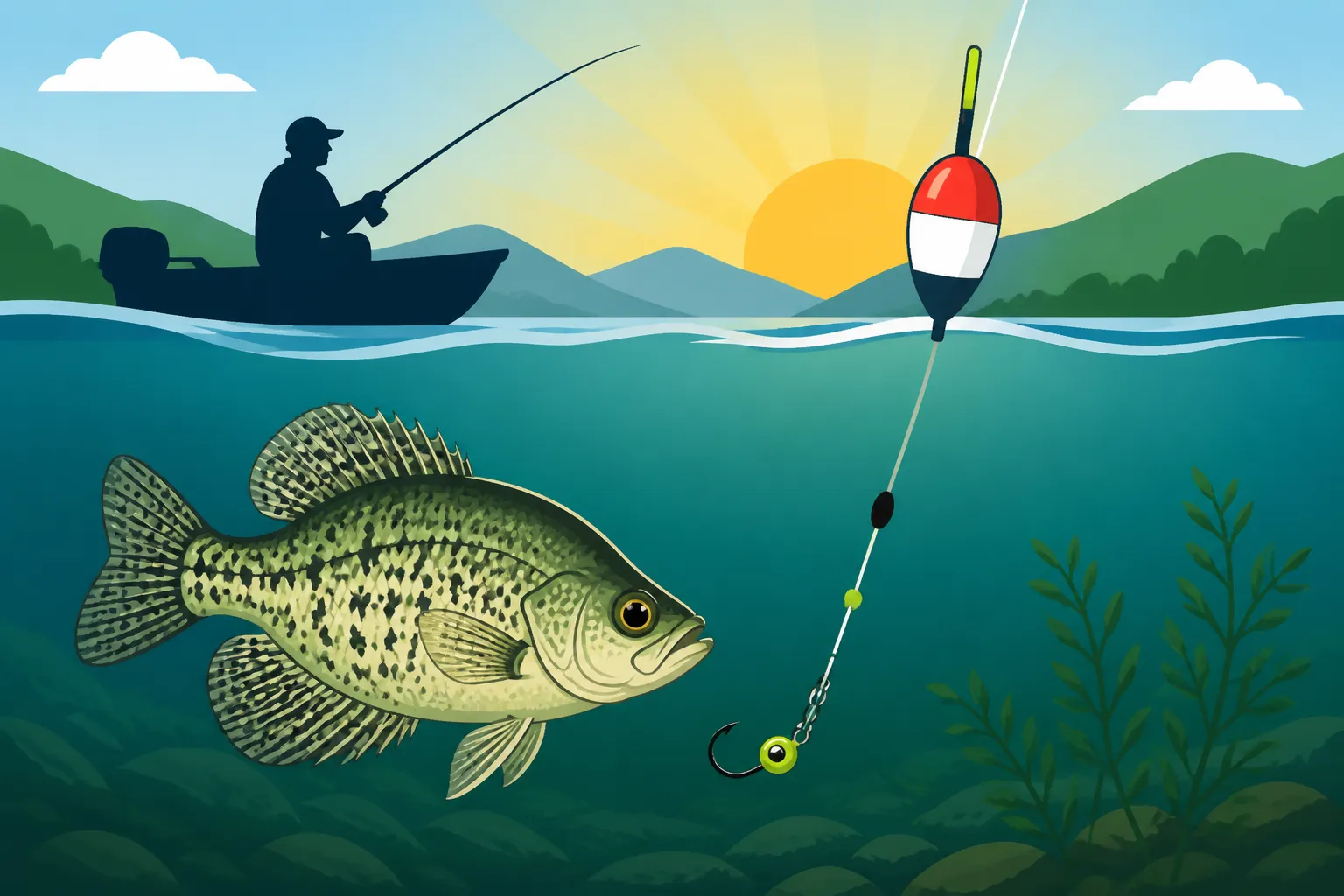
A slip bobber, on the other hand, slips freely up and down your fishing line. The magic happens thanks to a small bobber stop, often a tiny piece of string or rubber, that you can slide up and down your main line to precisely control your bait's depth. When you cast, the weight of your jig or minnow pulls the line through the bobber until it hits that stop. This means you can reel your bobber right down to your bait, making for compact, snag-free casting. It's a revelation for reaching crappie suspended at specific depths, whether they're 5 feet down or 20 feet down. This also allows you to probe different depths without re-tying your entire rig, which is a huge time-saver and lets you adapt quickly to changing crappie patterns, like during the Spring Crappie Spawn Timing in Tennessee.
Key Components of a Slip Bobber Rig
Building an effective slip bobber rig isn't complicated, but understanding each component is crucial. You'll need four main parts, in order:
First is the bobber stop. This small, adjustable knot or piece of rubber is the brain of your operation. It slides up and down your main line and is what ultimately dictates how deep your bait will sit. These are usually tiny, colored pieces of string or small rubber sleeves that come with an applicator wire. You can buy them pre-made, often in packs, and they're readily available at any tackle shop or online, including through retailers like Amazon.
Next comes a small bead. This little guy sits just below your bobber stop and acts as a buffer. The hole in the bobber stop is usually smaller than the bead, preventing the bobber stop from being pulled through the top of your actual slip bobber. It ensures a smooth transition and reliable depth setting. Without the bead, your bobber stop might get jammed inside the bobber, or even pull through the eyelet if it's too small.
Third, and obviously central to the whole setup, is the slip bobber itself. Unlike fixed bobbers, a slip bobber has a small hole running through its center, allowing your line to pass through freely. They come in various sizes and shapes, from slender pencil floats to rounder, more buoyant styles. The type you choose depends on the weight of your bait and jig, and the conditions you're fishing in. For crappie, a more sensitive bobber that signals subtle bites is usually preferred.
Finally, at the bottom of the rig, after your line passes through the bobber, you'll attach your jig or hook with a sinker. This is what pulls your line down through the bobber until it hits the bobber stop, setting your depth. The weight needs to be sufficient to pull the line through the bobber but not so heavy that it spooks the crappie. Many crappie anglers prefer small jigs from 1/32 oz to 1/8 oz, which serve as both lure and weight.
Setting Up Your Slip Bobber Rig for Tennessee Crappie
Getting your slip bobber rig dialed in correctly can make all the difference between a frustrating day and a limit full of crappie. It's not rocket science, but paying attention to the details will ensure smooth casting and effective fishing.
Gathering Your Essential Gear
Before you even think about hitting the water, gather everything you'll need. A little preparation goes a long way, especially when you're trying to rig up boatside.
First, your fishing rod and reel. For crappie, a light to medium-light action spinning rod, typically 6 to 7 feet long, paired with a small spinning reel, is ideal. This setup provides the sensitivity needed to detect delicate crappie bites and the backbone to handle their surprisingly strong fight. When considering your reel, look for one that balances well with your rod. Many anglers find that a high-quality, smooth reel can improve casting distance and accuracy, especially with lighter crappie jigs. For more on selecting the right gear, check out our guide on Best Rod and Reel Combo for Beginners.
Next, your fishing line. Monofilament lines in the 4 to 6-pound test range are excellent for crappie. They offer good knot strength, are affordable, and have enough stretch to act as a shock absorber when a big crappie decides to make a run. Some anglers prefer fluorocarbon for its low visibility and increased sensitivity, but mono is perfectly adequate for slip bobber fishing.
Of course, you'll need your slip bobbers themselves. Carry a variety of sizes and styles. Smaller, more sensitive bobbers are great for calm conditions and finicky crappie, while larger, brighter ones might be better for windy days or when fishing at a distance. As mentioned earlier, bobber stops and beads are also essential. You can often find these packaged together, which is super convenient. Don't forget an extra pack or two, as they are tiny and easy to lose.
Finally, your terminal tackle: crappie jigs, hooks, split shot weights, and swivels. Jigs are often the preferred choice for crappie under a bobber, with popular sizes ranging from 1/32 oz to 1/8 oz. Colors like chartreuse, white, black, and pink are perennial favorites, but always carry a selection to match local conditions and crappie preferences. Check out Best Jig Colors for Spring Crappie for more specific recommendations. If you're using live bait, like minnows, you'll need small Aberdeen or specialized crappie hooks. Always have a few split shot weights handy in case you need to add a little extra weight to your rig to help it sink or cast further. A small barrel swivel can also be useful to prevent line twist, especially if you're using spinning lures.
Step-by-Step Rigging Instructions
Now for the practical part: putting it all together. Take your time, and soon it’ll be second nature.
-
Thread on your bobber stop: Begin by sliding your bobber stop onto your main fishing line. Most bobber stops come with a thin wire loop. You simply feed your main line through this loop, then slide the bobber stop off the wire and onto your line. Gently pull the tag ends of the bobber stop material to cinch it down, but not so tightly that it damages your line or can't be adjusted later. Ensure it's secure enough to hold its position.
-
Add the bead: Immediately after the bobber stop, slide one of your small beads onto the line. This bead will rest against the bobber stop and prevent it from pulling through the top eyelet of your slip bobber.
-
Attach the slip bobber: Now, thread your main line through the eyelet at the bottom of your slip bobber, then up through the top eyelet. The line should now pass freely through the bobber.
-
Tie on your jig or hook: At the very end of your line, tie on your preferred crappie jig or a hook for live bait. A simple Palomar knot or improved clinch knot works great for this. If you're using a hook for live bait, you might also want to add a small split shot weight a few inches above the hook to help it sink and present naturally.
-
Test your knots and adjust: Give all your knots a gentle tug to ensure they're secure. Now, you have a fully rigged slip bobber setup! The beauty of it is that your bobber stop can be effortlessly slid up and down your line to set your desired fishing depth.
Adjusting Depth for Different Crappie Habits
This is where the slip bobber truly shines. Crappie are notorious for suspending at specific depths, and those depths can change throughout the day and year. Being able to quickly adjust your bait's presentation is crucial.
Start by considering the water you're fishing. Are you near a brush pile, a submerged tree, or a drop-off? Use your fish finder or knowledge of the area to estimate the depth where crappie might be holding. Many modern fish finders, even budget-friendly ones, can help you quickly locate suspended fish and submerged structure.
When you first start, it's often a good idea to set your depth so your bait is a few feet off the bottom or just above any visible structure. For example, if you see a brush pile on your sonar screen that goes from 15 feet to 25 feet, try setting your bait at 12-14 feet deep to fish above it, then adjust deeper in increments of a foot or two until you find the strike zone. Remember, crappie often feed upwards, so it's generally better to fish slightly above them rather than below.
As you fish, pay close attention to where you get bites. If you're consistently catching crappie at a certain depth, keep it there. If bites slow down, don't be afraid to experiment. Slide your bobber stop up or down a foot or two at a time. This methodical approach will help you pinpoint the crappie's preferred feeding depth. This flexibility is vital when you're trying to figure out Where to Catch Crappie on Kentucky Lake, which is known for its diverse depths and structures.
Advanced Tips and Techniques for Crappie with a Slip Bobber
Once you’ve mastered the basic setup, you can start refining your approach to truly maximize your crappie catch. It’s about more than just setting the depth; it’s about understanding crappie behavior and presenting your bait irresistibly.
Reading the Water and Locating Crappie Hotspots
Knowing where to cast is just as important as knowing how to rig your line. Crappie aren't just swimming around randomly; they follow predictable patterns tied to structure, water temperature, and food sources.
Look for areas with submerged cover. Crappie love to hide in brush piles, standing timber, rock piles, and even old tires. These spots provide ambush points for baitfish and protection from predators. If you have a fish finder, use it to scan for these underwater sanctuaries. If not, look for visual cues on the surface, like points, channels, or creek beds that might indicate structure below. In many Tennessee lakes, especially the larger reservoirs, these hotspots are well-known, but fresh ones can always be found. For instance, knowing How to Catch Crappie Around Brush Piles is crucial for success on many of our waters.
Water temperature plays a huge role in crappie location. During the spring spawn, crappie move into shallower coves and bays to lay eggs. At other times of the year, they'll retreat to deeper, more stable temperatures. For example, during summer heat, crappie often suspend in the thermocline, an invisible layer of water with a stable temperature. This is where a slip bobber really shines, allowing you to present your bait precisely within that narrow comfort zone. Understanding the Best Time of Year to Catch Crappie on Tennessee's Kentucky Lake often means understanding seasonal movements.
Also, pay attention to shad activity. Crappie are predatory fish, and they'll follow their food. If you see baitfish flickering on the surface or showing up on your sonar, chances are crappie aren't far behind. These areas, particularly those with a good mix of cover and baitfish, are prime targets for your slip bobber rig.
The Art of the Jig and Retrieve
Once your slip bobber rig is in the water, it's not just a matter of waiting for a bite. A little action can go a long way in enticing crappie.
For crappie, a subtle jigging motion is often the key. After your bait settles at the desired depth, let it sit for a moment. Then, with a gentle twitch of your rod tip, make your jig or minnow "dance." This slight movement mimics a struggling baitfish or insect, which can trigger a crappie's instinct to strike. Experiment with the cadence: a couple of quick twitches, a pause, then another twitch. Sometimes, a very slow, almost imperceptible lift and drop is all it takes.
When using jigs, you can also incorporate a slow retrieve. Cast your slip bobber rig, let it settle, jig it a few times, then slowly reel in a few feet, pausing to jig again. This allows you to cover more water and find active fish. The goal is to make your bait look as natural and appealing as possible. For specific techniques, our guide on How to Jig for Crappie provides excellent foundational knowledge that pairs well with slip bobber fishing.
Always be mindful of your bobber's behavior. A crappie bite can range from a violent plunge to a subtle twitch or just a slight sideways movement. Sometimes, the bobber might just lay flat on the water, indicating the fish has taken the bait and is moving upward. Any unusual movement warrants a gentle but firm hook set. Don't wait for the bobber to disappear entirely; often, the first subtle sign is when the crappie has the bait in its mouth.
Best Baits and Lures to Pair with a Slip Bobber
The beauty of a slip bobber rig is its versatility. It works exceptionally well with both artificial lures and live bait, giving you options depending on crappie preferences and conditions.
For live bait, minnows are hands down the most popular choice for crappie. A lively minnow suspended under a slip bobber is often irresistible. Hook your minnow lightly through the lips or just behind the dorsal fin to keep it active. Waxworms, mealworms, and crickets can also be effective, especially for smaller crappie or in ponds. The natural movement of live bait is something even the pickiest crappie struggle to ignore.
When it comes to artificial lures, small jigs are king. As mentioned, 1/32 oz to 1/8 oz jigs are standard. The plastic bodies can vary widely in shape, from small tubes and curly-tail grubs to tiny minnow imitations and spider jigs. Experiment with different colors and profiles until you find what the crappie are biting on that day. Sometimes, a bright chartreuse is what they want; other times, a more natural white or clear glitter pattern is the ticket. Check out the section on Best Tackle for Tennessee Crappie Fishing for more specific lure suggestions.
Another excellent option is a crappie minnow imitation lure. These are small, hard or soft plastic lures designed to mimic baitfish, often with a small lip to give them a subtle swimming action. When suspended under a slip bobber, they can be twitched and paused, creating an erratic movement that crappie find hard to resist. Some anglers even tip their jigs with a tiny piece of live bait, like a minnow head or a waxworm, to add extra scent and appeal. This hybrid approach often proves very successful.
| Crappie Baits/Lures | Best Use Case | Presentation Tip |
|---|---|---|
| Live Minnows | Finicky crappie, cold water, natural presentation | Hook through lips or dorsal fin for lively action. |
| Jig with Plastic Grub | All-around, active crappie, versatile | Twitch and pause; slow retrieve. |
| Tube Jigs | Versatile, mimics baitfish or insect larva | Gentle lifts and drops, subtle action. |
| Spider Jigs | Mimics insects, slower fall rate | Very subtle twitches, ideal for slow bites. |
| Crappie Minnow Lures | Aggressive crappie, larger profile | Twitch, pause, and let it flutter. |
| Waxworms/Mealworms | Small crappie, panfish, very subtle scent | Best on small hooks, minimal movement. |
Troubleshooting Common Slip Bobber Issues
Even with the best setup, fishing always throws curveballs. Knowing how to quickly address common problems can save your day on the water and keep you from getting frustrated.
Dealing with Wind and Current
Wind and current are two of the biggest foes of any bobber angler, and slip bobbers are no exception. They can make accurate casting difficult, push your bait out of the strike zone, and obscure subtle bites.
When faced with wind, try to cast into the wind or at a slight angle to it. This can help push your bait back towards you rather than away. If the wind is very strong, a slightly heavier jig or split shot can help your bait sink faster and reduce the amount of time it spends being blown around on the surface. You might also opt for a more streamlined, pencil-style slip bobber which offers less resistance to the wind and rides lower in the water, making it less prone to being pushed around. Fishing on the lee side of islands, points, or sheltered coves can also offer respite from strong winds.
Current, whether from a river or the outflow of a dam, requires a different approach. If the current is mild, it can actually be your friend, providing a natural drift for your bait. Cast upstream of where you expect crappie to be, and let your rig drift naturally into the strike zone. If the current is strong, however, it can make your bobber lie flat or pull your bait away too quickly. In strong current, consider adding a bit more weight to your jig or line to help it sink faster and hold its position better. You might also want to shorten the distance between your bobber and your bait, allowing for a more controlled drift closer to the surface where the current might be less intense. For areas with specific current patterns, like the Clinch River or Caney Fork River, understanding How Water Temperature Affects Fish Activity can also help in predicting crappie locations relative to current.
Preventing Line Tangles and Frustrations
There’s nothing worse than casting out only to reel in a bird's nest of tangled line and a hopelessly wrapped rig. Slip bobber setups, while great for casting, can still tangle if not managed properly.
The most common cause of tangles is overpowering your cast. With a slip bobber, you don't need to whip your rod aggressively. A smooth, controlled lob or sweep cast is usually all that's required. This allows your bait to follow your bobber in an arc, reducing the chances of them colliding in mid-air and creating a tangle. Ensure your retrieve is also smooth; avoid reeling in slack line too quickly, which can cause loops and knots.
Line twist can also be a culprit, especially if you’re using lures that spin or are battling fish that twist and turn. Using a high-quality barrel swivel between your main line and your leader (if you use one) can help immensely in preventing line twist from reaching your reel. Periodically, you can also let your line out in the current with nothing attached and let it untwist naturally.
Finally, ensuring your bobber stop is properly cinched but still adjustable is key. If it's too loose, it can slide down during the cast, causing your bait to hit your bobber and tangle. If it's too tight, you risk damaging your line, which could lead to a break-off on a good fish. Practice setting it so it holds firm but can still be moved with a bit of gentle force. By taking these simple precautions, you'll spend more time fishing and less time untangling.
Disclaimer
The information provided in this guide is for general informational purposes only and is not intended as legal advice. Fishing regulations, license requirements, and safety guidelines can change. Always consult the most current regulations set forth by the Tennessee Wildlife Resources Agency (TWRA) before engaging in any fishing activities. It is your responsibility to understand and comply with all applicable laws and regulations. Fishing can be dangerous; always prioritize safety and wear appropriate personal flotation devices (PFDs) when on the water.