Best Bait for Striped Bass in Cold Weather
Trying to catch striped bass in the biting chill of a Tennessee winter can feel like an impossible puzzle. The fish seem to vanish, and your usual baits just aren't cutting it. This guide is here to untangle that cold-weather mystery, helping you understand how stripers behave when temperatures drop and what baits will actually tempt them to bite, even when the air nips at your nose.
Understanding Striped Bass Behavior in Tennessee's Cold Waters
When the water temperatures in Tennessee's big reservoirs plummet, striped bass don't just disappear; they simply change their habits drastically. Unlike their warmer-water counterparts, winter stripers become lethargic, focusing on energy conservation and seeking out stable, often deeper, environments. Their metabolism slows down, which means they're not chasing fast-moving, erratic lures with the same vigor they show in spring or fall.
How Cold Water Affects Striped Bass Metabolism
Cold water significantly slows down a striped bass's metabolic rate. Think of it like a bear going into hibernation – not quite as extreme, but the principle is similar. Their digestion slows, their need for frequent meals decreases, and their movements become more deliberate and less aggressive. This means that a bait that looks injured, moves slowly, and presents an easy meal is far more appealing than something requiring a high-energy chase. The fish are still eating, but they are incredibly selective, preferring to conserve energy rather than expend it.
During this time, their senses might also be less acute, or at least less inclined to react quickly. A subtle vibration or a persistent scent trail becomes more important than a flashy, fast retrieve. It's a game of patience and presentation, understanding that you're trying to appeal to a fish that's essentially on a slow burn.
Where Striped Bass Seek Refuge in Winter
Striped bass in Tennessee reservoirs often congregate in deeper water during the colder months, seeking out areas with more stable temperatures. This usually means channels, creek beds, deep points, and the often overlooked thermal refuges created by power generation plants or warmer tributaries. They’ll school up in these zones, sometimes in massive numbers, making them a prime target if you can locate them.
Finding these winter hideouts is often the biggest challenge. It requires good electronics, a keen eye for subtle changes in bottom structure, and an understanding of reservoir topography. While they might be deep, they’re still often relating to some kind of structure, whether it’s a drop-off, a submerged timber line, or even baitfish schools that have also moved to deeper, more stable environments. Knowing Where to Catch Striped Bass in Tennessee during these colder periods often involves focusing on these deeper, more predictable patterns.
Why Live Bait Becomes Paramount
Given their slowed metabolism and preference for an easy meal, live bait often becomes the most effective choice for cold-weather striped bass. A live shad, herring, or even a large shiner struggling naturally sends out distress signals and subtle vibrations that even a sluggish striper can't ignore. It looks and smells like a real meal, something they don't have to chase far or work hard to subdue.
The natural movement of live bait is almost impossible to replicate with artificial lures, especially when fish are suspended and barely moving. The baitfish's desperate, erratic twitches are often just enough to trigger a predatory strike without requiring the striper to exert much effort. It’s about offering the path of least resistance to a fish that's primarily concerned with survival and energy conservation.
Top Bait Choices for Cold Weather Stripers in Tennessee
When the temperature drops, your tackle box might need a bit of an overhaul. The go-to flashy lures of summer often won't cut it, and you'll need to turn to options that appeal to a lethargic, cold-water striper. The key is natural presentation and a slow, tempting meal.
Live Bait: The Undisputed King of Winter
For many experienced Tennessee striper anglers, live bait is the undisputed champion in cold weather. Nothing quite mimics the natural distress of a real baitfish, and that’s what often triggers a strike from a less-than-enthusiastic striper.
- Gizzard and Threadfin Shad: These are natural forage for striped bass in most Tennessee reservoirs. Large gizzard shad, often 5-8 inches, are particularly effective. They put out strong vibrations and scent, and their size represents a substantial meal. You can collect these with a cast net in warmer periods and keep them in a well-aerated bait tank. When presenting them, a slow, natural drift or a careful suspension near schooling stripers is key.
- Alewives and Blueback Herring: Where present, these are also excellent choices. Their silvery flash and active swimming motion can draw attention even in dim, deep water. Similar to shad, the bigger the bait, the better, as stripers are looking for a high-calorie meal.
- Large Shiners: While perhaps not as common in every reservoir, large golden shiners can be very effective, especially if local bait shops carry them. They're hardy and often stay lively longer on the hook than shad, which can be an advantage on a slow day.
The biggest challenge with live bait is often procurement and keeping it alive. A good bait tank with plenty of aeration and circulation is crucial. You can find quality bait tanks and aerators on Amazon, which can make a huge difference in your success rate.
Cut Bait: Scent and Persistence
When live bait is scarce or proving difficult to manage, fresh cut bait can be a surprisingly effective alternative, especially for bottom-oriented stripers. The primary advantage of cut bait is its strong scent trail, which can attract lethargic fish that might not be actively cruising for a meal.
- Fresh Shad or Herring Chunks: Using a fresh chunk of gizzard shad or herring, ideally from baitfish caught that same day, releases oils and scent into the water. The best cuts include a piece of the gut or a section with bone, as these release the most attractants.
- Presentation: Cut bait is typically fished on or near the bottom, often with a slip sinker rig to allow the fish to take the bait naturally. Drop it into deep channels or where you've marked fish or bait schools. The lack of movement requires patience, but the potent scent can be irresistible to cold-stunned stripers.
While it lacks the natural movement of live bait, the persistent scent trail of cut bait can convince a hesitant striper that an easy, high-protein meal is waiting for them. It’s a passive approach, but sometimes that’s exactly what’s needed when the water is frigid.
Artificial Lures: Slow and Deep Presentations
While live bait often dominates, certain artificial lures can still produce strikes in cold weather, especially when you encounter active schools or prefer to cover more water. The key is slow and deep.
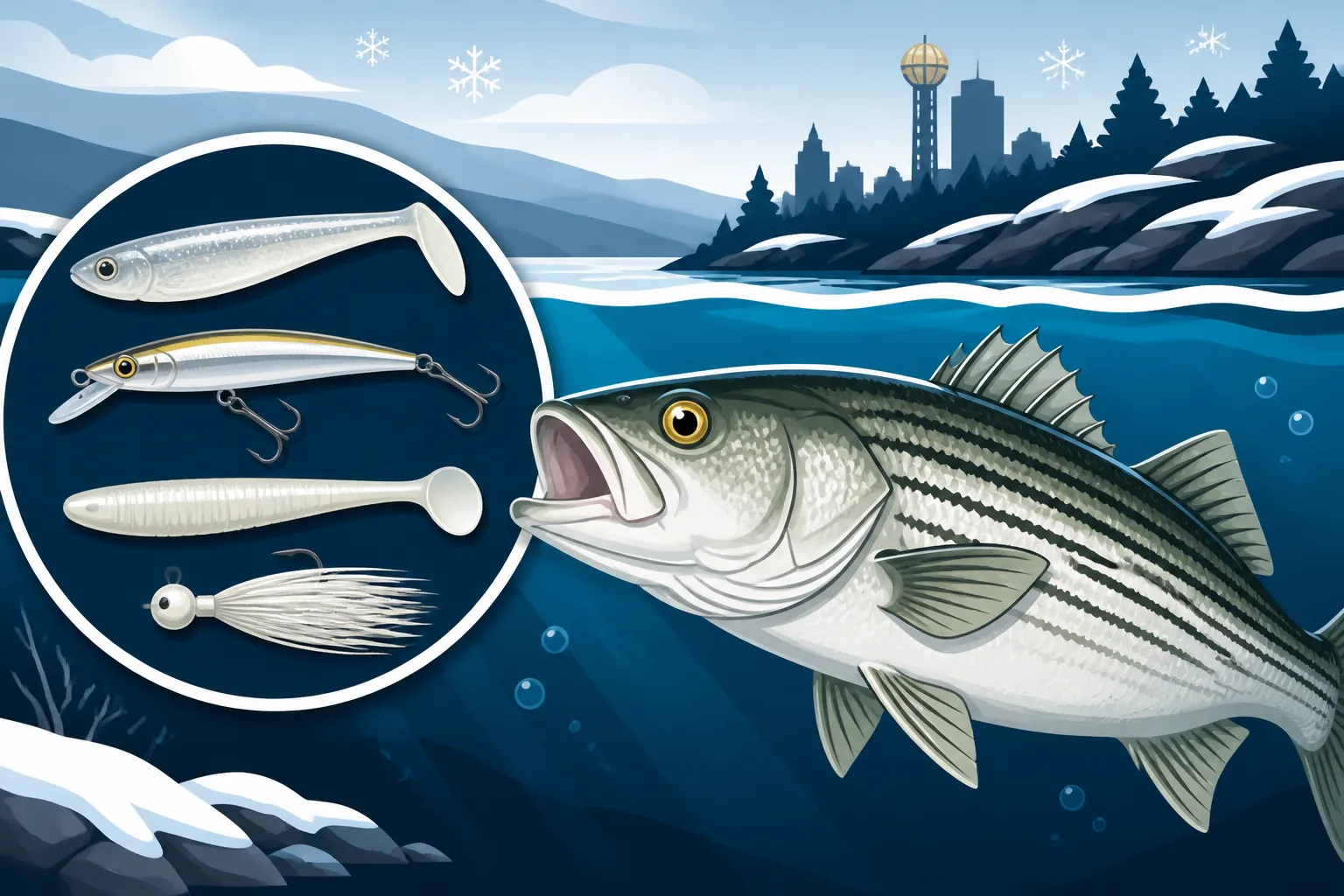
- Jigs with Soft Plastics: Heavy jigs (1-3 oz) paired with large, paddle-tail swimbaits or grub-style plastics are excellent. Colors like white, pearl, chartreuse, or even darker natural colors can work. The presentation is critical: a slow, subtle retrieve, often bounced gently off the bottom or jigged vertically through schools of fish. You're trying to mimic a dying or disoriented baitfish, making it an easy target. Look for quality soft plastics with a realistic profile and action, many of which are widely available on Amazon.
- Blade Baits: These thin metal lures create a lot of vibration on the retrieve or on the fall, which can be picked up by a striper's lateral line even in murky or deep water. Vertical jigging blade baits over marked fish can be highly effective. The key is to lift and drop, letting the bait flutter, rather than a fast, aggressive retrieve.
- Spoons: Heavy jigging spoons, like Hopkins or Kastmasters, can also be deadly. Their erratic fall and flash resemble a dying baitfish. Similar to blade baits, vertical jigging is the primary technique. Let them fall to the desired depth, then snap them up a few feet before letting them flutter back down. These are particularly good when you're fishing directly over dense schools of stripers.
- Large Swimbaits: For slightly less lethargic fish, a slow-rolling, large swimbait can draw strikes. Choose jointed or soft-bodied swimbaits that have a natural, undulating action even at very slow retrieve speeds. These are usually fished either by casting and slowly retrieving or by slow-trolling.
Remember, the colder the water, the slower your presentation needs to be. Forget the fast rips and jerks of warmer months. Think subtle, enticing, and easy to catch.
Here’s a quick overview of bait options:
| Bait Type | Pros | Cons | Ideal Conditions |
|---|---|---|---|
| Live Shad | Natural movement, strong scent, irresistible | Hard to keep alive, can be difficult to procure | Lethargic fish, deep water, subtle presentation |
| Cut Bait | Strong, persistent scent, easy to rig | No movement, requires patience, less active | Bottom fishing, attracting distant fish, passive |
| Jigs/Soft Plastics | Versatile, covers water, can imitate various prey | Requires precise presentation, less scent | Active schools, vertical jigging, covering ground |
| Blade Baits | High vibration, good flash, effective vertically | Can snag easily, less natural presentation | Marked fish, deep suspended schools, dirty water |
| Jigging Spoons | Excellent flash, good for vertical jigging | Can snag, requires active presentation | Deep suspended schools, clear water, vertical fishing |
| Large Swimbaits | Realistic profile, natural slow action | Less scent, fish need to be somewhat active | Moderate cold, slow retrieve, targeting larger fish |
Rigging and Presentation Techniques for Cold Weather Success
Catching striped bass in cold weather isn't just about the bait; it's heavily about how you present it. With their slowed metabolism, stripers aren't going to chase a fast-moving meal. Your techniques need to be subtle, slow, and irresistible.
The Art of Slow Trolling with Live Bait
Slow trolling is arguably one of the most effective methods for cold-weather stripers, especially when they are suspended in the water column or spread out over a large area. The goal is to move just fast enough to impart a natural swimming action to your live bait, typically 0.5 to 1.5 miles per hour.
- Downriggers and Planer Boards: These tools become invaluable. Downriggers allow you to present live bait at precise depths, often right above or through marked schools of stripers. Planer boards help spread your baits out, covering a wider swath of water and keeping lines from tangling. If you're serious about striper fishing, investing in a good downrigger system will pay dividends, and you can find various models and accessories on Amazon. Rod Holder and Planer Board Setup for Reservoir Striper Trolling and Downrigger Basics for Striped Bass are great resources to master these techniques.
- Freelines and Planer Boards: Even without downriggers, a simple freelined live bait behind a planer board can be effective, especially if fish are cruising shallower or near the surface. The board takes the bait away from the boat, mimicking a lone, vulnerable fish.
- Depth Control: Use different weights or leader lengths to adjust the depth of your baits. Often, fish will be suspended in a specific thermal layer, and getting your bait to that exact depth is crucial.
Vertical Jigging Over Marked Fish
When your fish finder lights up with a school of stripers huddled in a deep channel or suspend over a point, vertical jigging is a precise and deadly technique. This method works well with heavy jigs, blade baits, and spoons.
- Precise Positioning: Anchor or use a strong trolling motor with GPS Spot-Lock to hold your boat directly over the marked fish. This precision is non-negotiable.
- Subtle Action: Drop your lure directly into the school. Once at depth, the action should be subtle. A gentle lift and fall, a slow flutter, or a light quiver of the rod tip is often all it takes. Remember, you're trying to mimic a weak or dying baitfish, not a frantic escape. Too much aggressive movement can spook them.
- Line Monitoring: Pay close attention to your line on the fall. Often, stripers will hit a jig as it flutters down, and you'll only detect the bite as a slight pause or slack in your line.
Bottom Fishing with Cut Bait
For stripers that are hugging the bottom in deep holes or channels, cut bait rigged on a Carolina rig or a simple slip-sinker rig can be highly effective.
- Carolina Rig: This rig consists of a sinker (egg sinker or bullet sinker) above a swivel, followed by a fluorocarbon leader and a sharp circle hook. This allows the fish to pick up the bait without feeling the weight of the sinker, leading to more solid hookups.
- Freshness and Scent: Always use the freshest cut bait possible. The stronger the scent, the better. Consider adding a scent attractant if you really want to maximize your chances, though fresh bait is usually sufficient.
- Patience is Key: This is a waiting game. Cast your rig out, let it settle on the bottom, and wait for a bite. Don't be tempted to retrieve it too often; let the scent do the work.
Rods, Reels, and Line for Cold Water Stripers
Your gear needs to be up to the task of handling large, powerful fish, even if they're sluggish. A medium-heavy to heavy action rod, typically 7-8 feet, will provide the leverage needed for strong hooksets and fighting big stripers.
- Reels: A sturdy baitcasting reel or a robust spinning reel with a smooth drag system is essential.
- Line: Spool up with 20-30 lb monofilament or fluorocarbon main line, or 30-50 lb braided line with a fluorocarbon leader. Braided line offers superior sensitivity, which is crucial for detecting subtle cold-water bites, while fluorocarbon leaders provide invisibility and abrasion resistance. You can find a fantastic selection of high-quality fishing lines and leaders on Amazon. Best Line Weight for Tennessee Striped Bass Trolling has more specifics on line choice.
Finding Striped Bass in Tennessee Reservoirs During Winter
Locating striped bass in the vastness of a Tennessee reservoir during winter can feel like finding a needle in a haystack. But with the right tools and understanding of their predictable patterns, you can significantly narrow down your search.
Utilizing Electronics: Fish Finders and Mapping
Your boat's electronics are your best friends in winter. A high-quality fish finder with down-imaging and side-imaging capabilities can be a game-changer for identifying deep-water structure and suspended schools of baitfish and stripers.
- Sonar Interpretation: Learn to distinguish between baitfish schools and larger individual fish or schools of stripers. Look for arches or dense blobs on your traditional sonar. Side-imaging can help you scan wide areas for structure, bait balls, and potential striper congregations that might be off to the sides of your boat.
- GPS Mapping: Modern GPS units with detailed lake mapping are invaluable. They allow you to pinpoint deep channels, old creek beds, roadbeds, submerged bridges, and steep drop-offs – all prime winter striper real estate. Mark spots where you find bait or fish, and pay attention to how they relate to the structure. Best Fish Finders for Tennessee Reservoir Fishing can help you choose the right gear.
- Temperature Gauges: Pay close attention to your boat's water temperature gauge. While surface temperatures might be cold, subtle increases at certain depths or in specific areas can indicate a thermal refuge where stripers might congregate.
Targeting Key Winter Structure
Striped bass in cold weather will gravitate towards predictable structures that offer both refuge and access to food.
- River Channels and Creek Beds: These are highways and homes for winter stripers. Look for bends, confluences, and deeper holes within these channels where fish can stage. The stable temperatures and current (even if subtle) found here are often attractive.
- Deep Points and Humps: Points that drop steeply into deep water or isolated humps surrounded by deep water can be magnets for stripers. They offer ambush points and easy access to different depths as conditions change.
- Dam Areas: The deep water near the main lake dam often holds large schools of stripers, especially if there's any generation or current. These areas can be incredibly productive, but also very popular.
- Warm Water Discharges: If a reservoir has any power plant discharges or warmer tributary inflows, these areas create thermal refuges that can attract massive numbers of baitfish and, consequently, stripers. While not always present on every lake, they are prime locations when available.
Following the Baitfish
No matter the season, stripers are predators, and they will follow their food. In winter, baitfish like shad and herring will also seek out warmer, more stable water, often schooling tightly in deep channels or suspended in the water column.
- Locate the Bait: Your first priority should always be to find the bait. Where the bait goes, the stripers will follow. Look for dense schools of baitfish on your electronics. Often, the stripers will be lurking just below or to the sides of these schools, waiting for an easy meal.
- Depth is Key: Pay attention to the depth at which the bait is holding. If the bait is suspended at 30 feet, that’s where you should be presenting your offerings. If the bait is on the bottom, adjust accordingly.
- Predatory Behavior: Even in cold water, stripers will sometimes "ball up" baitfish, herding them into tighter groups. Watch for these tell-tale signs on your sonar. These are often the most active groups of stripers and your best chance for a bite.
By combining an understanding of Striped Bass Fishing Guide for Tennessee Reservoirs with focused efforts on locating bait and using your electronics effectively, you'll dramatically increase your chances of finding and catching these formidable fish even when the chill sets in. Always be mindful of Tennessee Striped Bass Season and Regulations to ensure you're fishing legally and sustainably.
Disclaimer
This article is for general informational purposes only and does not constitute professional advice. Laws, prices and regulations vary by location and change over time. Consult a qualified professional for guidance on your specific situation.