Best Bass Fishing Spot on Reelfoot Lake, Tennessee
Trying to pinpoint the absolute best bass fishing spot on Reelfoot Lake can feel like searching for a needle in a haystack, especially with its unique, stump-filled landscape. It’s not your typical reservoir, and that can be a real head-scratcher for anglers used to clear, deep water. This guide is here to cut through the confusion and lead you straight to the most productive areas for bass on Reelfoot Lake, offering practical tips and the local insights you need to make your next trip a success.
Understanding Reelfoot Lake's Unique Bass Habitat
Reelfoot Lake isn't just another body of water in Tennessee; it's a geological marvel, created by the New Madrid earthquakes in the early 19th century. This history gives it a truly distinct character that profoundly impacts bass fishing. Forget about deep, clear drop-offs and rocky points you might find in other Best Fishing Lakes in Tennessee. Reelfoot is shallow, typically ranging from 5 to 20 feet deep, and it's absolutely packed with submerged cypress trees, stumps, and dense aquatic vegetation. This makes it a labyrinth, but also a paradise for bass.
Cypress Forests and Stumps: Bass Magnets
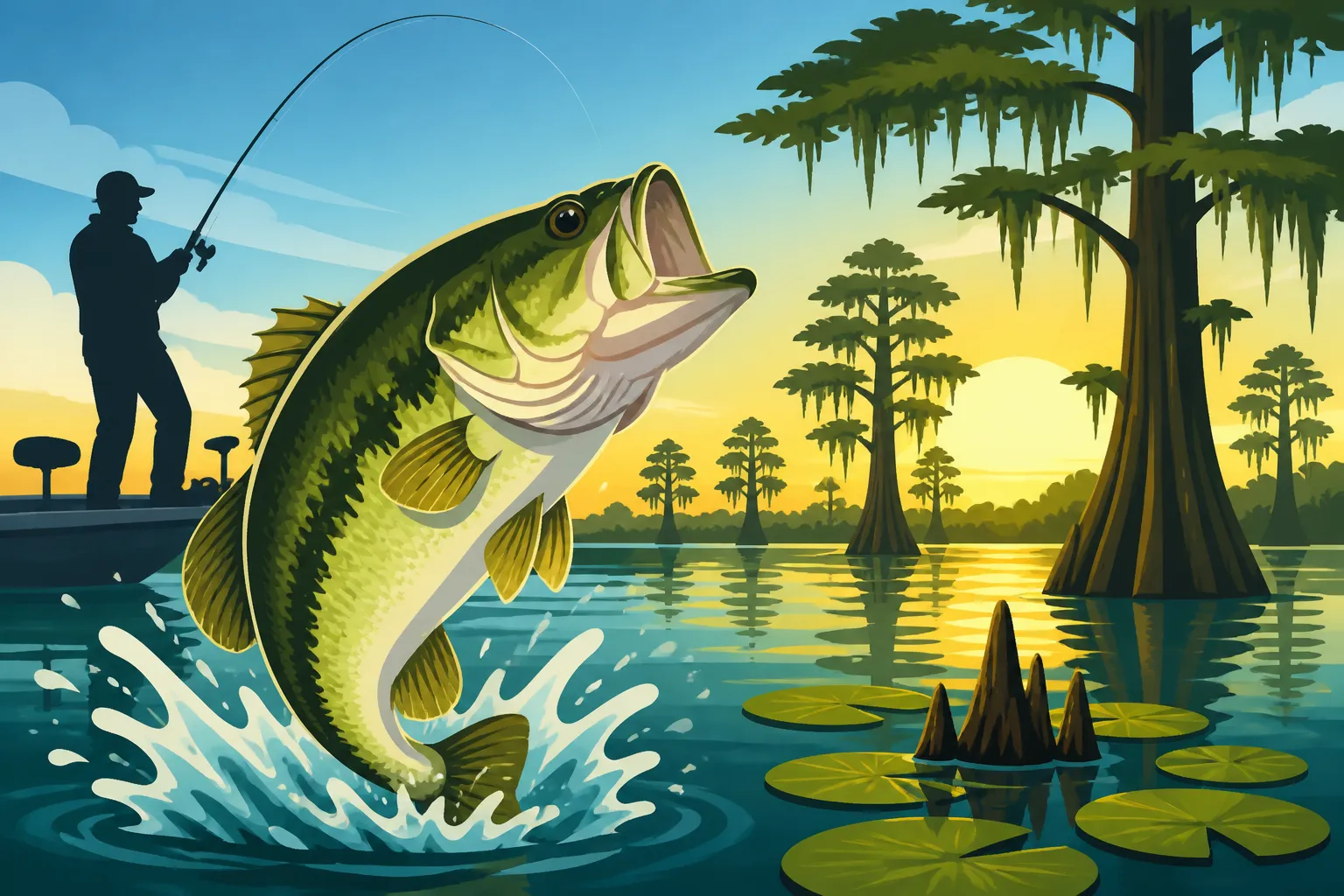
The sheer density of cypress trees and their gnarled stumps are the defining feature of Reelfoot. These aren't just obstacles; they are the backbone of the bass habitat here. Bass use these structures for everything: ambush points, shade from the intense Tennessee sun, and protection from predators. You'll often find them tucked right up against a stump or in the shadow of a cypress knee, waiting for an unsuspecting baitfish or frog to swim by. It’s a game of patience and precision when fishing these areas, requiring you to get your lure into tight spaces without getting hung up.
Imagine navigating through what feels like a drowned forest, with dark, tannin-stained water reflecting the sky. Every single stump, every fallen log, every clump of lily pads holds potential. This means that unlike lakes where bass might roam vast open waters, on Reelfoot, they are often incredibly localized, holding tight to cover. A slight shift in your boat's position, or a cast that lands just a few inches differently, can be the difference between a bite and nothing at all. This is why local knowledge, or even a good guide from platforms like FishingBooker, can be invaluable here.
Shallow Water Dynamics and Vegetation
The shallow nature of Reelfoot Lake, combined with its fertile waters, leads to extensive growth of aquatic vegetation, especially during the warmer months. Lily pads, hydrilla, and various grasses form dense mats that create another layer of prime bass habitat. These weed beds provide oxygen, food sources (like frogs and insects), and excellent cover for bass. When the sun beats down, bass will often burrow deep into these mats to escape the heat and ambush prey from below.
Fishing these areas effectively demands specialized techniques and weedless lures. It’s not about casting and retrieving quickly; it's about methodically working your way through the thick stuff. Think about pitching a Texas-rigged plastic into a small opening in the lily pads or buzzing a frog bait over the top of a thick mat. The challenges of fishing in such dense cover are real – you’ll get snagged, you’ll lose lures, but the rewards of pulling a hefty largemouth out of that tangled mess are well worth it. It's a truly unique kind of fishing that tests your resolve and your tackle.
Key Areas for Largemouth Bass on Reelfoot Lake
While Reelfoot Lake as a whole is a fantastic bass fishery, certain areas consistently produce more and larger fish due to their specific habitat characteristics, depth, and forage availability. Knowing these hotspots can dramatically increase your chances of a successful outing. Remember, always check Lake-Specific Fishing Rules That Override Tennessee's Statewide Limits before you go, as Reelfoot occasionally has unique regulations.
The Grassy Banks and Cypress Swamps of the Blue Basin
The Blue Basin is perhaps one of the most talked-about bass fishing spots on Reelfoot, and for good reason. Located on the western side of the lake, this area is characterized by its slightly deeper water (for Reelfoot, that means 10-15 feet in places) and incredible concentrations of standing cypress trees and dense underwater grass beds. During the spring spawn and through the summer, bass flock to these areas.
Anglers often target the edges of these grass beds and the pockets within the cypress trees. The transition lines between open water and heavy cover are particularly productive. Early mornings or late evenings often see bass cruising these areas, feeding aggressively. Topwater frogs, buzzbaits, and spinnerbaits worked over the grass can be deadly. As the day progresses and the sun gets higher, pitching and flipping jigs or Texas-rigged creatures into the darkest pockets of the cypress trees and thickest parts of the grass mats becomes more effective. It’s a diverse fishery within the Blue Basin, offering opportunities for various techniques depending on the time of day and the mood of the fish.
The Upper Blue Basin and Open Water Channels
Moving further north into the Upper Blue Basin, you'll encounter a combination of extensive lily pad fields and more defined open water channels. These channels, while still relatively shallow, provide pathways for bass movement and are often bordered by prime cover. This area is particularly strong for bass that are relating to a mix of shallow and slightly deeper water.
Here, the strategy often involves targeting the edges of the lily pad fields, especially where they meet open water or a discernible channel. Spinnerbaits and chatterbaits retrieved along these edges can draw explosive strikes. During post-spawn and summer, when bass might be slightly more aggressive and spread out, crankbaits that mimic baitfish or even swimbaits can be very effective in these more open channel areas. Don’t overlook the isolated clumps of cypress trees that stand guard near these channels; they can hold some truly big fish. This is also a good area to consider if you're looking for Where to Catch Crappie on Reelfoot Lake, as they often share similar habitat during certain times of the year.
Beyond the Basin: Exploring the North End's Backwaters and Pockets
While the Blue Basin is renowned, the shallower, more secluded backwaters and pockets in the northern end of Reelfoot Lake should not be ignored, especially during the spring spawn and early summer. These areas often have less boat traffic and offer a more intimate fishing experience. They are typically even shallower, sometimes only a few feet deep, but are teeming with cypress stumps, fallen trees, and emergent vegetation like buttonbushes.
Bass here are often more concentrated and less pressured. Fishing these northern backwaters requires stealth and patience. Techniques like pitching small jigs, soft plastics, or even weightless worms into tight cover can be incredibly productive. Look for areas with a mix of cover—a stump next to a patch of lily pads, or a small opening in a dense weed bed. These subtle features can hold the biggest bass. During the colder months, these shallow areas can be less productive, but they absolutely shine when the water warms up, and bass move in to reproduce and feed aggressively. Remember that Tennessee Bass Fishing Seasons and Patterns greatly influence where fish are found.
Effective Techniques and Baits for Reelfoot Bass
Fishing Reelfoot Lake effectively means adapting your techniques and bait choices to its unique environment. Standard bass fishing approaches might get you some bites, but to consistently land fish, you need to think "Reelfoot." The dense cover, shallow water, and often stained visibility dictate a specific playbook.
Navigating the Cover: Flipping, Pitching, and Punching
Given the lake's incredible amount of submerged timber, cypress trees, and dense vegetation, flipping, pitching, and punching are not just techniques; they are necessities for bass fishing on Reelfoot. These methods allow you to present your bait precisely into tight pockets and heavy cover where bass live.
- Flipping and Pitching: These are short-range casting techniques used to drop a bait softly and accurately into small targets like openings in lily pads, alongside cypress stumps, or under low-hanging branches. You'll want a heavy-action rod (7' to 7'6"), a baitcasting reel spooled with 20-30 lb fluorocarbon or braided line, and a stout hook. Jigs (½ oz to 1 oz) with plastic trailers, or Texas-rigged creature baits and worms, are go-to choices. The key is a quiet entry and letting the bait fall naturally. If you don't get a bite on the initial fall or a couple of subtle twitches, retrieve and try another piece of cover. This methodical approach allows you to dissect the endless cover present on Reelfoot.
- Punching: When the vegetation gets really thick – think dense mats of hydrilla or matted lily pads – punching comes into play. This involves using a heavy weight (¾ oz to 1 ½ oz tungsten) to literally punch through the mat, getting your bait down to the bass hiding underneath. You'll need braided line (50-65 lb), a heavy-action rod (7'6" to 8'), and a stout, straight-shank hook. Creature baits or small compact plastics are best for punching. Once your bait breaks through, let it fall to the bottom, give it a few shakes, and be ready for an immediate strike. The bites can be subtle or incredibly aggressive as the bass react to something invading their hidden lair.
Topwater Excitement: Frogs, Buzzbaits, and Poppers
There’s nothing quite like a topwater strike, and Reelfoot Lake offers some of the best topwater action in Tennessee, especially during the warmer months. The abundant vegetation and shallow water create ideal conditions for bass to feed on the surface.
- Hollow-Body Frogs: These are absolute staples for Reelfoot. When bass are holding in thick lily pad fields or matted grass, a weedless hollow-body frog is unparalleled. Cast it onto the mat and work it slowly over the cover, pausing occasionally. The idea is to mimic a frog or small rodent crossing the surface. When a bass blows up on it, resist the urge to set the hook immediately. Wait until you feel the fish, then set hard. This patience is often the hardest part, but crucial for hooking up.
- Buzzbaits and Whopper Ploppers: For slightly more open water but still around cover, buzzbaits and prop baits like the Whopper Plopper can be incredibly effective. Fish these along the edges of grass lines, parallel to cypress trees, or over submerged stumps. The commotion they create draws bass from a distance, and the strikes are often ferocious. These baits work best in low-light conditions (early morning, late evening, or on cloudy days) or when the water is choppy.
- Poppers and Walk-the-Dog Baits: While perhaps not as iconic as frogs on Reelfoot, poppers and walk-the-dog style baits (like a Heddon Super Spook Jr. or a Zara Spook) can be excellent choices in clearer pockets or around sparse cover. They excel at imitating distressed baitfish and can entice cautious bass that might be hesitant to commit to a faster-moving buzzbait. The key is to impart a consistent, rhythmic action that makes the lure "walk" or "spit" effectively.
Soft Plastics and Jigs for Subtlety
Even with all the exciting power fishing on Reelfoot, sometimes a more subtle approach is needed. Soft plastics and jigs can be highly effective, especially when bass are pressured or when targeting specific pieces of cover.
- Texas-Rigged Worms and Creatures: These are versatile and weedless, making them perfect for Reelfoot's snaggy environment. Choose worms in natural colors like junebug, green pumpkin, or black/blue. Creature baits that imitate crawfish or small baitfish are also excellent. Rig them with a bullet weight (⅛ oz to ½ oz, depending on depth and wind) and a wide-gap hook. Work them slowly through cover, letting them fall, dragging, and pausing. Many bites come on the fall, so pay close attention to your line.
- Jigs: Flipping and pitching jigs, as mentioned earlier, are fantastic for mimicking crawfish or bluegill. Black/blue, green pumpkin, and brown are classic colors. Pair them with a plastic craw or chunk trailer to add bulk and action. Let the jig sink to the bottom, then hop or drag it over structure. Jigs are often the bait of choice for larger, more finicky bass that are holding tight to heavy cover.
| Seasonal Bass Patterns on Reelfoot Lake | Primary Locations | Recommended Techniques & Baits |
|---|---|---|
| Spring (Spawn) | Shallow flats, cypress trees, lily pad fields | Flipping/Pitching Jigs, Texas-Rigged Worms, Hollow-Body Frogs, Spinnerbaits |
| Summer (Post-Spawn/Heat) | Dense mats of vegetation, deep cypress pockets, shady areas | Punching Mats with Heavy Jigs/Creatures, Topwater Frogs over mats, Flipping Jigs into deep cover |
| Fall (Feeding Frenzy) | Edges of vegetation, open channels, baitfish schools | Spinnerbaits, Chatterbaits, Crankbaits, Buzzbaits, Swim Jigs, Topwater Poppers |
| Winter (Dormant) | Deeper channels (relative), main lake basin structure | Slow-rolled Spinnerbaits, Football Jigs, Alabama Rigs, Suspending Jerkbaits (less common for Reelfoot's typical depth) |
Planning Your Reelfoot Bass Fishing Trip
A successful trip to Reelfoot Lake requires a bit more planning than your average fishing excursion. From understanding the best times to visit to knowing where to launch your boat, these logistical details can make or break your experience.
Best Times to Visit for Bass Fishing
While Reelfoot offers bass fishing year-round, certain seasons consistently outshine others, particularly for targeting trophy largemouth. Your goals, whether it’s numbers or size, will also influence the best time for your visit.
- Spring (March – May): This is arguably the prime time for trophy bass on Reelfoot. As water temperatures rise, bass move into the shallow cypress trees and lily pad fields for the spawn. During this period, bass are often more aggressive and concentrated. Early spring sees fish in pre-spawn patterns, staging on slightly deeper cover before moving to their beds. Late spring is when you'll find them actively spawning or in post-spawn recovery, still relating to the shallow cover. The sheer number of big fish moving shallow makes this period incredibly exciting.
- Summer (June – August): Summer can be challenging but rewarding. The lake gets heavily vegetated, and bass bury themselves in the thickest mats to escape the heat. Early mornings and late evenings offer excellent topwater action, but during the midday heat, you'll need to focus on punching heavy jigs and creatures through dense cover. This is a time for patience and precision, as the fish can be lethargic. However, for those willing to work for it, some of the biggest bass are pulled out of these deep summer hideouts.
- Fall (September – November): As temperatures cool and baitfish school up, bass become very active, feeding aggressively to fatten up for winter. This is a great time for moving baits like spinnerbaits, chatterbaits, and crankbaits fished along the edges of vegetation and in the more open channels. Topwater can still be productive, especially in early fall. The changing colors of the cypress trees also make for a beautiful backdrop to your fishing trip.
- Winter (December – February): Winter fishing on Reelfoot can be tough due to the cold, but it's not impossible. Bass will often move to the slightly deeper (for Reelfoot) main lake basin areas, suspending over submerged structure or holding tight to cover. Slow presentations with jigs or Alabama rigs can sometimes coax bites from larger, lethargic bass. However, if you're looking for consistent action, other times of the year might be more fruitful. For deeper insights into yearly patterns, consult our guide on Tennessee Bass Fishing Seasons and Patterns.
Boat Access and Navigation Considerations
Getting on and around Reelfoot Lake presents its own set of challenges and requires specific knowledge of boat access and navigation. This isn't a lake where you can just launch anywhere and expect smooth sailing.
- Public Boat Ramps: Several public and private ramps provide access to Reelfoot Lake. Popular choices include Blue Basin Boat Ramp, Kirby Pocket, and Lake Center Landing. Always check current conditions, as water levels can fluctuate, affecting ramp usability, especially for larger boats. Some ramps are better suited for smaller jon boats or kayaks due to the lake's shallow nature. For a comprehensive list of launch points, consider checking resources like FishingBooker, which often include details on amenities.
- Navigation: Navigating Reelfoot Lake is unlike anywhere else. The entire lake is riddled with submerged stumps and cypress trees. It’s absolutely crucial to stay in marked channels, especially if you're unfamiliar with the lake. Running outside these channels, particularly at high speeds, can be extremely dangerous and damaging to your boat. A good GPS unit with detailed lake mapping is highly recommended. Many local anglers prefer using shallow-draft boats like jon boats or bass buggies equipped with powerful trolling motors and even pole anchors (like Power-Poles or Talons) to navigate and hold position in the dense cover. If you plan to use a boat, understanding Tennessee Boat Registration Requirements Explained and Tennessee Life Jacket and PFD Rules for Boaters is essential. For those with larger vessels, our guide on Best Fishing Boats for Tennessee's Big Reservoirs might offer some transferable wisdom, though Reelfoot is truly unique.
- Hiring a Local Guide: For first-timers, or those looking to maximize their chances, hiring a local guide is highly recommended. A guide will not only put you on fish but also navigate the lake safely and teach you the specific techniques that excel on Reelfoot. They know the current patterns, the best spots given recent weather, and how to safely traverse the maze of stumps. Many excellent guides specializing in Reelfoot bass can be found through online platforms or local bait shops.
Essential Gear and Local Bait Shops
Beyond your rods, reels, and lures, a few other items are practically mandatory for a successful Reelfoot bass fishing trip.
- Weedless Lures: Stock up on hollow-body frogs, Texas-rigged plastics (worms, creature baits), heavy jigs, and spinnerbaits with weed guards. You will get snagged, so bring plenty.
- Heavy Tackle: As discussed, heavy-action rods and braided line are your friends here. Don't skimp on line strength; you'll need it to pull bass out of dense cover.
- Shallow Water Anchoring: If your boat allows, shallow water anchors are invaluable for holding position precisely in the tight quarters of Reelfoot.
- Sun Protection: With extensive time spent in open water or under the sparse shade of cypress trees, good sun protection (hats, sunscreen, long sleeves) is a must.
- Local Bait Shops: Before hitting the water, a stop at a local bait shop like Blue Bank Resort Bait Shop or Reelfoot Lake State Park Visitor Center can provide invaluable, up-to-the-minute information on water conditions, recent catches, and local hot spots. They often carry the specific local baits and colors that are currently producing.
Remember, a Tennessee Fishing License Guide is crucial. You can often purchase licenses at these bait shops, or online via the TWRA website.
Disclaimer
Fishing conditions and regulations in Tennessee, particularly on unique bodies of water like Reelfoot Lake, can change. Always consult the latest Tennessee Wildlife Resources Agency (TWRA) regulations before heading out to ensure you are compliant with all local, state, and federal laws. Stay safe and enjoy your time on the water!