Some states neighboring Tennessee honor each other’s licenses only on shared waters
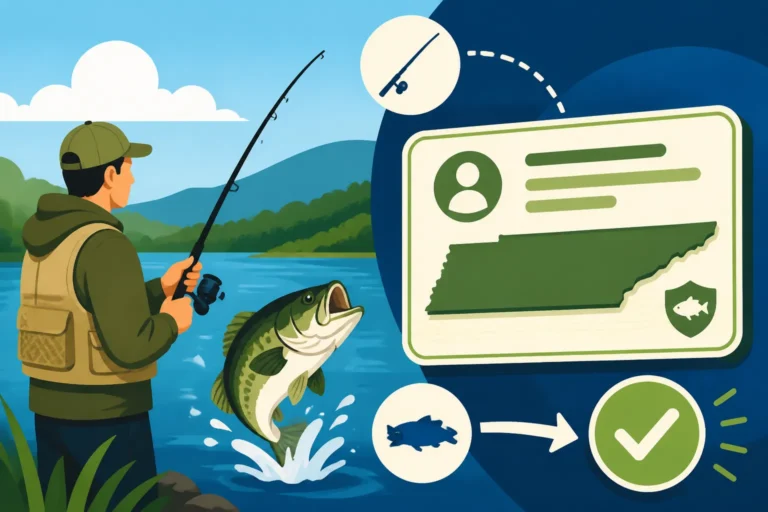
It's a common dilemma for anglers: you're standing on the banks of a beautiful river, or you're out on a sprawling lake, and suddenly you wonder, "Am I still legal if I drift into the next state?" The complexities of fishing licenses on shared waters between Tennessee and its neighbors can be a real source of frustration, making you second-guess what should be a relaxing day. This guide aims to clear up that confusion, specifically focusing on how reciprocity works when Tennessee shares its waters with bordering states.
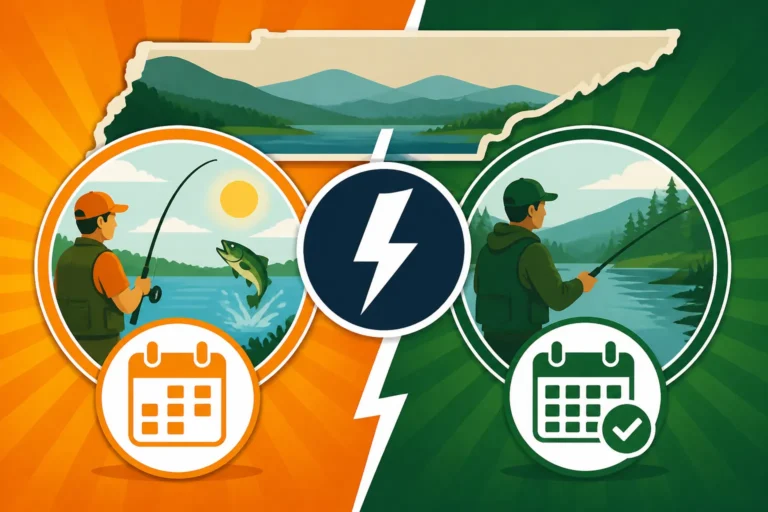
Understanding Fishing License Reciprocity on Border Waters
When you're out on the water, the last thing you want to be thinking about is state lines and legal jurisdictions. Yet, for those of us who live near or travel to Tennessee's borders, this is a very real consideration. Reciprocity agreements are designed to make things easier, but they come with their own set of rules and limitations.
The Concept of Shared Waters and Overlapping Jurisdictions
Tennessee boasts an impressive list of eight neighboring states: Kentucky, Virginia, North Carolina, Georgia, Alabama, Mississippi, Arkansas, and Missouri. Many of these borders aren't just lines on a map; they run right through major rivers and expansive lakes. Consider iconic fishing destinations like Kentucky Lake, which seamlessly flows into Kentucky, or Pickwick Lake, which touches not only Tennessee but also Mississippi and Alabama. These are the "shared waters" we're talking about, where one cast could theoretically land your lure in two different states.
The fundamental idea behind reciprocity is to simplify fishing in these specific areas. Instead of requiring you to purchase separate fishing licenses from each state—imagine needing a Tennessee and a Kentucky license just to fish Kentucky Lake—states agree to honor each other's permits within these designated shared zones. This arrangement is a huge relief for local anglers and visitors alike, freeing you from the constant worry of inadvertently crossing an invisible legal boundary. It allows you to concentrate on the thrill of the bite and the beauty of the surroundings, rather than stressing over paperwork. However, it's absolutely crucial to grasp that these agreements are rarely a blanket permission to fish any water in the neighboring state; they are typically confined to the actual physical boundary waters.
Why States Create Reciprocity Agreements
States don't just establish reciprocity agreements on a whim; these arrangements are typically born out of practical necessity and mutual benefit. One significant driver is the promotion of tourism and local economies. When anglers from, say, northern Mississippi can easily fish the southern reaches of Pickwick Lake with just their Mississippi license, they're more inclined to visit, frequent local bait shops, gas stations, and restaurants in Tennessee. This influx of visitors provides a welcome boost to small businesses on both sides of the border, fostering a spirit of regional cooperation rather than competition.
Another compelling reason is the simplification of enforcement for wildlife agencies. Imagine the challenge for a game warden trying to enforce fishing regulations on a river that literally defines a state border. Without reciprocity, they'd constantly be navigating complex questions about an angler's exact position on the water and the validity of their out-of-state license. Reciprocity agreements streamline this process considerably, often empowering wardens from both participating states to enforce their regulations across the entire shared body of water, as long as the angler possesses a valid license from either state involved in the agreement. It's a pragmatic solution that makes life easier for both anglers and the dedicated law enforcement officers working to conserve our natural resources.
Common Misconceptions About Border Water Licenses
Despite the clear benefits of reciprocity, confusion often arises, leading to common misconceptions that can get anglers into hot water. The most prevalent misunderstanding is believing that if you hold a Tennessee fishing license, it automatically extends to all waters in any bordering state. This simply isn't true. Most reciprocity agreements are highly specific, applying only to the designated "shared waters"—the particular lakes or river segments that form the actual physical boundary. They almost never extend to inland waters fully contained within the neighboring state. For instance, your Tennessee fishing license might be valid on the shared portion of Kentucky Lake, but it absolutely will not cover you if you drive an hour into Kentucky to fish a different lake, like Lake Barkley. For that, you would need to explore options for a Nonresident Fishing License Costs in Tennessee or directly purchase a Kentucky nonresident license.
Another frequent mistake is assuming that catch limits, size restrictions, and other specific fishing regulations are also reciprocal. While your license might be honored, the actual rules you must follow can often depend on which state's side of the water you are fishing, or sometimes even which state issued your license. In some cases, the more restrictive regulation of the two states will apply to all anglers on the shared water. It is absolutely vital to Tennessee Fishing Regulations Explained for the specific body of water you intend to fish. These details are not minor; overlooking them can result in significant fines and a spoiled fishing trip.
Navigating Specific Reciprocity Agreements by Neighboring State
Understanding the general concept of reciprocity is a great start, but the real complexity often lies in the specific agreements Tennessee has with each of its neighbors. It's not a uniform system, and what applies to Kentucky might be entirely different for Alabama or North Carolina. This section will delve into some of the most common scenarios and crucial details for fishing Tennessee's shared border waters.
Kentucky and Tennessee: Shared Waters, Shared Rules
When it comes to Tennessee and Kentucky, the most famous shared water is, without a doubt, Kentucky Lake. This massive reservoir is a shining example of how reciprocity can simplify things for anglers. If you're fishing Kentucky Lake, regardless of whether your boat is physically on the Tennessee side or the Kentucky side, you are legally covered with a valid fishing license from either state. This is incredibly convenient for residents and visitors alike who frequently fish this expansive body of water. So, if you've got your annual How Tennessee Fishing Licenses Work for Tennessee, you're all set to explore any part of Kentucky Lake.
However, it's absolutely critical to remember that this reciprocity generally applies only to the main body of Kentucky Lake. If you decide to venture off into a tributary that lies entirely within Kentucky, or into other lakes or rivers specific to Kentucky, your Tennessee license will not be valid. In such cases, you would need to acquire a Kentucky fishing license. The same principle applies to Kentucky residents; their Kentucky license is valid on Kentucky Lake, but it won't cover them if they decide to fish inland Tennessee waters like Percy Priest Lake Fishing Near Nashville, Tennessee or the Clinch River. Always carry your physical or digital license as proof, and remember that details are key.
Mississippi and Alabama: Pickwick Lake and River Systems
Pickwick Lake is another fantastic illustration of shared waters, forming a tri-state border junction between Tennessee, Mississippi, and Alabama. For anglers enjoying Pickwick Lake, the reciprocity is incredibly generous: a valid fishing license from any of these three states will legally cover you to fish its waters. This extensive agreement is a huge advantage for bass, crappie, and catfish enthusiasts who frequent this renowned section of the Tennessee River. Whether you're licensed in Tennessee, Mississippi, or Alabama, you're covered for the main body of Pickwick Lake.
Beyond Pickwick, other segments of the Tennessee River and its significant tributaries that form state borders may also have specific agreements. For instance, the Tennessee River continues its journey south into Alabama. While some localized agreements might exist, it's generally a safer bet to assume that once you are entirely within Alabama's geographical boundaries and off the direct border, an Alabama license is required. Before casting a line in these less-defined areas, always consult the respective state's wildlife agency—such as the Tennessee Wildlife Resources Agency (TWRA) for Tennessee—to confirm current regulations. A quick check can save you from an unexpected fine and ensure you’re always compliant. Many anglers even use online resources, perhaps found via an Amazon search for regional fishing guides, to cross-reference state regulations.
Missouri, Arkansas, North Carolina, and Virginia: River Border Specifics
Tennessee shares borders with several other states, and while large shared lakes might be less common than with Kentucky or Mississippi, river systems frequently define these boundaries. For example, the mighty Mississippi River forms a significant portion of Tennessee's western border with both Arkansas and Missouri. On these specific stretches of the Mississippi River, reciprocity agreements are generally in place, allowing anglers with a valid license from either Tennessee or the bordering state to fish the shared river. This is particularly relevant around major cities like Memphis, where the river serves as a prominent fishing destination.
However, the eastern borders with North Carolina and Virginia, as well as the southern border with Georgia, largely involve mountainous terrain and numerous smaller rivers and streams. Reciprocity for entire river systems is far less common in these areas. While a general Tennessee Fishing License Guide covers the basics, specific agreements are often limited to very short stretches of water, or in many cases, are not present at all for fishing licenses. For instance, while the Appalachian Trail might traverse state lines effortlessly, fishing license boundaries in smaller, cold-water trout streams are often much more stringent. It is highly probable that you'll need a separate license if you cross into North Carolina, Virginia, or Georgia, even if you're fishing the same continuous river system. For precise details on these specific river border situations, your best course of action is always to consult the TWRA website or the corresponding wildlife agency in the neighboring state. Local bait shops near the border can sometimes provide invaluable, hyper-local information as well.
Consequences of Not Having the Right License
It's natural to sometimes overlook the details, especially when fishing on confusing border waters. But hoping to simply "get away with it" is a gamble that's rarely worth taking. The dedicated game wardens of the Tennessee Wildlife Resources Agency (TWRA) and their counterparts in neighboring states are highly trained and knowledgeable about these complex reciprocity rules. They are constantly patrolling, ensuring that everyone on the water is compliant, and getting caught without the correct permit can swiftly turn a serene day of fishing into a frustrating and costly ordeal.
The Risks of Fishing Without the Correct License
The most immediate and tangible consequence of fishing without a valid license, or without the proper reciprocal license, is a significant fine. These fines can range from moderate to quite substantial, often far exceeding the cost of even an annual nonresident license. This isn't just a minor inconvenience; depending on the specific circumstances—such as being a repeat offender or combining the infraction with other violations like exceeding catch limits—you could face even more severe penalties. In some cases, your valuable fishing equipment, including your rods, reels, or even your boat, could be confiscated. Imagine the disappointment of losing your cherished gear, all because a few dollars or a few minutes weren't spent securing the correct paperwork.
Beyond the financial and material penalties, there's the unwelcome disruption and embarrassment. Being stopped by a game warden and having your outing interrupted for an investigation is never a pleasant experience, especially if you're fishing with family or friends. Such an incident can cast a long shadow over an otherwise perfect trip. Furthermore, a fishing violation can become a mark on your record, potentially impacting your ability to purchase licenses in the future or even leading to the revocation of fishing privileges in certain states. The relatively minor cost of a license or two is a minuscule investment when weighed against these potential nightmares. It’s always best to be informed about Penalties for Fishing Without a License in Tennessee before you even consider heading out.
When to Consider Purchasing Multiple State Licenses
Given the nuanced nature of reciprocity agreements, there will undoubtedly be situations where purchasing a fishing license for both Tennessee and a neighboring state is not just a smart idea, but an absolute necessity. This is particularly true if your fishing plans extend beyond the immediate, agreed-upon shared waters. For example, if you're planning a week-long fishing vacation and want to spend a couple of days targeting bass on the Tennessee side of Kentucky Lake, but also want to explore a separate, beautiful lake located entirely within Kentucky, you will need both a Tennessee license (perhaps a Tennessee Single-Day Fishing License Options or an annual one) and a Kentucky nonresident license.
Moreover, if you are an angler who frequently traverses state lines for different fishing opportunities, having licenses for multiple states provides invaluable flexibility and peace of mind. While your Tennessee license might cover the shared expanse of Kentucky Lake, it won't allow you to pursue trout in a small, pristine stream located solely within the Great Smoky Mountains National Park on the North Carolina side. Owning both licenses means you're free to chase the best bite wherever it may lead without the constant anxiety of legal boundaries. You can conveniently acquire these licenses online directly from the respective state's wildlife agency websites, or sometimes from authorized retailers like Walmart or specialized sporting goods stores, many of which can also be found on platforms like Amazon if you're also looking for accompanying gear or guides.
Why Nonresident Licenses Are Pricier
If you've ever compared the price of a fishing license for an out-of-state angler versus a resident, you've likely noticed a significant difference, with nonresident licenses being considerably more expensive. This isn't merely a tactic for states to extract more money from visitors; it's deeply rooted in the financial structure of wildlife and fisheries conservation programs. The primary funding sources for state wildlife agencies, such as TWRA, come from resident license fees, along with specific excise taxes on fishing tackle and motorboat fuel (as mandated by the federal Sport Fish Restoration Act). This crucial revenue directly supports vital initiatives like fish population management, stocking programs, habitat restoration, the development of public access points, and the enforcement of fishing regulations.
When you purchase a resident license, you are directly contributing to the long-term health and sustainability of your own state's fisheries. Nonresidents, on the other hand, might only visit occasionally, and thus do not contribute to the state's tax base in the same manner as permanent residents. The higher nonresident fee helps ensure that all individuals who benefit from the state's meticulously managed and robust fishing resources contribute their fair share to maintaining them for current and future generations. For instance, a Nonresident 3-Day and 10-Day License Options for Tennessee can cost significantly more than a resident equivalent, but this investment helps safeguard the pristine waters and abundant fish populations that you travel to enjoy.
Practical Tips for Fishing Tennessee's Border Waters
You've now got a solid grasp on reciprocity and the potential pitfalls. Let's turn that knowledge into practical strategies so you can fully enjoy your fishing trips on shared waters without any unnecessary stress. A little bit of proactive preparation can make all the difference for a seamless and legal outing.
Always Verify Current Regulations
This cannot be stressed enough: always, always verify current regulations. This is the single most critical piece of advice for any angler, and it becomes doubly important when dealing with border waters. Reciprocity agreements, like all legal frameworks, are not static. State wildlife agencies regularly review and update their regulations, meaning what was valid last year might have changed this year. Therefore, before every single trip to a border water, make it an absolute priority to check the latest regulations for both Tennessee (via the TWRA website) and the specific neighboring state involved.
Never rely solely on anecdotal information, social media chatter, or what you vaguely remember from a previous trip. Dedicate a few minutes to visiting the official websites or even calling the regional offices of the respective wildlife agencies. These are the authoritative sources that will provide the most up-to-date information on license requirements, the exact boundaries of specific reciprocal agreements for shared waters, and any unique Some Tennessee lakes set catch limits that override the statewide defaults. For example, catch limits, size minimums, or even bait restrictions can vary significantly between states sharing the same water, and sometimes the more restrictive rule will apply to everyone. Being well-informed is your best defense against unexpected fines.
Understanding Jurisdiction on the Water
One of the most perplexing aspects of fishing border waters is figuring out which state's jurisdiction you're actually operating under at any given moment. While reciprocity agreements validate your license from one state across the shared water, enforcement can still depend on your precise location and the specific rules of the agreement. For instance, on the shared expanse of Kentucky Lake, both Tennessee and Kentucky game wardens possess the authority to check your license and enforce their respective state's regulations.
In many scenarios, if you are holding a Tennessee license on a reciprocal water, you are generally expected to adhere to Tennessee's specific catch and size limits, even if you are technically fishing on the Kentucky side of the lake. Conversely, an angler holding a Kentucky license would follow Kentucky’s regulations. This can certainly become complicated when different states have varying limits for popular species like bass or crappie. Some agreements explicitly state that the most restrictive rule from either state applies to all anglers on the shared water, regardless of where their license originated. Your safest approach is to be intimately familiar with both sets of rules for the species you intend to target. When any doubt arises, always err on the side of caution and comply with the more restrictive regulation to avoid any potential legal issues.
Digital vs. Printed Licenses and Accessibility
In our increasingly digital world, most states, including Tennessee, offer the convenience of digital fishing licenses. You can typically purchase or renew your How to Get a Tennessee Fishing License online and then display it on your smartphone or another mobile device. This is incredibly practical, as it means one fewer paper document to misplace in your tackle box or have blow away in your boat. However, on border waters, particularly in more remote fishing locations, reliable cell service can be unpredictable.
Consider a situation where a game warden requests to see your digital license, and your phone has no signal or, worse, its battery dies. That's a quick route to an unpleasant situation. While Digital vs Printed Fishing Licenses in Tennessee are generally accepted, it is an exceptionally wise practice to always carry a physical, printed copy of your license when fishing border waters. You can easily print one at home after an online purchase, or even save a clear screenshot on your phone as a backup in case of no signal. Many seasoned anglers even go a step further and laminate their printed license for enhanced durability. Retailers, including large sports stores or local bait shops which might also stock gear found on Amazon, often provide printing services if you purchase your license in person. This small, preventive measure guarantees that you will always have tangible proof of your legal right to fish, regardless of any technological glitches.
Here's a quick reference table for general guidance on Tennessee's border waters. Remember, these are broad guidelines, and you should always verify specific, up-to-date regulations directly with the relevant wildlife agencies before each trip!
| Neighboring State | Shared Water Examples | Reciprocity? (Generally) | Notes |
|---|---|---|---|
| Kentucky | Kentucky Lake | Yes | Valid license from either state on Kentucky Lake. Check for other state's inland waters. |
| Mississippi | Pickwick Lake, Mississippi River | Yes | Valid license from TN, MS, AL on Pickwick Lake. Mississippi River stretches often have agreements. |
| Alabama | Pickwick Lake | Yes | Valid license from TN, MS, AL on Pickwick Lake. Other TN River stretches into AL generally require AL license. |
| Arkansas | Mississippi River | Yes | Valid license from TN or AR on shared Mississippi River segments. |
| Missouri | Mississippi River | Yes | Valid license from TN or MO on shared Mississippi River segments. |
| Virginia | N/A (Mountain Streams) | Limited/No | Generally require separate state licenses for specific waters. |
| North Carolina | N/A (Mountain Streams) | Limited/No | Generally require separate state licenses, especially in the Great Smoky Mountains. |
| Georgia | N/A (Mountain Streams) | Limited/No | Generally require separate state licenses for specific waters. |
This table helps illustrate why the phrase "Some states neighboring Tennessee honor each other's licenses only on shared waters" is so important. It clearly highlights that the shared waters are the key differentiator for reciprocity.
Final Thoughts on Seamless Border Fishing
Fishing across state lines in Tennessee and its surrounding regions can open up a treasure trove of incredible angling opportunities, from chasing trophy largemouth in vast reservoirs to pursuing native trout in pristine mountain streams. However, this experience doesn't have to be marred by confusing bureaucracy or legal anxieties. By taking the time to truly understand the nuances of reciprocity, discerning when it's necessary to purchase multiple state licenses, and consistently staying informed about the latest regulations, you can navigate these shared waters with unwavering confidence and ease. Don't ever let the perceived complexity of border regulations deter you from exploring all the magnificent fishing experiences that the region has to offer. A little bit of proactive homework before you leave is a small, worthwhile investment for countless hours of uninterrupted enjoyment on the water.
Ultimately, your goal should always be to maximize your time with a line in the water, focusing on the pursuit of fish rather than fretting over legal technicalities. Whether you're meticulously planning a weekend expedition to a major reservoir or simply hoping for a peaceful day on a quiet border river, always ensure that your license situation is completely squared away. Beyond official agency websites, you can often discover valuable resources, including detailed fishing maps and guides, by conducting online searches or browsing the outdoor sections of retailers, perhaps even finding useful items on platforms like Amazon. Getting all your ducks in a row ensures that your attention remains squarely fixed on the exhilarating thrill of the catch and the unparalleled natural beauty of Tennessee's diverse waterways.
Disclaimer
The information provided in this guide is for general informational purposes only and is subject to change. While we strive for accuracy, fishing regulations, license requirements, and reciprocity agreements can be updated by state wildlife agencies. Always consult the official Tennessee Wildlife Resources Agency (TWRA) website and the relevant wildlife agencies of neighboring states for the most current and specific information before engaging in any fishing activities.