Where to Catch Crappie on Center Hill Lake
Center Hill Lake is undeniably beautiful, a true gem tucked away in the Tennessee hills, but let's be honest, finding crappie here can feel like searching for a needle in a haystack for many anglers. This deep, clear reservoir presents a unique challenge, often leaving folks scratching their heads about where these elusive panfish are hiding. This guide is designed to cut through that frustration, offering detailed, actionable insights into precisely where and how to target crappie on Center Hill Lake throughout the year.
Understanding Crappie Behavior on Center Hill Lake
Crappie are notoriously finicky, and on a lake like Center Hill, their habits are heavily influenced by the lake's distinct characteristics. Unlike some of Tennessee's other fertile, shallower reservoirs, Center Hill boasts incredibly clear water and significant depth, which means crappie here behave a little differently. If you’re used to targeting them in brushy, murky waters, you’ll need to adjust your approach.
Lake Characteristics and How They Affect Crappie
Center Hill Lake is a deep, clear impoundment of the Caney Fork River, renowned for its stunning bluffs and rocky shoreline. It’s a hydroelectric dam lake, which means water levels can fluctuate, though not as drastically or frequently as some other reservoirs. The clarity of the water is a double-edged sword: it allows crappie to see prey from a distance, but it also makes them warier of predators (including you!). This often pushes them deeper or tighter to structure. You won't find extensive shallow weed beds here like you might on, say, Kentucky Lake, so crappie rely heavily on other forms of cover.
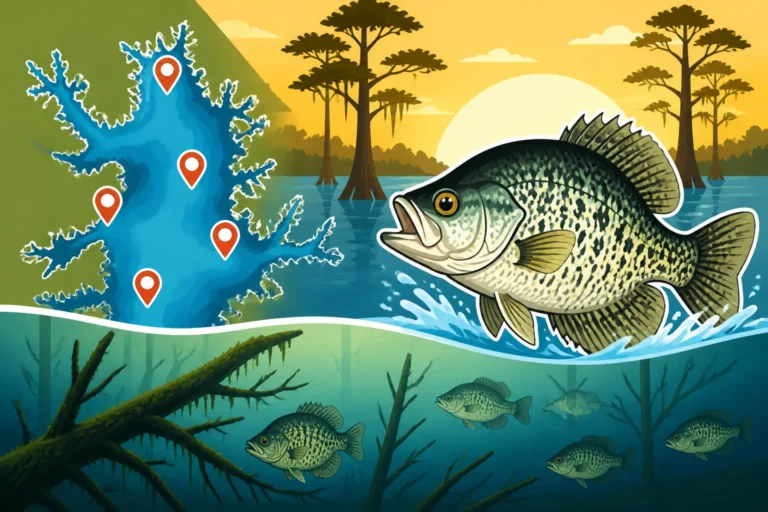
Instead of thick vegetation, Center Hill crappie relate to submerged timber, rock ledges, bluff walls, and especially man-made brush piles. The lack of natural cover in many areas means that any isolated structure becomes a major draw. Knowing this, savvy anglers often spend time locating and even creating brush piles to concentrate fish. Without these key ambush points, crappie would be scattered over vast, open water, making them incredibly difficult to find. Understanding this crucial difference from other lakes is your first step to success.
Seasonal Movements of Crappie
Just like us, crappie don't stay in one spot year-round. Their movements are dictated by water temperature, spawning urges, and the availability of food. On Center Hill, these seasonal shifts are quite pronounced:
- Spring (Pre-Spawn & Spawn): As water temperatures creep into the upper 50s and low 60s Fahrenheit, crappie begin their journey from deeper wintering holes into shallower spawning areas. This is arguably the most predictable time to find them. They'll stage near the mouths of coves and then move into protected, shallower pockets with some form of cover – be it submerged timber, old stumps, or rocky banks.
- Summer: Once the spawn is over and water temperatures rise into the 70s and 80s, crappie retreat to deeper, cooler water. They'll often suspend over old creek channels, congregate around deep main lake points, or hide within the thermocline (the layer where water temperature changes rapidly) if one is present. Deep brush piles become absolutely essential during these warmer months.
- Fall: As water temperatures start to drop again, crappie become more active and begin to feed aggressively to fatten up for winter. They'll often move back towards the edges of creek channels and shallower flats near their deep summer haunts. This can be a fantastic time for crappie fishing, as they're often more willing to chase baits.
- Winter: In the coldest months, crappie move to the deepest parts of the lake. They'll seek out vertical structures like bluff walls, deep creek channels, or the deepest brush piles you can find. Their metabolism slows down, so they won't be as aggressive, but they can still be caught with slow, precise presentations.
Knowing these general patterns is key. You wouldn't look for crappie in a 5-foot deep cove in January any more than you'd expect to find them suspended 40 feet deep in a shallow spawning flat in April.
Prime Crappie Spots on Center Hill Lake
Pinpointing specific locations is crucial for crappie success on Center Hill. While the whole lake holds fish, certain areas consistently produce more than others due to their structure and habitat.
Springtime Hotspots: Spawning Areas
When the dogwoods bloom and the water warms, crappie push into the shallows to spawn. On Center Hill, these aren't always sprawling, mud-bottomed flats. Instead, look for protected coves and creek arm pockets.
The Falling Water River arm is a prime example. This large section of the lake offers numerous secondary creeks and protected coves that warm up quickly. Anglers often find success in the back of areas like Dry Creek, Mine Lick Creek, and around the numerous smaller coves that branch off the main arm. Look for submerged timber, stumps, or even rocky banks with small pockets. The crappie will usually be in water anywhere from 3 to 10 feet deep, depending on the sun penetration and water clarity. Focus on areas with slightly stained water, as crappie often prefer this during the spawn for better cover.
Another productive area can be found in the coves near Long Branch Recreation Area and Hurricane Marina. These areas have a mix of rock and some scattered timber, providing decent cover for spawning fish. Don't overlook smaller, lesser-known coves on the north side of the lake, particularly those with a bit of runoff that might create slightly murkier conditions and concentrate baitfish. Remember, the key is protection from wind and direct sunlight, allowing the water to warm steadily. If you're struggling to find fish, consider checking out this detailed Tennessee Crappie Fishing Guide by Season for more general seasonal tips.
Summer and Fall Deep Water Structures
Once the heat sets in, Center Hill crappie head for deeper, cooler haunts. This is where your electronics become your best friend, as you’ll be looking for specific structures.
- Brush Piles: Hands down, brush piles are the number one crappie magnet in the summer and fall on Center Hill. Many dedicated crappie anglers, and even the TWRA, have sunk brush piles across the lake. These act as artificial reefs, attracting baitfish and in turn, crappie. You'll find them scattered along ledges, main lake points, and in old creek channels. A good fish finder, especially one with side imaging, is invaluable for locating these hidden treasures. Look for brush piles in 15-30 feet of water, often on the edges of deeper channels. Areas around Center Hill Dam, Edgar Evins State Park, and the deeper sections of Sinking Creek and Pea Ridge are known to hold these types of structures. Many anglers use apps like
FishingBookerto find local guides who know exactly where these brush piles are. - Main Lake Points and Ledges: Crappie will use these deeper contour lines as travel routes and ambush points. Focus on points that drop off quickly into deep water, especially if they have some form of cover like submerged rocks or sparse timber. Ledges where the bottom transitions from shallower to deeper water are also prime areas. These can be found all over the main lake, particularly in the lower end near the dam.
- Old Creek Channels: The original river and creek channels that were flooded to create Center Hill Lake are crucial deep-water pathways. Crappie will suspend over these channels, especially if there's a thermocline present, or sit on the channel edges near brush.
In the fall, crappie might move a bit shallower on these same structures, becoming more aggressive. They'll still relate to the deep brush and channel edges but might be found closer to the tops of points in 10-20 feet of water during feeding windows.
Winter Crappie Habits and Locations
Winter fishing on Center Hill for crappie demands patience and precision. The fish are lethargic, grouped tightly, and often holding to specific, deep structures.
- Deep Creek Channels: This is where many crappie retreat to escape the cold. They'll often suspend directly over the deepest parts of the old river or creek channels, or hover tightly on the channel breaks. Look for them in 30-60 feet of water, sometimes even deeper. The lower end of the lake, closer to the dam, generally offers the deepest water and consistent winter crappie grounds.
- Bluff Walls and Vertical Structure: Center Hill has numerous dramatic bluff walls. Crappie will often position themselves along these vertical faces, especially where the wall extends deep into the water. This provides them with a consistent depth zone and protection. Again, your electronics are key to identifying schools of crappie clinging to these structures. Jigging vertically right along the bluff is often the most effective technique.
- Deep Brush Piles: Those same brush piles that held fish in summer and fall will often hold them in winter, just deeper and tighter. You might find crappie buried right in the middle of a dense brush pile, requiring a precise drop of your bait.
During winter, crappie are tightly schooled, so when you find one, you've often found many. The challenge is locating that school in the vastness of Center Hill. For more generalized advice on how cold water affects fish, check out our guide on How Water Temperature Affects Fish Activity.
Essential Techniques and Tackle for Center Hill Crappie
Once you've zeroed in on potential crappie hideouts, having the right techniques and tackle makes all the difference, especially on a challenging lake like Center Hill.
Recommended Baits and Lures
For Center Hill's clear water crappie, subtlety and natural presentation often win the day.
- Live Minnows: These are hard to beat, especially in winter or when crappie are finicky. A small fathead or rosy red minnow, hooked lightly through the back or lips, is irresistible. Fishing them under a slip bobber or tightlining can be very effective.
- Small Jigs: Soft plastic jigs in the 1/32 to 1/16 ounce range are staples. Colors can vary, but in clear water, natural tones like smoke, pearl, white, or light greens often work well. Chartreuse and hot pink can be deadly on overcast days or in slightly stained water. The clear water here means less flash and more natural movement can be key. A good starting point might be a Bobby Garland Baby Shad or a Crappie Magnet. You can find more specific color advice in our article on Best Jig Colors for Spring Crappie.
- Tubes and Grubs: Small tube jigs or curly tail grubs also produce, especially when tipped with a minnow or crappie nibbler for added scent.
Fishing Methods for Different Depths
Center Hill's varied depths require a versatile approach.
- Single Pole Jigging: This is a fantastic method for precisely targeting crappie holding tight to structure like brush piles or bluff walls. Using a sensitive ultralight rod, drop your jig or minnow vertically right on top of the fish you see on your fish finder. Small, subtle twitches are usually all it takes. This method is particularly effective in winter when crappie are less active.
- Spider Rigging: When crappie are scattered along a channel edge or suspending over an area, spider rigging can be highly effective. This involves using multiple long rods (often 8-16 feet) spread out from the front of the boat, each rigged with a jig or minnow, to cover a wide swath of water at varying depths. You move very slowly, often with a Minn Kota Ulterra trolling motor, allowing you to present baits to multiple fish simultaneously. This is a popular technique for fishing those deep creek channels and brush piles. Learn more about this technique in How to Spider Rig for Crappie.
- Trolling: For covering open water or finding scattered schools in deeper areas, slow trolling small jigs or minnow rigs can be effective. This is particularly useful in summer and fall when crappie might be suspended. You can use lighter lead head jigs or even small crankbaits designed for crappie, varying your speed until you find what triggers a bite.
- Slip Bobbers: In spring, when crappie are in shallower coves, a slip bobber rig allows you to present a minnow or jig at a precise depth without spooking wary fish. This method is also useful for targeting fish suspending over brush piles without getting snagged. Check out How to Use a Slip Bobber for Crappie for detailed instructions.
Gear Considerations for Center Hill
Having the right equipment can make your Center Hill crappie trip much more enjoyable and productive.
- Rods and Reels: Sensitive ultralight spinning rods (5-7 feet) paired with small spinning reels are ideal for single pole jigging. For spider rigging, longer crappie-specific rods (8-16 feet) are a must.
- Line: In Center Hill's clear water, fluorocarbon line (4-6 lb test) is a great choice for its low visibility and sensitivity. Monofilament can work too, but fluorocarbon typically offers an edge. Braided line is excellent for sensitivity but might require a fluorocarbon leader.
- Fish Finder/Sonar: This is non-negotiable for serious crappie fishing on Center Hill. Down imaging and especially side imaging will help you locate brush piles, old creek channels, and even schools of crappie holding tight to structure. A good GPS is also crucial for marking hot spots.
- Anchoring System: A quiet trolling motor with GPS Spot-Lock (like a Minn Kota or Garmin Force) is incredibly helpful for holding your position over brush piles or along channel edges, particularly when using multiple rods. Shallow water anchors like Power-Poles are less useful in Center Hill's deep water but an accurate deep-water anchor is important.
Best Practices for Success and Regulations
Beyond knowing where and how, there are some overarching best practices and regulations you'll want to keep in mind for a successful and legal crappie fishing experience on Center Hill.
Interpreting the Lake: Water Temperature, Clarity, and Weather
Crappie are highly sensitive to their environment. Learning to "read" Center Hill Lake conditions will give you a significant advantage.
- Water Temperature: This is perhaps the most critical factor. Crappie move to spawn based on water temperature, and their activity levels throughout the year are directly correlated to it. Investing in a good water temperature gauge is worthwhile. A general rule of thumb: crappie are most active when water temperatures are between 55-75°F.
- Water Clarity: As mentioned, Center Hill is generally very clear. If you encounter unusually turbid water (perhaps after a heavy rain in an arm like the Falling Water River), crappie might move shallower or be less wary. Adjust your jig colors and presentation accordingly, perhaps using brighter colors in stained water.
- Weather Patterns: Cold fronts can shut down crappie fishing quickly, pushing fish deeper and making them lethargic. Stable weather, especially several consecutive warm, sunny days in spring, will get them moving. Overcast days can sometimes make crappie more active in shallower water as they feel less exposed. Understanding How Rain Affects Fish Feeding Patterns can also provide an edge.
Crappie Limits and Responsible Angling
Always be aware of and follow Tennessee's fishing regulations. It's not just about avoiding penalties; it's about preserving the fishery for future generations.
- Statewide Crappie Limits: For Center Hill Lake, the statewide crappie limits apply. This typically means a daily creel limit of 20 crappie per angler, with only 5 of those allowed to be over 12 inches. It's crucial to measure your fish and adhere to these regulations. Ignoring these rules can lead to fines and negatively impact the crappie population. You can get a full rundown on these rules in our guide to Tennessee's Crappie Limit Is 20 Per Day, Only 5 Over 12 Inches.
- Catch and Release: While crappie are delicious, consider practicing selective harvest. Keep some for the frying pan, but release the larger breeding females, especially outside of the legal 'over 12 inch' slots, to help maintain a healthy population.
Planning Your Trip: Guides and Resources
Sometimes, the best way to jumpstart your success on a challenging lake like Center Hill is to tap into local knowledge.
- Local Bait Shops: These are goldmines of information. Stop by a local bait shop around Center Hill, like those near Smithville or Alexandria, before you launch. They often have up-to-the-minute reports on where crappie are biting, what baits are working, and any recent changes in lake conditions.
- Fishing Guides: If you're new to Center Hill or struggling to locate crappie, hiring a local fishing guide for a day can be incredibly beneficial. They can teach you the ropes of crappie fishing on this specific lake, show you productive areas, and help you understand the nuances of the local fishery. Websites like
FishingBookerare excellent resources for finding experienced local guides who specialize in crappie on Center Hill Lake. Even just one trip with a guide can drastically improve your future success. - TWRA Maps and Resources: The Tennessee Wildlife Resources Agency (TWRA) provides contour maps and sometimes even details on brush pile locations. Their website is a valuable resource for planning your trip and staying informed.
By combining an understanding of crappie behavior, knowledge of prime locations, the right techniques, and a commitment to responsible angling, you'll significantly increase your chances of a successful and rewarding crappie fishing experience on Center Hill Lake.
| Season | Primary Crappie Locations | Typical Depths | Preferred Techniques |
|---|---|---|---|
| Spring | Protected coves, creek mouths, submerged timber, rocky banks | 3-10 feet | Single pole jigging, slip bobbers with minnows/jigs |
| Summer | Deep brush piles, main lake points, old creek channels | 15-30+ feet | Spider rigging, vertical jigging, slow trolling |
| Fall | Edges of creek channels, brush piles, shallower humps/flats near deep water | 10-25 feet | Spider rigging, vertical jigging, casting jigs |
| Winter | Deep creek channels, bluff walls, deepest brush piles | 30-60+ feet | Slow vertical jigging, tightlining with minnows |
Disclaimer
Fishing conditions and regulations in Tennessee can change. Always consult the latest Tennessee Wildlife Resources Agency (TWRA) regulations before heading out on the water. This guide is for informational purposes only and should not replace official sources.