Where to Catch Crappie on Norris Lake, Tennessee
Many anglers dream of catching crappie, but the sheer size and depth of a reservoir like Norris Lake can make finding those sought-after panfish feel like searching for a needle in a haystack. With its extensive clear waters and countless coves, knowing exactly where to start and what to look for is crucial for a successful crappie outing. This guide will walk you through the prime locations and effective strategies to consistently land crappie on Norris Lake, transforming your fishing frustrations into triumphant hauls.
Understanding the Norris Lake Crappie Challenge
Norris Lake is a true gem, renowned for its incredible clarity and deep, sprawling waters. While these characteristics make it a beautiful place to spend a day, they also present a unique challenge for crappie anglers. Crappie in clear water often behave differently than those in murky, shallower impoundments, making traditional tactics sometimes less effective. It’s not just about throwing a minnow out; it’s about understanding their habits in this specific environment.
Deep, Clear Water and Crappie Behavior
Unlike some of Tennessee's more stained or shallow lakes, Norris Lake boasts an exceptional level of water clarity, often extending to depths of 10-20 feet or more. This clarity, while stunning for recreation, means crappie are often more skittish and prone to seeking deeper cover. They are highly visual feeders, so the clearer water also influences their preferred baits and presentation. You won't typically find them in vast, shallow flats exposed to direct sunlight for long periods unless they are actively spawning. Instead, they prefer the shadows cast by submerged timber, steep drop-offs, and deep brush piles, which offer both protection from predators and ambush points for baitfish. This makes using a good fish finder absolutely essential for efficient crappie hunting here; you're often looking for fish that are suspended or holding tight to structure many feet below the surface.
Seasonal Movements and Habitat Preferences
Crappie on Norris Lake are creatures of habit, largely dictated by the changing seasons and corresponding water temperatures. Their movements are predictable once you understand the pattern. In early spring, as water temperatures begin to climb into the 50s, crappie will start to migrate from their deep winter haunts toward shallower spawning areas. This is when you'll find them concentrating in coves and pockets, especially those with warmer, sun-exposed banks. As the water warms further into summer, they retreat to deeper, cooler water, often suspending over the old river channels or congregating around significant submerged structure. Fall sees another transition as temperatures drop, and crappie move back into creek arms, actively feeding as they prepare for winter. When winter sets in, they hunker down in the deepest parts of the lake, usually suspending over creek channels or main lake points, often in depths exceeding 30-40 feet. Understanding this annual cycle is the first step to knowing when and where to focus your efforts. For a deeper dive into these patterns, you might want to read our full guide on the Tennessee Crappie Fishing Guide by Season.
Top Crappie Hotspots on Norris Lake
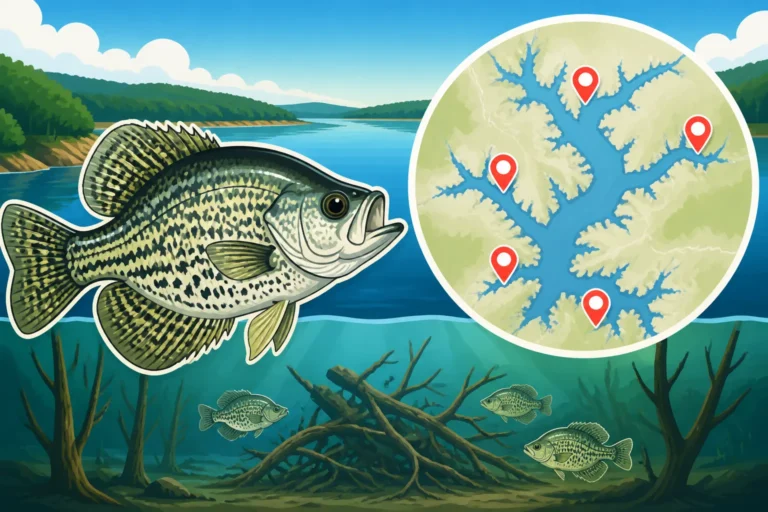
Norris Lake's immense size, with over 800 miles of shoreline, means there are countless potential crappie hideouts. However, certain areas consistently produce better than others due to their unique underwater topography, abundance of cover, and proximity to crappie highways like old river channels. When planning a trip, looking up local fishing reports on platforms like FishingBooker can often give you real-time insights into which spots are currently hot.
Key Creek Arms and Their Unique Structure
The extensive network of creek arms flowing into Norris Lake provides some of the most consistent crappie fishing. These arms often retain more nutrients and have more gradual depth changes than the main lake, creating ideal conditions.
- Big Creek: Located on the western side of the lake, Big Creek is a prime crappie area, especially during the spring spawn. It features numerous smaller coves and pockets, along with a well-defined creek channel that provides excellent travel routes and holding areas. Look for submerged timber, brush piles, and old roadbeds here. The upper reaches tend to warm up faster, drawing crappie in earlier in the season.
- Powell River Arm: This massive arm, extending far up into the mountains, offers a diverse crappie habitat. The river channel itself is a major highway for fish, and its countless feeder creeks provide endless opportunities. Focus on areas where the channel swings close to steep banks or where submerged rock piles and fallen trees offer ambush points. There's a lot of deep water here, so don't be afraid to fish suspended crappie.
- Clinch River Arm: Similar to the Powell, the Clinch River arm provides vast stretches of excellent crappie habitat. It's known for its clear water and deep sections. Target the many tributary creeks and coves, especially those with standing timber or laydowns. The lower end of the Clinch arm, closer to the main body of the lake, can be very productive in cooler months when crappie school up.
- Big Ridge State Park Area: While not a "creek arm" in itself, the coves and points around Big Ridge State Park offer easily accessible and often productive crappie fishing. The TWRA occasionally enhances these areas with fish attractors, making them excellent spots for both bank and boat anglers. Keep an eye out for these marked locations.
Productive Depths and Cover
Crappie on Norris Lake are highly reliant on structure and specific depths. Their clear-water nature makes them sensitive to light, so they'll often retreat deeper or into dense cover during bright days.
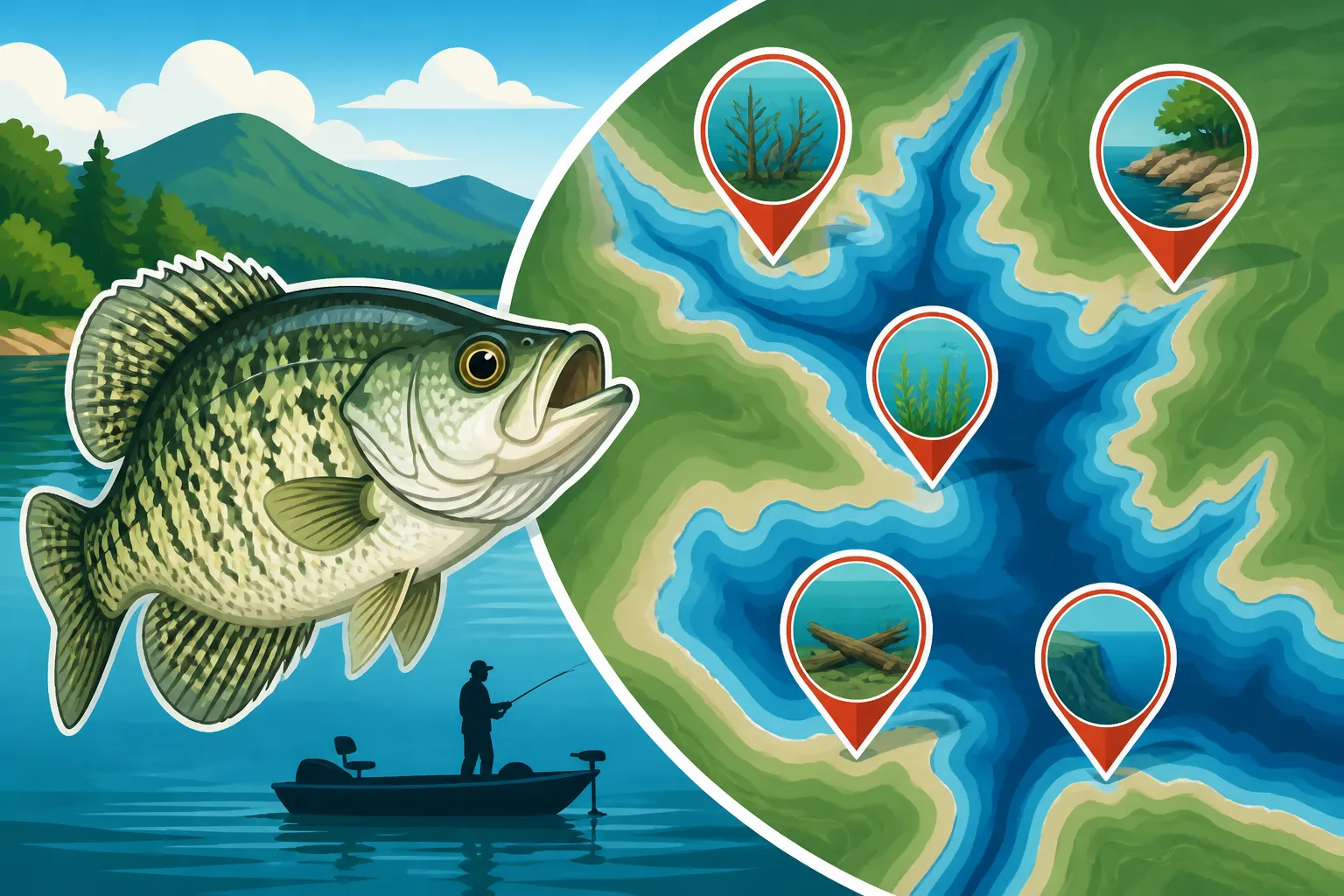
- Submerged Timber and Brush Piles: Throughout Norris Lake, especially in the creek arms and along old creek channels, you'll find extensive standing timber and submerged brush piles. These are absolute magnets for crappie. The Tennessee Wildlife Resources Agency (TWRA) actively places fish attractors in many areas, often marked with buoys. These man-made structures are fantastic, but don't overlook naturally fallen trees or old stump fields, which can hold just as many fish. During the colder months, crappie will suspend directly within or just above these structures in 20-40 feet of water.
- Deep Ledges and Drop-offs: Norris Lake is characterized by dramatic depth changes. Crappie will often position themselves along steep ledges, particularly where a flat drops sharply into an old river or creek channel. These transitions provide easy access to both shallow feeding grounds and deep sanctuary. Using your electronics to locate these depth contours and scanning for suspended fish along them is key. Consider how the Norris Lake Tennessee Crappie Spawn Timing in Spring affects these depths, as crappie will move shallower but still relate to nearby deep water for retreat.
- Roadbeds and Foundations: Before Norris Lake was impounded, entire communities existed in its valleys. The remnants of old roadbeds, bridge abutments, and even house foundations now lie submerged, creating fantastic artificial reefs for crappie. These structures often offer unique edges and crevices where crappie can hide and ambush baitfish. FishingBooker fishing guides often have detailed knowledge of these hidden gems, which are challenging to find without good electronics or local intel.
Finding Crappie Near the Main Lake Channel
While many anglers focus on the creek arms, the main lake channel and its adjacent points can be phenomenal for crappie, especially outside of the spawning season. These areas offer consistent deep water and excellent current flow, which baitfish and crappie both appreciate.
- Main Lake Points: Any main lake point that extends into the deep channel or has a steep drop-off is worth investigating. Crappie will often stack up on the sides or tips of these points, especially if there's any submerged brush or rock nearby. These points act as natural funnels for baitfish, making them prime feeding locations.
- Suspended Over Channels: In the summer and winter, a common pattern on Norris Lake is finding crappie suspended directly over the deepest parts of the old river channels, often far from any visible shoreline structure. They might be 20 feet down over 60 feet of water, chasing schools of baitfish. This requires good sonar and careful interpretation of what you're seeing on your screen. This type of fishing often involves slow trolling or "spider rigging" multiple lines at different depths to find the productive zone.
Crappie Hotspot Summary Table
To help visualize some of these prime locations and their general seasonal productivity, here's a quick reference:
| Location Type | Spring (Spawn) | Summer (Deep) | Fall (Feeding) | Winter (Deep) | Key Features & Tips |
|---|---|---|---|---|---|
| Big Creek Arm | Excellent (shallow coves) | Good (channel/timber) | Very Good (all over) | Good (channel) | Warms quickly, abundant timber, old roadbeds. |
| Powell River Arm | Good (upper reaches) | Excellent (deep channel) | Good (all over) | Excellent (deep channel) | Vast, deep, main river channel, feeder creeks. |
| Clinch River Arm | Good (coves/timber) | Excellent (deep channel) | Very Good (coves/channel) | Excellent (deep channel) | Similar to Powell, great for suspending fish, numerous tributaries. |
| Big Ridge State Park | Very Good (attractors) | Good (nearby points) | Good (attractors) | Fair (deeper) | TWRA fish attractors, easy access for bank anglers. |
| Main Lake Points | Fair (early/late spawn) | Very Good (structure) | Excellent (feeding) | Good (structure) | Drop-offs, current breaks, baitfish congregation. |
| Suspended Over Channel | Fair | Excellent | Good | Excellent | Requires good electronics, open water, often large schools. |
| Submerged Timber/Brush | Excellent (shallow/deep) | Excellent (deep) | Excellent (all depths) | Excellent (deep) | Constant crappie magnets, often enhanced by TWRA. Always check marked areas. |
| Roadbeds/Foundations | Good | Very Good | Good | Good | Unique hard structure, often overlooked without good mapping/sonar. |
Strategies for Consistent Crappie Success
Once you've identified potential crappie hotspots, the next step is to employ the right techniques and bait. Norris Lake's clear water and deep habitat mean that precision and presentation are paramount. You can have all the best spots marked, but without the right approach, those crappie will remain elusive.
Best Baits and Lures for Norris Lake Crappie
When it comes to crappie on Norris Lake, you generally want to stick with baits that are either natural-looking or provide subtle action, given the water clarity.
- Live Minnows: Hands down, live minnows are king for Norris Lake crappie, especially during the colder months or when fish are finicky. A small shiner or fathead minnow hooked through the back or lip, suspended under a slip bobber or tightlined, is incredibly effective. The natural movement of a live minnow is often irresistible to crappie that are suspended or holding tight to cover. Keep your minnows lively by using a good aerated bait bucket.
- Small Jigs: Soft plastic jigs ranging from 1/32 oz to 1/8 oz are incredibly versatile. Colors can vary, but clear water often calls for more natural tones like smoke, pearl, chartreuse, or even black/blue. Crappie jigs with small, wispy tails or those that mimic baitfish are excellent. Some local favorites include Bobby Garland's Baby Shad or products from Jenko Fishing. Experiment with different colors and sizes until you find what they're hitting. You can often tip these jigs with a piece of a crappie nibbler or a small live minnow for added attraction. For more details on presentation, our How to Jig for Crappie guide can be really helpful.
- Tubes and Hair Jigs: Small tube jigs (1.5-2 inches) in colors like white, chartreuse, or black/red are also highly effective, particularly when vertically jigging or casting towards brush piles. Hair jigs, though less common for crappie, can be deadly in clear water due to their subtle, natural pulsing action.
- Scented Baits: Adding scent to your artificial lures, or using scented soft plastics, can give you an edge, especially when crappie are being hesitant. Brands like Berkley PowerBait or Spike-It offer crappie-specific scents that can make a big difference.
Mastering Vertical Jigging and Trolling
Given the depths and structures crappie relate to on Norris Lake, two techniques stand out: vertical jigging and trolling.
- Vertical Jigging: This is arguably the most precise and effective method when crappie are holding tight to specific structures like brush piles, standing timber, or old roadbeds. Using your fish finder to pinpoint these structures and the crappie around them, position your boat directly over the top. Then, drop a small jig or minnow straight down, precisely to the depth where the fish are holding. Slowly lift and drop the bait, keeping it in the strike zone. This technique requires patience and a good feel for subtle bites. Many anglers use a tactic called "tightlining" for crappie, where you watch your line for the slightest twitch instead of relying solely on rod tip action.
- Trolling (Spider Rigging): When crappie are suspended over deeper channels or scattered along a flat, slow trolling (often called "spider rigging") can be incredibly effective. This involves using multiple rods (often 4-8 or more, depending on regulations) rigged with jigs or minnows at varying depths and distances from the boat. By moving slowly (0.5 to 1.5 mph) over productive areas, you cover a lot of water and present baits at various depths until you find the fish. This is particularly popular in the spring and fall when crappie are actively roaming. A typical setup involves long rods extending out from the boat, creating a wide spread.
- Casting and Retrieving: While not as dominant as vertical jigging or trolling in deep water, casting small jigs or spinnerbaits towards shallow cover (like laydowns or docks) can be productive, especially during the spring spawn or when crappie move into feeding flats in the fall. A slow, steady retrieve or a "twitch-twitch-pause" retrieve often works best.
Adapting to Changing Conditions
Norris Lake is dynamic, and what worked yesterday might not work today. Being adaptable is key to consistent success.
- Light and Weather: On bright, sunny days, crappie will typically retreat to deeper water or dense cover to escape the intense light. On cloudy days or during low-light periods (dawn and dusk), they may move shallower and become more active. Heavy rain can also stir up shallow water, causing crappie to move into slightly deeper, more stable areas or to feed aggressively on runoff. Pay attention to our Dawn and Dusk Fishing Patterns for Crappie guide for tips on low-light fishing.
- Water Temperature: This is perhaps the most critical factor. Crappie are cold-blooded and their metabolism is directly tied to water temperature. Understanding the ideal temperature ranges for spawning, feeding, and resting will help you predict their behavior. For example, in spring, target warmer pockets; in summer, seek cooler, deeper water.
- Baitfish Presence: Crappie are predators, and they will follow their food source. If you see baitfish on your sonar or visually, crappie are likely nearby. Focus your efforts where baitfish are abundant, whether they are suspended in open water or schooling around structure.
Essential Gear and Navigation Tips for Norris Lake
Fishing Norris Lake effectively requires more than just a rod and reel. Its size and depth necessitate specific gear and a mindful approach to navigation and safety.
Recommended Electronics for Crappie Fishing
In the clear, deep waters of Norris Lake, a good electronics setup isn't just a luxury; it's practically a necessity for consistent crappie catches.
- High-Quality Fish Finder with Side Imaging/Down Imaging: A modern fish finder with both side imaging and down imaging capabilities will revolutionize your crappie fishing. Down imaging provides a detailed, photographic-like view directly beneath your boat, helping you distinguish individual fish and the type of structure they're relating to. Side imaging allows you to scan wide areas to either side of your boat, revealing brush piles, timber, and schools of crappie that you might otherwise miss. Brands like Humminbird and Lowrance offer excellent units that can help you mark those hidden treasures. Our article on Do You Need a Fish Finder for Crappie Fishing in Tennessee? goes into more detail.
- GPS and Lake Mapping: Integrated GPS with detailed lake maps (like those from Navionics or Lakemaster) is invaluable. Norris Lake has countless coves, points, and submerged features. A good map will show you old creek channels, roadbeds, and contour lines that are crappie magnets. Use your GPS to mark successful spots, brush piles you've found, and safe travel routes. Many fish finders come with excellent mapping capabilities built-in.
- Trolling Motor with Spot-Lock: A Minn Kota Ulterra or a Garmin Force trolling motor with a "spot-lock" or anchor mode feature is a game-changer. This technology allows you to hold your boat precisely over a productive crappie spot, even in windy conditions, freeing you up to focus on fishing rather than constantly adjusting your position. This is especially helpful for vertical jigging on Norris Lake's deep structures.
Responsible Angling and Lake Access
Norris Lake is a busy recreational lake, especially in warmer months. Practicing responsible angling and boating habits is essential for everyone's enjoyment and safety.
- Boating Safety: Always wear a life jacket, especially when underway. Be aware of other boaters, swimmers, and kayakers. The lake can get rough with heavy boat traffic, so know your vessel's limits. If you're new to navigating larger bodies of water, consider taking a boating safety course. Check out our detailed guide on Best Boats for Tennessee's Norris Lake to ensure you're equipped with the right vessel for this expansive water.
- Fish Handling and Regulations: Always adhere to Tennessee's fishing regulations, including size and creel limits for crappie. The current statewide crappie limit in Tennessee is 20 fish per day, with only 5 of those allowed to be over 12 inches. These limits are in place to ensure healthy fish populations for future generations of anglers. Handle fish carefully, especially if you plan to release them. A swift, clean release minimizes stress and improves survival rates. You can find more specific details on Crappie Limits Under Tennessee Fishing Rules.
- Respect Private Property and Public Access: While Norris Lake offers numerous public boat ramps and access points, always respect private property signage. Many of the best fishing spots may be near private docks or shorelines, so be mindful and maintain a courteous distance. Public access points are often maintained by the TWRA or local communities. Before heading out, you can often find information on public ramps and facilities through websites like FishingBooker or the TWRA.
Navigating Norris Lake's vastness can be daunting at first, but with the right knowledge, equipment, and a healthy dose of patience, it can become one of the most rewarding crappie fisheries in Tennessee. Tight lines and happy fishing!
Disclaimer
The information provided in this guide is for general informational purposes only and is not intended as legal or professional advice. Fishing regulations, conditions, and best practices can change, and it is always the angler's responsibility to consult the most current regulations issued by the Tennessee Wildlife Resources Agency (TWRA) before engaging in any fishing activities. Always prioritize safety and environmental stewardship.