Where to Catch Crappie on Chickamauga Lake
Crappie fishing on a massive body of water like Chickamauga Lake can feel like searching for a needle in a haystack. With over 36,000 acres of water and hundreds of miles of shoreline, it’s easy to feel overwhelmed, wondering where those elusive schools of papermouths are hiding. This comprehensive guide is here to cut through that confusion, giving you the insider knowledge on exactly where to find and catch crappie on Chickamauga Lake, regardless of the season.
Decoding Chickamauga Lake's Crappie Hotspots
Understanding crappie isn't just about throwing a line in the water; it's about knowing why they are where they are. Chickamauga Lake, being a Tennessee Valley Authority (TVA) reservoir, offers a diverse underwater landscape that crappie absolutely thrive in, but you need to know what to look for.
Understanding Crappie Behavior in Reservoirs
Crappie, whether black or white, are creatures of habit. They love structure, whether it’s natural or man-made, and they are constantly on the hunt for baitfish. In a large reservoir like Chickamauga, these patterns become even more pronounced. They're often found in schools, so when you find one, you're likely to find many! Their movements are heavily influenced by water temperature, available food sources, and their spawning instincts. Knowing these fundamental behaviors is your first step to consistent success. They'll transition between shallow and deep water throughout the year, always seeking comfortable temperatures and an easy meal.
Key Structures That Attract Crappie
Chickamauga Lake is teeming with structure, both natural and artificial, and crappie use every bit of it for cover, ambush points, and spawning. Think about it: a crappie needs a place to hide from predators, a spot to ambush shad, and somewhere safe to lay its eggs.
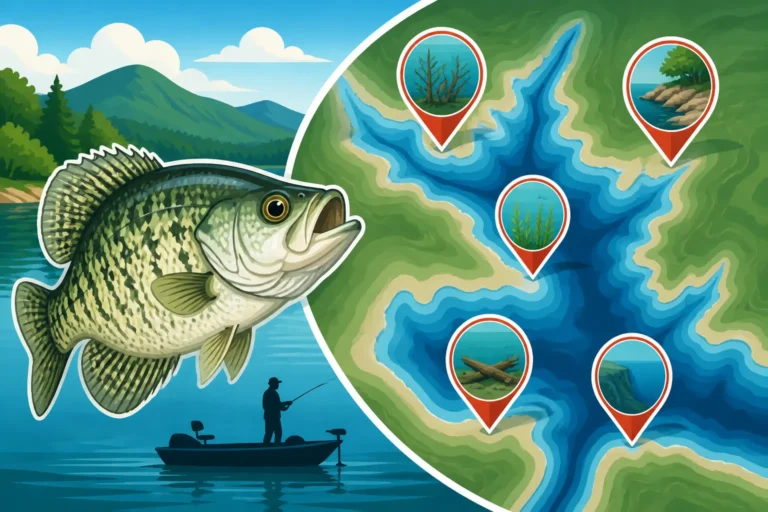
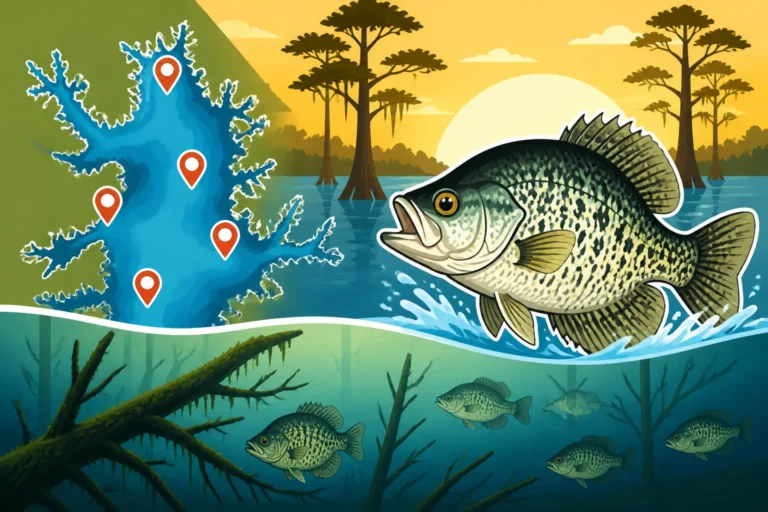
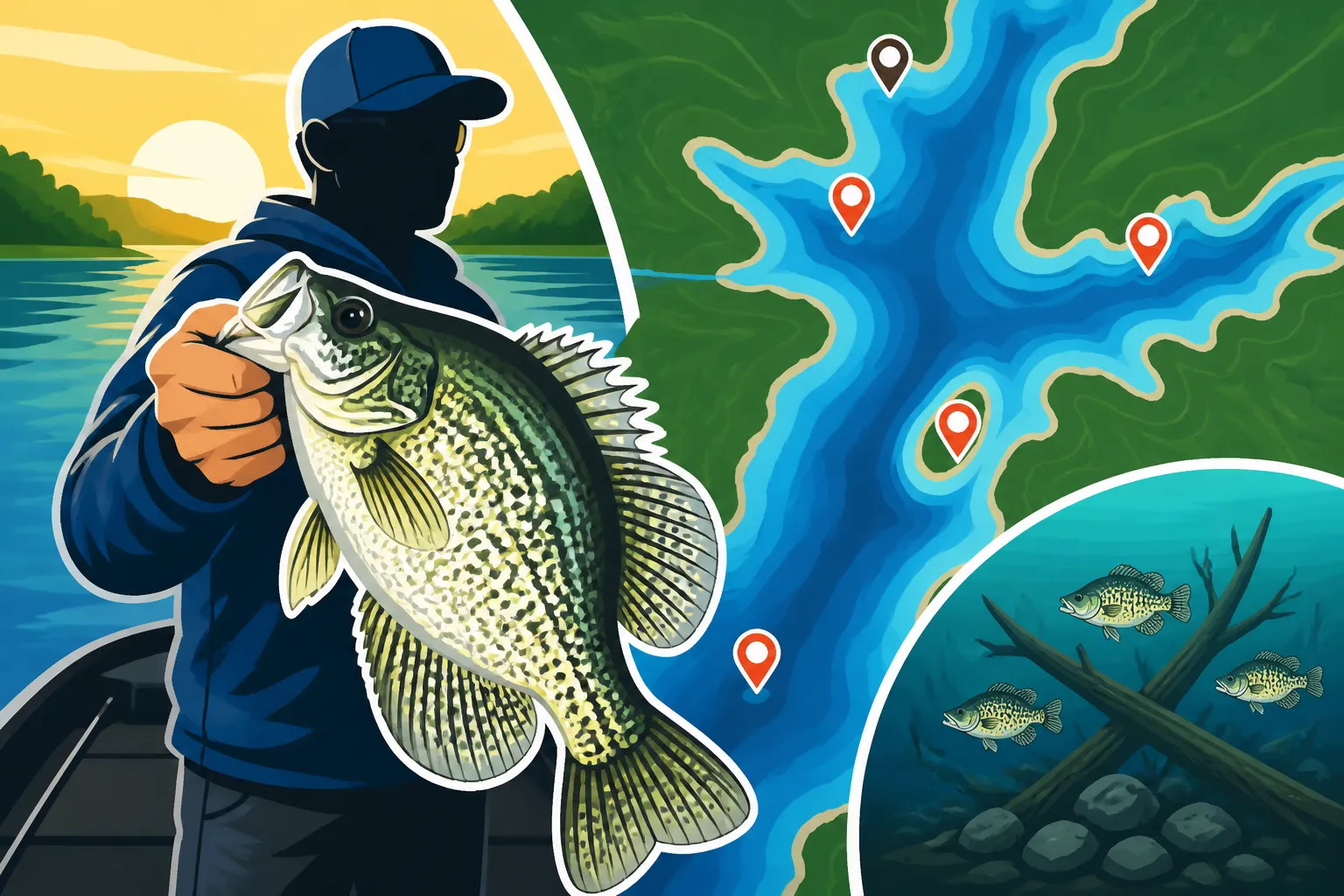
- Submerged Timber and Brush Piles: These are crappie magnets. Old trees, stumps, and intentionally sunk brush piles provide excellent cover. Many local anglers and the Tennessee Wildlife Resources Agency (TWRA) have placed countless brush piles throughout the lake. These act as apartment buildings for crappie, offering shelter and food for baitfish. When you're scanning with your fish finder, look for these distinct clusters on the bottom.
- Bridge Pilings and Riprap: Bridges that cross the lake, like the Highway 60 bridge, have massive concrete pilings that extend deep into the water. These provide vertical structure that crappie relate to, especially during cooler months. The riprap (rocky banks) leading up to these bridges also holds crappie, particularly in spring.
- Creek Channels and River Bends: The old river channels of the Tennessee River and its tributaries that now lie submerged beneath Chickamauga are highways for fish. Crappie will suspend along the edges of these channels, especially where there's a sharp drop-off or a bend that creates a current break.
- Docks and Marina Areas: Private docks, especially those with lights that attract baitfish at night, can be fantastic crappie spots. The pilings and any submerged structures around these docks provide cover. Marina basins also offer deeper, more stable water in colder months.
The Role of Forage and Water Conditions
Crappie are primarily piscivorous, meaning they eat other fish, with shad being their main forage. Where the baitfish go, the crappie will follow. Keeping an eye on schooling baitfish, often visible on your sonar or even bubbling on the surface, is a huge clue. Water conditions like temperature, clarity, and current also play a critical role. Crappie prefer slightly stained water over crystal clear, as it gives them more cover. Strong currents can push them into slack water or behind structure. During periods of heavy rain, muddy runoff can turn crappie off, forcing you to look for clearer water pockets further up tributaries or in protected coves.
Seasonal Strategies for Chickamauga Crappie
Crappie fishing on Chickamauga is a year-round affair, but your approach needs to change with the seasons. What works in April won't necessarily work in August. Understanding these seasonal shifts is key to consistent catches.
Spring Spawn: Shallow Water Bonanza
Spring is arguably the most exciting time for crappie fishing on Chickamauga. As water temperatures climb into the high 50s and low 60s Fahrenheit, crappie move shallow to spawn.
- Timing and Location: This usually kicks off in late March and can run through May. Look for crappie in shallow coves, along protected banks, and in the backs of creeks. They'll seek out woody cover like stumps, brush, and even grass beds in water often less than 5 feet deep. Good spots include the backwaters of Sale Creek, Wolftever Creek, and Harrison Bay. Areas with warmer, stained water will often see the spawn start earlier.
- Techniques: Light tackle is ideal here. Small jigs (1/16 to 1/8 ounce) tipped with soft plastic bodies in chartreuse, white, or black/chartreuse are deadly. Minnows fished under a bobber are also incredibly effective. Present your bait slowly and methodically around every piece of cover you can find. Remember, during the spawn, crappie are aggressive and protective, making them easier to catch.
Summer Depths: Adjusting to the Heat
Once the spawn is over and water temperatures rise into the 70s and 80s, crappie retreat to deeper, cooler water. This is when your electronics become invaluable.
- Timing and Location: From June through August, crappie will suspend over deeper creek channels, river bends, and main lake points. They often congregate around deep brush piles or submerged timber in 15-30 feet of water, sometimes even deeper.
- Techniques: Vertical jigging directly over brush piles or slow trolling (spider rigging) with multiple rods are highly effective. For spider rigging, you'll use longer rods and often multiple baits at different depths, covering a wide area. Look for schools of baitfish, and you'll often find crappie nearby. Small crankbaits can also be effective when trolling, especially those designed to run at specific depths. If you're targeting specific brush piles, a good fish finder is essential to drop your jig right into the strike zone. Many anglers find the best success in the deeper pockets of areas like Dallas Bay or the main river channel ledges.
Fall Feeding Frenzy: Following the Bait
As water temperatures cool down in the fall, crappie become incredibly active again, feeding heavily in preparation for winter.
- Timing and Location: From September through November, crappie will start to move shallower again, following baitfish that are also moving towards the backs of creeks and coves. They'll often be found around brush piles, docks, and submerged points in 8-15 feet of water.
- Techniques: This is a great time for both casting jigs and slow trolling. Crappie are often aggressive and will readily hit a variety of baits. Look for schooling baitfish near structure, and the crappie won't be far behind. You might find them suspended higher in the water column during low light conditions or cloudy days. The mouth of Sale Creek or Ooltewah Creek can be particularly productive as crappie chase shad into these areas.
Winter Persistence: Deep Water Rewards
Don't put your rods away in winter! Chickamauga Lake can offer some fantastic crappie fishing during the colder months, provided you know where to look.
- Timing and Location: From December through February, crappie gather in large schools in the deepest parts of the lake, often holding tight to vertical structure or deep brush piles in 25-45 feet of water, sometimes even deeper. The main river channel and the lower sections of major creeks like Sale Creek and Dallas Bay are prime areas.
- Techniques: Slow and methodical is the name of the game. Vertical jigging with very small jigs (1/32 or 1/16 ounce) or live minnows is most effective. Your electronics are crucial for locating these deep schools. Fish extremely slowly, barely moving your bait. Sometimes, just holding it perfectly still a few inches above the crappie is what it takes. They are less active in the cold, so a subtle presentation is key.
Top Areas to Target Crappie on Chickamauga Lake
While crappie can be found throughout Chickamauga, certain areas consistently produce better catches due to their unique features and structure. Knowing these hot spots can save you a lot of time on the water.
North End: From Soddy-Daisy to Sale Creek
The northern end of Chickamauga Lake, particularly the areas around Soddy-Daisy and the expansive mouth of Sale Creek, are renowned crappie factories.
- Sale Creek Area: This large tributary offers a wealth of crappie habitat. In spring, the shallow coves and backwaters of Sale Creek are excellent for spawning crappie. Throughout the rest of the year, crappie congregate along the old creek channel, particularly where it meets the main lake. Look for deep brush piles and submerged timber along these channel edges. There are numerous public boat ramps in this area, making access easy.
- Soddy-Daisy Backwaters: Similar to Sale Creek, the bays and coves north of Soddy-Daisy offer protected waters with plenty of cover. These areas tend to be shallower and warm up faster in spring, making them early crappie hotspots. As temperatures rise, crappie will move to deeper structure in the main lake near these coves.
Mid-Lake Region: Near Harrison Bay and Wolftever Creek
The middle section of Chickamauga Lake, including the popular Harrison Bay and Wolftever Creek, provides diverse crappie opportunities.
- Harrison Bay: This is a huge, well-known area with a mix of shallow flats, deep channels, and plenty of man-made and natural structure. In spring, the shallower arms of Harrison Bay are fantastic. As summer hits, crappie move out to the deeper channels and brush piles around the main lake points. The numerous docks and marinas in Harrison Bay also hold crappie year-round.
- Wolftever Creek: Located closer to Chattanooga, Wolftever Creek is another significant tributary that consistently produces crappie. Its winding creek channel, coupled with submerged timber and brush, makes it a prime target. The area where Wolftever Creek empties into the main lake often has current breaks that stack up baitfish and, consequently, crappie.
Southern Reaches: Closer to the Dam
The southern end of Chickamauga Lake, particularly near the dam and the lower sections of creeks like Dallas Bay, offers deeper, more stable water, which can be fantastic for crappie, especially in colder months.
- Dallas Bay: This large bay has a distinct creek channel and numerous deep brush piles. Crappie here often relate to the deeper water, especially in summer and winter. Look for them suspended over structure in 20-40 feet of water. The points leading into and out of Dallas Bay are also worth exploring.
- Chickamauga Dam Area: While fishing directly in the turbulent waters below the dam isn't recommended for crappie, the main river channel areas immediately above the dam can be excellent. This section has significant depth and current, making it a good wintering ground for crappie that seek stable conditions. Focus on the main channel ledges and any pronounced bends or humps.
Essential Gear and Techniques for Chickamauga Crappie Success
Having the right tools for the job makes all the difference, and crappie fishing is no exception. A well-prepared angler understands that different situations call for different gear and strategies.
Rods, Reels, and Line Choices
- Rods: For most crappie fishing on Chickamauga, a light to medium-light spinning rod, 6 to 7 feet in length, is a versatile choice. This allows for good casting distance with light jigs and provides enough backbone to handle a good-sized crappie. For spider rigging or tightlining, longer crappie-specific rods, often 9 to 16 feet, are used to spread out lines and cover more water.
- Reels: Small spinning reels (size 1000 or 2000) are perfect for crappie. They are lightweight and balance well with light rods, offering smooth drag for those paper-thin mouths.
- Line: Monofilament line in 4-6 lb test is a classic choice for crappie, offering good knot strength and stretch for shock absorption. Many anglers are now opting for braided line (6-10 lb test) with a fluorocarbon leader (4-6 lb test). The braid offers superior sensitivity for detecting subtle bites, while the fluorocarbon leader is nearly invisible underwater.
Baits, Lures, and Jigging Strategies
Crappie are not overly picky, but certain presentations are more effective than others.
- Live Minnows: These are often the most reliable bait, especially when crappie are finicky. Hook them lightly through the lips or back and fish them under a bobber in shallow water or on a tightline rig in deeper water.
- Jigs: Small soft plastic jigs are incredibly versatile. Popular styles include tube jigs, curly tail grubs, and shad darts. Colors like chartreuse, white, black/chartreuse, and pink are perennial favorites. Experiment with different colors and sizes (1/32 to 1/8 ounce) until you find what the crappie prefer on a given day.
- Jigging Techniques:
- Casting and Retrieving: Cast your jig out, let it sink to your desired depth, and retrieve it with a slow, steady retrieve or a series of small hops and pauses.
- Vertical Jigging: This is perfect for fishing brush piles and deep structure. Position your boat directly over the structure, drop your jig down, and make small, subtle vertical movements to entice bites. A good fish finder is essential for this approach.
- Bobby Garland and Crappie Magnet are popular brands of soft plastic crappie baits that work wonderfully on Chickamauga.
The Art of Spider Rigging and Trolling
When crappie are scattered or you're trying to cover a large area, spider rigging or trolling can be incredibly effective.
- Spider Rigging: This technique involves using multiple long rods mounted around the boat, each with a different bait or jig fished at varying depths and distances from the boat. It allows you to present multiple baits simultaneously and cover a wide swath of water. This is particularly effective in deeper water or when crappie are suspended.
- Trolling: Slow trolling, either with jigs or small crankbaits, can also be productive. Use your trolling motor to move slowly along creek channels, river ledges, or flats. Vary your speed and bait depth until you find the sweet spot. Trolling is excellent for covering a lot of water quickly and locating schools of active crappie. Many anglers will consult a site like FishingBooker to find guides who specialize in these advanced techniques, which can be invaluable for learning the nuances of Chickamauga.
Planning Your Crappie Trip to Chickamauga
A successful fishing trip involves more than just knowing where the fish are; it’s about preparation and understanding the practicalities of fishing on a large reservoir.
Best Times of Day and Weather Considerations
Just like any other species, crappie are influenced by the time of day and weather conditions.
- Low Light Conditions: Dawn and dusk are often the most productive times for crappie, as they are more active and feed aggressively during these periods. This is true year-round.
- Cloud Cover: Overcast days can also be excellent, as the reduced light often encourages crappie to move shallower and feed more actively throughout the day.
- Rain and Cold Fronts: While rain can sometimes muddy the water, a light drizzle can often spark a bite. However, a strong cold front after a period of warm weather can shut down the bite for a day or two, pushing crappie deeper and making them lethargic. You may need to adjust your technique after a cold front.
- Wind: Moderate wind can be a friend or a foe. A light chop on the water can break up the surface and make crappie feel more secure, but strong winds can make boat control and presentation difficult.
Navigating the Lake and Finding Access Points
Chickamauga Lake is large, so familiarizing yourself with its layout and access points is crucial.
- Navigation: Use a good GPS unit or a detailed lake map. Pay attention to channel markers, especially in the main river channel. Submerged hazards like stumps and shallow humps can be present, so navigate cautiously, particularly in areas you're not familiar with.
- Boat Ramps: There are numerous public and private boat ramps around Chickamauga Lake, from Chattanooga up to Dayton. Popular public ramps include Harrison Bay State Park, Chester Frost Park, and the ramps in Sale Creek. Make sure your boat and trailer are in good working order for launching and retrieving.
- Shore Fishing: While boat fishing offers the most versatility, there are some great spots for shore fishing, particularly in state parks and along public access areas like the causeways and bridges. For example, Harrison Bay State Park offers several areas for bank fishing.
If you're looking to maximize your time on the water or are just starting out on Chickamauga, considering a guided trip can be incredibly beneficial. Services like FishingBooker can connect you with experienced local guides who know the lake like the back of their hand and can teach you specific techniques and hot spots tailored to the current conditions. It’s a fantastic way to jumpstart your learning curve and potentially catch some impressive crappie.
Crappie Limits and Important Regulations
Before you head out, always make sure you're up to date on the latest Tennessee fishing regulations. This includes statewide bass limits for other species you might encounter, but specifically, you'll want to be aware of the daily limits and size restrictions for crappie. The statewide crappie limit in Tennessee is 20 fish per day, with only 5 of those 20 being over 12 inches. However, these regulations can change, and some specific lakes or reservoirs might have different rules that override the statewide defaults. Always check the current TWRA Fishing Guide before your trip. Ensuring you have your Tennessee Fishing License Guide in order and understanding the various license options, from a Tennessee Resident Combination Hunt and Fish License to Tennessee Single-Day Fishing License Options, is also critical to avoid any penalties for fishing without a license in Tennessee.
| Season | Typical Water Temp | Location | Preferred Depths | Primary Techniques | Recommended Baits/Lures |
|---|---|---|---|---|---|
| Spring | 58-65°F (14-18°C) | Shallow coves, creek backs, protected banks, woody cover | 2-8 feet | Casting jigs, minnows under bobber | Small jigs (chartreuse, white), live minnows |
| Summer | 75-85°F (24-29°C) | Deep creek channels, river bends, deep brush piles | 15-30+ feet | Vertical jigging, spider rigging, slow trolling | Small jigs, live minnows, small crankbaits |
| Fall | 65-70°F (18-21°C) | Creek mouths, points, docks, submerged timber | 8-15 feet | Casting jigs, slow trolling | Jigs, live minnows, small crankbaits |
| Winter | 40-50°F (4-10°C) | Main river channel, deep sections of major creeks, deep brush piles | 25-45+ feet | Vertical jigging, very slow presentations | Very small jigs (1/32oz), live minnows |
Disclaimer
This article is for general informational purposes only and does not constitute professional advice. Laws, prices and regulations vary by location and change over time. Consult a qualified professional for guidance on your specific situation.