Largemouth Bass Growth Rate in Tennessee Lakes
One of the most common questions I get from fellow anglers is about how quickly those beautiful largemouth bass grow in our Tennessee waters. It can feel like some lakes produce giants effortlessly while others seem to keep them in the "teenager" phase forever, leaving us scratching our heads. Understanding the growth rate of largemouth bass is key to becoming a more informed angler, helping you anticipate what you might catch and better appreciate the ecosystem you're fishing. This guide will dive deep into the many factors that influence how fast largemouth bass grow right here in Tennessee.
What Influences Largemouth Bass Growth in Tennessee?
It's easy to assume that all largemouth bass grow at the same pace, but that couldn't be further from the truth. Just like people, fish have a lot of variables impacting their development. When we talk about bass growth, we're not just discussing how long they get, but also how much weight they put on, which is often what trophy hunters are really after.
Forage Availability and Quality
This is arguably the most critical factor. Imagine trying to grow big and strong without enough food! For largemouth bass, a plentiful supply of high-quality forage is paramount. What does that mean in Tennessee? We're talking about a healthy population of baitfish like shad (gizzard and threadfin), various species of sunfish (bluegill, redear sunfish), shiners, and even smaller crappie. If a lake or pond has an explosion of shad, you'll often see bass putting on weight at an incredible rate. Conversely, if forage is sparse or of poor nutritional value, bass growth will be slow, and they might even become stunted, looking long and skinny for their age.
Think about a lake like Chickamauga, which has an almost legendary reputation for producing monster bass. Part of that fame comes from its incredibly rich forage base. The bass there have a constant buffet of protein-packed meals, allowing them to pack on pounds rapidly. In contrast, a small, overpopulated farm pond with limited forage might have hundreds of small bass that never seem to get past a pound or two because there just isn't enough food to go around.
Water Quality and Habitat
Beyond just food, the environment itself plays a massive role. Good water quality means stable oxygen levels, appropriate pH, and low levels of pollutants. Bass are resilient, but they thrive in clean, well-oxygenated water. If a lake experiences prolonged periods of low oxygen, especially in deeper, warmer waters, it can stress the fish and hinder their growth.
Habitat is another huge piece of the puzzle. Largemouth bass need structure for ambush points, shelter from predators, and areas to spawn. This includes submerged timber, rock piles, aquatic vegetation (like hydrilla or milfoil), and even man-made structures like dock pilings and bridge rip-rap. Lakes with diverse and abundant cover tend to support healthier, faster-growing bass populations because they provide ample hunting grounds and protection. For example, a shallow lake with extensive grass beds offers endless opportunities for bass to ambush unsuspecting baitfish, leading to better growth. You can often find excellent books on understanding fish habitat on Amazon to deepen your knowledge.
Water Temperature and Growing Season Length
Fish are cold-blooded, meaning their metabolism is directly tied to water temperature. In warmer water, their metabolism speeds up, they digest food faster, and they grow more quickly—provided there's food to consume. Tennessee's generally long, warm summers provide an extended growing season for largemouth bass. They can feed aggressively and put on significant size from late spring through early fall.
However, extreme heat can also stress fish, especially if oxygen levels drop. In the cooler months of winter, bass metabolism slows down dramatically. They become less active, feed less frequently, and their growth essentially pauses until the water warms up again. This seasonal fluctuation means bass experience periods of rapid growth followed by periods of maintenance. Understanding How Water Temperature Affects Bass Feeding is crucial for predicting their activity and growth patterns.
Genetics and Fishing Pressure
While environmental factors are huge, genetics also play a part. Some bass naturally have a genetic predisposition to grow larger and faster than others. Stocking programs often consider the genetic lineage of the bass to introduce strains known for robust growth.
Fishing pressure can also indirectly affect growth rates, especially in smaller, heavily fished waters. If anglers consistently remove the largest, fastest-growing bass, it can subtly alter the genetic makeup of the population over time, potentially leading to a slower average growth rate. However, modern catch-and-release practices, especially for trophy-sized fish, help mitigate this, allowing larger fish to continue to grow and contribute to the gene pool. Many anglers are careful about Keeping a trophy largemouth over 18 inches counts against your daily limit for this very reason.
Average Largemouth Bass Growth Rates in Tennessee Lakes
So, what can you expect in terms of average growth in our Tennessee lakes? It's tough to give a single, definitive answer because, as we've seen, so many factors are at play. However, we can look at some general benchmarks and understand how they vary.
Typical Size by Age
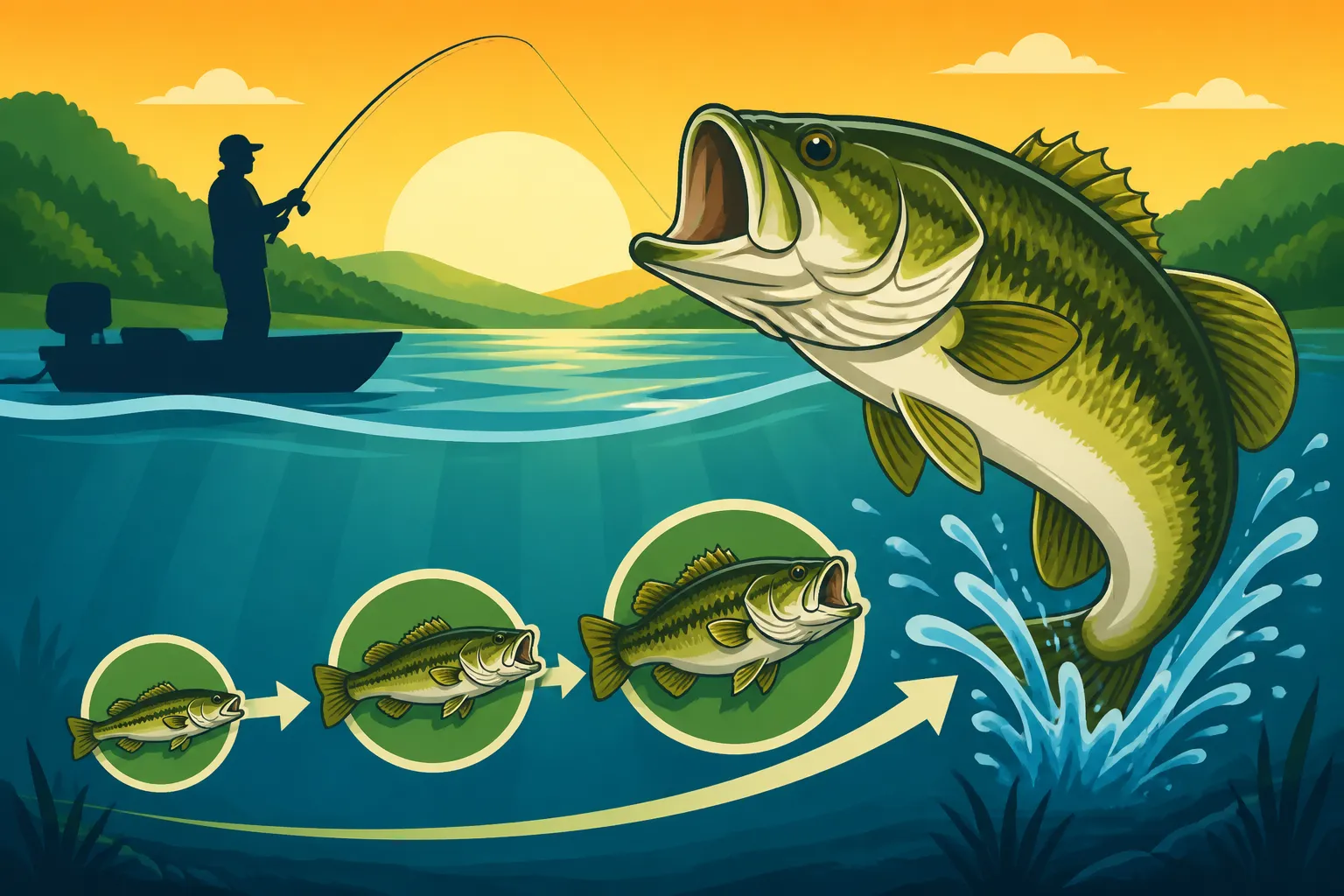
In a healthy Tennessee lake with good forage and habitat, a largemouth bass might grow roughly like this:
- Year 1: By the end of their first year, a bass born in the spring might be anywhere from 4 to 8 inches long, sometimes even a bit more in exceptionally rich environments. They are focused on survival and rapid initial growth.
- Year 2: These fish could reach 10 to 14 inches. They're becoming more efficient predators.
- Year 3-4: This is often when they hit the "keeper" size for many anglers, typically ranging from 14 to 18 inches. They're strong, healthy, and really starting to put on some bulk.
- Year 5-7: A bass in this age range could easily be 18 to 22 inches, often weighing 3 to 6 pounds, or even more in prime trophy lakes. This is where you start talking about impressive fish.
- Year 8+: True lunkers, often exceeding 7-8 pounds and 22+ inches, are generally older fish, sometimes 8 to 10 years old or more. These are the fish that have survived multiple spawning seasons and avoided predators and anglers.
It's important to note that these are averages. A bass in a nutrient-rich lake like Chickamauga might hit 5 pounds by age 4 or 5, while a bass in a less fertile body of water might take 7 or 8 years to reach that same size. This variation is a big part of the fun and challenge of bass fishing! Anglers often study Tennessee Bass Fishing Seasons and Patterns to maximize their chances of catching these different age classes.
Growth Rate Variation Between Lake Types
The growth rate of largemouth bass can differ significantly even within Tennessee, depending on the specific characteristics of the lake or reservoir.
- Large Reservoirs (e.g., Chickamauga, Kentucky Lake): These vast water bodies often boast incredibly rich ecosystems. They usually have an abundant and diverse forage base, extensive submerged cover, and large areas of ideal habitat. Bass in these reservoirs tend to grow faster and reach larger sizes due to the sheer abundance of food and space. Trophy bass are more common here. Chickamauga Lake, Tennessee's Top Spot for Record Largemouth Bass is a perfect example of this.
- Smaller Lakes and Ponds: Farm ponds or smaller community lakes can be a mixed bag. If well-managed with a balanced fish population and adequate forage, bass can grow quite well. However, they are more susceptible to overpopulation, which can lead to stunted growth if there aren't enough resources for all the fish. Small, unmanaged ponds can often have a lot of bass, but few, if any, ever reach a significant size.
- Highland Reservoirs (e.g., Dale Hollow, Norris Lake): These lakes often feature clearer, cooler water and can be less fertile than their lowland counterparts. While they still produce excellent bass, the growth rate might be slightly slower, and the fish might take a bit longer to reach trophy sizes compared to the more fertile, warmer reservoirs. However, they are known for exceptional smallmouth bass and offer different fishing challenges.
Here's a simple table illustrating potential differences in largemouth bass growth by lake type, keeping in mind these are generalized examples:
| Lake Type/Forage Level | Typical Length at Year 1 | Typical Length at Year 3 | Typical Length at Year 5 | Potential for Trophy Sizes (5+ lbs) |
|---|---|---|---|---|
| High Forage Reservoir | 7-9 inches | 15-18 inches | 20-22+ inches | High |
| Average Reservoir | 5-7 inches | 12-15 inches | 17-20 inches | Moderate to Good |
| Stunted Pond | 3-5 inches | 8-11 inches | 12-14 inches | Low to Rare |
Factors That Can Speed Up or Slow Down Growth
As anglers, understanding what makes a bass tick (or, in this case, grow) can help us appreciate our catches and even inform our conservation efforts. Let's delve a bit deeper into what really puts the pedal to the metal for growth or, conversely, slams the brakes.
Abundant and Diverse Forage
We touched on this, but it bears repeating: the quality and quantity of food are paramount. If a bass is in a lake teeming with easy-to-catch, high-protein prey like threadfin shad, gizzard shad, and plump bluegill, it will grow at an accelerated rate. These forage fish provide the necessary energy and nutrients for rapid muscle and bone development. A bass that expends minimal energy to find and catch its meals has more energy to convert into growth. This is why you'll often see robust bass in systems that sustain massive baitfish schools.
Consider the role of invasive species, too. While not always positive, certain forage introductions can dramatically alter growth. For instance, if a lake introduces gizzard shad, which grow larger than threadfin, the bass that can consume these larger prey will show exceptional growth. However, if the gizzard shad grow too large too quickly, they can outgrow the bass's ability to eat them, creating a less efficient food chain. This dynamic balance is what fishery managers constantly strive to maintain.
Optimal Habitat and Water Conditions
A bass needs a home where it feels safe and can efficiently hunt. Lakes with a complex mix of deep and shallow water, submerged cover (like hydrilla beds or standing timber), and rocky points provide ideal conditions. These areas offer ambush points, thermal refuge during extreme temperatures, and spawning grounds. A well-structured environment reduces stress on the fish, allowing them to allocate more energy towards growth rather than just survival.
Conversely, degraded habitats, such as those with excessive siltation, lack of cover, or polluted runoff, can severely hamper growth. Bass in these areas might struggle to find food, evade predators, or even spawn successfully, leading to a population of smaller, less healthy fish. Regular water quality monitoring and habitat restoration efforts by organizations like the Tennessee Wildlife Resources Agency (TWRA) are vital for fostering healthy bass populations. Many passionate anglers even volunteer for clean-up days to help maintain these crucial habitats.
Population Density and Competition
This is a classic ecological principle: too many mouths to feed. If a lake becomes overpopulated with bass, especially in a limited forage environment, competition for food will be fierce. This leads to stunted growth, where many bass are caught, but they are all small for their age. Instead of a few large, healthy fish, you have many small, hungry ones. This is common in smaller, unmanaged ponds where natural predator-prey balances are easily disrupted.
For example, a pond might be stocked with bass, but if bluegill (their primary food) aren't also stocked and managed, the bass quickly eat through the available food and then slow their growth. In such scenarios, selective harvest of smaller bass can actually improve the overall growth rate of the remaining fish by reducing competition. It's a tough decision for some anglers, but it’s often a necessary one for the health of the fishery. Always check Tennessee Fishing Regulations Explained for specific guidance on harvest limits for particular bodies of water.
Disease and Parasites
Like all living creatures, fish can suffer from diseases and parasites. While less common in a widespread sense that significantly impacts overall growth rates across an entire reservoir, localized outbreaks or persistent parasite loads can weaken individual fish, making them less efficient at feeding and more susceptible to other stressors. This reduced vigor naturally translates to slower growth. Healthy ecosystems with good water quality and balanced populations generally keep disease transmission in check.
Understanding Largemouth Bass Age and Size for Anglers
For us anglers, understanding growth rates isn't just academic; it has practical implications for how we approach fishing, what gear we choose, and how we practice conservation. Knowing what to expect in terms of size and age can really enhance your time on the water.
Estimating Age from Size
While you can't get an exact age without looking at fish scales or ear bones (otoliths) under a microscope, experienced anglers and fishery biologists can make pretty good estimations based on length and weight. If you consistently catch 12-inch bass in a particular lake, and you know that lake's average growth rate, you can ballpark their age. If those 12-inch bass are plump and healthy, they might be younger than 12-inch bass from a stunted pond that are lean and hungry.
Knowing this helps manage expectations. If you're fishing a clear, highland reservoir, you might expect a 3-pound bass to be 5-6 years old. But in a fertile, lowland lake, a 3-pounder could be a year or two younger. This subtle difference shapes your perspective and helps you understand the health of the fishery. You might consider specific setups, like a medium-heavy rod and a baitcasting reel loaded with heavier line, which you can easily find on Amazon, if you're targeting those larger, older bass. For general guidance on gear, take a look at Best Rods for Largemouth Bass.
The Role of Catch and Release for Growth Potential
Catch and release is a cornerstone of modern bass fishing, and it directly impacts the potential for bass to reach older ages and larger sizes. Every time you release a healthy bass, you're giving it another chance to grow, spawn, and contribute to the fishery. This is especially true for the larger, more genetically robust fish that have proven their ability to survive and thrive. Many tournaments strictly enforce catch-and-release rules to ensure the long-term health of the bass population.
While Tennessee's Largemouth Bass Limit Is 5 Per Day, Only 1 Over 18 Inches allows for harvest, many anglers choose to release all their large bass, focusing on keeping smaller, pan-sized fish for the table. This selective harvesting strategy can actually help improve the overall growth rate of the remaining bass by reducing competition among the smaller fish. It's a win-win: you get to enjoy a fresh meal, and the trophy fish continue to grow. This mindful approach ensures that future generations of anglers will also have the chance to experience the thrill of catching a Tennessee lunker. For those interested in improving their skills, learning Best Lures for Pre-Spawn Bass Fishing can help you target those bigger, older fish when they are most active.
Disclaimer
This article is for general informational purposes only and does not constitute professional advice. Laws, prices and regulations vary by location and change over time. Consult a qualified professional for guidance on your specific situation.