Striped Bass vs Hybrid Striped Bass: What’s the Difference?
It’s easy to get confused when you’re out on the water in Tennessee, casting for those hard-fighting members of the Morone family. Many anglers, even seasoned ones, find themselves scratching their heads trying to distinguish between a Striped Bass and a Hybrid Striped Bass. This guide is here to clear up that confusion, diving deep into the subtle yet significant differences that will help you identify your catch with confidence and ensure you're following the right regulations.
The Core Identity: What Defines Each Species?
At first glance, both Striped Bass and Hybrid Striped Bass share a striking resemblance, and for good reason—they're related! But dig a little deeper, and you'll find distinct identities that affect where they live, how they grow, and even how they fight on the end of your line. Understanding these fundamental differences is your first step to becoming a more informed and successful angler.
True Striped Bass (Morone saxatilis): The Anadromous Original
Let's start with the classic: the pure Striped Bass, often affectionately called "stripers." These magnificent fish are true giants of the freshwater world, even though their lineage traces back to the salty seas. Originally, Striped Bass are anadromous, meaning they spend most of their lives in saltwater and migrate to freshwater rivers to spawn. However, thanks to successful stocking programs, many of Tennessee's vast reservoirs have thriving landlocked populations. These fish have adapted remarkably well, forming self-sustaining or near self-sustaining populations in some of our larger impoundments.
Think about a body of water like Norris Lake: A Tennessee Fish Species Overview or Cherokee Lake – these are prime examples of places where you'll find pure stripers. They tend to be long and sleek, built like a torpedo, perfectly designed for cruising open water and chasing down schools of baitfish. Their lateral lines, those dark, prominent stripes running down their sides, are typically strong, unbroken, and very distinct from head to tail. These fish are known for their incredible growth potential; given the right conditions and a healthy forage base, they can become absolute monsters, easily exceeding 50 pounds in some areas. Landing one of these giants is an unforgettable experience, a true test of an angler's skill and tackle. They are often found in deeper, cooler, more oxygenated parts of the lake, especially during the warmer months, always on the hunt. For more about these powerful fish, check out Striped Bass Fishing in Tennessee Reservoirs.
Hybrid Striped Bass (Morone saxatilis x Morone chrysops): The Best of Both Worlds
Now, let's talk about the Hybrid Striped Bass, often referred to as "Wipers" or "Sunshine Bass" depending on which parent species was the female in the cross (though many just call them hybrids). These are not naturally occurring fish; they are a marvel of aquaculture, specifically bred for sport fishing. A hybrid striped bass is, quite literally, a cross between a female Striped Bass (Morone saxatilis) and a male White Bass (Morone chrysops). This genetic mix creates a fish that often embodies the best traits of both parents.
Why were they created? Primarily, for a few key reasons: they grow faster than pure stripers, they are generally hardier, and they can tolerate warmer water temperatures and less oxygenated environments than their pure Striped Bass counterparts. This makes them ideal for stocking in a wider variety of lakes and reservoirs that might not be suitable for pure stripers. Lakes like Percy Priest Lake Fishing Near Nashville, Tennessee or Old Hickory Lake are well-known for their fantastic hybrid populations.
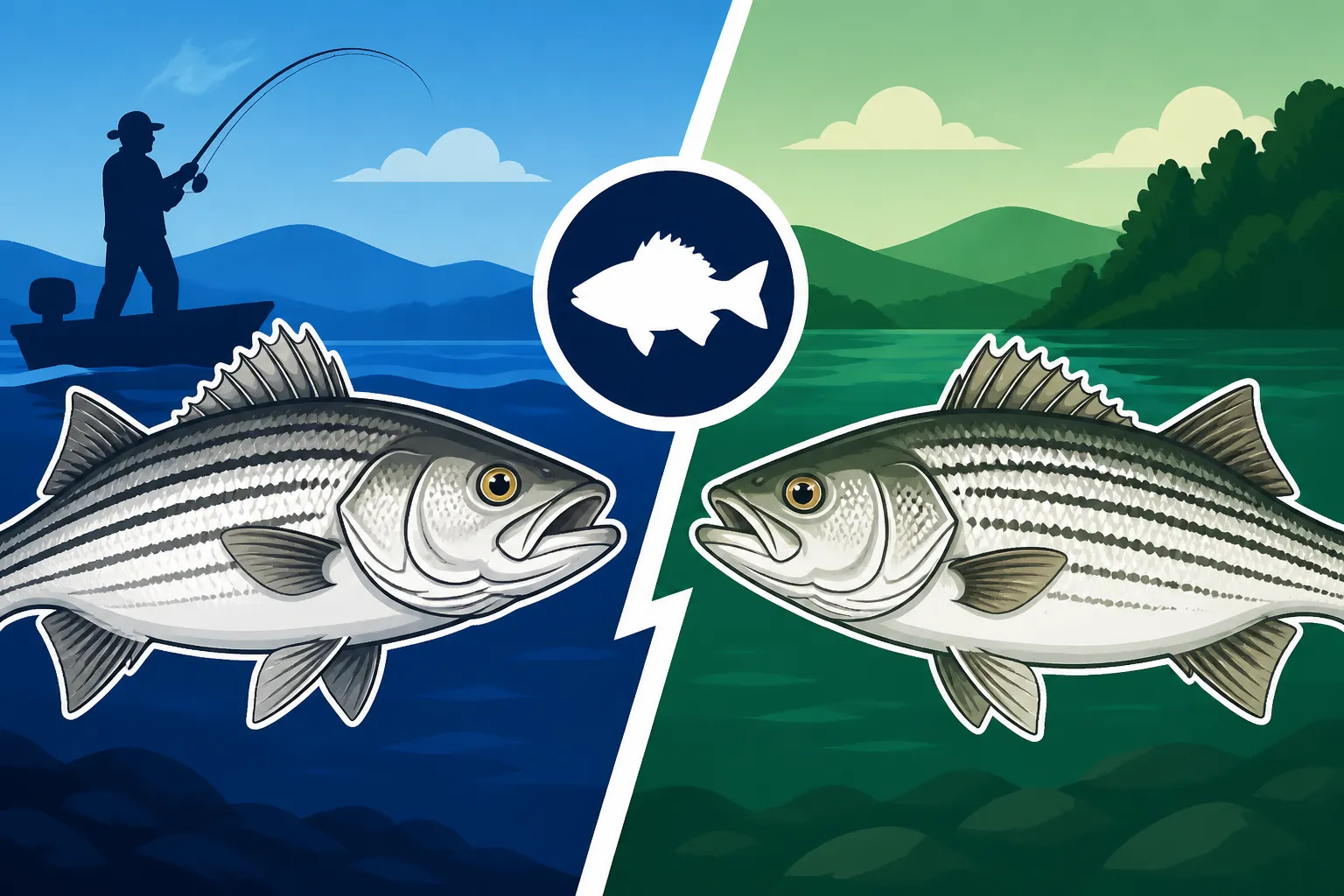
Physically, hybrids tend to have a deeper, more stout body shape, often described as "football-shaped," giving them a powerful, compact build. Their most defining characteristic, however, lies in their stripes. Unlike the pure striper's unbroken lines, a hybrid's lateral lines are usually broken, splotchy, or discontinuous, especially along their lower sides. They might have a few solid lines up top, but as you move down the body, you'll see those tell-tale interruptions. While they don't typically reach the colossal sizes of pure stripers, hybrids are fierce fighters, growing quickly to an impressive 5 to 20 pounds, and sometimes even larger. They are aggressive feeders, often schooling in impressive numbers and providing incredible action for anglers.
Telling Them Apart: Key Identification Markers
So, you've got a fish on the line, and it's putting up a phenomenal fight. How do you know if it's a pure Striped Bass or a Hybrid? Don't just guess! Knowing the difference is important for compliance with regulations and simply for satisfying your angler's curiosity. There are several key physical traits that, once you learn to spot them, make identification much easier.
Striping Patterns: The Most Obvious Clue
This is, without a doubt, the first thing you should look for and often the most reliable indicator. The lateral lines, those dark stripes running horizontally down the fish's body, are your best friend in distinguishing these two species.
- Pure Striped Bass: Imagine you've just reeled in a powerful fish from Watts Bar Lake, Tennessee's Largest Lake for Fishing. When you look at its sides, you'll see several prominent, dark, continuous stripes. These stripes run straight and strong from the gills all the way to the tail, with very few, if any, interruptions. Even the stripes below the lateral line (the main, most prominent line) will typically be solid and unbroken. Think of them like perfectly drawn lines on a piece of paper.
- Hybrid Striped Bass: Now, if that same fish from Watts Bar Lake turned out to be a hybrid, its stripes would tell a different story. While hybrids will also have distinct stripes, many of them—especially the ones below the lateral line—will appear broken, fragmented, or splotchy. It's like someone drew the lines, then went back and erased sections of them. You might see some solid lines higher up on the body, but as you move down, you'll almost certainly find stripes that stop and restart, or are noticeably offset from each other. Sometimes they look less like lines and more like a series of dashes or dots.
It’s crucial to check multiple stripes on both sides of the fish. Sometimes, one side might have a less obvious pattern than the other. Take a moment to examine a few of the lower stripes, as these are often the most telling for hybrids. This visual check becomes second nature with practice, and soon you'll be able to tell them apart at a glance.
Body Shape and Fin Structure: Subtle but Important Differences
While the stripes are usually the biggest giveaway, paying attention to the overall body shape and even the dorsal fins can offer additional confirmation.
- Pure Striped Bass: As mentioned earlier, pure stripers are built for speed and endurance in open water. They have a more streamlined, elongated, and cylindrical body shape. Think of it as a sleek, muscular swimmer. Their body tapers gracefully from head to tail, giving them that torpedo-like profile. If you compare it side-by-side with a hybrid, the pure striper will almost always appear thinner in proportion to its length.
- Hybrid Striped Bass: Hybrids, on the other hand, tend to be deeper-bodied and more compact for their length. They often have a "football" or "humpback" appearance, especially around the shoulders. This stockier build gives them incredible power for their size, leading to those signature bulldog fights. Regarding their fins, another subtle but helpful characteristic to observe is the separation of their two dorsal fins. On a hybrid, the first (spiny) dorsal fin and the second (soft-rayed) dorsal fin are usually clearly separated. On a pure striper, while they are technically separate, they are often much closer together, sometimes appearing almost connected by a small membrane at their base. It's a nuanced difference, but it can be a good supporting clue after you've checked the stripes.
Mouth and Tongue Patches: Advanced Identification
For the truly dedicated angler who wants absolute certainty, especially in situations where the stripe pattern might be ambiguous (though rare), checking the fish's mouth and tongue can provide a definitive answer. This requires a bit more care, as you'll be handling the fish directly.
- Pure Striped Bass: Gently open the fish's mouth and look at its tongue. A pure Striped Bass will have two distinct, parallel patches of teeth on its tongue. These are quite noticeable once you know what to look for, feeling almost like sandpaper.
- Hybrid Striped Bass: A Hybrid Striped Bass will typically have only one distinct patch of teeth on its tongue, or sometimes several scattered, smaller patches that don't form the clear, double-row pattern of a pure striper.
Always handle fish with wet hands and as little stress as possible, especially if you plan to release them. This method is usually a last resort if you're really stumped by the external features, but it's a scientific way to confirm your catch's identity.
Fishing Implications: Why It Matters to Anglers
Beyond simply knowing what you've caught, understanding the differences between Striped Bass and Hybrid Striped Bass has real-world implications for your fishing strategy, gear choices, and most importantly, adhering to local regulations. It's not just about bragging rights; it's about being a responsible and effective angler.
Different Habitats and Feeding Preferences
Because of their genetic makeup and physical characteristics, pure stripers and hybrids often behave differently in Tennessee's waters, even when they share the same lake.
- Pure Striped Bass: These fish generally prefer cooler, deeper, more oxygenated water. They are typically pelagic, meaning they roam the open water column, often following vast schools of baitfish like gizzard and threadfin shad. During summer, you'll often find them congregating around thermoclines, where cooler water holds more oxygen. Their feeding binges can be explosive, with schools of stripers pushing bait to the surface in what's known as a "striper boil." To effectively target them, you need to think about deep-water tactics, trolling large swimbaits, or casting topwater lures into those frantic feeding frenzies. Understanding How Water Temperature Affects Fish Activity is paramount for locating these fish.
- Hybrid Striped Bass: Hybrids, with their greater tolerance for warmer water and varied conditions, can be found in a broader range of habitats. While they also school and chase baitfish, they are often more willing to come into shallower water, especially in the spring and fall. You might find them in tributary mouths, around prominent points, or even in the tailwaters below dams. They are less confined to the deep, cool zones, making them potentially more accessible to anglers who don't have specialized deep-water electronics. Their aggressive nature means they'll often strike a wider variety of baits, from crankbaits to jigs to live shad.
Knowing these habitat and feeding tendencies means you can adjust your approach. If you're targeting pure stripers, you'll likely focus on deep structure, open water trolling, or early morning topwater action in specific areas. For hybrids, you might explore more diverse areas, including shallower banks or current breaks, expanding your fishing opportunities.
Gear Selection and Fight Differences
Both species are renowned for their powerful fights, but there can be subtle differences that influence your gear choices. When you're shopping for gear, whether online on platforms like Amazon or at your local tackle shop, consider these distinctions.
- Pure Striped Bass: When a truly large pure striper hits your line, be prepared for a battle. These fish are known for long, powerful runs that can strip line from your reel in a hurry. They often make deep, dogged fights, testing your rod, reel, and drag system to their limits. For trophy stripers, anglers often opt for heavy-action rods, robust baitcasting or spinning reels spooled with strong braided line (think 30-50lb test), and stout fluorocarbon leaders. You need tackle that can absorb powerful shocks and withstand prolonged stress. If you're wondering about your setup, you might find Best Rods and Reels for Tennessee Fishing helpful.
- Hybrid Striped Bass: Hybrids, while generally smaller than the largest pure stripers, are no slouches in a fight. They are known for their incredibly hard, bulldog-like battles. They might not make the same incredibly long runs as a big striper, but they pull with immense power for their size, often turning sideways to create maximum drag. For most hybrids, a medium-heavy rod with a quality spinning or baitcasting reel spooled with 15-20lb monofilament or 20-30lb braid is usually sufficient. You still need strong gear, but perhaps not the absolute heaviest setup reserved for truly monster stripers. However, don't underestimate them; a big hybrid can surprise you!
Choosing the right gear not only makes the fight more enjoyable but also increases your chances of landing the fish and minimizing stress on both the fish and your equipment.
Regulations and Catch Limits
This is perhaps the most critical reason to be able to tell the two species apart: regulations for Striped Bass and Hybrid Striped Bass can, and often do, differ within Tennessee waters. It’s not uncommon for a lake to have a specific daily creel limit and size restriction for pure stripers that is completely different from the limits for hybrids. In some cases, they might be managed under a combined "striped bass complex" regulation, but it's vital not to assume.
Imagine catching a limit of what you think are hybrids, only to find out you've actually kept too many pure stripers for that specific lake's rules. That could lead to a citation and a hefty fine. Always, always check the current Tennessee Wildlife Resources Agency (TWRA) fishing guide for the specific body of water you intend to fish before you cast your first line. Regulations are subject to change, and lake-specific rules often override statewide defaults. For general information, you can always consult Tennessee Fishing Regulations Explained and Tennessee Fishing Season and Catch Limits. Being informed means you can enjoy your fishing trip without worrying about breaking the law.
Here’s a quick overview table to help solidify the core differences:
| Feature | Striped Bass (Pure) | Hybrid Striped Bass (Wiper/Sunshine Bass) |
|---|---|---|
| Origin | Native to oceans, stocked in freshwater | Man-made crossbreed (Striper x White Bass) |
| Lateral Lines | Generally continuous, unbroken, distinct | Often broken, interrupted, or splotchy |
| Body Shape | More torpedo-shaped, sleek, streamlined | Deeper, more "football-shaped," compact |
| Max Size Potential | Larger, can exceed 50+ pounds | Smaller, typically 5-20 pounds, sometimes more |
| Growth Rate | Slower to reach trophy size | Faster to reach catchable size |
| Water Preference | Cooler, deeper, highly oxygenated areas | More tolerant of warmer water, wider range |
| Tongue Patches | Two distinct patches | Usually one distinct patch, or scattered |
| Fight | Powerful, long runs, deep fights | Hard, bulldog-like, aggressive |
| Lifespan | Longer, often 10+ years | Shorter, typically 5-7 years |
Remember, while the table gives you a good snapshot, nothing beats seeing these fish in person and practicing your identification skills. Every fish is a little different, but these guidelines will serve you well. For more on the specifics of their growth, check out Striped Bass Size Records and Growth Rates, and for the rules, Tennessee Striped Bass Season and Regulations. If you're gearing up, you might even consider specific lures, and Best Lures for Striped Bass in Deep Water could be a good resource, regardless of the precise species.
Disclaimer
This article is for general informational purposes only and does not constitute professional advice. Laws, prices and regulations vary by location and change over time. Consult a qualified professional for guidance on your specific situation.