Striped Bass Size Records and Growth Rates
Many anglers hitting Tennessee’s vast reservoirs share a common dream: landing a truly massive striped bass. It’s a powerful, hard-fighting fish that commands respect, but understanding what it takes for these impressive fish to reach trophy size, and what the current benchmarks are for record-breaking catches, can feel a bit mysterious. This guide aims to demystify the incredible growth journey of striped bass in our Tennessee waters, exploring the factors that contribute to their immense size and offering insights into the pursuit of these legendary fish.
Understanding Striped Bass Growth in Tennessee's Waters
When you think about striped bass in Tennessee, you're often imagining a behemoth that can peel line off your reel like it's nothing. But every one of those giants started small. The journey from a tiny fingerling to a truly massive fish is a testament to their predatory nature and the rich environments our state’s reservoirs provide.
The Rapid Rise of a Reservoir Predator
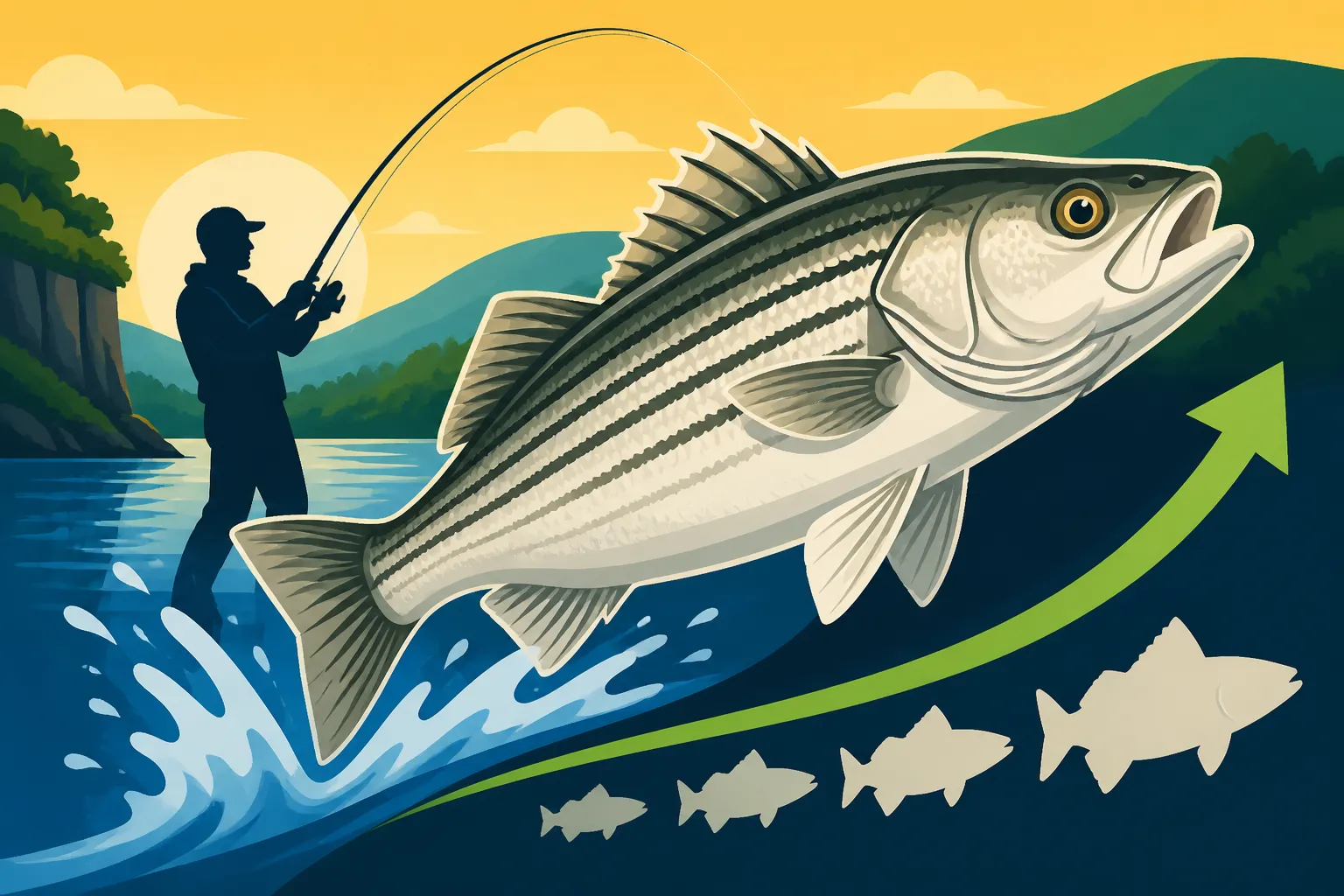
Striped bass, particularly those stocked in landlocked freshwater reservoirs like many of Tennessee's, are known for their incredibly rapid growth rates. In their early years, these fish are absolute eating machines, taking advantage of abundant forage fish populations. Think of them as aquatic teenagers constantly raiding the pantry! Lakes teeming with gizzard shad, threadfin shad, and alewives offer an all-you-can-eat buffet that allows stripers to pack on pounds and inches at an astonishing pace. This means that within just a few years, a fish that started out no bigger than your finger can easily become a respectable "keeper" size, offering a fantastic fight for any angler. Their metabolism is high, and with plenty of food, they convert that energy directly into muscle and length, making them one of the fastest-growing game fish in our state.
The sheer volume of water and the extensive food chains within Tennessee's larger reservoirs create ideal conditions for this rapid development. Unlike river systems where food sources might be more dispersed, a reservoir concentrates forage, allowing stripers to expend less energy finding food and more energy growing. This is particularly true in their first three to five years, where you see a dramatic increase in both length and girth. After that initial explosive growth, it might slow down a bit, but they continue to add weight, becoming truly formidable predators. Striped Bass Fishing Guide for Tennessee Reservoirs can help you understand more about where these fish thrive.
Factors that Fuel a Striper's Size
Several critical elements come into play when a striped bass reaches truly exceptional sizes in Tennessee. First and foremost is the availability and quality of forage. A reservoir with a healthy, diverse, and abundant population of baitfish will naturally produce larger, healthier stripers. If the primary food source is plentiful, stripers don't have to work as hard to eat, leading to more efficient growth. Water temperature and oxygen levels are also crucial; stripers prefer cooler, well-oxygenated water, which influences their comfort and feeding patterns. Reservoirs with a robust "thermocline" – a layer of colder, oxygenated water in the deeper sections during summer – often allow stripers to survive and thrive through warmer months when other lakes might stress them.
Genetics certainly play a role, as some individual fish are simply predisposed to grow larger and live longer. However, environmental factors often have a more significant impact on the overall population's size potential. The management practices of the Tennessee Wildlife Resources Agency (TWRA) also contribute, as they monitor populations and stocking efforts to ensure a balanced ecosystem where stripers have every opportunity to grow. A healthy, well-managed lake with a steady supply of food and good water quality is a perfect recipe for producing those legendary, record-contending striped bass that anglers dream about. Understanding How Water Temperature Affects Fish Activity is key to appreciating these dynamics.
The Quest for Tennessee's Record Striped Bass
Every state has its fishing legends, and Tennessee is no exception, especially when it comes to the sheer power and size of striped bass. These fish grow to incredible dimensions, and the state record for striped bass is a testament to the potential of our waters and the dedication of our anglers.
Celebrating Legendary Catches
The state record striped bass in Tennessee stands as a monumental achievement, a fish of truly legendary proportions that inspires awe among anglers. It’s a weight and a length that many aspire to, and it represents the pinnacle of striped bass fishing in our state. While the specific numbers of the current record are always subject to change and verification, the idea of a fish of that magnitude captures the imagination. It’s proof that Tennessee's reservoirs are capable of producing truly world-class game fish. The pursuit of such a giant involves immense patience, skill, and often a bit of luck, and anyone who comes close to that mark has accomplished something truly special.
These record-breaking catches aren't just about the fish itself; they're about the story, the struggle, and the indelible memory created. They show us what's possible and push other anglers to refine their techniques, explore new waters, and dedicate themselves to the chase. Many of these record fish have come from our massive impoundments, like Watts Bar Lake, Tennessee's Largest Lake for Fishing or Kentucky Lake Fishing on the Tennessee Side, which are known for their ability to sustain such large predators. The sheer excitement around a potential record makes checking the official TWRA records a regular pastime for many serious anglers.
Verifying a Trophy: What Anglers Need to Know
Catching a truly massive striped bass is one thing; getting it officially recognized as a state record is another entirely. The process involves strict protocols to ensure accuracy and fairness. First, the fish must be weighed on a certified scale, usually at a local marina or bait shop that has equipment regularly inspected and approved for commercial use. This isn't a task for your typical bathroom scale; precision is paramount. Secondly, the fish needs to be measured precisely for length and girth. It's often recommended to have these measurements witnessed by multiple individuals who can attest to their accuracy.
Documentation is critical. Anglers are typically required to take clear photographs of the fish, often alongside the measuring device and scale, to provide visual proof. Contacting the TWRA as soon as possible after the catch is also essential, as they will guide you through their specific verification procedures. This often includes examining the fish itself to confirm species identification and potentially collecting tissue samples. The integrity of the state record system relies on these meticulous steps, ensuring that every legendary catch earns its rightful place in Tennessee's angling history. Having a good, reliable measuring tape and a digital scale on hand that you might find on Amazon can be a real asset for any angler hoping to document a truly impressive catch.
Lifelong Journeys: Average Growth Rates and Expectations
While the state record represents the extreme upper limit, most anglers are more interested in what constitutes a good-sized striped bass and how they typically progress through their life stages in Tennessee. Understanding these average growth rates can help set realistic expectations and inform your fishing strategies.
From Juvenile to Jumbo: Typical Size Ranges by Age
The growth trajectory of a striped bass in Tennessee reservoirs is quite remarkable. In their first year, often from hatchery stock, they grow rapidly, becoming active feeders. By the time they're a few years old, they typically reach a size that makes for an exciting catch – strong, healthy fish often in the medium to substantial range. As they mature, say in the four-to-eight-year range, their growth tends to be more about adding girth and weight than dramatic increases in length, though they continue to get longer too. This is when they transition from "good catch" to "impressive fish" status. After about eight years, or sometimes even longer in our most productive lakes, they can start reaching the truly large and exceptionally heavy categories, where they become genuine trophy contenders.
Of course, these are general trends. Each fish is an individual, and environmental conditions vary year to year. However, the consistent abundance of forage in our large reservoirs means that a healthy striper has a real chance to become a formidable size. It's always thrilling to pull in a fish that's clearly several years old, knowing the journey it's taken to reach that size.
Here's a general idea of how striped bass might progress through their lifespan in Tennessee:
| Age Category | General Length Description | General Weight Description | Key Characteristics |
|---|---|---|---|
| Early Juvenile | Small to medium | Light to moderate | Rapid growth, schooling, high metabolism |
| Growing Adult | Medium to substantial | Moderate to heavy | Powerful fighters, actively feeding on forage |
| Mature Adult | Large to very large | Heavy to exceptionally heavy | Often found in deeper water, seeking larger prey |
| Trophy Potential | Very large, impressive | Exceptionally heavy | Peak size, often solitary or in small groups |
Reservoir-Specific Growth Trends
It’s fascinating how different reservoirs across Tennessee can produce varying average sizes and growth rates for striped bass. While the general pattern of rapid early growth holds true, factors unique to each body of water can influence how big individual fish get. For instance, a lake with an exceptionally robust population of gizzard shad, like some areas of Norris Lake Fishing Guide, Tennessee's Clearest Water or parts of the Cumberland River Fishing Spots in Tennessee, might see stripers reaching impressive sizes quicker or maintaining higher average weights. Conversely, a reservoir with less consistent forage or greater fishing pressure might produce stripers that, on average, don't reach the same maximum sizes.
Water clarity also plays a role. Clearer lakes might offer different hunting advantages or disadvantages for stripers compared to more turbid waters, influencing their feeding efficiency. Anglers who consistently fish one particular reservoir often develop a keen sense of what constitutes a "big fish" for that specific lake, recognizing that the benchmarks can shift. For example, a 30-pound striper might be common in one major reservoir but a true rarity in another. This highlights the importance of local knowledge and fishing reports when you’re out chasing these magnificent fish.
Enhancing Your Chances for a Giant Tennessee Striper
If you're serious about catching a trophy striped bass in Tennessee, it's not just about luck. It's about understanding their habits, knowing where to look, and having the right tools for the job. Combining knowledge with appropriate gear can significantly increase your odds of landing that fish of a lifetime.
Prime Locations and Peak Seasons for Big Fish
Targeting big stripers in Tennessee means focusing on reservoirs that have a proven track record of producing them. Lakes like Chickamauga Lake, Tennessee's Top Bass Fishing Destination (which also produces impressive stripers), Watts Bar Lake, Tennessee's Largest Lake for Fishing, Norris Lake Fishing Guide, Tennessee's Clearest Water, and Percy Priest Lake Fishing Near Nashville, Tennessee are renowned for their striped bass populations. These sprawling bodies of water offer the deep, cool, oxygenated water and abundant forage that large stripers need to thrive. While stripers are present year-round, certain seasons offer better opportunities for targeting the giants.
Spring and fall often see stripers more active and shallower as they follow baitfish, making them more accessible to anglers using various techniques. In the summer, they tend to retreat to deeper, cooler water, requiring specialized tactics like downrigging or targeting thermoclines. Winter can also be productive, with stripers schooling tightly around deep structure. Keeping an eye on local fishing reports and adapting your approach to the season and water conditions for the specific lake you're fishing is crucial. Many veteran anglers will tell you that half the battle is simply being in the right place at the right time, armed with the right knowledge. You can learn more about Tennessee Bass Fishing Seasons and Patterns, which often overlap with striper activity, or specific Best Fishing Lakes in Tennessee that hold these giants.
Essential Gear for Targeting Trophy Stripers
When you hook into a truly large Tennessee striped bass, you'll quickly realize that these fish are in a league of their own when it comes to raw power. Their long, muscular bodies are built for drag-screaming runs, and if you're not prepared, they'll humble you in a heartbeat. That’s why having the right gear is non-negotiable. You'll want a heavy-duty rod, typically 7 to 8 feet long with a medium-heavy to heavy action, paired with a robust baitcasting or spinning reel capable of holding a substantial amount of strong line. Many anglers opt for braided line, often 50 to 80 pounds, due to its strength and sensitivity, paired with a fluorocarbon leader. Best Rods and Reels for Tennessee Fishing can offer more specific recommendations.
Beyond the rod and reel, your terminal tackle needs to be equally sturdy. Heavy-gauge hooks, strong swivels, and durable split rings are crucial, as a weak link will inevitably fail under the strain of a big striper. Live bait, especially large gizzard shad or herring, is often the top choice for trophy stripers, but large swimbaits, jerkbaits, and trolling lures can also be highly effective. For those targeting deep summer fish, downriggers or planer boards are essential tools that help present baits at the precise depth where stripers are feeding. Many anglers find a lot of their specialized gear, from heavy-duty hooks to robust reels, on online marketplaces like Amazon, often reading reviews to ensure they're getting quality products that can stand up to the challenge of a truly massive fish. Best Trolling Gear for Tennessee Striped Bass is particularly useful if you plan to cover a lot of water.
Disclaimer
This article is for general informational purposes only and does not constitute professional advice. Laws, prices and regulations vary by location and change over time. Consult a qualified professional for guidance on your specific situation.