Do Electric Trolling Motors Count as Mechanical Propulsion in Tennessee?
We've all been there: staring at that shiny new electric trolling motor, imagining how it will revolutionize your fishing trips, only to be struck by that nagging question – "Does this mean I have to register my boat now?" It’s a common point of confusion for many Tennessee anglers, especially those with smaller craft like kayaks or canoes who usually fly under the registration radar. This guide is here to clear up that mystery, explaining exactly how the Tennessee Wildlife Resources Agency (TWRA) views electric trolling motors in relation to mechanical propulsion and what that means for your vessel.
The Crucial Question: Do Trolling Motors Qualify as Mechanical Propulsion?
It's a really good question, and one that trips up a lot of folks. You might think "electric" equals "different" than a roaring gas engine, but when it comes to the legal definition in Tennessee, the answer is pretty straightforward. You're not alone in wondering about this; it’s a detail that can easily be overlooked, especially if you’re new to adding power to your fishing setup.
Decoding "Mechanical Propulsion" in Tennessee
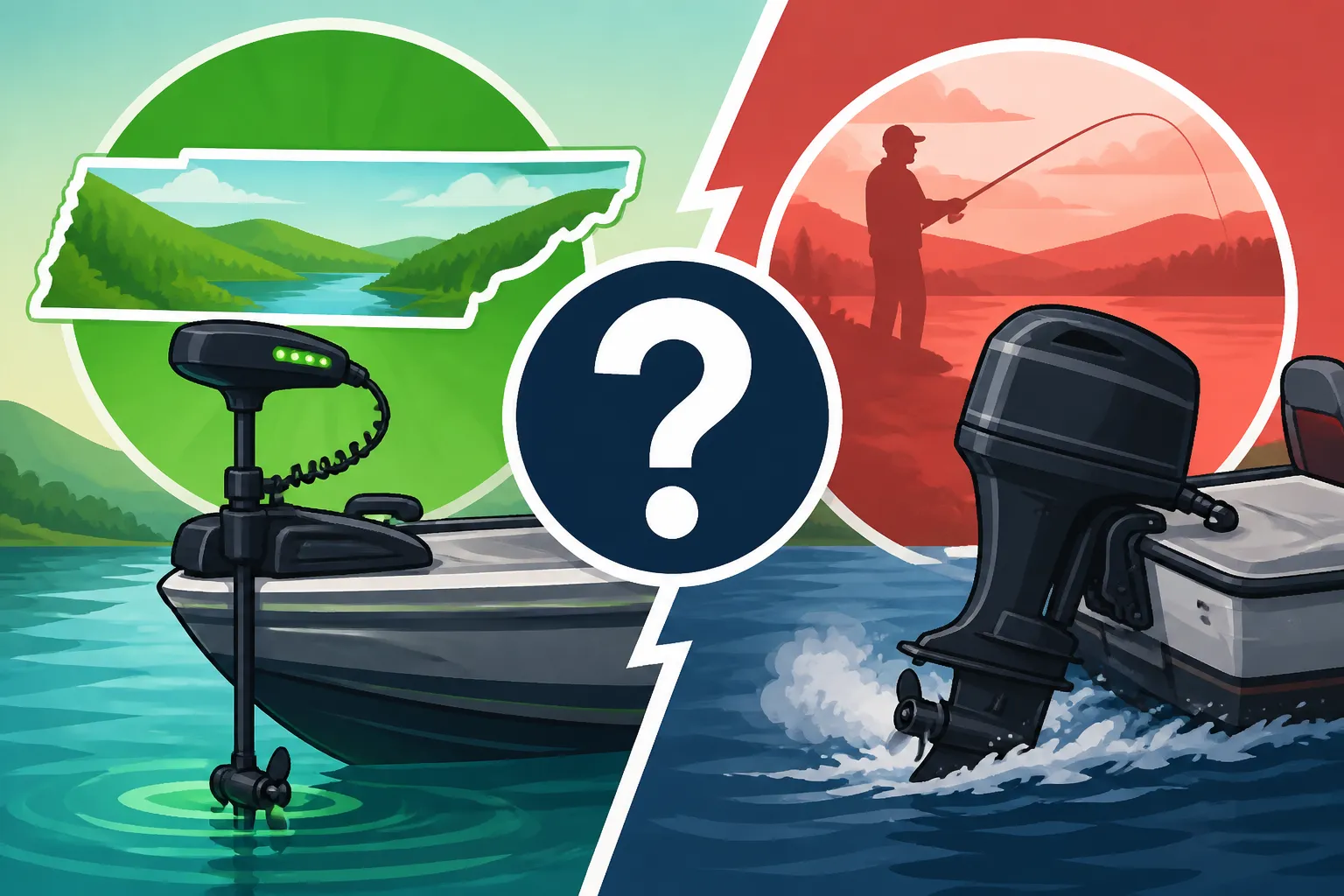
Let's cut right to the chase: in Tennessee, an electric trolling motor absolutely counts as "mechanical propulsion." The TWRA defines mechanical propulsion broadly, encompassing any method of propelling a vessel through the water using power other than wind or human muscle. This means whether you've got a massive outboard motor or a tiny electric trolling motor, if it's pushing your boat, it falls under the same category. It's not about the fuel type (gas, electric, propane, etc.) or even the horsepower, but rather the source of the power. If it's not you paddling, rowing, or sailing, it's considered mechanical.
So, while your electric trolling motor might be whisper-quiet and emit zero exhaust, it's still mechanically moving your boat. This distinction is vital because it's the presence of any mechanical propulsion that triggers the boat registration requirement in Tennessee. Without this understanding, you could easily find yourself on the wrong side of the law, thinking you're exempt when you're really not. It's a key piece of information for every angler considering an upgrade to their setup.
The reason for this broad definition boils down to uniformity and safety on the water. Regardless of how a boat is propelled, if it's moving under power, it needs to be identifiable and accountable, just like a car on the road. This helps the TWRA manage waterways, respond to emergencies, and enforce regulations consistently. It ensures that all powered vessels, from high-speed bass boats to a leisurely kayak with a small trolling motor, are part of the system designed to keep everyone safe and preserve our natural resources.
Registration Requirements Triggered by an Electric Motor
Once you bolt on that electric trolling motor, even if it's just a small one on the stern of your favorite fishing kayak, your vessel officially enters the realm of "mechanically propelled" boats in Tennessee. This instantly means it's no longer exempt from registration. Many people assume that if their boat is under a certain length or horsepower, or if it's a non-traditional boat like a canoe, that they're somehow in the clear. Unfortunately, that's a common misconception that can lead to unexpected fines.
The rule applies across the board. Whether you’re rigging up a tiny Jon boat, a fiberglass fishing skiff, or even a paddleboard, the moment an electric motor is attached and capable of propelling it, that vessel needs to be registered with the TWRA. This often catches kayakers and canoe enthusiasts by surprise, as their unmotorized vessels have always been exempt. Suddenly, that convenient little electric kicker transforms their simple paddle craft into a regulated boat.
So, if you're outfitting your vessel with an electric trolling motor, it's time to shift your mindset from "paddle craft" to "powered vessel" in the eyes of the law. This guide, along with others like Do Kayaks Need to Be Registered in Tennessee?, can help clarify exactly what you need to do to stay compliant. It's a small step that makes a big difference in ensuring you enjoy your time on the water without any legal headaches.
Navigating the Tennessee Boat Registration Process for Motorized Vessels
Now that we know your electric trolling motor means your boat needs to be registered, let's talk about how to actually get it done. It might seem like a daunting bureaucratic task, but the TWRA has made the process relatively straightforward, whether you prefer to do it online or in person.
Your Step-by-Step Guide to Registering
Registering your motorized vessel in Tennessee is a necessary step, and thankfully, it's not overly complicated. You have a few options for where to complete this process: online through the TWRA's website, in person at a TWRA regional office, or through authorized license agents (often bait shops, sporting goods stores, or county clerks). Most people find the online method the most convenient, allowing them to handle it from home.
When you go to register, you'll need a few key documents and pieces of information. The primary document is proof of ownership for your boat. This could be a manufacturer's statement of origin (MSO) for a new boat, a bill of sale for a used boat, or a previous registration if you've recently purchased a registered vessel. You'll also need the boat's Hull Identification Number (HIN), which is usually found on the transom. For the motor itself, you'll need its make, model, and horsepower – even for electric trolling motors, the "thrust" rating is typically used in place of horsepower if a direct HP isn't listed.
The registration form will ask for details about your boat's length, type (e.g., Jon boat, kayak, canoe, bass boat), and the type of propulsion. Make sure to accurately report all this information. The TWRA uses these details to categorize your vessel and calculate the appropriate registration fee. For a deeper dive into all requirements, check out Tennessee Boat Registration Requirements Explained. Taking the time to gather everything beforehand will make the process much smoother and quicker.
Understanding Fees, Renewals, and Display
Once you've submitted your application and provided all the necessary details, the registration fee will be calculated. In Tennessee, these fees are based on the length of your vessel, not the type of propulsion. So, whether you have a small Jon boat with an electric trolling motor or a larger bass boat with a gas engine, the fee structure depends on how long your boat is. You'll want to check the current TWRA website or your local agent for the most up-to-date fee schedule, as these figures can change.
| Boat Length (Approximate) | Initial Registration & Renewal Cost Shape |
|---|---|
| Less than 16 feet | Generally lower range |
| 16 to 26 feet | Mid-range |
| 26 to 40 feet | Higher range |
| Over 40 feet | Highest range |
You'll typically have options for how long you want your registration to be valid, often one year or three years. Choosing a multi-year option, like those discussed in One Year vs Three Year Boat Registration in Tennessee, can sometimes save you a bit of money and certainly saves you the hassle of annual renewals. Just remember to mark your calendar so you don't miss the expiration date! When it's time to renew, the process is very similar to initial registration, and you can even do it conveniently online, as outlined in How to Renew a Tennessee Boat Registration Online.
Finally, once your boat is registered, you'll receive your registration numbers and decals. These must be properly displayed on your vessel. The registration numbers (two letters, four numbers, two letters, e.g., TN-1234-AB) must be permanently affixed to both sides of the forward half of your boat, read from left to right, in block characters at least three inches high, contrasting with the hull color. The validation decal, showing the expiration year, is usually placed within six inches of the numbers on the left side of the bow. Proper display isn't just a suggestion; it's a legal requirement that helps enforcement officers quickly identify registered vessels.
Special Considerations for Kayaks and Canoes with Motors
This is where many anglers find themselves in a new regulatory landscape. For years, your trusty kayak or canoe has been a simple, unencumbered vessel—just grab your paddle and go. The moment you decide to add an electric trolling motor, however, you cross a significant threshold. Your human-powered craft is now considered mechanically propelled, and it falls under the same registration requirements as any other powerboat in Tennessee. This often comes as a surprise to many paddlers who just wanted a little extra push against the current or to cover more water.
The convenience of an electric motor on a kayak or canoe is undeniable. It allows you to explore further, battle headwinds, hold position against a current while fishing, and reduce fatigue. But this added utility comes with the responsibility of compliance. You'll need to go through the same registration process, obtain registration numbers, and affix them to your kayak or canoe, which can sometimes be a creative challenge on smaller, irregularly shaped hulls. Ensure the numbers are visible and meet the size and color contrast requirements.
Furthermore, adding mechanical propulsion can also trigger other requirements, such as the Tennessee Boating Safety Education Certificate for operators born after a certain date. While paddlers might typically be exempt from these courses, becoming a "powerboat" operator means adhering to these additional safety regulations. Who Needs Tennessee's TWRA Boating Safety Certificate dives deeper into these requirements, making it clear that your responsibility on the water expands alongside your vessel's capabilities. It’s important to educate yourself on all aspects of safe and legal operation once you've motorized your small craft.
Essential Safety and Gear for Your Electric-Powered Craft
Getting your boat registered is just the first step. When you add an electric trolling motor, you're not just adding propulsion; you're also adding to your responsibilities regarding safety and proper equipment. It’s crucial to understand these changes to ensure every trip is both enjoyable and compliant.
Mandatory Safety Equipment You'll Now Need
The moment your kayak, canoe, or small Jon boat gains mechanical propulsion, it graduates into a category of vessels with more stringent safety requirements. First and foremost, personal flotation devices (PFDs), or life jackets, become even more critical. While it's always wise to wear one, Tennessee law specifically requires all children 12 years of age and younger to wear a U.S. Coast Guard-approved life jacket whenever they are on the open deck of a propelled vessel. For more details on these rules, you can consult Tennessee Life Jacket and PFD Rules for Boaters. Every person on board must also have an accessible, wearable PFD of the appropriate size.
Beyond individual PFDs, your newly motorized vessel will likely need additional safety gear. If your boat is 16 feet or longer, you'll need a Type IV throwable flotation device on board, ready for immediate use. You'll also need a sound-producing device, such as a whistle or horn, to signal other boaters or alert for emergencies. If you plan to be on the water between sunset and sunrise, or during periods of restricted visibility like fog or heavy rain, you are also required to display navigation lights. This includes a white all-around light and separate red/green lights for the bow, which is a significant change for a small kayak or canoe. Learn more about night boating requirements in Do You Need Navigation Lights for Night Fishing in Tennessee?.
Remember, these aren't just suggestions; they are legal requirements designed to keep you and others safe. A quick check of the TWRA's boating safety guide can help you create a comprehensive checklist of all the gear you need to have on board. While adding all this equipment might feel like a lot, the peace of mind knowing you're prepared for any situation, and compliant with the law, is well worth the effort.
Choosing and Maintaining Your Electric Trolling Motor System
Selecting the right electric trolling motor for your boat involves more than just picking the cheapest option. You'll need to consider the thrust (measured in pounds) relative to your boat's size and weight, as well as the typical conditions you'll be fishing in. Stronger currents or heavier boats will demand more thrust. Shaft length is also crucial, especially for kayaks or canoes, to ensure the propeller is always submerged adequately without hitting the bottom in shallow water or catching air in choppy conditions. You can find a huge variety of options and compare specifications from reputable retailers like Bass Pro Shops or Amazon.
The power source for your trolling motor – the battery – is equally important. Most electric trolling motors run on 12V deep-cycle marine batteries, though some larger ones might require 24V or even 36V systems (multiple batteries wired together). Investing in a good quality deep-cycle battery is paramount, as they are designed for sustained power output over long periods, unlike car batteries meant for short bursts of high power. Proper battery maintenance, including regular charging and keeping terminals clean, will significantly extend its lifespan and ensure reliable performance on the water.
When considering your setup, think about how you'll manage battery life during a full day of fishing. Carrying a spare, fully charged battery, or having a portable power station, can be a game-changer for longer excursions. It's always a good idea to monitor your battery's charge level, especially if you're exploring remote areas. Planning your power usage can prevent you from being stranded far from the boat ramp, turning a relaxing day into an unexpected workout.
Staying Compliant and Avoiding Costly Mistakes
Ignoring registration and safety requirements, even for a small electric-powered boat, can lead to unwelcome encounters with the TWRA. Wildlife officers routinely patrol Tennessee's lakes and rivers, checking for valid registration, proper display of numbers, and required safety equipment. They're not just looking for big bass boats; they check all vessels, including kayaks and canoes with trolling motors. Getting caught without proper registration or mandated safety gear can result in fines and disrupt your fishing trip. While Penalties for Fishing Without a License in Tennessee deals specifically with fishing licenses, it gives you a good idea of the seriousness with which the TWRA approaches non-compliance.
The cost and hassle of a citation far outweigh the relatively simple process of registering your boat and outfitting it with the necessary safety equipment. It's also important to always carry proof of your boat's registration while on the water. Whether it's a physical copy or a digital version on your phone, you need to be able to present it if requested by a wildlife officer. This small piece of paper or digital file is your proof of compliance and can save you a lot of trouble.
Beyond the legal aspect, compliance is about responsible boating. Having the right safety gear not only protects you but also sets a good example for others and contributes to a safer environment for everyone enjoying Tennessee's beautiful waterways. Investing a little time upfront to understand and meet these requirements ensures that your adventures with your electric trolling motor are always safe, legal, and stress-free.
Frequently Asked Questions About Electric Trolling Motors and Registration
It's natural to have more questions when you're delving into regulations that might change how you've always used your small boat. Let's tackle some of the common thoughts and scenarios that come up.
"What if my motor is really small?"
This is a fantastic and very common question! Many anglers assume there’s a minimum horsepower or thrust rating before registration kicks in. After all, a tiny 18-pound thrust motor seems negligible compared to a massive gas outboard, right? However, for Tennessee boat registration purposes, the physical size or power output of the electric trolling motor doesn't exempt your vessel. If it's capable of mechanically propelling your boat, it triggers the registration requirement.
Think of it this way: the TWRA's definition of mechanical propulsion is broad for a reason. It's about the method of propulsion, not its intensity. So, whether you've got a small, transom-mounted electric motor on a 10-foot Jon boat for those quiet creek adventures, or a powerful bow-mount unit on a full-size bass boat, they both fall under the same regulatory umbrella. The smallness of your motor won't save you from the need to register, so it's always best to assume registration is necessary if you've added any electric propulsion.
This might feel a bit excessive if you're just putting a 30-pound thrust motor on a tiny kayak, but the consistency in enforcement helps ensure clarity for everyone. It removes any ambiguity or loopholes based on subjective interpretations of "small." So, if you're contemplating adding even the most compact electric trolling motor to your craft, factor in the registration step from the get-go.
"Does it matter if I only use the motor sometimes?"
Another excellent point of clarification! You might be thinking, "I mainly paddle my kayak, the electric motor is just for when I get tired or need to fight a strong wind." It's a logical thought process, but unfortunately, the way the TWRA sees it, your boat is classified by its capability, not just how you choose to operate it at any given moment.
If your vessel is equipped with an electric trolling motor that can propel it, then it is considered a mechanically propelled vessel, regardless of whether the motor is actively in use, tilted up, or even just sitting in the boat. The key is that the boat has been fitted with the means of mechanical propulsion. You wouldn't expect a car to be exempt from registration just because you sometimes push it downhill in neutral, right?
Therefore, if your boat has an electric trolling motor attached, even if you rarely turn it on, it still needs to be registered. The moment you decide to use that motor, you want to be fully compliant. Don't risk a fine by assuming occasional use means occasional registration. It's about being prepared and legal whenever you hit the water.
"Where can I buy a motor and get registration help?"
When it comes to purchasing an electric trolling motor, you have plenty of options. Large outdoor retailers like Bass Pro Shops are excellent resources, offering a wide selection, knowledgeable staff, and often installation services. Online giants like Amazon also carry a huge range of motors, from budget-friendly options to high-end models, often with competitive pricing and detailed customer reviews that can help you make an informed decision. Local bait and tackle shops might also carry a smaller selection and can provide personalized advice based on local fishing conditions.
For registration help, the primary resource is the Tennessee Wildlife Resources Agency (TWRA) itself. Their website is typically the best place to start for up-to-date information, forms, and online registration portals. You can also visit a TWRA regional office in person, where staff can guide you through the process and answer any specific questions you might have about your vessel. Additionally, many county clerk offices and sporting goods stores that sell fishing licenses are authorized to process boat registrations, offering convenient walk-in options.
No matter where you choose to buy your gear or get help with registration, don't hesitate to ask questions. The goal is to get you on the water safely, legally, and with confidence. Taking the time to properly outfit and register your electric-powered craft ensures you can focus on what truly matters: catching fish and enjoying the beauty of Tennessee's waterways.
Disclaimer
This article is for general informational purposes only and does not constitute professional advice. Laws, prices and regulations vary by location and change over time. Consult a qualified professional for guidance on your specific situation.