Best Crappie Jigs for Lake Fishing
Finding the perfect crappie jig for lake fishing in Tennessee can feel like searching for a needle in a haystack, especially with the sheer number of options out there. It's frustrating to stand in the aisle, wondering if you're picking the right color, size, or style for the specific conditions you'll face on the water. This guide is here to cut through that confusion, helping you understand the best crappie jigs for various lake fishing scenarios, so you can spend less time guessing and more time catching.
Understanding Crappie Jigs: Types and When to Use Them
Crappie jigs are far more than just a hook with some plastic; they are a sophisticated system designed to mimic baitfish, insects, or crustaceans. The combination of a jig head and a soft plastic body creates a specific action, profile, and fall rate that can be irresistible to crappie. Knowing the different types and when to deploy them is your first step to consistent success on Tennessee's renowned crappie lakes.
Jig Heads: Weight and Hook Style
The jig head is the foundation of your crappie jig, determining how quickly it sinks, how it moves through the water, and how it feels to the fish. It's not just about getting it to the right depth; it's about presenting it naturally.
The Importance of Jig Head Weight
Jig head weight is crucial for controlling depth and presentation speed. Lighter jig heads, often 1/32 or 1/16 ounce, are excellent for shallow water, calm conditions, or when crappie are suspended just under the surface. They offer a slow, enticing fall that can trigger bites from finicky fish. Imagine fishing a glassy coved area on Old Hickory Lake Fishing Spots on a still morning; a light jig head allows your bait to flutter down slowly, giving crappie plenty of time to react.
Heavier jig heads, typically 1/8 to 1/4 ounce, are your go-to for deeper water, windy days, or when you need to punch through current or thick cover. If you're targeting crappie suspended in 15-20 feet of water on a large reservoir like Kentucky Lake Fishing on the Tennessee Side, a heavier head gets your bait down quickly and keeps it in the strike zone. It also provides better contact with the bottom if you're fishing near structure. The key is to use the lightest jig head possible that still allows you to reach your desired depth and maintain feel. Too heavy, and your presentation might look unnatural; too light, and you'll struggle to get it where the fish are.
Hook Style and Size Considerations
Beyond weight, the hook style and size on your jig head play a significant role. Most crappie jig heads feature either a standard J-hook or a sickle hook. Sickle hooks are often preferred by many crappie anglers because their sharp, inward bend is designed to hold fish better, reducing the chances of a crappie spitting the hook once it's set. When browsing jig heads at a local bait shop or online at Bass Pro Shops, pay attention to the wire gauge as well. Finer wire hooks penetrate easier, which is great for lighter bites, but a slightly heavier wire can be beneficial if you're frequently snagging in brush piles and need a hook that won't straighten out easily.
Hook size should correspond to the size of your soft plastic body. Generally, a #4 or #2 hook is standard for 1.5 to 2-inch bodies, while larger 1/0 or 2/0 hooks might be used for bigger plastics or targeting trophy-sized crappie. A mismatched hook and body can hinder the bait's action and make it harder for crappie to get hooked properly.
Soft Plastic Bodies: Shape and Action
The soft plastic body is what gives your crappie jig its visual appeal and irresistible action. These come in a dizzying array of shapes, sizes, and textures, each designed to mimic different forage or elicit specific responses from crappie.
Paddle Tails, Curly Tails, and Straight Tails
These are perhaps the most common soft plastic designs for crappie.
- Paddle Tails: These bodies feature a small, flat paddle at the end that creates a thumping or vibrating action as it moves through the water. This vibration is excellent for attracting crappie in stained or murky water, where sight might be limited, or when you want to imitate a fleeing baitfish. Think of fishing on Watts Bar Lake, Tennessee's Largest Lake for Fishing where the water might have a bit of stain; a paddle tail can really shine.
- Curly Tails (Grubs): The classic curly tail grub has a long, slender tail that curls into a C-shape. This tail produces a continuous, undulating action, even with the slightest movement. It's incredibly versatile and effective for a wide range of conditions, offering a more subtle presentation than a paddle tail. When crappie are a bit more lethargic, or you're vertically jigging, the constant movement of a curly tail can be just what they need to commit.
- Straight Tails (Minnow or Shad Imitations): These plastics often mimic the profile of a small baitfish, with little to no inherent action in the tail itself. Their effectiveness lies in their realistic profile and the action imparted by the angler, often paired with a darting jig head. They are fantastic for clear water, where crappie rely more on sight, or when a very subtle, natural presentation is required. You might use these in clearer lakes like Norris Lake Fishing Guide, Tennessee's Clearest Water when you want to perfectly imitate a small threadfin shad.
Tubes, Spiders, and Other Specialty Shapes
Beyond the basic tails, there's a world of specialized soft plastic bodies designed for unique situations.
- Tubes: Tube jigs are hollow, cylindrical bodies with tentacles at one end. They offer a unique spiral fall and undulating tentacle action that can imitate everything from a small crawfish to a distressed baitfish. Tubes are particularly effective when crappie are hiding in heavy cover, as their compact profile makes them less prone to snagging. They can be incredibly deadly when fished with a slow retrieve or vertically jigged directly into brush piles.
- Spider Jigs: These typically combine a solid body with several thin, wiggly legs that create a lot of subtle movement. They often resemble small insects or tiny aquatic critters, making them perfect for crappie that are feeding on smaller prey. They are fantastic for a slow, steady retrieve or when suspended under a bobber.
- Creature Baits/Hybrid Jigs: Manufacturers are constantly innovating, creating hybrid designs that combine elements of different jig types, like a tube body with a paddle tail, or a grub with an extra set of fins. These can offer a unique action that crappie haven't seen before, sometimes giving you an edge on heavily pressured waters. Experimentation is key with these; sometimes an unusual profile is exactly what triggers a bite.
Choosing the Right Jig Size, Color, and Material
Once you understand the basic types, fine-tuning your selection based on size, color, and even the scent or material of the jig can dramatically improve your catch rate. Crappie can be incredibly picky, and having a diverse selection in your tackle box is paramount.
Size Matters: Matching the Hatch and Beyond
The general rule of thumb for jig size is to "match the hatch," meaning you should try to imitate the size of the forage crappie are currently eating. If you're seeing small minnows or shad in the water, a 1.5 to 2-inch jig body is usually a safe bet. However, crappie are opportunistic feeders, and sometimes a slightly larger profile can trigger a strike from a bigger fish looking for a more substantial meal.
Consider the time of year and the crappie's metabolism. In colder water, crappie are less active and prefer smaller, slower-moving baits. A tiny 1/32 ounce jig with a 1-inch grub might be perfect for How to Catch Crappie in Cold Water. In warmer water during the spring spawn or summer, they're more aggressive and might readily hit a 2.5 or 3-inch paddle tail. Don't be afraid to experiment. If you're not getting bites on a standard 2-inch jig, try upsizing or downsizing to see what the crappie prefer on that particular day.
Color: The Ultimate Crappie Puzzle Piece
Color can be one of the most debated and frustrating aspects of crappie fishing. There's no single "best" color, as conditions like water clarity, sunlight, and even the crappie's mood can change preferences hourly. However, there are some reliable guidelines.
Water Clarity and Light Conditions
- Clear Water: In very clear lakes or streams, like parts of the Clinch River when targeting Tennessee Trout Limits and Season Rules, more natural, translucent colors tend to perform best. Shades of clear, smoke, subtle greens, and blues that mimic small baitfish or invertebrates are often key. Light, bright colors like white and chartreuse can also work, especially if you're trying to grab attention.
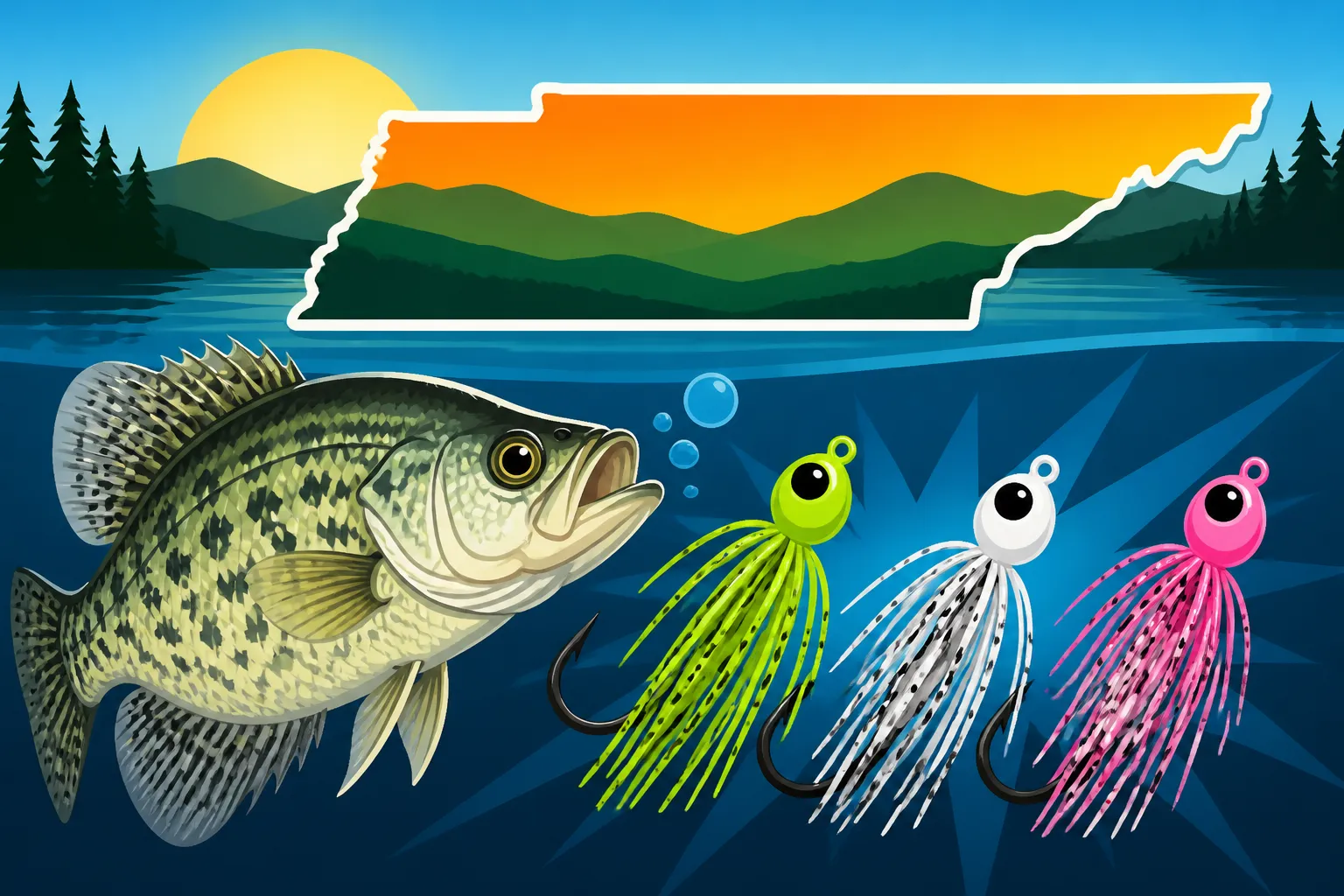
- Stained/Murky Water: When the water has a bit of color or is muddy after a rain, you need jigs that stand out. Bright, vibrant colors like chartreuse, orange, hot pink, and lime green are excellent. Two-tone jigs, often with one bright color and one darker color (like black and chartreuse or orange and black), create contrast that crappie can see more easily. Glow-in-the-dark jigs can also be surprisingly effective in very dark or deep water.
- Overcast vs. Sunny Days: On overcast days, fish may prefer brighter colors that offer more contrast against the dull light. On bright, sunny days, sometimes a more subtle, natural color is better to avoid spooking light-sensitive fish. However, sometimes a flash of bright color can still trigger a reaction strike even in bright conditions.
Experimentation is Key
Always carry a variety of colors. What worked yesterday might not work today, and what works on one lake might not work on another. Start with a few proven colors (like black and chartreuse, white, or various shades of green pumpkin) and then experiment. Many experienced anglers will tie on a different color jig for each person in the boat until a pattern emerges. You can find massive assortments of crappie jigs, including unique color combinations, on Amazon, making it easy to stock up on options.
Material and Scent: The Finishing Touches
The material composition of a soft plastic jig can affect its durability and action. Some are super soft for maximum movement, while others are tougher for more aggressive bites or fishing around sharp cover. Newer materials also boast enhanced durability, meaning fewer lost tails after a few bites.
Scented Jigs and Attractants
Many crappie jigs now come pre-scented, infused with fish attractants like garlic, anise, or various baitfish scents. This added sensory appeal can be a game-changer, especially for finicky crappie. The scent can mask human odors, encourage crappie to hold onto the bait longer (giving you more time to set the hook), and even draw them in from a distance. If your favorite unscented jigs aren't performing, consider adding a dab of liquid or gel attractant to them. This simple addition can sometimes turn a slow day into a productive one.
Advanced Jigging Techniques and Presentation
Having the right jig is only half the battle; knowing how to present it effectively is the other. Crappie are often responsive to subtle changes in retrieve speed, depth, and action. Mastering these techniques will elevate your crappie fishing game.
Vertical Jigging and Spider Rigging
These techniques are particularly effective when crappie are schooled up or holding tight to structure in deeper water, a common scenario in many Tennessee lakes.
Precision of Vertical Jigging
Vertical jigging involves positioning your boat directly over a known crappie school or structure (like a submerged brush pile or stump field) and dropping your jig straight down. This is where a good fish finder really pays off, allowing you to see the fish and precisely present your bait at their depth. The action is usually a subtle lift-and-drop or a series of small twitches, keeping the jig moving just enough to entice a bite without spooking the fish.
This method is highly effective for targeting specific depths and contours. If you're on a lake like Center Hill Lake Fishing Guide where crappie often suspend over deep channels or submerged trees, vertical jigging lets you put your jig right in front of their faces. You can also experiment with "dead sticking," holding the jig perfectly still at a specific depth, as crappie will often strike a motionless bait. Many anglers prefer a sensitive rod for vertical jigging to detect those almost imperceptible crappie bites.
The Art of Spider Rigging
Spider rigging, sometimes called "long lining" or "trolling jigs," involves deploying multiple rods (often 6-8) from the front or sides of the boat, each with a different jig set at varying depths and distances. The boat moves slowly, typically with a trolling motor, allowing the jigs to cover a wide area and explore different depths simultaneously. This technique is fantastic for locating crappie when they are scattered or when you're searching for schools in new areas.
Each rod might have a different jig head weight, soft plastic color, or style, helping you quickly identify what the crappie are biting on that particular day. For example, one rod might have a 1/16 oz chartreuse curly tail, while another has a 1/8 oz white paddle tail. This broad coverage makes spider rigging an incredibly efficient way to find active crappie on expansive bodies of water like Chickamauga Lake, Tennessee's Top Bass Fishing Destination. The slow, consistent movement of the boat imparts a natural action to the jigs, mimicking schooling baitfish.
Casting and Retrieving: Varying Your Presentation
Not all crappie fishing happens directly over structure. Sometimes, crappie are cruising shallow flats, along weed lines, or near docks. Casting your jigs and varying your retrieve is essential for these situations.
Steady Retrieve and Stop-and-Go
The simplest retrieve is a steady, slow crank, allowing the jig's natural action to do the work. This works well with curly tails and paddle tails, as their tails will constantly move. Vary the speed until you find what the crappie prefer. Sometimes, a super slow retrieve is key, while other times, a slightly faster pace can trigger aggressive strikes.
The "stop-and-go" retrieve is another highly effective technique. Cast your jig out, let it sink for a few seconds, then reel it a few times, and pause. Most strikes often occur during the pause, as the jig flutters or falls enticingly. This mimics a wounded baitfish and can be irresistible to crappie. You can also incorporate subtle twitches of your rod tip during the retrieve or pause to add even more erratic action to your jig.
Jerking, Popping, and Skipping
For more aggressive presentations, or when fishing around heavy cover, "jerking" or "popping" a jig can be deadly. This involves a sharp, short twitch of the rod tip, followed by a pause. The jig darts erratically, then falls, often prompting a reaction strike. This is especially effective when crappie are hiding in brush piles or submerged trees, as the sudden movement can draw them out.
"Skipping" jigs is a technique often employed by bank anglers or those fishing from a boat trying to reach crappie under docks or overhanging trees. By casting with a sidearm motion, you can make the jig "skip" across the water's surface, reaching spots that would otherwise be inaccessible. This requires a bit of practice but can unlock untouched crappie sanctuaries. For these more aggressive presentations, make sure your jig head is secure and your soft plastic is rigged straight to ensure consistent action.
Essential Crappie Jig Accessories and Storage
While the jigs themselves are central, the right accessories and proper storage can make your crappie fishing experience much more organized and productive. Don't overlook the little things that can make a big difference on the water.
Line, Leaders, and Knot Choices
Your line choice is critical for both detecting subtle bites and preventing break-offs.
Line Types for Crappie Fishing
- Monofilament: This is a popular choice for crappie due to its stretch, which can act as a shock absorber, helping to prevent hooks from tearing out of a crappie's soft mouth. It's also relatively inexpensive and easy to tie knots with. However, its stretch can make it harder to detect light bites, especially in deeper water.
- Fluorocarbon: Fluorocarbon is known for its low visibility underwater, making it a great choice for clear water conditions. It has less stretch than mono, offering better sensitivity, but can be a bit stiffer and more expensive. Many anglers use a fluorocarbon leader with a monofilament or braided main line.
- Braided Line: Braided line offers extreme sensitivity and strength with virtually no stretch. This means you'll feel every bump and subtle bite. However, it's highly visible, so it's almost always paired with a fluorocarbon or monofilament leader (2-4 feet) to present the jig naturally. It's excellent for heavy cover or when you need maximum feel. For example, when you're learning Best Rod and Reel Combo for Beginners, you might start with mono, but as you advance, braided line with a leader could be your preference.
Leader Materials and Knots
Using a leader is generally a good idea, especially with braided main line. A 4 to 6-pound test fluorocarbon or monofilament leader is typically sufficient for crappie. The length of your leader can vary, but 2-4 feet is a good starting point. This provides a less visible presentation to the fish while allowing you to enjoy the benefits of your main line.
For knots, a Palomar knot is a strong and reliable choice for tying your jig to your line. For attaching a leader to your main line, an FG knot or a double uni knot are popular choices for their strength and smooth profile, which helps them pass through rod guides easily. Practicing these knots at home will save you valuable fishing time on the lake.
Tackle Boxes, Holders, and Organization
Keeping your crappie jigs organized is crucial. There's nothing worse than fumbling through a tangled mess when the crappie are biting.
Specialized Jig Storage
Dedicated jig boxes, often with small, individual compartments, are ideal. These prevent your jigs from tangling, protect the soft plastic bodies from getting damaged, and keep colors separate. Some boxes are designed with slits to hold jig heads securely, while others have adjustable dividers for different soft plastic styles. You can find a wide variety of these organizational solutions at Bass Pro Shops or through online retailers like Amazon, from small pocket-sized boxes to larger, multi-compartment systems.
Consider organizing by jig head weight, then by soft plastic body type, and finally by color. This makes it quick and easy to find exactly what you need when you're on the water. Having separate boxes for different species or conditions (e.g., a "clear water crappie box" and a "stained water crappie box") can also save time.
Rod Holders for Multiple Rods
If you're spider rigging or simply fishing with multiple rods from your boat, quality rod holders are indispensable. These securely hold your rods in place, allowing you to cover more water and react quickly when a crappie strikes. Look for adjustable holders that can be angled to spread your lines out and can be easily mounted to your boat's gunwales or transom. This is particularly important on Boat Fishing Rules and License Requirements in Tennessee to ensure safety and compliance.
| Jig Head Weight | Ideal Depth Range | Ideal Conditions | Typical Soft Plastic Size |
|---|---|---|---|
| 1/32 oz | 0-8 feet | Calm, clear | 1.0 – 1.5 inches |
| 1/16 oz | 5-15 feet | Calm to light wind | 1.5 – 2.0 inches |
| 1/8 oz | 10-25 feet | Moderate wind, current | 2.0 – 2.5 inches |
| 1/4 oz | 20+ feet | Strong wind, heavy current | 2.5 – 3.0 inches |
Remember, these are general guidelines, and experimentation is always encouraged. The best crappie jigs for lake fishing in Tennessee are the ones that are putting fish in your boat!
Disclaimer
This article is for general informational purposes only and does not constitute professional advice. Laws, prices and regulations vary by location and change over time. Consult a qualified professional for guidance on your specific situation.