Best Ultralight Rods for Trout Streams
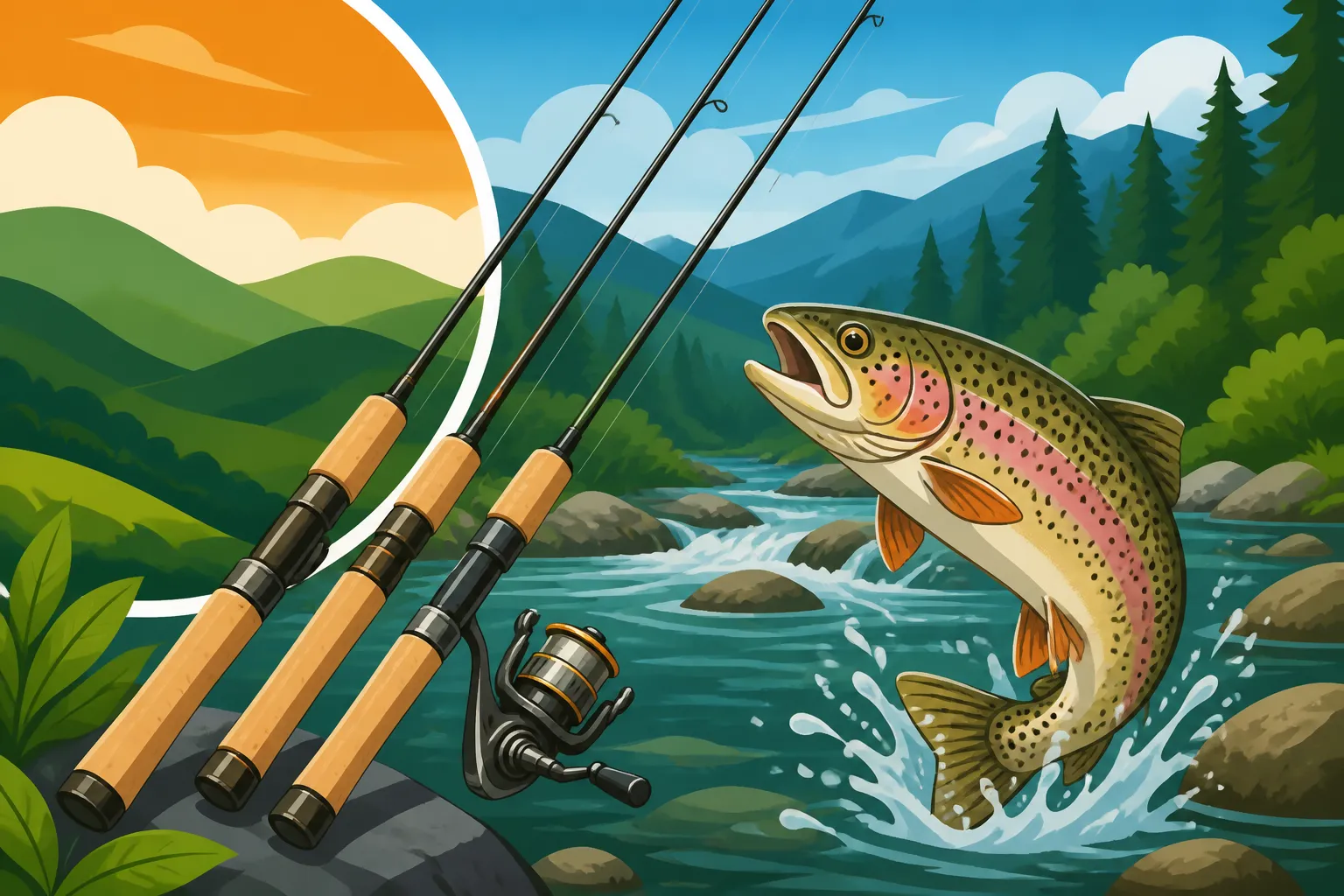
Anglers often find themselves staring at the beautiful, clear waters of a Tennessee trout stream, feeling a mix of anticipation and frustration. You know there are trout lurking in those pools and riffles, but your regular gear just feels… too much. Trying to cast a heavy lure with a stiff rod into a tight, brushy stream often results in tangled lines, spooked fish, and a whole lot of head-shaking. If you've ever felt like your equipment was working against you rather than with you when chasing those wily Tennessee trout, you're not alone. This guide is dedicated to shedding light on the best ultralight rods for trout streams, helping you choose the perfect wand to make those delicate presentations and truly enjoy the fight.
Why Go Ultralight for Tennessee Trout Streams?
The decision to embrace ultralight fishing isn't just about novelty; it's a strategic move that can dramatically improve your success rate and enjoyment when targeting trout in Tennessee's diverse waterways. From the freestone streams in the Great Smoky Mountains to the tailwaters below our big dams, trout are often wary and require a subtle approach. Heavy gear simply doesn't cut it when precision and sensitivity are paramount.
The Delicate Dance of Presentation
Think about it: many of Tennessee's prime trout streams, especially those designated as "blue ribbon" or special regulation waters, are crystal clear and relatively shallow. Fish in these environments have excellent eyesight and are incredibly sensitive to vibrations and unnatural movements. A heavy lure splashing down like a cannonball, or a thick line creating a noticeable "belly" in the current, can send every trout within a fifty-foot radius darting for cover.
Ultralight rods, by their very nature, are designed for finesse. They allow you to cast incredibly light lures – think tiny spinners, micro jigs, or even just a single salmon egg – with surprising distance and pinpoint accuracy. The rod's limber action acts like a slingshot for these miniature offerings, delivering them softly to the water's surface, often mimicking natural insects or dislodged baitfish. This delicate presentation is absolutely crucial for fooling those finicky trout, making them believe your offering is a natural part of their diet rather than a foreign object. It's about blending in, becoming part of the environment, and reducing your footprint on the water. Plus, with a lighter line and smaller bait, you're less likely to spook fish, even in heavily pressured areas. This is especially true in smaller, more intimate streams where every cast counts.
Enhanced Sensitivity and the Fight
Another huge advantage of ultralight gear is the unparalleled sensitivity it offers. When you're fishing with a feather-light lure, sometimes the only indication of a bite is a subtle "tick" or a slight hesitation in your line. A heavier rod simply doesn't transmit these nuances effectively, leading to missed strikes. Ultralight rods, with their fine tips and responsive blanks, act like an extension of your arm, allowing you to feel every bump, every rock, and most importantly, every gentle tug from a trout.
Once you hook into a trout, even a modest one, the ultralight experience truly shines. While a larger rod might simply winch in a twelve-inch rainbow, an ultralight transforms that same fish into a thrilling adversary. The rod bends deep, the drag sings, and you feel every head shake, every tail kick. It's an incredible adrenaline rush, forcing you to employ good angling technique – managing your drag, pumping and reeling, and carefully guiding the fish – rather than just muscling it in. This makes every catch, big or small, a memorable battle. It’s why many seasoned anglers, even those who chase big bass and catfish, always keep an ultralight setup ready for trout; it's simply a more engaging and sporting way to fish. For newcomers looking to learn How to Spin Fish for Trout, starting with sensitive gear can be a real confidence booster.
Essential Features of a Great Ultralight Trout Rod
Choosing an ultralight rod isn't just about grabbing the smallest one on the shelf. There are specific characteristics that make a particular rod exceptional for trout fishing in streams, and understanding them will help you make an informed decision. The balance of power, action, and length all play a critical role in how the rod performs in real-world scenarios.
Rod Power and Action Explained
When we talk about "power" in a fishing rod, we're referring to its lifting strength or its resistance to bending. For ultralight rods, this is usually described as "ultralight" (UL) or sometimes "light" (L). An ultralight power rod is designed to handle very light lines (typically 2-6 lb test) and lures, and it will bend significantly under even a small amount of pressure. This softness is precisely what allows for those delicate presentations and protects those light lines from breaking during a spirited fight. Try to avoid anything heavier than a "light" power for dedicated trout stream fishing, as it will lose the finesse you're seeking.
"Action," on the other hand, describes where the rod bends along its length.
- Fast Action: Bends mostly in the top third of the rod. This offers excellent sensitivity and quick hook sets, which can be great for detecting subtle bites. However, it can be a bit more challenging for beginners to cast very light lures with.
- Moderate Action (or Medium Action): Bends through the top half of the rod. This is often a fantastic all-around choice for ultralight trout fishing. It provides a good balance of casting distance for light lures, cushioning for lighter lines, and enough backbone to control a fish.
- Slow Action: Bends almost throughout the entire length of the rod, even into the handle. These rods are incredibly forgiving for light lines and offer super soft presentations, making them ideal for the smallest streams and the most delicate techniques. However, hook sets can be a bit softer, and they might lack the power to turn a larger fish in heavy current.
For most Tennessee trout streams, a moderate-fast to moderate action ultralight rod is often the sweet spot. It provides enough sensitivity to feel those subtle takes and enough flexibility to cast tiny offerings, while still having some backbone to manage a feisty rainbow or brown trout. You can find excellent options from brands like Ugly Stik or St. Croix at outdoor retailers like Bass Pro Shops, or readily available on Amazon. How to Catch Trout in Cold Water often requires a very subtle approach, where a slower action rod can really shine.
Ideal Lengths for Tennessee's Diverse Streams
The length of your ultralight rod will significantly impact your casting ability, accuracy, and overall comfort, especially given the varied environments of Tennessee's trout streams.
- Shorter Rods (4'6" to 5'6"): These are fantastic for tight, overgrown streams where overhead casting is impossible. Think about those small mountain creeks in the Smokies, where you're often roll casting or flip-casting under rhododendron branches. A shorter rod allows for incredible precision in close quarters and reduces the chance of snagging trees on your backcast. The downside is reduced casting distance in open areas and less leverage during a fight.
- Medium Rods (5'6" to 6'6"): This range is arguably the most versatile for Tennessee trout. A 6-foot ultralight rod is long enough to make decent casts in more open stretches, yet still manageable in moderately brushy areas. It offers a good balance of casting performance and control, making it a great all-around choice for many of our rivers and larger creeks.
- Longer Rods (6'6" to 7'6"+): While less common for true ultralight stream fishing, longer ultralight rods have their place, especially on wider rivers or tailwaters where longer casts are needed to reach feeding lanes or avoid spooking fish. They offer superior line control, especially when mending line in current, and can provide more cushion for light lines during a fight. However, they become cumbersome quickly in tight, brush-lined streams. For fishing larger bodies of water, or if you plan to target Tennessee's Best Trout Streams which include wider rivers like the Caney Fork or Clinch, a longer ultralight might be beneficial.
| Rod Feature | Recommended for Small, Brushy Streams | Recommended for Medium to Large Streams / Versatile | Recommended for Wide Rivers / Tailwaters |
|---|---|---|---|
| Power | Ultralight (UL) | Ultralight (UL) to Light (L) | Ultralight (UL) to Light (L) |
| Action | Slow to Moderate-Slow | Moderate to Moderate-Fast | Moderate-Fast to Fast |
| Length | 4'6" – 5'6" | 5'6" – 6'6" | 6'6" – 7'6"+ |
| Line Weight | 2-4 lb test | 2-6 lb test | 4-8 lb test |
| Lure Weight | 1/32 – 1/8 oz | 1/16 – 1/4 oz | 1/8 – 3/8 oz |
| Use Case | Roll casts, short pitches, tight spots, maximum finesse | All-around stream fishing, good balance of features | Long casts, current control, open water, larger trout potential |
Pairing Your Ultralight Rod: The Complete Setup
An ultralight rod is only as good as the components it's paired with. To truly unlock its potential, you need to match it with the right reel, line, and terminal tackle. This isn't just about aesthetics; it's about creating a balanced system where every piece works in harmony to give you the best performance.
Selecting the Right Reel and Line
The reel you choose for your ultralight trout rod should be equally ultralight, focusing on smooth drag and proper balance. A reel that's too heavy will make your sensitive rod feel tip-heavy and clunky, defeating the purpose of an ultralight setup. Look for small spinning reels, typically in the 1000 or 500 size (or sometimes even smaller, like a 200 or 750), designed for light lines. Key features to prioritize include:
- Smooth Drag System: This is paramount. When fighting a strong trout on light line, a jerky or inconsistent drag will lead to snapped lines and heartbreak. Test the drag in the store; it should pull smoothly with no hesitation. Many reels from trusted brands offer excellent drag systems even at an accessible price point.
- Lightweight Construction: Materials like graphite frames and rotors keep the overall weight down, helping the reel balance perfectly with your ultralight rod.
- Good Line Capacity: While you'll be using light line, ensure the spool has enough capacity to hold a decent amount of backing and your main line without overfilling.
For your line, monofilament (mono) or fluorocarbon are generally the best choices for ultralight trout fishing.
- Monofilament: Often called "copolymer" in modern formulations, mono is forgiving, has a good amount of stretch, and floats, which can be beneficial for topwater presentations or when fishing with indicators. It's also typically less expensive. For trout, 2 to 4 lb test is common in smaller streams, while 4 to 6 lb might be used in larger waters or for bigger fish.
- Fluorocarbon: This line is nearly invisible underwater due to its refractive index, making it fantastic for clear water and spooky trout. It has less stretch than mono, offering more sensitivity and a quicker hook set. However, it's denser, so it sinks, and it can be a bit stiffer and more expensive. Many anglers use a short fluorocarbon leader (2-4 ft) tied to a monofilament or even braided main line.
- Braided Line (with fluorocarbon leader): Some anglers prefer the zero-stretch and incredible sensitivity of braided line as their main line, especially when casting very far. However, braid is highly visible and has no abrasion resistance. If you go this route, always tie on a fluorocarbon leader of 4-8 lb test for the business end of your setup.
For general stream fishing, a high-quality 4 lb test monofilament or a 4 lb test fluorocarbon line should cover most situations. For more detailed recommendations, check out guides like Best Reels for Trout Fishing. You can find a vast selection of both reels and lines at Bass Pro Shops or on Amazon.
Lures, Baits, and Tactics for Ultralight Success
The beauty of an ultralight setup is that it allows you to effectively fish a huge array of small, enticing offerings that would be difficult or impossible to cast on heavier gear. This opens up a world of possibilities for tempting even the most reluctant trout.
- Spinners: Classic ultralight trout lures. Brands like Panther Martin, Mepps, and Roostertail in sizes #00 to #2 are deadly. The flash and vibration are irresistible to trout. Work them across current, retrieve them slowly, or let them tumble through deeper pools.
- Spoons: Small, lightweight spoons from 1/32 to 1/8 oz, like Kastmasters or Little Cleos, have an erratic wobble that drives trout wild. They cast surprisingly far for their weight.
- Jigs: Tiny hair jigs, marabou jigs, or plastic grub jigs (1/64 to 1/8 oz) are incredibly effective, especially when tipped with a small piece of bait like a waxworm or mealworm. Fish them under a small bobber or slowly jig them along the bottom.
- Soft Plastics: Miniature worms, grubs, and creature baits on a tiny jig head or under a float can be very productive. Think brands like Berkley PowerBait or Gulp! in natural colors.
- Natural Baits: For many, nothing beats live bait. Red worms, mealworms, waxworms, and even small crickets are deadly when fished on a tiny hook (size 10-16) with a split shot or under a bobber. PowerBait dough or nuggets are also perennial favorites for stocked trout.
- Flies (with a spin rod): While not true fly fishing, you can effectively cast weighted nymphs or small streamers on an ultralight spinning rod using a casting bubble or a weighted float. This is a great way to imitate insect hatches without needing a dedicated fly rod.
When it comes to tactics, focus on stealth and accuracy. Approach the stream cautiously, stay low, and make short, accurate casts to likely holding areas: behind rocks, in current seams, under overhanging branches, or at the tail ends of pools. For specific lure recommendations, take a look at our guide on Best Lures for Stocked Rainbow Trout. Remember to always check the Tennessee Trout Limits and Season Rules for any specific stream regulations on bait or lure types, as some waters are artificial-lure-only.
Caring for Your Ultralight Investment
Your ultralight rod and reel are finely tuned instruments designed for precision. Just like any quality tool, they perform best and last longest with proper care and maintenance. Neglecting your gear, especially after a day on the water, can lead to decreased performance, premature wear, and even costly repairs.
Cleaning and Storage Tips
After every fishing trip, especially if you've been in muddy or sandy conditions, or if your gear has been exposed to rain or dampness, a quick cleaning goes a long way:
- Rod: Wipe down the rod blank with a damp cloth to remove dirt, grime, and fish slime. Pay special attention to the guides, ensuring there's no grit built up that could abrade your line. Check for any cracks or damage to the guide inserts, as these can quickly fray line. A gentle rinse with fresh water and a soft towel dry is usually sufficient. Avoid harsh chemicals that could damage the rod finish.
- Reel: Remove the spool and gently wipe down the reel body and spool with a damp cloth. A soft brush can help get into crevices. If the reel was submerged or heavily splashed, a quick rinse under lukewarm tap water (without spraying directly into any openings) followed by thorough drying is wise. Ensure all components are completely dry before storage to prevent rust.
- Lubrication: Periodically, perhaps every few months of regular use, you'll want to apply a tiny drop of fishing reel oil to the bail arm pivots and handle knob. A very thin layer of grease can be applied to the main gear if you're comfortable opening the reel, but for most anglers, external lubrication is enough for general maintenance. Don't overdo it – a little goes a long way!
- Line Care: Always check your line for nicks, abrasions, or twists, especially the last few feet. If you find any damage, cut off the compromised section. Over time, line can develop memory or degrade from UV exposure. Consider replacing your line at least once a season, or more frequently if you fish often.
When storing your ultralight setup, always keep it in a cool, dry place, away from direct sunlight or extreme temperatures. Rods are best stored upright or horizontally, out of the way of being knocked over. Many ultralight rods come with a cloth bag or a hard tube, which are excellent for protection. Keeping your rod and reel separate if possible during long-term storage can also be beneficial. This attention to detail ensures that when the Tennessee Fishing Season and Catch Limits open up, your gear is ready to go.
Field Repairs and Maintenance
Even with the best care, things can happen on the water. Knowing a few basic field repairs can save your day and prevent minor issues from becoming major problems:
- Broken Rod Tip: The most common ultralight rod casualty. Carry a spare rod tip repair kit (available cheaply at places like Bass Pro Shops or on Amazon). These kits contain various sized tips and a small tube of hot melt glue. In a pinch, you can usually carefully remove the old tip, heat the glue, slide on the new tip, and be back in action.
- Line Tangles and Backlash: Prevention is key – don't overfill your spool and learn proper casting techniques. If you do get a bird's nest, patiently pick it apart. Trying to yank it free will only make it worse.
- Stuck Reel: If your reel suddenly feels stiff or gritty, it might be due to sand or debris. A quick rinse (if possible and you can immediately dry it) might help, but often this requires a deeper cleaning at home or by a professional.
- Loose Guide: If a guide becomes loose, you can sometimes temporarily secure it with electrical tape to prevent further damage to the rod blank or your line until you can get it properly re-wrapped.
Carrying a small basic repair kit with you – including spare line, a multi-tool with pliers and cutters, and a rod tip repair kit – can be a lifesaver. Being prepared means you spend more time fishing and less time frustrated by equipment failures. Regular cleaning and attention to small details will significantly extend the life of your ultralight rod and reel, making every trip to Tennessee's Best Trout Streams a pleasure.
Disclaimer
This article is for general informational purposes only and does not constitute professional advice. Laws, prices and regulations vary by location and change over time. Consult a qualified professional for guidance on your specific situation.