Fishing License Reciprocity Between Tennessee and Neighboring States
It's incredibly frustrating when you're geared up for a fantastic day of fishing, maybe on a big lake that spans state lines, only to second-guess if your current fishing license actually covers you. The rules can be as murky as a rain-swollen river, leaving many anglers wondering if they need multiple licenses or if there's some kind of magical cross-state agreement. This guide is here to clear the waters, explaining exactly how fishing license reciprocity works between Tennessee and its neighboring states, so you can cast your line with confidence.
Understanding Fishing License Reciprocity Basics
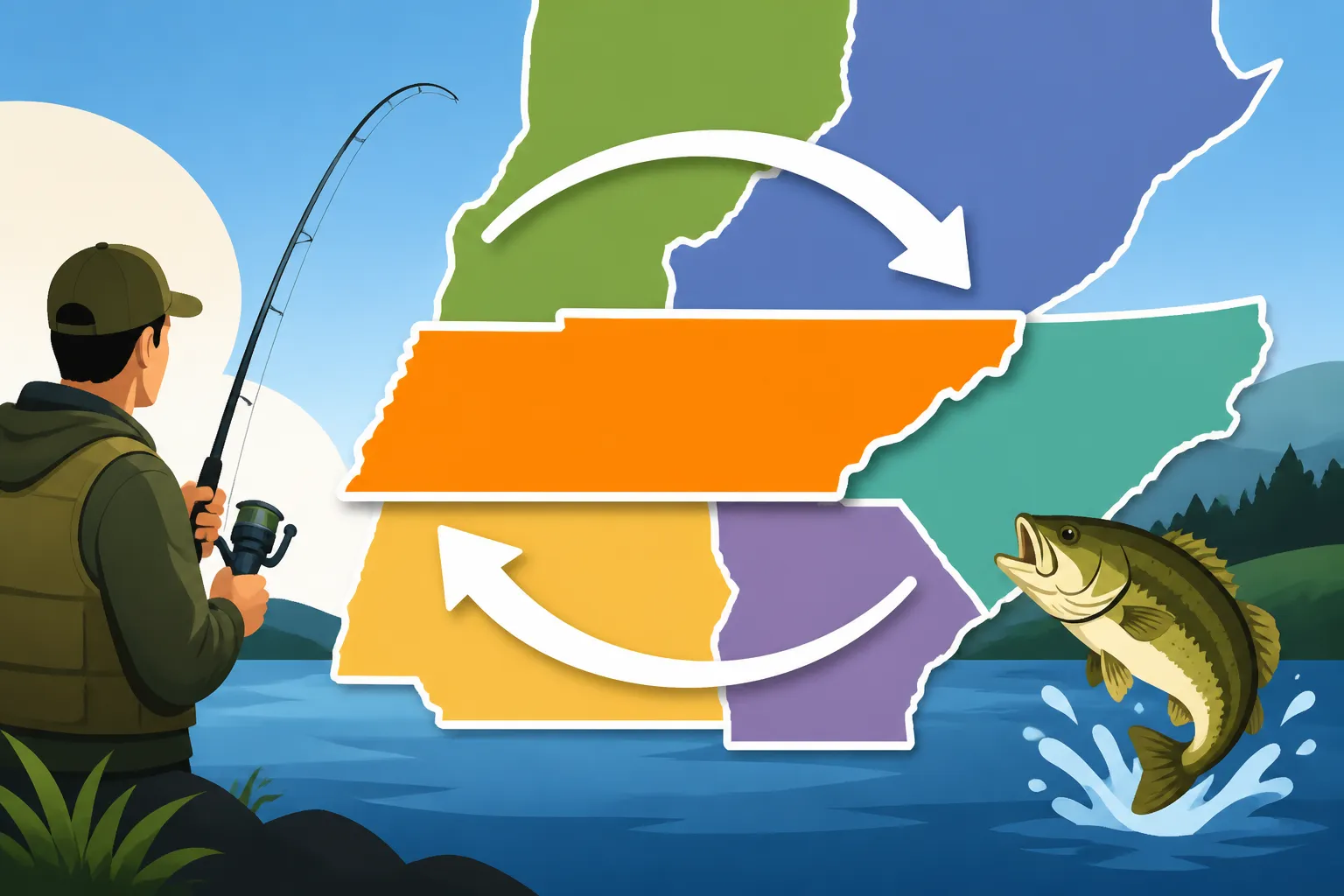
When we talk about "reciprocity" in fishing licenses, it simply means that certain states have an agreement where a fishing license from one state might be recognized as valid in specific waters of another state. It's not a blanket pass to fish anywhere you please in a neighboring state, but rather a carefully carved-out understanding that usually applies to shared border waters. Think of it as a special handshake between wildlife agencies to make things a little easier for anglers who frequent those shared bodies of water.
This concept isn't just a nicety; it's a practical solution to a common problem. Imagine fishing in the middle of a sprawling lake like Kentucky Lake, which is shared by Tennessee and Kentucky. Without reciprocity, you'd constantly be worried about drifting a few hundred yards and inadvertently breaking the law just by crossing an invisible state line in the water. That kind of stress takes all the joy out of fishing, and nobody wants that. Reciprocity aims to reduce that unnecessary anxiety for anglers, allowing them to focus on the fish, not the GPS coordinates marking political boundaries.
What Reciprocity Actually Means for Anglers
For anglers, reciprocity primarily means that if you possess a valid resident or nonresident fishing license from Tennessee, you might be able to fish in certain designated waters shared with a bordering state, even if you technically drift into that state's territory. The key here is "might" and "certain designated waters." It's almost never a statewide agreement, and it doesn't mean your Tennessee license is suddenly valid for every pond, river, or lake in Kentucky, for example. It's almost exclusively limited to specific bodies of water that literally form the border between the two states.
These agreements are usually detailed down to the specific body of water, and sometimes even down to particular sections of those waters. For instance, on the Mississippi River, the rules might apply differently than they do on reservoirs like Pickwick Lake. It's crucial not to assume that just because Tennessee shares a border with a state like North Carolina, your Tennessee license will work on every stream in the Great Smoky Mountains National Park, even if it's right on the border. Always double-check the specific agreement for the exact water you plan to fish, as the details can be surprisingly granular.
Why Reciprocity Matters on Border Waters
Reciprocity is absolutely critical on those huge, inter-state waterways that are beloved by anglers. Without it, fishing would be a bureaucratic nightmare. Imagine a tournament on Kentucky Lake. Anglers would need to meticulously track their position, staying firmly within the boundaries of the state where their license is valid. Even a small gust of wind or a strong current could push a boat across an invisible line, turning a legal catch into an illegal one. This would make fishing incredibly difficult and would undoubtedly lead to a lot of fines and frustration.
For everyday anglers, reciprocity simplifies planning. If you live near a border and regularly fish a shared river or lake, knowing your single state license covers you on both sides saves you money and hassle. Instead of buying two annual licenses—one for Tennessee and one for Kentucky, for instance—you might only need one. This makes fishing more accessible and encourages people to enjoy these magnificent natural resources without unnecessary financial barriers. It’s a win-win for anglers and for promoting outdoor recreation in the border regions.
Tennessee's Reciprocity Agreements with Neighboring States
Tennessee shares borders with eight different states: Kentucky, Virginia, North Carolina, Georgia, Alabama, Mississippi, Arkansas, and Missouri. However, the reciprocity agreements are not universal across all these borders, nor do they apply to every body of water. Most agreements, where they exist, are focused on the major rivers and reservoirs that physically delineate the state lines. It's really important to know which state you're dealing with and what specific body of water you're fishing.
The Tennessee Wildlife Resources Agency (TWRA) works with its counterparts in neighboring states to establish these agreements, and they are regularly reviewed and sometimes updated. This means what was true last year might have a slight modification this year, so staying current is a must. For the most part, you'll find the most robust reciprocity on major rivers and impoundments, rather than smaller streams or inland lakes that are entirely within one state's jurisdiction, even if they're close to a border.
Fishing Kentucky Lake: Tennessee and Kentucky Rules
Kentucky Lake is one of the most famous examples of a shared fishery, stretching across both Tennessee and Kentucky. For anglers here, it’s great news: there is a significant reciprocity agreement in place. Generally, a valid Tennessee fishing license will allow you to fish the Tennessee portion of Kentucky Lake, and in most cases, it will also cover you on the Kentucky side of the lake, particularly on the main body of water. The same usually applies to Kentucky license holders fishing the Tennessee side. This arrangement is a huge benefit for anyone targeting the fantastic bass, crappie, and catfish the lake is known for.
However, it's never quite as simple as "you're covered everywhere." The key detail often lies in the embayments and tributaries. While your Tennessee license typically works on the main body of water that forms the actual border, it might not cover you if you venture far up a creek or into a backwater that is entirely within Kentucky's dry land boundary, even if it feeds into Kentucky Lake. These specific areas might require a Kentucky license. It's always best practice to consult the TWRA regulations, as well as the Kentucky Department of Fish and Wildlife Resources (KDFWR) regulations, especially if you plan to explore those less obvious fishing spots far from the main channel. Knowing the nuances can save you a lot of grief.
Mississippi River Borders: Tennessee and Arkansas/Missouri
The mighty Mississippi River forms Tennessee's western border with both Arkansas and Missouri, offering incredible fishing opportunities for species like catfish, bass, and crappie. Thankfully, there are comprehensive reciprocity agreements in place for fishing the Mississippi River itself. If you hold a valid Tennessee fishing license, you are generally authorized to fish the flowing waters of the Mississippi River from the bank or from a boat, regardless of whether you're technically on the Tennessee, Arkansas, or Missouri side of the main river channel. This simplifies things immensely for anglers who want to explore this vast river system without constantly worrying about invisible state lines.
Just like with Kentucky Lake, the reciprocity on the Mississippi River typically applies to the main channel and often to the immediate backwaters and oxbows that are directly connected to the river. However, if you pull into a bayou or a lake that is clearly landlocked or distinctly separate from the main river channel and entirely within the land boundaries of Arkansas or Missouri, your Tennessee license might not be sufficient. In those cases, you would need the appropriate license for that state. These agreements are fantastic for ensuring that river anglers can enjoy the full breadth of the Mississippi, but always keep an eye out for those isolated or distinctly inland waters where the rules might shift.
Pickwick Lake and the Alabama/Mississippi Connection
Pickwick Lake is another major reservoir system that exemplifies multi-state fishing, touching Tennessee, Alabama, and Mississippi. This body of water is renowned for its excellent bass and catfish fishing, drawing anglers from all three states. On Pickwick Lake, the reciprocity rules are generally favorable for anglers, but they do require a bit of attention to detail due to the three-way shared border. A valid Tennessee fishing license typically allows you to fish the Tennessee portion of Pickwick Lake, and often extends to the portions that border Alabama and Mississippi, especially within the main channel of the lake. Similarly, anglers with Alabama or Mississippi licenses are often permitted to fish on the Tennessee side of the main lake.
However, the specific areas where reciprocity is honored can sometimes differ slightly between Alabama and Mississippi's agreements with Tennessee. For example, while you might be covered on the main body of water, venturing deep into a creek arm that is entirely within Alabama or Mississippi might require a license from that specific state. It's not uncommon for state wildlife agencies to define the "reciprocal waters" very precisely, sometimes even using landmarks or bridge crossings. Before heading out to Pickwick Lake, especially if you plan to explore all three state sections, it's highly advisable to review the current regulations from the TWRA, the Alabama Department of Conservation and Natural Resources (ADCNR), and the Mississippi Department of Wildlife, Fisheries, and Parks (MDWFP). This triple-check ensures you're fully legal no matter which side of the lake the fish are biting on.
The Not-So-Simple Case of Georgia and North Carolina
When it comes to Tennessee's borders with Georgia and North Carolina, the situation for fishing license reciprocity is generally much less straightforward, and in many cases, non-existent for inland waters. While Tennessee shares beautiful mountain streams and large reservoirs like Chickamauga Lake (which is entirely within Tennessee but flows into Georgia eventually) or the Hiwassee River (which starts in Georgia), there are very few, if any, specific reciprocal agreements that allow a Tennessee license to be used on Georgia or North Carolina waters, or vice-versa, beyond the immediate thread of a shared river or very limited, specifically defined border waters.
For the most part, if you are fishing in waters clearly within Georgia, you will need a Georgia fishing license. If you are fishing in North Carolina, you will need a North Carolina fishing license. This is particularly true for the renowned trout streams in the Appalachian mountains that crisscross these states. While a stream might flow from North Carolina into Tennessee, your Tennessee trout stamp and license won't automatically cover you in the North Carolina headwaters. Always assume you need the appropriate state's license when fishing in these regions, unless you have explicit, current information from the respective wildlife agencies confirming a specific reciprocal agreement for that exact body of water. For example, specific regulations apply to trout fishing in the Great Smoky Mountains National Park, but these are often federal park rules rather than state reciprocity agreements. If you plan to fish the Clinch River Trout Fishing in East Tennessee or explore the Tennessee's Best Trout Streams, you'll need to be clear on where those waters lie.
Key Factors Affecting Reciprocity
Reciprocity isn't a simple yes or no answer for an entire state border. There are several nuanced factors that dictate whether your fishing license will be honored across state lines. Understanding these elements is crucial for any angler who plans to venture near or on border waters. Ignoring them can lead to unexpected fines or legal troubles, which is the last thing anyone wants when they're trying to enjoy a peaceful day on the water.
It's not just about the state you're licensed in, but also the specific body of water, your residency, and even the type of fish you're targeting. These layers of rules can seem overwhelming, but a little homework upfront can save a lot of headaches later.
Public vs. Private Waters
One fundamental distinction that always applies, regardless of state lines, is whether you are fishing in public or private waters. Reciprocity agreements, by their very nature, apply only to public waters—typically navigable rivers and lakes that are managed by state or federal agencies. They do not, under any circumstances, extend to private ponds or lakes. If you're fishing on private property, even if that property is right on a state border, you would still need the landowner's permission and the appropriate fishing license for the state in which that private water body is located.
For example, if you have permission to fish a private pond in Arkansas, your Tennessee fishing license will not cover you, even if the pond is just a stone's throw from the Mississippi River where reciprocity is otherwise in effect. Private land and private water rights generally supersede any interstate reciprocal agreements. Always clarify ownership and permission before casting a line into any water body that isn't clearly marked as public access. Most of the time, the large reservoirs and rivers we discuss are public, but it's a good reminder not to assume.
Species-Specific Regulations and Limits
Even when reciprocity is in place for a shared body of water, it's vital to remember that species-specific regulations and catch limits might still vary between the states. For instance, on Kentucky Lake, while your Tennessee license might be valid on both sides, the daily creel limit or minimum size for certain species, like crappie or bass, might technically differ if you're on the Kentucky side versus the Tennessee side. These differences aren't always dramatic, but they can exist.
This means that even if you're legally fishing with your Tennessee license on the Kentucky side of a shared lake, you might still be expected to adhere to Kentucky's regulations for the fish you catch while in Kentucky waters. This is where it gets truly tricky, and why some anglers opt to buy both state licenses if they frequently cross borders, just to be safe. It's essential to check the regulations of both states for the species you intend to target. Don't assume that because your license is valid, all the rules are uniform. For example, Tennessee has specific Statewide Bass Limits for Tennessee Anglers and Crappie Limits Under Tennessee Fishing Rules that you need to be aware of, and those might not perfectly align with a neighboring state's.
Residency Status and License Types
Your residency status plays a significant role in how reciprocity works, if at all. Reciprocity agreements are generally designed for both resident and nonresident license holders of the participating states, but the specific type of license you hold can impact your coverage. For instance, a basic annual fishing license usually qualifies, but certain specialized permits, like trout stamps or individual lake-specific permits, might not always be reciprocated. It’s also crucial to remember that a "county-only" license, such as the Tennessee County-Only Fishing License Explained, is almost never reciprocated across state lines, as its very nature is to restrict fishing to within a single county in your home state.
Nonresidents often face higher license costs, as detailed in Nonresident Fishing License Costs in Tennessee, and might consider options like the Nonresident 3-Day and 10-Day License Options for Tennessee if they're just visiting. However, these specific short-term licenses still need to adhere to the reciprocal agreements. Always check to ensure that the specific type of license you hold is covered by the reciprocity agreement for the water you intend to fish. Don't assume that just because you have a license, it's the right license for cross-state fishing.
Navigating Common Reciprocity Scenarios
Even with the best intentions, navigating fishing license reciprocity can throw you some curveballs. It's not always intuitive, and real-world situations can often be more complex than the general rules suggest. Understanding common scenarios and the potential pitfalls can help you avoid problems and ensure a smooth, enjoyable fishing trip, rather than a stressful encounter with a game warden. It’s about being proactive and informed, rather than reactive.
Crossing the Line: When Your License Becomes Invalid
One of the most common and easily made mistakes is inadvertently crossing the invisible state line into non-reciprocal waters. This often happens in those tricky areas where a shared main body of water feeds into numerous tributaries or embayments that quickly become entirely within one state's territory. For example, you might be legally fishing on Kentucky Lake with your Tennessee license, but if you motor far up a feeder creek that is entirely in Kentucky and not part of the reciprocal agreement, your Tennessee license suddenly becomes invalid.
In such a situation, you would then be fishing without a license in Kentucky, subject to their laws and penalties. This is why having a good GPS with detailed mapping is invaluable on border waters. It allows you to clearly see the state lines and avoid straying into areas where your license isn't honored. The consequences of fishing without a license, as detailed in Penalties for Fishing Without a License in Tennessee, can range from significant fines to confiscation of gear, so it's a risk not worth taking.
The Importance of Knowing Local Lake-Specific Rules
Beyond interstate reciprocity, many large reservoirs and even smaller local lakes have their own unique, lake-specific fishing rules that override statewide defaults. This is particularly true for catch limits, size restrictions, and sometimes even methods of take. So, even if your Tennessee license is valid on a specific part of a shared lake due to reciprocity, you still need to be aware of any local rules that the other state might have imposed on that body of water.
For example, a lake that crosses the Tennessee-Kentucky border might have a specific slot limit for bass that is unique to that particular lake and differs from both Tennessee's statewide bass limit and Kentucky's statewide limit. These Lake-Specific Fishing Rules That Override Tennessee's Statewide Limits are in place for conservation reasons or to manage specific fish populations. Always check the official regulations for the exact lake you plan to fish, from both states if it's a border water. It's a layer of complexity, but a necessary one for responsible angling.
Checking Before You Cast: Essential Resources
So, how do you make sure you're covered? The most reliable way is to check with the official wildlife agencies of both states involved. For Tennessee, that's the Tennessee Wildlife Resources Agency (TWRA). For Kentucky, it's the Kentucky Department of Fish and Wildlife Resources (KDFWR), and so on. Their official websites are usually the best places to find current regulations, maps outlining reciprocal waters, and details on specific agreements. Don't rely solely on word-of-mouth or old fishing forums.
Many agencies offer detailed PDF regulation guides that you can download and even print or save to your phone for easy access. You can also call their regional offices directly if you have a very specific or unusual question. Websites like Amazon also offer physical copies of state fishing regulations or outdoor guides that sometimes compile this information, though always verify currency. Take the extra five minutes to confirm the rules before you head out; it's a small investment for peace of mind. For general information, a great starting point is the Tennessee Fishing License Guide or a broader look at Tennessee Fishing Regulations Explained.
Ensuring You're Covered: Best Practices
Fishing should be a relaxing escape, not a legal tightrope walk. By adopting a few best practices, you can minimize the chances of running into trouble with reciprocity rules and focus on what truly matters: catching fish. Being prepared and informed is your best defense against confusion and potential penalties.
When to Buy a Nonresident License
If you're a Tennessee resident planning to fish extensively in another state, especially in inland waters or areas not covered by a reciprocity agreement, it's almost always smarter and safer to simply buy a nonresident license for that state. The cost of a nonresident license, while sometimes higher than a resident one, pales in comparison to the potential fines and hassle of being caught without the proper authorization. This is particularly relevant if you're visiting for more than a day or two and plan to explore various fishing spots.
For nonresidents visiting Tennessee, consider a Tennessee Single-Day Fishing License Options if you're just passing through, or one of the Nonresident 3-Day and 10-Day License Options for Tennessee for a short trip. For longer stays or frequent trips, a full annual nonresident license might even be more cost-effective. Sometimes, the peace of mind of having two licenses when fishing shared waters is worth the extra expense, especially if you plan to target specific species or visit areas with ambiguous boundaries.
Digital vs. Physical Proof of License
The TWRA, like many state agencies, has moved towards more convenient options for carrying your fishing license. You can usually purchase or renew your Tennessee Fishing License Online and often receive a digital copy instantly. This means you can keep your license on your smartphone, which is incredibly handy. However, it's always a good idea to have a backup, as phones can run out of battery, get wet, or simply be unreliable in remote areas.
Many anglers choose to print a physical copy of their license and keep it in a waterproof bag in their tackle box or wallet. This way, if your phone fails, you still have proof. You can find more details on this in Digital vs Printed Fishing Licenses in Tennessee. Whether digital or physical, always ensure your license is easily accessible and readable if a game warden asks to see it. It's your responsibility to present valid proof that you're legally fishing.
Staying Up-to-Date with Regulation Changes
Fishing regulations, including reciprocity agreements, are not static. They can change annually, sometimes even mid-season, due to biological surveys, new legislation, or revised agreements between states. Relying on outdated information is a recipe for trouble. Make it a habit to check the official TWRA website and the relevant neighboring state's wildlife agency website at the beginning of each fishing season, or whenever you plan a trip to a new border water.
Signing up for email newsletters or following the official social media channels of these agencies can also be a good way to stay informed about critical updates. Don't just assume the rules are the same as last year. Taking a few minutes to review the latest regulations can save you from a fine and ensure your fishing trips remain enjoyable and fully compliant with the law. This diligence is part of being a responsible and ethical angler, contributing to the conservation efforts that keep our waters bountiful.
| Bordering State | Shared Water Body | General Reciprocity Status (Tennessee License) | Notes & Considerations |
|---|---|---|---|
| Kentucky | Kentucky Lake | Yes, on main lake body and many immediate embayments. | Check specific rules for far-reaching creeks and tributaries fully in KY. |
| Arkansas | Mississippi River | Yes, on main river channel and directly connected oxbows/backwaters. | Inland lakes or distinct bayous fully within AR require AR license. |
| Missouri | Mississippi River | Yes, on main river channel and directly connected oxbows/backwaters. | Inland lakes or distinct bayous fully within MO require MO license. |
| Alabama | Pickwick Lake | Yes, on main lake body and many immediate embayments. | Check specific rules for far-reaching creeks and tributaries fully in AL. |
| Mississippi | Pickwick Lake | Yes, on main lake body and many immediate embayments. | Check specific rules for far-reaching creeks and tributaries fully in MS. |
| Virginia | Holston, Clinch Rivers (upper sections) | Limited/No general agreements for inland waters. Typically, you need VA license in VA. | Some small, specific border sections might have specific local agreements; always verify. |
| North Carolina | Mountain Streams, Fontana Lake | No general reciprocity. You typically need an NC license in NC waters. | Great Smoky Mountains National Park has its own specific permit rules. |
| Georgia | Nickajack Lake, Hiwassee River (upper) | No general reciprocity. You typically need a GA license in GA waters. | While TN rivers flow from GA, your TN license won't cover you upstream in GA. |
Disclaimer
The information provided in this guide is for general informational purposes only and is not intended as legal advice. Fishing regulations and reciprocity agreements are subject to change and can be highly specific. Always consult the official websites and publications of the Tennessee Wildlife Resources Agency (TWRA) and the corresponding wildlife agencies of neighboring states (e.g., KDFWR, AGFC, MDC, ADCNR, MDWFP, VDGIF, NCWRC, GA DNR) for the most current and accurate information before fishing on or near state borders. Your compliance with all applicable laws and regulations is your sole responsibility.