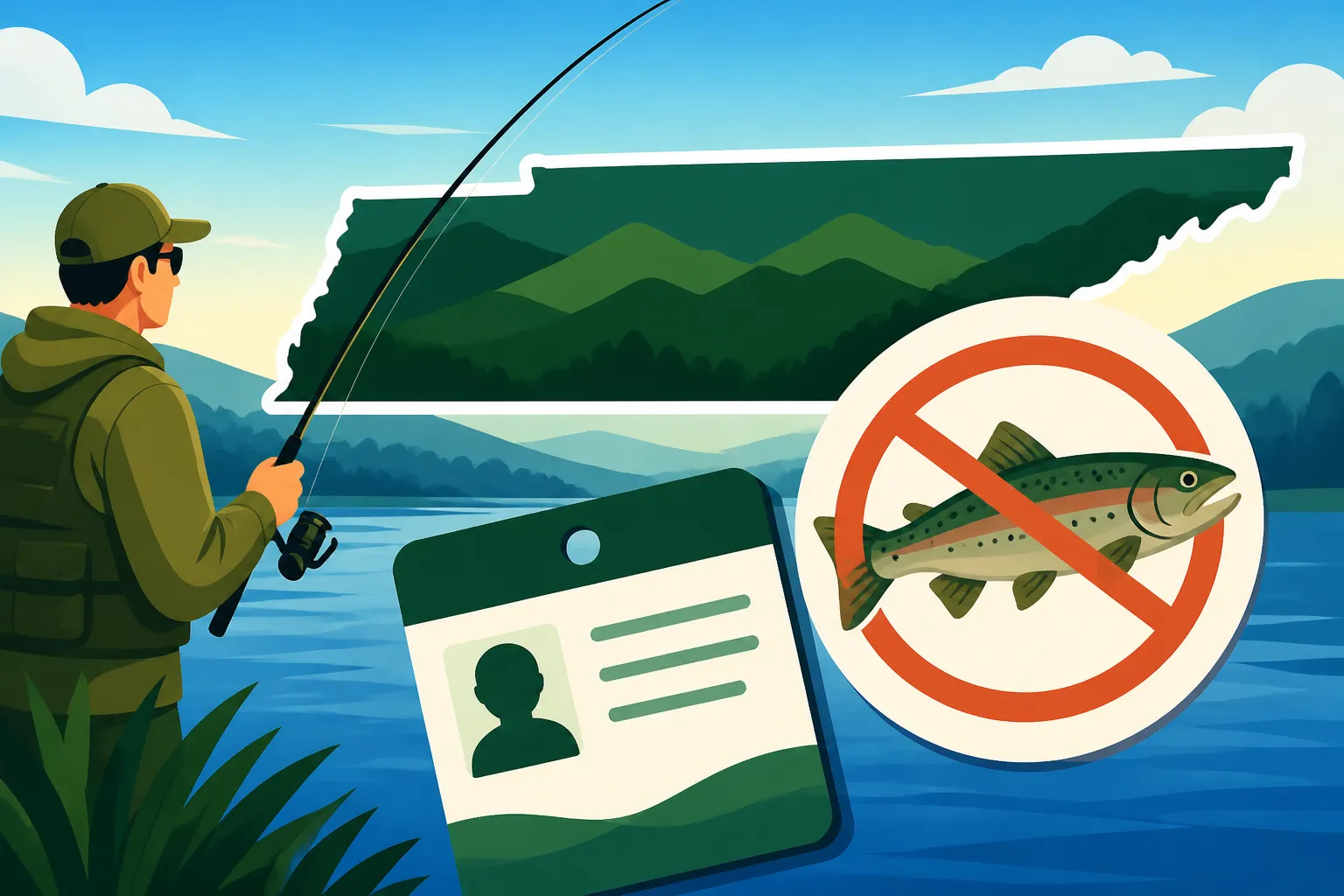
Nonresident annual license without trout costs $49 in Tennessee
It can be really frustrating trying to figure out fishing regulations and license costs, especially when you're visiting from out of state and just want to enjoy Tennessee's incredible waterways. There's nothing worse than getting ready for a fun trip, only to realize you're not sure which license you need or how much it will cost. This guide is here to clear up all that confusion, specifically focusing on the annual fishing license for nonresidents who aren't planning to target trout, breaking down what it covers, why it's priced the way it is, and how you can get one without a hitch.
Understanding the Nonresident Annual Fishing License in Tennessee
Tennessee is a true angler's paradise, boasting a diverse range of fishing opportunities from the mighty Mississippi River to the serene lakes in the Cumberland Plateau and the trout streams of the Great Smoky Mountains. But for those of us who don't call Tennessee home, navigating the fishing license landscape can feel a bit like trying to read a topo map without a legend. One of the most common questions revolves around the nonresident annual fishing license, particularly the option that doesn't include trout privileges.
Who Needs a Nonresident License?
Simply put, if you don't permanently reside in Tennessee, you're considered a nonresident by the Tennessee Wildlife Resources Agency (TWRA) when it comes to fishing licenses. This applies whether you're visiting for a weekend, a summer vacation, or even if you own property in Tennessee but claim another state as your primary residence. It’s a common distinction across states, designed to help manage local wildlife and resources, with funds from license sales often going directly back into conservation efforts.
We totally get it—it can feel a little unfair sometimes when you see different pricing structures. You're just here to enjoy the state's beauty and maybe catch a trophy bass! But these regulations are in place to ensure sustainable fishing for everyone. So, if you're a family from Georgia, for example, planning a wonderful week-long trip to Kentucky Lake Fishing on the Tennessee Side or exploring the waters of Watts Bar Lake, Tennessee's Largest Lake for Fishing, each angler in your group who is of licensing age will need a Tennessee nonresident license. This guide will specifically focus on the options and costs related to those who aren't looking to fish for trout, which can simplify things for many.
The $49 Basic Annual License: What It Covers
The nonresident annual fishing license without trout is a fantastic option for many visiting anglers, priced at $49. This isn't just a random number; it's a carefully set fee to balance access with resource management. When you purchase this license, you're buying a full year of fishing privileges, starting from the date of purchase. That means you can cast your line for a wide variety of popular fish species found across Tennessee's public waters.
Specifically, this $49 license covers you for species like largemouth bass, smallmouth bass, spotted bass, crappie, bluegill, catfish (channel, blue, and flathead), and various other panfish. You can fish in any of Tennessee's public lakes, rivers, and streams, as well as designated TWRA lakes and state park ponds that don't have special trout regulations. It truly provides extensive coverage for a general fishing trip, allowing you to chase many of Tennessee's most sought-after game fish. It's a great value if you plan to visit multiple times within a 12-month period, offering much more flexibility than short-term permits.
Why the "No Trout" Option Matters
The "without trout" distinction is really important, both for your wallet and for what you're legally allowed to fish for. Many nonresident anglers are primarily interested in species like bass or crappie, which are abundant in Tennessee's warmwater lakes and rivers. If your fishing plans don't involve targeting rainbow, brown, or brook trout, then opting for the $49 license makes perfect sense because it allows you to save a significant amount of money.
Trout fishing often requires specific management, including stocking programs in cold-water streams, particularly in areas like the Great Smoky Mountains National Park or the Clinch River. These programs require substantial funding, which is why licenses that include trout privileges are typically more expensive. If you’re not wading into a pristine trout stream, there’s no need to pay for that extra coverage. It simplifies your license choice and ensures you're only paying for the fishing opportunities you intend to use. It’s worth noting that checking if Do You Need a Trout Permit With Your Tennessee License is necessary is one of the first questions many anglers ask when planning their trip.
Comparing Nonresident License Options and Costs
When you're planning a fishing trip to Tennessee as a nonresident, you'll quickly realize there are a few different license options beyond just the annual one. It can feel like a bit of a puzzle trying to figure out which one offers the best value for your specific trip. Understanding the nuances between the annual license and its short-term counterparts, especially when it comes to the "trout-inclusive" factor, is key to making an informed decision.
Annual vs. Short-Term Nonresident Licenses
The $49 annual nonresident license without trout is a strong contender if you envision yourself fishing in Tennessee multiple times throughout the year or for an extended single trip. However, for shorter visits, the TWRA offers more temporary solutions. Let's take a look at how these compare in a straightforward way:
| License Type | Duration | Price (No Trout) | Price (With Trout) | Best For |
|---|---|---|---|---|
| Nonresident Annual Fishing | 12 Months | $49 | $98 | Frequent visitors, long stays, multiple trips |
| Nonresident 3-Day Fishing | 3 Consecutive | $20 | $40 | Short weekend trips, one-time visits |
| Nonresident 10-Day Fishing | 10 Consecutive | $30 | $61 | Week-long vacations, extended single trips |
As you can see, the annual license without trout at $49 offers incredible value if your plans involve more than just a quick weekend trip. For instance, if you're planning two separate week-long trips in a calendar year, buying two 10-day licenses would cost you $60 (without trout), making the $49 annual pass a clear winner. Even for a single trip lasting more than 10 days, the annual option can be more economical. For a comprehensive look at other short-term options, you might want to read our guide on Nonresident 3-Day and 10-Day License Options for Tennessee.
The "Trout Inclusive" Difference in Pricing
This is where many anglers get caught off guard: the significant price jump when you add trout to your nonresident annual license. While the basic annual license without trout costs $49, the annual license with trout privileges jumps to $98 for nonresidents. That's double the price! This difference isn't arbitrary; it reflects the higher cost of managing and stocking specific cold-water fisheries that sustain trout populations.
Tennessee invests heavily in its trout program, maintaining pristine waters and regularly stocking fish in designated trout streams and rivers. These efforts ensure a quality experience for anglers seeking these prized fish. However, if your focus is squarely on bass fishing on Chickamauga Lake: Tennessee's Top Bass Fishing Destination or chasing crappie on Reelfoot Lake Fishing, Tennessee's Cypress Swamp Lake, paying for trout access you won't use doesn't make financial sense. Our article on Why Nonresident Licenses Cost More With Trout Included goes into even more detail about these reasons. It's truly about aligning your license choice with your actual fishing intentions.
Calculating the Best Value for Your Trip
To truly find the best value, you need to be honest with yourself about your fishing habits and plans. Consider these scenarios:
- The Occasional Visitor: If you're coming to Tennessee just once a year for a long weekend (3-4 days) and focusing on warmwater species, the $20 nonresident 3-day license without trout is probably your most cost-effective choice. Why spend $49 if you'll only use it for a few days?
- The Week-Long Vacationer: For a full week's vacation targeting bass and crappie, the $30 nonresident 10-day license without trout is a solid option. It gives you plenty of flexibility for a single, extended trip.
- The Frequent Flier: If you anticipate multiple trips to Tennessee throughout the year, even just two or three long weekends, the $49 annual license without trout quickly becomes the most economical choice. It covers you for a full 12 months, allowing spontaneous trips without worrying about buying a new short-term license each time. It's essentially buying peace of mind.
Always think about your target species too. If you do decide last minute that you want to try your hand at trout fishing on a second trip, you'd then have to buy a separate trout permit or a whole new trout-inclusive license, which could end up being more expensive than if you had just bought the $98 annual license to begin with. It’s a bit of a gamble, but for most warmwater anglers, the $49 annual pass is a sweet spot for value and convenience.
How to Purchase and Carry Your Tennessee Nonresident License
So, you've decided the $49 nonresident annual fishing license without trout is the right fit for your Tennessee fishing adventures. Great choice! Now, let's talk about the easiest ways to get your hands on one and make sure you're properly equipped when you hit the water. The process is pretty straightforward, designed to be as convenient as possible for anglers, whether you're at home or already in the Volunteer State.
Online Purchase Process
The absolute quickest and most convenient way to purchase your Tennessee fishing license is online through the Tennessee Wildlife Resources Agency (TWRA) website. This method is a lifesaver for nonresidents, allowing you to secure your license from anywhere with an internet connection before you even leave home.
Here's how it generally works:
- Visit the TWRA Website: Head to the official TWRA licensing portal.
- Select License Type: Navigate to the nonresident fishing license options. Make sure to carefully select the "Annual Fishing (Type 074)" and ensure it specifies "No Trout" or is the basic annual fishing type.
- Provide Information: You'll need to input your personal details, including your name, address (your nonresident address), date of birth, and typically a driver's license number or other form of identification.
- Payment: Complete the purchase using a credit or debit card.
- Print or Save: Once purchased, you'll receive a confirmation email with a link to your digital license. You can either print this out immediately or save it to your smartphone. The license is valid as soon as your transaction is complete, so there's no waiting period.
This instant gratification is one of the biggest perks, meaning you can literally buy it while driving to your fishing spot and be legal to fish moments later (though we highly recommend doing it before you leave!). For more detailed instructions, check out our guide on How to Buy or Renew a Tennessee Fishing License Online.
In-Person Options and What to Bring
If you prefer a more traditional route, or if you find yourself spontaneously deciding to fish once you're in Tennessee, you can also purchase your nonresident license at a variety of authorized vendors across the state. These typically include:
- Sporting Goods Stores: Large retailers like Bass Pro Shops and Cabela's, often found near major lakes or cities, are always equipped to sell licenses.
- Local Bait and Tackle Shops: These smaller, often family-owned businesses are fantastic resources not just for licenses but also for local fishing advice, what's biting, and the best baits to use.
- Walmart and Other Retailers: Many general merchandise stores with a sporting goods section will also be authorized license agents.
When purchasing in person, you'll need to bring a valid form of identification, usually your driver's license from your home state. The agent will input your information, and you'll pay the $49 fee. The benefit here isn't just the license itself; it's the opportunity to ask questions, get up-to-the-minute reports, and maybe even pick up some essential gear you forgot.
Digital vs. Physical Proof of License
In Tennessee, both a digital copy of your fishing license (displayed on your smartphone) and a printed physical copy are accepted as valid proof by game wardens. This flexibility is incredibly convenient for anglers today.
- Digital Convenience: Carrying your license on your phone means one less thing to keep track of physically. It's always with you as long as your phone is charged. Just make sure your phone is protected, perhaps in a sturdy waterproof phone case, many of which are available on Amazon. This way, if you accidentally drop it near the water, your proof of license (and your phone!) remains safe.
- Physical Reliability: For those who prefer old-school methods or worry about phone battery life or water damage, a printed copy is still a perfectly acceptable choice. Some anglers even laminate their printed license for durability.
It's always a good idea to have either a clear digital copy saved to your device or a readily accessible printed copy. You never want to be in a situation where you can't present your license if asked. Our detailed guide on Digital vs Printed Fishing Licenses in Tennessee can offer more insights into the pros and cons of each method. Regardless of how you carry it, the key is that it's present and easily verifiable.
Important Rules and Considerations for Nonresident Anglers
Getting your nonresident annual fishing license for Tennessee is a crucial first step, but it's just that—the first step. Having a valid license permits you to fish, but it doesn't exempt you from adhering to the state's comprehensive fishing regulations. These rules are put in place to ensure fair chase, protect fish populations, and maintain the quality of Tennessee's fisheries for generations to come. As a nonresident, understanding these rules is just as vital as having your license in hand.
Statewide vs. Lake-Specific Regulations
While your $49 nonresident annual license grants you statewide fishing privileges for warmwater species, it's absolutely critical to remember that Tennessee has a blend of statewide regulations and specific rules that apply to individual lakes, rivers, or even sections of a water body. You might think, "I have my license, I'm good to go!" But that's only half the battle.
For example, the statewide daily limit for largemouth bass is 5 fish, with only one allowed over 18 inches. However, a particular lake, say Percy Priest Lake Fishing Near Nashville, Tennessee, might have a different slot limit or catch-and-release only rule for certain species during specific times of the year. Similarly, popular spots like Chickamauga Lake, Tennessee's Top Bass Fishing Destination often have unique regulations due to their reputation for trophy fish. Always, always check the current TWRA fishing guide or look up the specific regulations for the body of water you plan to fish before you make your first cast. This will prevent any unfortunate surprises from a game warden. Our guide on Lake-Specific Fishing Rules That Override Tennessee's Statewide Limits can help you understand this complexity better, and a comprehensive overview can be found in our Tennessee Fishing Regulations Explained.
Reciprocity with Neighboring States (or Lack Thereof)
A common question among nonresident anglers, especially those from states bordering Tennessee, is about license reciprocity. Can you use your Kentucky or Alabama fishing license on Tennessee waters? The answer, for the most part, is no. A Tennessee fishing license is required to fish in Tennessee's inland waters. While some states have agreements for shared border waters, these are very specific exceptions, not the rule.
For instance, there might be specific stretches of the Mississippi River or certain lakes that straddle state lines where a license from either state is honored only within those defined reciprocal waters. However, as soon as you venture into waters fully within Tennessee's state lines, your Tennessee nonresident license becomes mandatory. Don't assume your home state's license will cover you; it's a mistake that can lead to fines. It’s always best to assume you need a Tennessee license unless you have definitive, current information directly from the TWRA about a specific reciprocal agreement for the exact water you'll be fishing. For more information, read our detailed article on Fishing License Reciprocity Between Tennessee and Neighboring States.
Penalties for Non-Compliance
It bears repeating: fishing without a proper license or failing to adhere to Tennessee's fishing regulations can lead to serious consequences. Game wardens in Tennessee are diligent, and ignorance of the law is not an acceptable defense. Getting caught fishing without a license, or with the wrong type of license (like a "no trout" license when you're caught with trout), can result in fines and potentially other penalties.
Fines for fishing without a license can vary, but they're certainly more expensive and troublesome than simply buying the correct $49 nonresident annual license in the first place. Beyond the monetary cost, it can also lead to your fishing gear being confiscated, and it can sour what should have been a relaxing day on the water. It's truly not worth the risk. Always carry your license, whether digitally or physically, and review the rules for your chosen fishing spot. You can find more details on potential consequences in our guide on Penalties for Fishing Without a License in Tennessee. Being a responsible angler means being informed and prepared, ensuring your time on Tennessee's beautiful waters is always enjoyable and legal.
Disclaimer
Please remember that fishing regulations and license fees can change. While every effort has been made to provide accurate and up-to-date information, it is always the angler's responsibility to verify the latest rules and costs directly with the Tennessee Wildlife Resources Agency (TWRA) before engaging in any fishing activities. This guide is for informational purposes only and should not be considered legal advice.