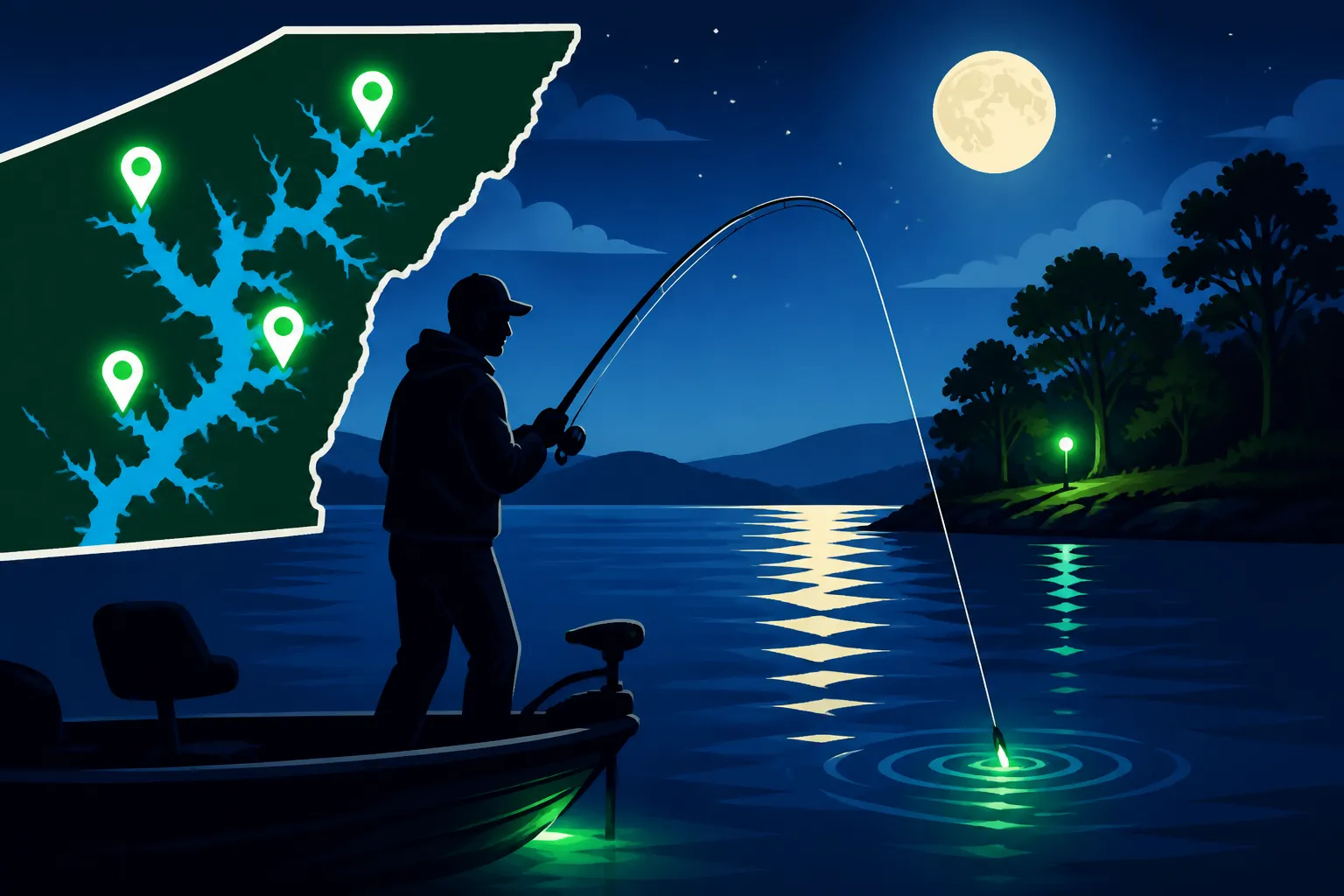
Night Fishing Spots on Watts Bar Lake, Tennessee
The stifling heat of a Tennessee summer day can make fishing a real grind. Between the blazing sun, the relentless boat traffic, and fish retreating to the deepest, coolest pockets of water, many anglers find themselves packing it in by early afternoon, feeling more defeated than refreshed. But what if I told you that when the sun dips below the horizon, a whole new world of opportunity opens up on Watts Bar Lake? Night fishing isn't just about escaping the heat; it's about tapping into a different rhythm of the lake, where big fish roam and tranquility reigns. This guide will walk you through everything you need to know to make your Watts Bar Lake night fishing dreams a reality, from finding the best spots to rigging up right.
The Allure of Night Fishing on Watts Bar Lake
There’s something truly magical about being out on the water after dark. The familiar shoreline lights up with a soft glow, the sounds of nature amplify, and the hustle and bustle of daytime activity fades into a peaceful calm. On a vast body of water like Watts Bar Lake, this transformation is even more pronounced, offering a unique angling experience that’s hard to beat.
Escaping the Heat and Crowds
Let's be real, those scorching summer days in Tennessee can be brutal. Temperatures often climb into the 90s, and the humidity can make it feel even hotter. Not only is this uncomfortable for us anglers, but it also sends many of our target fish species deep, seeking cooler, more oxygenated water. Trying to coax a bite out of a lethargic bass or crappie in the middle of the day can be an exercise in futility.
Enter night fishing. As the sun sets, the air temperature drops, sometimes by as much as 10-20 degrees, making for a much more pleasant experience on the boat. The water surface also begins to cool, encouraging baitfish and their predators to move into shallower, more accessible feeding grounds. You'll find yourself much more comfortable, able to focus on the fishing rather than just trying to stay hydrated and avoid sunburn. Plus, the sheer number of boats dwindles dramatically, leaving you with wide-open stretches of water and prime spots all to yourself. Imagine not having to fight for a spot on a productive ledge or waiting your turn at a popular boat ramp!
Targeting Nocturnal Predators
Many of the most sought-after game fish in Watts Bar Lake are actually more active hunters under the cover of darkness. This isn't just a coincidence; it's a fundamental shift in their behavior driven by instinct and opportunity. Species like channel catfish, blue catfish, flathead catfish, and even certain bass and crappie transition from a cautious, deep-water existence to aggressive foraging when night falls.
Catfish, for instance, are primarily nocturnal feeders, using their highly developed senses of smell and touch to locate prey in the dark. They'll cruise shallow flats, creek channels, and the edges of submerged cover, looking for an easy meal. Crappie, particularly the larger slabs, often move out of deep brush piles and suspend closer to the surface, especially when baitfish are drawn in by artificial lights. Even largemouth and smallmouth bass, though often thought of as daytime predators, will capitalize on the low light conditions, using the cover of darkness to ambush prey moving into shallower areas. This means your chances of hooking into a trophy fish can significantly increase after dark, adding an extra layer of excitement to your outing.
Prime Locations for Night Fishing Success on Watts Bar
Watts Bar Lake is an expansive reservoir stretching over 72 miles, covering more than 39,000 acres, so knowing where to start your night fishing adventure is key. While fish can be found throughout the lake, certain areas offer consistent action and ideal conditions for after-dark angling.
Navigating the Lower Lake Region
The lower end of Watts Bar Lake, particularly around the Watts Bar Dam, can be an incredibly productive area for night fishing. The current generated by the dam's operation often concentrates baitfish, which in turn attracts larger predators. The tailwaters below the dam are legendary for striped bass and a variety of catfish species that hold in the turbulent water, waiting for an easy meal to come by. While these areas can be tricky to navigate at night due to the currents, experienced anglers often find success here.
Moving slightly upstream from the dam, the mouths of major creeks like White Creek and Piney Creek offer fantastic opportunities. These creek mouths are natural funnel points for baitfish, especially as water temperatures fluctuate. During the night, crappie often suspend in the water column near these creek channels, particularly if there’s some overhead light from nearby docks or if you deploy submersible lights from your boat. Bass will also patrol these areas, especially if there's submerged timber or rock piles acting as ambush points. It's crucial to use your sonar during the day to mark these structures so you can easily return to them at night. This detailed guide on Watts Bar Lake, Tennessee's Largest Lake for Fishing can give you even more insights into the lake's layout and best general spots.
Mid-Lake Structures and Bridge Pilings
The vast mid-lake section of Watts Bar is characterized by its numerous main lake points, ledges, and deep creek channels. These geological features create perfect habitat for fish seeking structure, and at night, they become prime feeding grounds. Targeting long, sloping points that drop off into deeper water can be highly effective for both bass and crappie. Fish will often move up onto the shallower portions of these points under the cover of darkness to feed, retreating to deeper water as dawn approaches.
Bridge pilings, such as those under the Highway 68 bridge that crosses the lake, are absolute magnets for fish at night. The concrete structures themselves provide cover and act as current breaks, and often, overhead streetlights illuminate the water around them. This artificial light attracts plankton, which attracts baitfish, which then attracts everything else! Catfish will scour the bottom around the pilings, while crappie and stripers will suspend in the lighted areas. When fishing these spots, position your boat carefully to avoid disturbing other anglers and be mindful of any strong currents that might push you into the structure. You can often find a local guide through FishingBooker who specializes in these mid-lake areas, making your night trip much more efficient. Many of them know exactly how to navigate around these busy spots safely in the dark.
Exploring the Upper Lake and River Bends
As you move further up Watts Bar Lake, the reservoir begins to take on more riverine characteristics. The upper reaches offer a different kind of night fishing experience, often with deep river bends, submerged islands, and large, shallow flats that become active at night. These areas are fantastic for catfish, which love to cruise the deeper bends and flats for food, and also for bass that will push baitfish against the banks.
One notable area in the upper lake is near the Kingston Steam Plant discharge. The warmer water discharged from the plant can create an artificial draw for fish, even in cooler months, though it's still productive in summer as it creates a localized current. Anglers often find success here with various species drawn to the slight temperature difference and increased baitfish activity. Remember to always check local signage regarding access and safety near such facilities. Additionally, the extensive system of shallow flats and submerged vegetation found in the upper lake, especially towards the embayments, can hold impressive numbers of panfish and bass that feel more secure feeding in the dark. These areas may require more careful navigation but can yield excellent results for those willing to explore. You might be surprised by the variety of Watts Bar Lake Bass and Catfish Species you encounter in these diverse habitats.
Essential Gear and Techniques for a Successful Night Trip
Night fishing on Watts Bar Lake demands a different approach than your typical daytime excursion. Safety, proper lighting, and specialized techniques are paramount to both enjoyment and success.
Safety First: Lighting, Navigation, and Communication
Your number one priority when fishing at night is safety. Visibility is drastically reduced, increasing the risk of accidents. Every angler on board should have a reliable headlamp, preferably with a red light option. Red light preserves your night vision better than white light, allowing your eyes to adjust more quickly when you switch it off. Your boat must be equipped with proper navigation lights (red/green bow lights and an all-around white stern light) and they must be turned on from sunset to sunrise. Beyond that, a powerful spotlight is indispensable for scanning the water for debris, identifying buoys, or locating landmarks.
Navigation is critical. Relying solely on visual cues can be treacherous. A GPS unit or chartplotter on your boat, pre-loaded with Watts Bar Lake maps, is essential. Mark your waypoints for productive spots during daylight hours, and use your GPS to safely navigate to and from them. Consider having a backup navigation method, like a smartphone app, as well. Communication is another key safety element. Ensure your cell phone is fully charged, and consider carrying a VHF radio, especially if you plan to venture far from shore or into less populated areas. Most importantly, everyone on board should wear a U.S. Coast Guard-approved life jacket, or at least have easy access to one. The Tennessee Life Jacket and PFD Rules for Boaters specify requirements, especially for children, but it's always wise for everyone to wear one at night.
Baits, Lures, and Presentation for Night Biters
The baits and lures you choose for night fishing often differ from your daytime arsenal, focusing on scent, vibration, and silhouette. For catfish, the most popular choice is typically natural bait. Cut bait (shad, bluegill, skipjack), chicken livers, and various "stink baits" or dough baits are incredibly effective. Present these on the bottom using a slip-sinker rig, allowing the fish to pick up the bait without feeling resistance. This technique is detailed in articles like Catfish Bottom Fishing Basics. Live bait like worms or minnows can also be excellent.
For crappie, small jigs (1/16 to 1/8 ounce) fished under a slip bobber are hard to beat, especially when positioned near submersible lights that attract baitfish. Darker colors like black, blue, or junebug, or even glow-in-the-dark jigs, can create a strong silhouette against the light. Slow, subtle jigging motions are usually all it takes. Bass anglers often turn to dark-colored jigs with rattles, large plastic worms, or slow-rolled spinnerbaits that displace a lot of water. Topwater lures, particularly those that make a lot of noise like poppers or buzzbaits, can also be exhilarating in low light, relying on sound and silhouette to draw explosive strikes. Remember, fish rely more on lateral line vibrations and smell at night, so a slower presentation that allows them to find the bait is often more effective.
Setting Up Your Boat for Night Fishing
Transforming your boat from a daytime cruiser to a night fishing machine involves a few key additions. First, consider investing in portable fishing lights. Submersible LED lights, especially green ones, are incredibly effective at attracting plankton and baitfish directly to your boat, creating a feeding frenzy beneath you. These can dramatically improve your crappie and catfish success. Make sure you have ample battery power to run these lights for several hours, or even a small generator.
Rod holders are invaluable for night fishing, allowing you to run multiple lines for catfish or giving you a place to temporarily secure your rod while you navigate or re-tie. Keep a well-stocked cooler on board for your catch and for drinks. Perhaps most importantly, keep your tackle organized. Fumbling through a messy tackle box in the dark is frustrating and can lead to lost gear. Use tackle trays with clear lids and organize them by species or bait type so you can quickly grab what you need. Think about how you typically set up your boat; if you’re fishing a big lake like Watts Bar, you’ll want a boat that’s stable and has enough space for all your gear, as discussed in Best Boats for Watts Bar Lake. Ensure everything is easily accessible, even when you can’t see clearly.
Planning and Maximizing Your Watts Bar Night Fishing Adventure
A successful night fishing trip isn't just about showing up after dark; it requires careful planning, adherence to rules, and sometimes, a little help from the pros.
Understanding Regulations and Weather Patterns
Before you even think about launching your boat for a night trip on Watts Bar, you need to be absolutely certain you understand all the relevant regulations. The Tennessee Wildlife Resources Agency (TWRA) sets the rules for fishing, and these can include statewide limits, as well as lake-specific regulations that might override the general rules. Make sure you have your Tennessee Fishing License Guide sorted out, and review the Tennessee Fishing Regulations Explained thoroughly. These regulations cover everything from daily creel limits and size restrictions for different species to specific rules about gear or fishing methods on certain waters. Nothing ruins a peaceful night on the lake faster than an unexpected encounter with a game warden due to an oversight.
Beyond the regulations, weather is paramount. Night fishing can be exhilarating, but it can also be dangerous if a storm rolls in unexpectedly. Always check the weather forecast meticulously before heading out. Pay close attention to wind speed and direction, as Watts Bar is a large lake and can get rough very quickly. Look for any warnings about thunderstorms, heavy rain, or sudden temperature drops. Cold fronts, in particular, can shut down the bite, even at night. It's always a good idea to have a Plan B in case the weather turns foul. Rescheduling your trip is always better than risking your safety on the water.
Consider a Guided Trip for Local Expertise
For newcomers to Watts Bar Lake, or even for seasoned anglers looking to maximize their chances and learn the best night spots quickly, booking a guided trip can be an invaluable investment. Local fishing guides on Watts Bar possess an intimate knowledge of the lake's contours, current fish patterns, and specific hotspots that might only be productive after dark. They often have specialized equipment for night fishing, such as powerful sonar systems for finding submerged structures and high-intensity submersible lights for attracting bait.
A guide can not only put you on fish, but they can also teach you the nuanced techniques required for successful night fishing on Watts Bar, from bait presentation to navigating in the dark. This can save you countless hours of trial and error, making your experience far more productive and enjoyable. Plus, with a service like FishingBooker, you can easily find and book reputable guides operating on Watts Bar Lake who specialize in night fishing for species like catfish or crappie. Many guides are passionate about sharing their knowledge and can make your trip a truly memorable one. A quick search on their platform will show you several options, and you can read reviews from other anglers to find the perfect match for your night fishing adventure, whether you're hoping for a monster catfish or a cooler full of crappie. Learning How to Catch Catfish at Night from a professional, for instance, can elevate your skills significantly.
Watts Bar Lake Night Fishing Species Overview
To help you plan your night fishing strategy, here’s a quick overview of what you can expect to target:
| Species | Preferred Night Habitat | Common Night Baits/Lures | Notes |
|---|---|---|---|
| Catfish | Deep channels, creek mouths, shallow flats, dam tailwaters | Cut bait, chicken livers, stink baits, live worms | Highly active nocturnal feeders, use bottom rigs, good scent is key. |
| Crappie | Suspended near brush piles, bridge pilings, lighted areas | Small jigs (dark/glow), live minnows | Attracted to light, use sensitive rods and light line, often found in mid-depths. |
| Largemouth Bass | Shallow coves, points, submerged timber, weed lines | Dark jigs, spinnerbaits, plastic worms, topwater | Ambush predators, target structure and cover, loud topwater lures can trigger strikes. |
| Smallmouth Bass | Rocky points, humps, deeper main lake structure | Jigs, crankbaits, tubes (dark colors) | Also hunt in low light, often found on clearer, rocky bottoms, can be caught deep or shallow. |
| Striped Bass | Dam tailwaters, main lake points, deep ledges | Live shad, large swimbaits, bucktail jigs | Strong fighters, often feed aggressively on schooling baitfish, follow current breaks. |
This table provides a general guide, but remember that fish behavior can vary depending on water temperature, moon phase, and other environmental factors.
Disclaimer
Fishing and boating inherently carry risks. Always prioritize safety, understand and follow all local regulations, and wear appropriate safety gear. This guide is for informational purposes only, and conditions on Watts Bar Lake can change rapidly. Always check the latest weather forecasts and adhere to all TWRA guidelines.