Best Jig Colors for Spring Crappie
It's a common frustration, isn't it? You head out to your favorite crappie spot on a beautiful spring day, your tackle box brimming with every jig color imaginable, yet you're left scratching your head, wondering which tiny lure will finally entice those elusive slabs. The truth is, choosing the right jig color for spring crappie in Tennessee can feel like a shot in the dark, especially with fluctuating water conditions and the crappie's ever-changing moods. This guide aims to shed some much-needed light on the subject, helping you understand the science and strategy behind selecting the perfect jig color to fill your livewell during this prime fishing season.
Understanding Why Jig Color Matters for Spring Crappie
Before we dive into specific color recommendations, it's crucial to understand why jig color plays such a significant role in enticing crappie, especially during the spring. It's not just about what looks good to us; it's about what looks, or rather, appears best to a crappie under various environmental conditions.
How Crappie Vision Adapts to Light Conditions
Crappie, like most fish, have excellent vision, but their eyes are designed to perceive color and contrast differently than human eyes, particularly in low-light environments. In spring, especially during those overcast days or early morning/late evening bites, ambient light is often limited. Crappie eyes are well-adapted to low light, with a high concentration of rod cells, which help them detect movement and contrast. They can also see a broader spectrum of colors than we might imagine, including ultraviolet light, which can make certain jigs "glow" to them even when we can't perceive it.
What this means for your jig choice is that under bright, sunny conditions, a crappie might easily discern subtle color variations. But as the light dims, whether due to cloud cover, deep water, or time of day, contrast and brightness become more important than exact hue. A color that stands out and creates a clear silhouette against the water column will often be more effective than a perfectly camouflaged one. This is why many anglers swear by brighter colors for those low-light spring mornings, even if the water itself isn't particularly stained.
The Critical Role of Water Clarity
Water clarity is arguably the single most important factor when considering jig color for spring crappie. Tennessee's diverse waterways, from the crystal-clear mountain streams to the murky reservoirs like Reelfoot Lake, present a wide range of clarity conditions, and crappie jigs that excel in one environment might be completely ignored in another.
Think about it: in exceptionally clear water, like you might find in parts of Norris Lake or some of the smaller impoundments, crappie have ample opportunity to scrutinize your bait. Here, natural, subtle colors often shine because they mimic the natural forage that crappie are accustomed to seeing. Overly bright or unnatural colors can sometimes spook them, especially if they're pressured or wary. In these conditions, a jig that blends in just enough to look like a minnow or small insect, but still has enough flash or movement to draw attention, is ideal.
Conversely, in stained or muddy water, which is common during spring after heavy rains or in rivers with high sediment loads, visibility is drastically reduced. A subtle, natural-colored jig will simply disappear. This is where you need to reach for colors that offer maximum visibility and contrast. These colors act as beacons, sending a clear visual signal through the murk to a crappie's lateral line and eyesight. They allow the fish to locate your bait from a greater distance, triggering a reactionary strike even if they can't fully discern the details of the lure. Understanding these clarity nuances is fundamental to effective crappie fishing.
Top Crappie Jig Colors for Tennessee's Spring Waters
Now that we understand the "why," let's talk about the "what." Certain jig colors have earned their stripes over decades of spring crappie fishing in Tennessee, becoming go-to options for a reason. These aren't just random preferences; they're colors that consistently produce under specific conditions.
The Unbeatable Duo: Chartreuse and White
If there's one color combination that almost every seasoned crappie angler in Tennessee will tell you to have in your box, it's chartreuse and white. This pairing is a true classic, and for good reason.
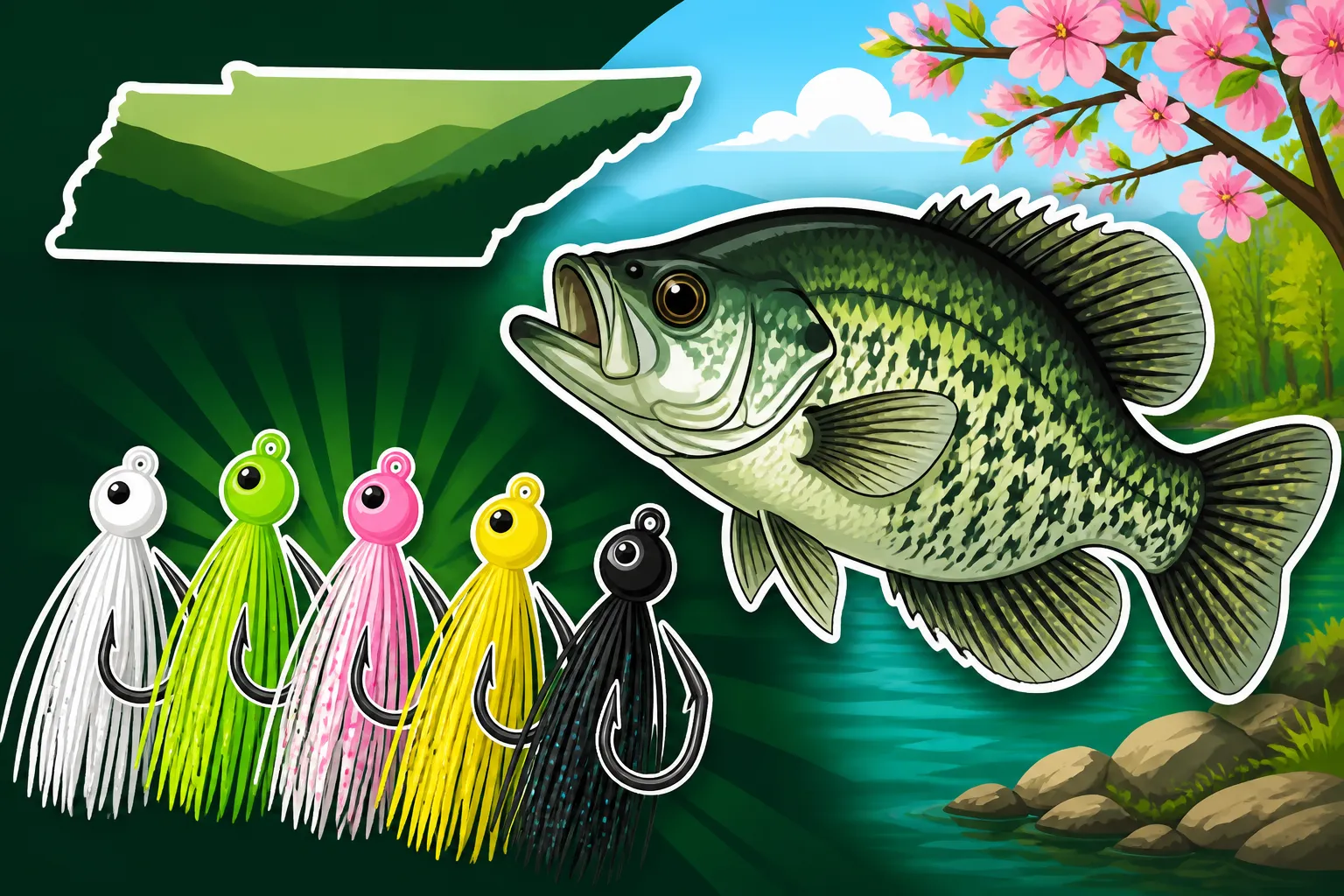
Chartreuse is an incredibly vibrant, almost fluorescent green-yellow that has an uncanny ability to stand out in a variety of water conditions. Its high-visibility makes it fantastic in stained or muddy water, where it provides a stark contrast that crappie can easily pick up. Even in clearer water, on overcast days or in deeper sections, chartreuse retains its visibility, mimicking perhaps a distressed baitfish or an insect larvae. Many anglers believe that crappie are simply attracted to the aggressive, attention-grabbing nature of chartreuse. You can find excellent chartreuse jigs on Amazon from brands like Bobby Garland or Crappie Magnet, often paired with another color for added appeal.
White, on the other hand, is all about flash and imitation. A pure white jig, especially one with a bit of pearl or glitter, does an excellent job of mimicking a fleeing shad or a small baitfish. It's highly visible in most conditions, providing a bright, reflective target. When combined, a chartreuse head with a white body, or a white head with a chartreuse tail, you get the best of both worlds: the attention-grabbing power of chartreuse and the natural baitfish imitation of white. This combo is a staple for a reason, and if you're only carrying a few jig colors, make sure this one is among them. It’s particularly effective during the Spring Crappie Spawn Timing in Tennessee when crappie are aggressive and protective.
Natural and Subtle Tones for Clear Water
When the water is clear, and the sun is high, you'll often find crappie can be a bit more finicky. They're able to get a good look at your bait, and if it doesn't look quite right, they might just turn up their noses. This is when you want to reach for more natural and subtle tones.
Colors like black, blue, green pumpkin, and various shades of brown or gray truly excel in clear water. A black jig, for instance, creates a sharp, distinct silhouette against a bright sky or lighter bottom, making it easily visible without being overly flashy. Imagine a black cricket or beetle falling into the water – it stands out against the surface. Black and blue combinations are also very effective, especially if you have a darker bottom or structure that the crappie are relating to. A black jig with a blue tail can perfectly imitate a small baitfish.
Green pumpkin, a popular bass fishing color, is also fantastic for crappie in clear water, particularly around vegetation. It blends naturally with underwater plants and algae, making your jig look like a small crawfish, insect, or even a juvenile bluegill. Brands often offer subtle glitter or flake in these natural colors, adding just enough shimmer to catch a crappie's eye without screaming "fake." When fishing in clear lakes like Norris Lake, these natural hues can make all the difference, tricking even the most wary crappie.
Bold and Bright for Stained or Muddy Conditions
When Tennessee's waters turn dingy or muddy, whether from recent rainfall on the Cumberland River or just naturally stained areas of a larger reservoir, subtle colors are out, and bold, bright colors are in. This is where you need maximum visibility to ensure your jig is seen.
Beyond chartreuse, consider vibrant shades of orange, pink, or even a bright, electric blue. These colors don't necessarily mimic any natural forage directly, but their primary purpose is to be seen. In heavily stained water, these colors create a strong contrast and appear as a vivid "hot spot" that crappie can home in on through the murk. Think about how a bright safety vest stands out against a dark background – that's the effect you're going for underwater. Some anglers even prefer jigs with glow-in-the-dark properties or UV enhancers for truly challenging conditions. You can find many options for these specialized jigs on Amazon, often from smaller, dedicated crappie tackle manufacturers.
A hot pink jig, for example, might seem outlandish, but it can be incredibly effective in murky conditions, particularly when crappie are aggressive. The key is visibility. When fishing on a lake like Kentucky Lake or Chickamauga Lake after a good rain, don't be afraid to experiment with these "loud" colors. If you’re unsure How to Jig for Crappie in these conditions, focus on slow retrieves and letting the color do the work.
Jig Color Selection Guide for Spring Crappie in Tennessee
Here's a handy table to help you quickly choose the right jig color based on common spring water conditions you might encounter in Tennessee:
| Water Clarity | Light Conditions | Preferred Jig Colors | Rationale |
|---|---|---|---|
| Crystal Clear | Bright Sun | Black, Blue, Green Pumpkin, Smoke, Transparent colors | Natural imitation, subtle silhouette, less likely to spook wary fish. |
| Overcast/Low Light | Black/Blue, Smoke/Blue, Green Pumpkin/Chartreuse | Stronger silhouette, subtle contrast for low light, still natural. | |
| Slightly Stained | Bright Sun | White, Pearl, Chartreuse, Pink, Light Blue | Good visibility, flash for attention, still somewhat natural. |
| Overcast/Low Light | Chartreuse, Orange, White/Chartreuse, Pink/White | High visibility, strong contrast, draws attention in reduced clarity. | |
| Muddy/Heavily Stained | Any (Sun or Overcast) | Chartreuse, Orange, Hot Pink, Electric Blue, Glow | Maximum visibility, strong vibration/profile, stands out in poor visibility. |
Adapting Your Color Strategy on Tennessee Lakes
Knowing the "best" colors is only half the battle. True crappie success comes from understanding how to adapt your strategy on the fly, constantly adjusting to what the fish are telling you. This involves paying close attention to local conditions and being willing to try new things.
Matching the Hatch and Local Forage
While bright colors are often about attracting attention, sometimes the most effective strategy is to mimic what the crappie are already eating. This concept, known as "matching the hatch" in the fly-fishing world, applies equally to jig fishing for crappie. In spring, crappie are often keying in on specific forage, whether it's tiny threadfin shad, small minnows, or even aquatic insects that become more active as the water warms.
If you're fishing a specific lake like Percy Priest Lake, which is known for its abundant shad populations, a silver or pearl-white jig that imitates a small shad can be incredibly effective. On other lakes or smaller ponds, crappie might be feeding on small bluegill fry, in which case a green pumpkin or brown jig could be more appropriate. Pay attention to what you see in the water – if you notice schools of baitfish, try to match their size and color. If you're catching crappie and they're spitting up tiny insects, consider a more subtle, natural-toned jig. Observing the local environment is a crucial step in Tennessee Crappie Fishing Guide by Season.
The key here is observation and sometimes, a little bit of guesswork based on the ecosystem you're fishing. If you're unsure, starting with a natural baitfish color and then switching to a bolder attractor color if you're not getting bites is a good strategy.
Embracing Experimentation and Crappie Mood Swings
One of the biggest mistakes an angler can make is to stick with a single jig color simply because it worked last week, or even last hour. Crappie are notorious for their "mood swings." What worked at dawn might not work at noon. What worked on Tuesday might not work on Wednesday. This means experimentation is not just an option; it's a necessity.
Always start with a couple of your confidence colors, but if they're not producing, don't hesitate to switch. Try a lighter color, then a darker one. Switch from a natural hue to a vibrant attractor. Sometimes, even a slight variation in the same color family can make a huge difference. For instance, if chartreuse isn't working, try a chartreuse with glitter, or a chartreuse/green combo, or even a chartreuse/orange. Carry a variety of jigs in different colors, shapes, and sizes from brands like Strike King or Mr. Crappie in your tackle box. This versatility, easily achieved by stocking up on various options through retailers like Amazon, will allow you to adapt to changing conditions and the crappie's preferences.
It's also worth noting that factors beyond color, like How Water Temperature Affects Fish Activity and even barometric pressure, can influence crappie behavior and their receptiveness to certain colors. So, when the bite is slow, don't just consider your presentation; definitely consider your color choice.
Beyond Color: Other Factors for Spring Crappie Success
While jig color is a critical piece of the puzzle, it's just one piece. To truly dominate the spring crappie bite in Tennessee, you need to consider a few other factors that work in conjunction with your color choice.
Jig Size, Profile, and Weight
The size, profile, and weight of your crappie jig are just as important as its color, sometimes even more so. Spring crappie are often feeding aggressively, but they can still be particular about the meal they're willing to commit to.
Size: Generally, crappie jigs range from 1/32 ounce to 1/8 ounce, though heavier jigs are used for deep water or strong currents, and lighter ones for very shallow or calm conditions. In early spring, when crappie might still be a bit sluggish, a smaller jig (1/32 oz or 1/16 oz) can be more appealing. As the water warms and the fish become more active, moving towards their spawning grounds, they might hit larger baits (1/8 oz) more readily. However, don't hesitate to go smaller if the bite is slow – sometimes a tiny, finesse presentation is all it takes, especially for pressured fish.
Profile: The shape of your jig body, whether it's a straight minnow imitation, a grub with a curly tail, a paddle tail, or a hair jig, dramatically affects its action in the water. Curly tail grubs are incredibly versatile, offering constant action even on a slow retrieve. Paddle tails create a thumping vibration that can be felt in murky water. Hair jigs have a subtle, lifelike quiver that's hard to beat in clear, cold water. Consider what you're trying to imitate and what kind of action you want to impart. For instance, a minnow-profile soft plastic, paired with a natural color, works wonders when crappie are chasing baitfish.
Weight: The weight of your jig dictates how fast it sinks and how deep you can present it. For shallow water fishing (under 10 feet), a 1/32 or 1/16 ounce jig is often perfect, allowing for a slow, controlled fall. When targeting crappie suspended over deeper brush piles or in channels, a 1/8 ounce jig might be necessary to get down quickly and stay in the strike zone. Matching your jig weight to the depth and current is crucial for maintaining proper presentation. For deeper crappie, learning How to Catch Crappie Around Brush Piles often involves heavier jigs to get through the cover.
Presentation and Retrieve Speed
Finally, no matter how perfect your jig color, size, and profile are, if your presentation isn't right, you won't catch fish. Spring crappie can be found in a variety of locations, from shallow spawning flats to deeper pre-spawn staging areas, and your retrieve needs to match their mood and location.
Slow and Steady: In early spring, when water temperatures are still cool (below 55°F), crappie are often lethargic. A very slow, almost imperceptible retrieve, often called "dead sticking" or "tightlining," is often most effective. Let the jig sink slowly, giving the crappie plenty of time to track it and commit. Small twitches, barely moving the rod tip, can add just enough action.
Medium Pace for Active Fish: As the water warms and crappie move towards their spawn, they become more active. A slow to medium retrieve, with consistent pauses and gentle lifts, can be incredibly effective. This mimics a baitfish swimming naturally. When fishing around cover like submerged timber or docks, try to pause your jig right at the edge of the cover, allowing it to flutter down – often, the strike comes on the fall.
Jigging Techniques: Whether you're casting from the bank or vertically jigging from a boat, mastering different jigging techniques is key. Vertical jigging directly over brush piles or schools of fish you've located on your Fish Finders and Electronics for Tennessee Reservoirs can be deadly. Casting and retrieving, especially along contours or around docks, allows you to cover more water. Remember, the goal is to make your jig look as natural and appealing as possible, triggering that instinctual strike. The best time of day for this can also vary, so understanding Best Time of Day to Jig for Crappie will further increase your chances.
By paying attention to these factors – color, size, profile, weight, and presentation – you'll be well-equipped to tackle Tennessee's spring crappie with confidence and success. Don't be afraid to experiment, keep a keen eye on the conditions, and enjoy the thrill of reeling in those delicious slabs. If you're wondering about the limits, check out the Crappie Limits Under Tennessee Fishing Rules to stay compliant.
Disclaimer
Fishing conditions and regulations in Tennessee can change. Always consult the latest Tennessee Wildlife Resources Agency (TWRA) regulations before heading out. This guide is for informational purposes only and does not supersede official rules or local advisories.