Best Time to Catch Bass on a Cloudy Day
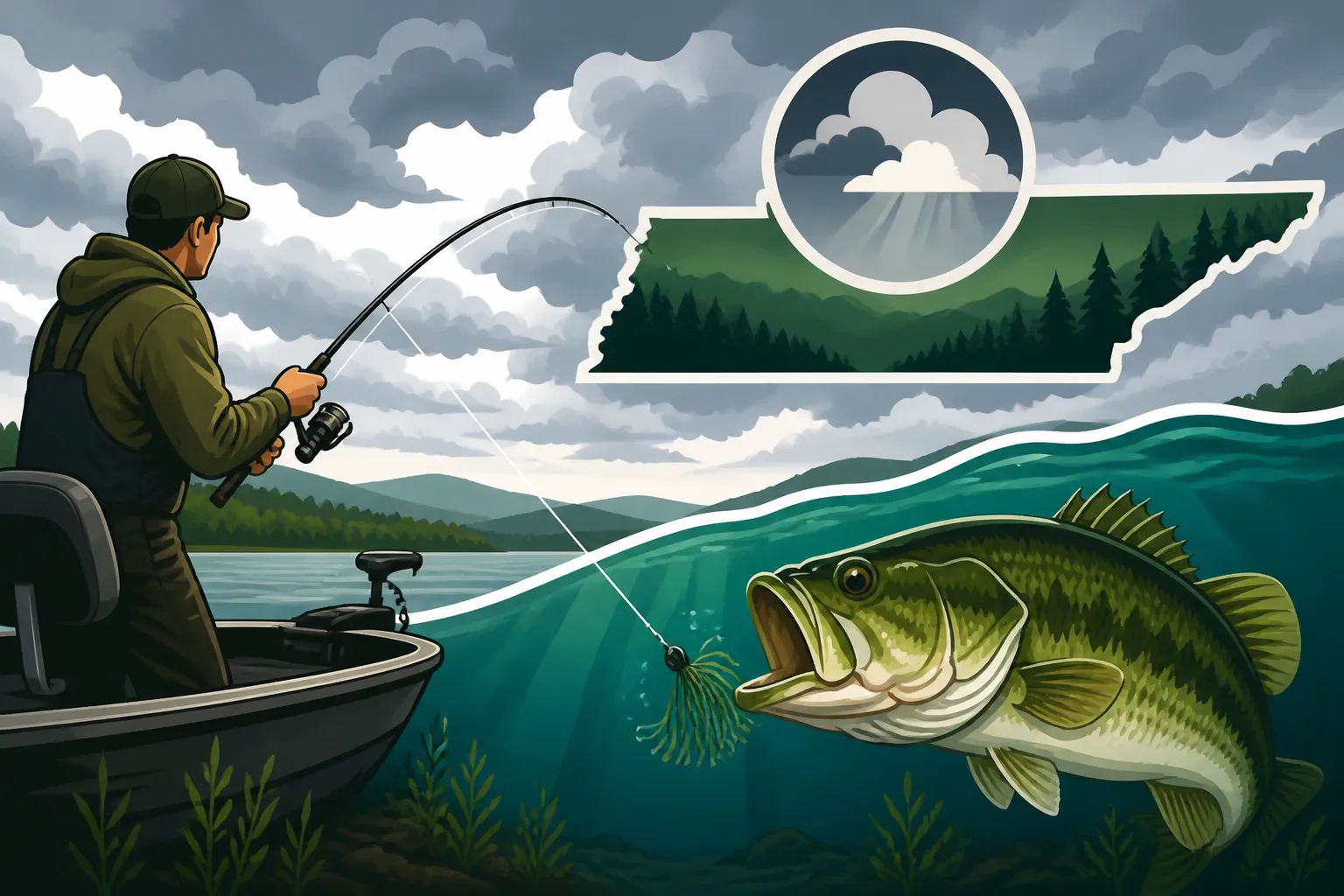
We've all been there, standing by the water under a gloomy, overcast sky, wondering if it's even worth casting a line. Many anglers mistakenly believe that bright, sunny days are always the best for bass fishing. However, those cloudy days, the ones that often feel a bit dreary to us, can actually be some of the most phenomenal times to entice a big Tennessee bass. This guide will dive deep into why overcast conditions are often a blessing, the prime times to cast your line, and the techniques and lures that will make you a cloudy-day bass catching machine.
Why Overcast Skies Create Ideal Bass Fishing Conditions
When the sun is blazing down, bass tend to retreat to deeper, cooler waters or hide under thick cover, making them harder to find and entice. But when the clouds roll in, a whole new world opens up for these cunning predators, and consequently, for us anglers.
Diffused Light and Reduced Shadows
One of the biggest advantages of a cloudy day is the way light penetrates the water. Instead of harsh, direct sunlight that creates sharp shadows and penetrates deep, cloud cover diffuses the light, scattering it evenly. This makes the entire water column more comfortable for bass, encouraging them to move out from their heavy cover and cruise more openly.
Think about it from a bass's perspective. On a sunny day, they're wary of overhead predators like eagles or ospreys, and the strong light can hurt their sensitive eyes. Cloudy conditions provide a natural canopy, reducing their visual vulnerability and allowing them to roam and feed with less caution. This means they're often shallower and more spread out, expanding your potential target zones significantly. It's a prime example of how nature’s elements dictate fish behavior, something you'll learn more about in our guide on how water temperature affects bass feeding.
Increased Fish Activity and Feeding Windows
Cloudy days often mimic those magical twilight hours of dawn and dusk when bass are naturally most active. Without the intense sun driving them deep or into the shadows, their feeding windows extend throughout the day. This prolonged activity period is a huge boon.
Instead of a narrow window in the early morning or late evening, you might find bass actively chasing baitfish from sunrise to sunset. The lower light conditions also make baitfish feel safer, venturing into more open water, which in turn draws bass out to hunt. This means you might not have to get up at the crack of dawn to have a successful outing if the clouds are holding strong all day. It's about adjusting your expectations and understanding that bass patterns shift with the weather, a topic covered extensively in our overview of Tennessee Bass Fishing Seasons and Patterns.
Best Times to Target Bass on Cloudy Days
While overcast conditions generally improve fishing throughout the day, there are still nuanced "best times" to consider that can maximize your success. It's not just about any time on a cloudy day; it's about understanding how the light and other factors interact.
Midday is Often Prime Time
Unlike sunny days where midday often means a lull in activity, a fully cloudy sky can make midday one of the most productive times for bass fishing. The diffused light provides consistent cover, and the water temperature tends to stabilize, making bass comfortable.
This means you can often find bass actively feeding in areas they'd typically abandon during sunny midday hours, such as shallow flats, points, and along the edges of weed lines. Don't be surprised to catch some of your biggest fish between 10 AM and 2 PM on a heavily overcast day, especially if there's a gentle breeze creating a chop on the water's surface to further break up the light. Many anglers might pack it in, but this is when you should be doubling down on your efforts.
The Role of Consistent Cloud Cover
The consistency of the cloud cover plays a huge role. If the clouds are patchy, with periods of bright sun alternating with shade, the bass can become confused and move erratically. However, a day with dense, consistent cloud cover that keeps the light steady and low from morning till evening is a goldmine.
On such days, bass maintain a more predictable pattern, often staying shallower for longer periods and feeding more aggressively. It's these consistently gloomy days that extend the "golden hour" for bass fishing from a few hours to nearly the entire day. This consistent light also influences how bass detect your lures, making certain presentations more effective. You can delve into more general timing strategies in our article on the Best Time of Day to Catch Bass.
Effective Techniques and Lures for Overcast Conditions
When the clouds are out, bass behave differently, which means your approach should change too. Certain lures and techniques capitalize on their increased aggression and reduced visibility.
Lure Choices: Color and Vibration
Under cloudy skies, visibility is naturally lower, and bass rely more on their lateral line to detect vibrations. This makes lures with strong profiles, good water displacement, and contrasting colors particularly effective.
- Darker, Contrasting Colors: Forget the natural, subtle hues you might use on a sunny day. Opt for black, blue, purple, or dark green. Chartreuse and combinations like black-and-blue are also fantastic because they create a strong silhouette against the dim sky, making them easier for bass to spot. Imagine a dark jig or a spinnerbait with black blades swimming through slightly dim water; it stands out like a sore thumb to a hunting bass. When choosing a jig for bass fishing, consider those with prominent skirts that flair out, adding to the visual appeal in low light, something we discuss in our guide on How to Rig a Jig for Bass Fishing. You can find a fantastic selection of these color combinations on Amazon.
- Vibration and Flash: Spinnerbaits, chatterbaits, and lipless crankbaits that produce significant vibration are phenomenal. The flash from a spinnerbait blade, even under diffused light, can catch a bass's eye, and the thumping vibration calls them in from a distance. For crankbaits, consider those with a wide wobble.
Presentation: Speed and Location
With bass being more active and less spooky on cloudy days, you can often get away with a faster retrieve or more aggressive presentations.
- Covering Water: Since bass are more spread out, you want to cover water efficiently. Casting spinnerbaits, crankbaits, or even topwater lures (if the water is warm enough) across flats, points, and along submerged grass beds can be highly effective. A fast retrieve can trigger reaction strikes from active bass.
- Targeting Shallower Depths: Bass feel more secure in shallower water under cloud cover. Don't be afraid to target depths of 2-8 feet, especially if there's some kind of cover like submerged timber, rocks, or weed lines. These spots become prime ambush points when the light is low. This contrasts sharply with summer bass fishing in bright sun, where you might focus on deeper structure, as detailed in our advice on How to Fish for Bass in Summer Heat. Consider using a reliable Best Rods for Largemouth Bass and a smooth Best Baitcasting Reels for Bass Anglers to get that lure exactly where it needs to be.
Here's a quick reference table for lure choices on cloudy days:
| Lure Type | Recommended Colors | Key Action/Feature | Best Use Case |
|---|---|---|---|
| Spinnerbaits | Black, Blue, Chartreuse, White (with dark blades) | Flash, Vibration | Covering open water, shallow to mid-depths, around cover |
| Chatterbaits | Black-and-blue, Green Pumpkin, White/Chartreuse | Strong Vibration, Jigging action | Through grass, around wood, reaction strikes |
| Crankbaits | Black, Blue, Dark Green, Crawfish patterns | Wobble, Deflection | Bumping off structure, varying depths |
| Jigs (Skirts) | Black-and-blue, Green Pumpkin, Purple, Dark Brown | Subtle movement, Profile | Flipping/pitching heavy cover, slower presentations |
| Buzzbaits | Black, White, Chartreuse | Topwater commotion | Early morning/late evening, calm cloudy conditions |
Remember, while these are excellent starting points, always observe how the fish are reacting and adjust accordingly. Even on a cloudy day, bass can be particular. You might find a great deal on diverse lure kits perfect for cloudy days on Amazon.
Understanding Water Conditions and Their Impact
Even with a consistent blanket of clouds overhead, other water conditions will always play a critical role in how bass behave and where they position themselves. It's never just about the sky.
Water Clarity and Lure Visibility
The clarity of the water directly impacts how well bass can see your lure, even under cloudy conditions.
- Clear Water: In very clear water, bass might still be somewhat wary, even if the light is diffused. Here, you might still want to use slightly more natural presentations, or at least lures that mimic natural forage closely in shape, even if the color is darker. The key is visibility. Darker colors still provide a good silhouette, but avoid anything overly garish that might look unnatural if they can see it coming from a distance.
- Stained or Murky Water: This is where cloudy days truly shine with aggressive lure choices. In stained or muddy water, visibility is already low, so bass rely heavily on vibration and strong color contrasts. Loud rattles in a crankbait, a thumping spinnerbait, or a large, dark jig will be easily detected. If you're dealing with very muddy conditions, our guide on How to Catch Bass in Muddy Water offers even more specialized tips.
Temperature Stability and Frontal Systems
Cloudy days often mean more stable air and water temperatures, which bass generally prefer. Sudden drops or spikes in temperature, especially from a cold front, can shut down feeding, regardless of the cloud cover.
If a cold front has just passed, even a cloudy day might find bass lethargic and hunkered down, making them harder to catch. In such scenarios, a slower, more deliberate presentation with a jig or a shaky head might be more effective than a fast-moving reaction bait. You can read more about adapting to these conditions in our advice on Best Lures to Use After a Cold Front. Conversely, if the cloudy day is part of a stable weather pattern, expect active fish.
Consider how these conditions overlap with different times of the year, like during Tennessee's Bass Spawn Timing in Tennessee Lakes. During the pre-spawn or post-spawn, a cloudy day can lead to incredible fishing as bass move to and from their spawning beds, feeling secure enough to feed aggressively. This highlights the importance of understanding the broader seasonal patterns alongside daily weather conditions, a topic deeply explored in our discussions around Pre-Spawn and Post-Spawn Bass Fishing Patterns and How to Fish for Bass in Spring.
Ultimately, cloudy days for bass fishing in Tennessee are a gift. They provide an extended window of opportunity, allow bass to be more aggressive, and often bring them into shallower, more accessible waters. So, the next time you see those gray skies, don't pack away your gear. Instead, grab your darkest lures, perhaps a new Best Crankbaits for Reservoir Bass from Amazon, and head out to the water. You might just have one of your best fishing days ever!
Disclaimer
This article is for general informational purposes only and does not constitute professional advice. Laws, prices and regulations vary by location and change over time. Consult a qualified professional for guidance on your specific situation.