How to Catch Bass in Muddy Water
There’s nothing quite as soul-crushing for an angler as arriving at your favorite Tennessee fishing spot, only to find the water churned up, brown, and utterly devoid of its usual clarity. That feeling of casting into what looks like chocolate milk, convinced no self-respecting bass would ever see your lure, is a frustration we've all felt. But don't despair! This comprehensive guide will arm you with the specific knowledge, gear choices, and techniques to turn those muddy water challenges into successful bass-catching opportunities, even in the murkiest of Tennessee lakes and rivers.
Understanding Why Water Gets Muddy in Tennessee and How Bass React
Muddy water isn't just a visual nuisance; it completely changes the underwater environment and, consequently, how bass behave and where they position themselves. Before we dive into tactics, it's crucial to understand why this happens in our beautiful state and what it means for our finned friends.
Common Causes of Murky Water in Tennessee
Tennessee's diverse geography, from the Appalachian Mountains to the Mississippi River floodplain, means we experience a variety of factors that can rapidly turn clear water into a cloudy mess.
Heavy Rainfall and Runoff
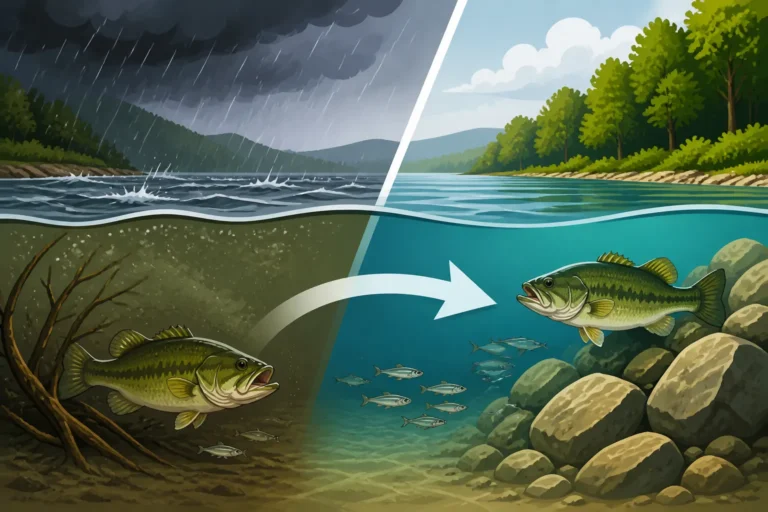
This is, hands down, the most common culprit. A significant rain event, especially after a dry spell, washes an incredible amount of sediment, dirt, and organic matter from the surrounding land into our creeks, rivers, and lakes. Think about a major downpour around Nashville's Percy Priest Lake or the tributaries feeding into Kentucky Lake. The water comes off the banks, carrying everything with it, and quickly spreads, reducing visibility drastically. This runoff isn't just dirt; it can bring nutrients and debris that further alter the ecosystem temporarily.
Wind and Wave Action
Our large reservoirs like Chickamauga Lake and Watts Bar Lake are particularly susceptible to wind-driven muddiness. Strong winds, especially those sustained for several hours or days, can stir up the shallow bottoms, particularly in coves, flats, and around points. The constant wave action lifts fine particles from the lakebed, suspending them in the water column and creating a muddy plume. This is particularly noticeable in areas with soft, silty bottoms rather than rocky substrates.
Upstream Construction and Agricultural Activity
While less dramatic than a storm, ongoing construction projects along riverbanks or extensive agricultural tilling can be continuous sources of sediment. When it rains, the disturbed soil erodes easily into nearby waterways. This type of muddiness might be more localized but can persist longer than storm-related turbidity if the source isn't managed. Anglers often encounter this along stretches of the Tennessee River or its tributaries flowing through agricultural areas.
How Bass Adapt to Low Visibility Conditions
Fish, especially bass, are incredibly adaptable creatures. While sight is a primary hunting tool in clear water, they possess other senses that become paramount in muddy conditions. Understanding these adaptations is key to predicting their behavior.
Reliance on the Lateral Line
The lateral line system is a super-sensitive organ running along the side of a fish's body. It detects vibrations and pressure changes in the water, essentially allowing bass to "feel" their surroundings and prey. In muddy water, where they can't see, they rely heavily on this sense to locate baitfish, avoid obstacles, and track your lure. This means lures that displace a lot of water and create strong vibrations become much more effective. Think about how a person uses their hands to feel their way in a dark room; a bass uses its lateral line in muddy water.
Enhanced Sense of Smell and Taste
Bass also have an acute sense of smell and taste. In murky water, they'll use these chemical cues to home in on potential meals. This is why scent-infused baits, soft plastics with strong attractants, and even natural baits can be incredibly effective when visibility is poor. The scent trail acts as a beacon, guiding them to your offering when they can't visually track it. Many anglers will add external scent to their favorite jigs or soft plastics when facing muddy conditions.
Seeking Out Light and Warmer Water
Muddy water often warms faster than clear water due to the suspended particles absorbing more sunlight. Bass are cold-blooded creatures, and their metabolism is tied to water temperature. They might seek out these slightly warmer, albeit muddy, zones. Additionally, muddy water blocks out more light, creating a darker environment even during the day. Bass, being ambush predators, can use this to their advantage, lurking in the darker water to surprise prey. Sometimes, they might even gravitate towards slightly clearer water pockets if available, often near inflowing creeks where the mud hasn't fully mixed, or deeper edges where the mud settles out.
Gear and Lure Choices for Muddy Water Bass Fishing
When the water turns murky, it’s time to rethink your tackle box. The delicate finesse presentations that shine in clear water will often go unnoticed. Instead, you need lures and gear that scream "I'm here!" through vibration, displacement, and bold visibility.
Colors and Vibrations That Stand Out
This is perhaps the most crucial adjustment you'll make for muddy water. Forget your natural shad patterns or subtle greens; it's time for loud and proud.
Dark, Opaque, and Contrasting Colors
In muddy water, the general rule is often to use dark or very bright colors. Dark colors like black, blue, and junebug create a strong silhouette against the low light, making them easier for a bass to detect. Think about how much easier it is to see a dark object against a dimly lit background than a transparent one. On the other hand, extremely bright, fluorescent colors like chartreuse, neon orange, or hot pink can also be incredibly effective. These colors literally glow or stand out in the low light conditions, catching the eye of any bass that gets close enough. A black-and-blue jig or a chartreuse spinnerbait are classic muddy water staples for a reason.
High-Vibration and Water-Displacing Lures
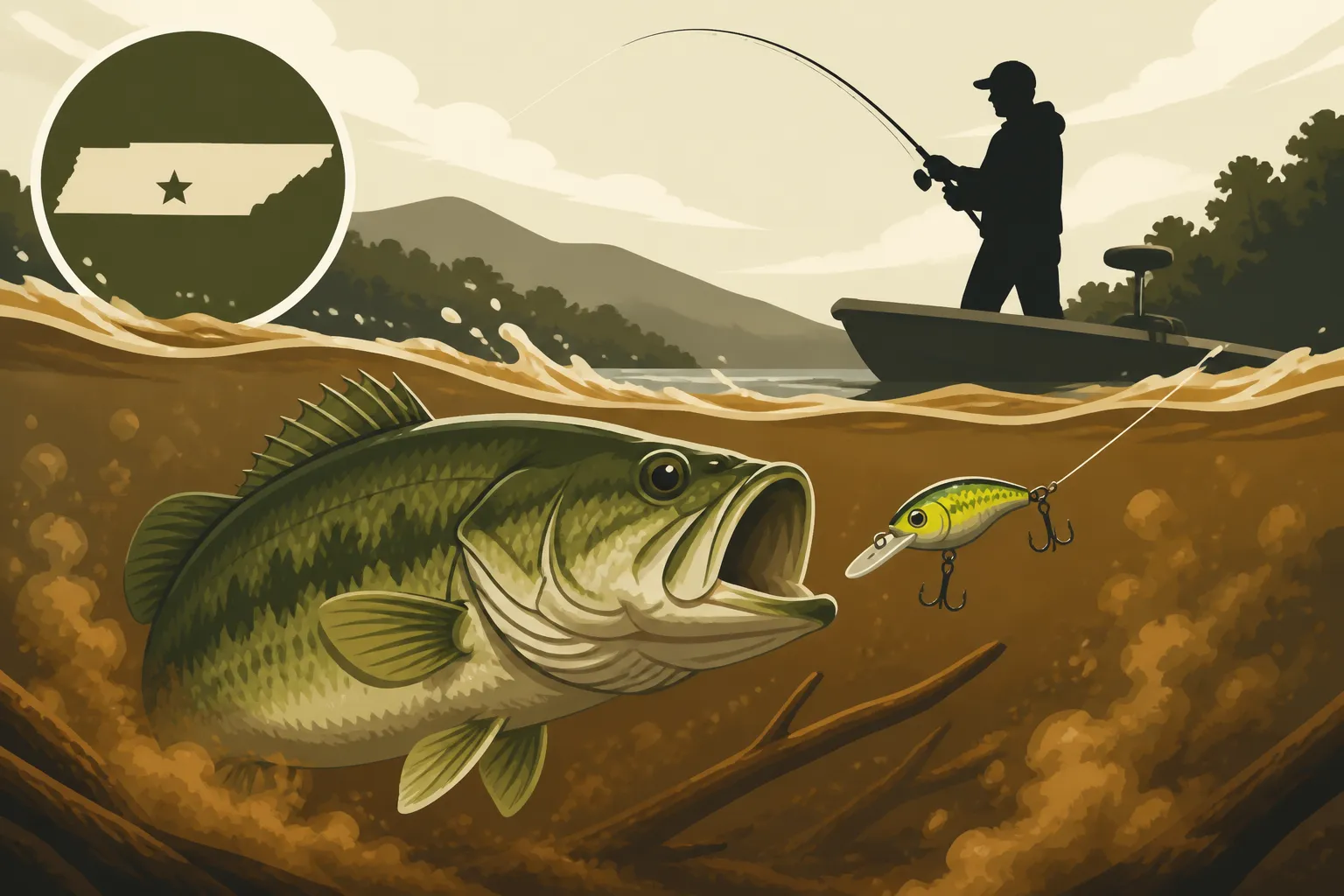
As we discussed, bass rely heavily on their lateral line in muddy water. This means lures that generate significant vibration and push a lot of water are your best friends.
- Spinnerbaits: With their thumping blades (especially Colorado or large willow leaf blades), spinnerbaits are fantastic for muddy water. They create a strong disturbance and flash, calling bass from a distance. A brightly colored skirt on a spinnerbait, perhaps chartreuse or white, combined with big blades, is a winning combination.
- Chatterbaits: These hybrid jigs, often called bladed jigs, produce an erratic, high-frequency vibration that bass absolutely cannot ignore. Their unique action makes them exceptional search baits in low visibility.
- Crankbaits: Particularly those with a wide wobble and rattles. Lipless crankbaits, especially, vibrate strongly on the retrieve and sink, covering water quickly. Deeper diving crankbaits can also be great for exploring submerged structure.
- Jigs with Rattles: Adding rattles to a jig or using a jig with a built-in rattle can significantly increase its effectiveness. The sound travels further in the murky water, giving bass an additional cue to locate your bait.
- Buzzbaits and Whopper Ploppers: For topwater action, anything that makes a lot of commotion on the surface can be irresistible. The gurgling, splashing, and squeaking sounds act as powerful attractants.
Many of these effective muddy water lures can be found in a wide array of colors and sizes on sites like Amazon, making it easy to stock up before your next outing.
Essential Rod, Reel, and Line Setups
Your gear needs to match the powerful lures and the aggressive bites often associated with muddy water bass fishing.
Heavier Line for Confidence
In clear water, anglers often use lighter line to reduce visibility to the fish. In muddy water, that concern is practically gone. This is your chance to spool up with heavier line – think 15-20 lb fluorocarbon or monofilament, or even 40-65 lb braided line. The heavier line gives you more confidence when setting the hook on powerful fish, especially when you can't see them bite, and allows you to wrench them out of heavy cover without fear of breaking off. Fluorocarbon offers excellent abrasion resistance, which is a plus around the debris often found in muddy conditions.
Medium-Heavy to Heavy Power Rods
You'll be throwing heavier, high-resistance lures and often fishing around thick cover. A medium-heavy to heavy power casting rod (around 6'6" to 7'6") is ideal. This rod power provides the backbone needed to cast bulky lures accurately, get a solid hook set, and effectively fight larger bass through heavy cover. A fast action tip will still give you enough sensitivity to detect subtle bites that can sometimes occur even in muddy water, especially if bass are just mouthing the bait.
Baitcasting Reels for Control and Power
For most muddy water applications, a good quality baitcasting reel with a decent gear ratio (6.1:1 to 7.5:1) is the way to go. The power and control offered by baitcasters are perfect for slinging heavier lures and muscling fish out of dense vegetation or submerged wood. However, if you're leaning towards lighter jigs or soft plastics, a sturdy spinning setup with a heavier line can still be effective, especially for shorter, more precise casts into tight spots. Don't be afraid to try different setups; experimenting with what feels right for you and the specific conditions is part of the fun.
| Lure Type | Key Characteristics | Why it Works in Muddy Water | Common Colors/Patterns |
|---|---|---|---|
| Spinnerbait | Thumping blades, flash | Strong vibration and visual flash calls fish from a distance. | Chartreuse, White, Black & Blue |
| Chatterbait | Erratic vibration, water displacement | High-frequency vibration is easily detected by lateral line. | Black & Blue, Green Pumpkin, White |
| Squarebill Crankbait | Wide wobble, rattles | Creates significant water displacement and sound. | Chartreuse, Crawfish, Fire Tiger |
| Lipless Crankbait | Tight vibration, loud rattles | Rapidly covers water, loud rattling attracts attention. | Red, Orange, Gold, Chrome |
| Jig (with rattle) | Bulk, skirt action, rattle | Large profile, subtle movement, and sound. | Black & Blue, Junebug, Green Pumpkin |
| Buzzbait | Topwater commotion, squeak | Loud surface disturbance draws reaction strikes. | Black, White, Chartreuse |
Locating Bass in Murky Tennessee Waters
Finding bass in clear water is often about sight fishing or targeting visible cover. In muddy water, it's a different game. You have to think like a bass and focus on key areas where they'll feel most comfortable, safe, and have an advantage over their prey.
Focus on Shallow Cover and Structure
Bass will often move shallower in muddy water. Why? Because the darker water makes them feel more secure and less exposed to predators from above. They also use the cover to ambush prey that might wander by.
Laydowns, Brush Piles, and Docks
Woody cover is a magnet for bass, and even more so when the water is murky. Fallen trees (laydowns), submerged brush piles, and the shaded undersides of docks provide excellent ambush points. Bass will often bury themselves deep within these structures, waiting for an unsuspecting baitfish or crawfish to swim past. When fishing these spots, make multiple casts from different angles to ensure you cover all potential hiding spots. A jig or a Texas-rigged soft plastic worked slowly and deliberately through the branches can be incredibly effective. Remember, the fish aren't going to chase your lure far in these conditions, so put it right in their face.
Rock Piles and Creek Channels
Rocky areas retain heat and often provide a firmer bottom, which bass prefer. Rock piles, riprap banks, and rocky points can be excellent holding areas. Similarly, the edges of old creek channels running through a lake are natural highways for bass, and they'll often hold tight to these drops, especially if there's any form of cover along the edge. Using your electronics to identify these submerged features, even if the visibility above water is poor, can give you a significant edge. In East Tennessee, the bluffs and rock formations along the Clinch River and parts of the Tennessee River often hold fish when other areas are muddy.
The Importance of Current Breaks and Edges
Current can be a double-edged sword in muddy water. Too much current can make it hard for bass to hold position, but subtle current breaks are prime feeding zones.
Transition Areas and Current Seams
Look for areas where moving water meets calmer water. This could be where a tributary flows into a main river, a point extends into a channel, or even behind larger submerged objects. Bass will sit just out of the main current, waiting for food to be washed past them. The current brings dislodged baitfish, crawfish, and other edibles, creating an easy meal for an ambushing bass. The seam where muddy water meets slightly clearer water is also a golden spot, as bass often use this as a dividing line for their ambush strategy. Think about the mouth of a creek flowing into Watts Bar Lake after a heavy rain – the dirty water mixing with the main lake body creates these prime seams.
Eddies and Backwater Pockets
Eddies are circular currents that form behind obstructions or in bends of rivers, creating a calmer zone. Bass love these areas because they can expend less energy, yet still have food delivered to them. Backwater pockets or shallow flats tucked away from the main current flow offer a refuge from the rushing water and can be slightly clearer, or at least calmer, holding more stable schools of baitfish. These are often overlooked spots, but can hold some of the biggest fish when the main lake or river is blown out. Don't forget to check out areas where you'd normally find Tennessee Bass Fishing Seasons and Patterns, as these fish will adapt their locations to deal with the mud.
Effective Techniques for Presenting Lures in Low Visibility
Once you've got the right gear and have an idea of where the bass might be hiding, the next step is perfecting your presentation. Muddy water requires a slower, more methodical approach, prioritizing feel and noise over visual appeal.
Slow and Deliberate Presentations
Remember, bass can't see your lure from a distance. You need to put it right in front of them and give them time to react.
Why Slow is Better
When the water is muddy, bass typically aren't going to chase a fast-moving bait very far. Their strike zone shrinks significantly. This means you need to work your lures slower, allowing bass more time to locate it using their lateral line and sense of smell. Think about dragging jigs along the bottom, slowly reeling a crankbait, or making a chatterbait just tick the tops of submerged grass. This slow approach also gives you more time to feel for those subtle thumps or increased pressure that indicate a bite, as a visual strike might not be apparent. For example, when learning How to Fish for Bass in Spring, slowing down your presentation is often key even in clearer water, and it becomes absolutely vital in muddy conditions.
Feel for Bites, Don't Always See Them
In clear water, you can often see a bass flash or your line twitch. In muddy water, those visual cues are almost entirely gone. You'll need to rely heavily on feeling the bite. Pay close attention to your rod tip and the tension in your line. A bite might feel like a subtle "thump," a sudden increase in weight, or simply a slackening of your line as a bass picks up your lure and swims towards you. It takes practice, but with experience, you'll learn to differentiate between a snag and a strike. This is where a sensitive rod and good quality line become even more critical.
Covering Water Systematically
While slow presentations are key, you still need to cover water efficiently to find active fish. It's about being thorough in specific zones, rather than just casting randomly.
Fan Casting and Grid Patterns
When approaching a piece of cover or structure, don't just cast to one side. Instead, use a fan-casting approach, making casts that spread out like spokes on a wheel. Start by casting parallel to the bank or structure, then gradually work your way outwards, covering every potential holding spot. For larger areas like flats or points, consider a grid pattern, systematically working your way across the area, making sure no spot goes unchecked. This methodical approach ensures you present your lure to every possible bass that might be holding in that zone.
Bank Beating and Target-Rich Environments
Sometimes, the most effective muddy water technique is to simply "beat the bank." Cast your lure as close to the shoreline cover as possible – laydowns, riprap, grass lines, even flooded bushes. Bass will often hug the bank in these conditions, looking for easy meals in the shallows. Make short, accurate casts, and retrieve your lure slowly through each likely looking spot. Don't be afraid to bump your crankbait into submerged logs or riprap; the deflection can often trigger a strike. Targeting specific pieces of cover identified by your electronics or by sight (if they're above water) is also crucial. A great way to prepare for this is to keep your Tackle Box Setup for Bass Fishing organized with those high-vibration, dark-colored baits ready to go.
Many anglers find success by focusing on shallow water, particularly in areas like those found on the Best Fishing Lakes in Tennessee that have a lot of bank access and woody cover. Remember to check local regulations concerning specific lake limits; you can learn more about general rules in the Tennessee Fishing Regulations Explained article. With these tips and the right mindset, even the murkiest Tennessee waters can yield some incredible bass fishing action.
Disclaimer
Fishing involves inherent risks. Always prioritize safety, wear appropriate personal flotation devices when on the water, and be aware of your surroundings. Regulations regarding fishing licenses, limits, and specific waterbody rules can change; always consult the latest Tennessee Wildlife Resources Agency (TWRA) guidelines before heading out. The information provided in this guide is for informational purposes only and should not be considered legal advice.